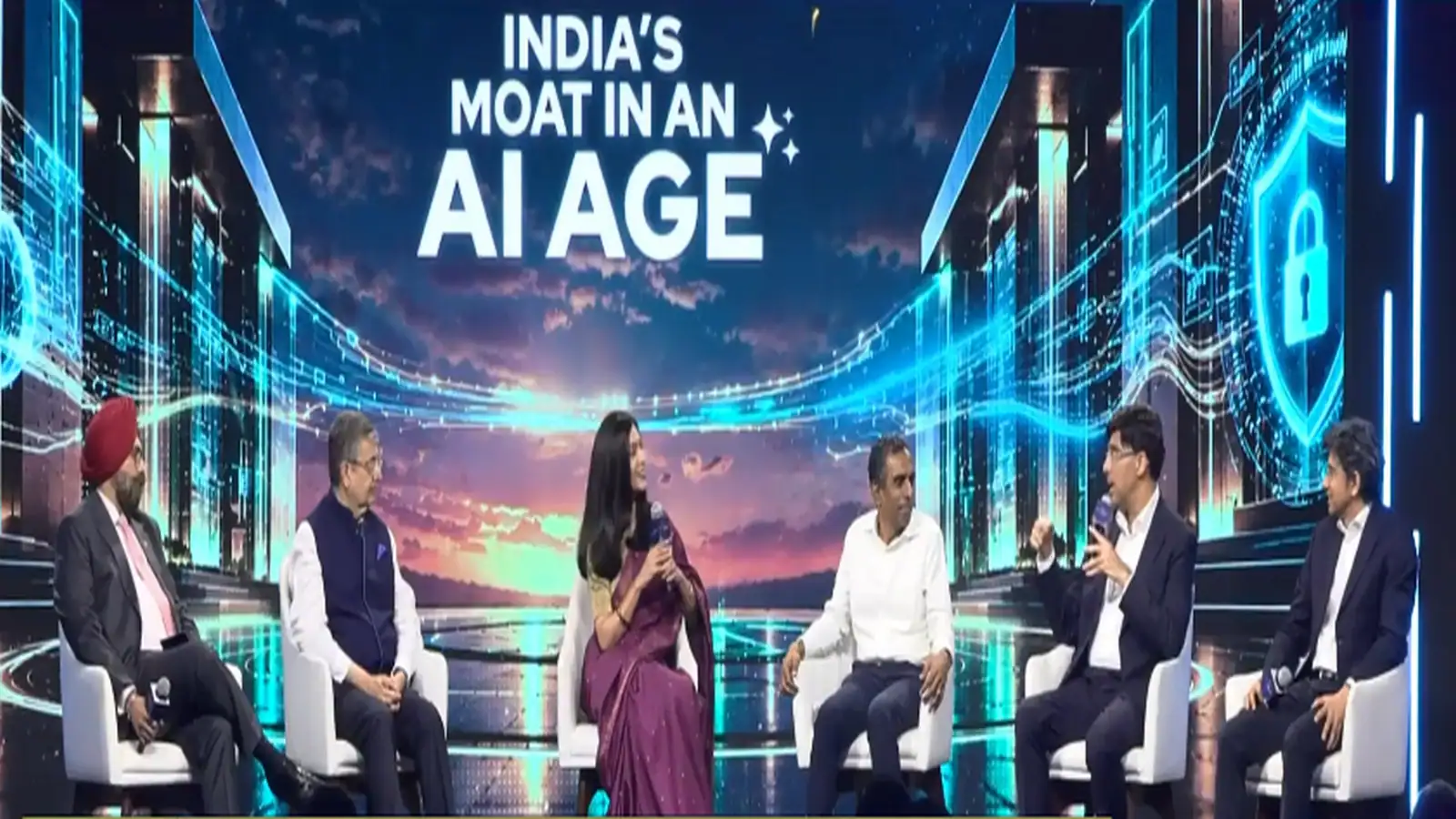
印度必须利用全球动态变化带来的窗口期,加速在人工智能、研究、创新和制造业方面的投资,同时增强应对地缘政治和经济不确定性的韧性,多位商界领袖在CNBC-TV18印度商业领袖奖集体颁奖典礼上表示。
India must use the window created by shifting global dynamics to accelerate its investments in artificial intelligence , research, innovation and manufacturing, while building greater resilience against geopolitical and economic uncertainty, leading business leaders said at the CNBC-TV18 India Business Leader Awards Collective.
科塔克马恒达银行创始人兼董事Uday Kotak表示,全球格局的变化,包括美国人工智能基础设施扩张面临的压力,可能给印度带来一些喘息空间以迎头赶上。然而,他警告不要仅将印度视为一个“反AI投资”目的地,敦促企业专注于技术、生产和制造。
Uday Kotak, Founder and Director of Kotak Mahindra Bank, said the changing global landscape, including pressure on the US AI infrastructure expansion, could give India some breathing space to catch up. However, he cautioned against viewing India merely as an anti-AI investment destination, urging businesses to focus on technology, production and manufacturing.
Kotak还呼吁印度企业探索与中国领先企业的合资合作,并将制造设施转移至印度。他强调,需要确定印度能够建立全球竞争优势并吸引投资的领域。
Kotak also called for Indian companies to explore joint ventures with leading Chinese companies and shift manufacturing facilities to India. He stressed the need to identify sectors where India could establish a global competitive advantage and attract investments.
Cholamandalam Investment、CG Power & Industrial Solutions和Tube Investments董事长Vellayan Subbiah表示,印度必须处于人工智能革命的最前沿,重点关注面向大众的普惠AI以及主权AI能力。
Vellayan Subbiah, Chairman of Cholamandalam Investment, CG Power & Industrial Solutions and Tube Investments, said India must be at the forefront of the AI revolution, with a focus on both affordable AI for the masses and sovereign AI capabilities.
他还强调,印度企业需要在国内开发并保留知识产权,而不应将自身角色局限于制造和全球能力中心。
渣打银行印度及南亚区首席执行官 PD Singh 表示,大量全球资本正等待进入印度,但政策连贯性、更快的审批流程和更好的基础设施将是释放投资的关键。
He also emphasised the need for Indian companies to develop and retain intellectual property domestically rather than limiting their role to manufacturing and global capability centres.PD Singh, CEO of India & South Asia at Standard Chartered Bank, said significant global capital was waiting to enter India, but policy consistency, faster approvals and better infrastructure would be critical to unlocking investments.
Groww 首席执行官 Lalit Keshre 对印度的增长前景和 AI 生态系统表示乐观,而国际象棋特级大师 Viswanathan Anand 强调了在 AI 驱动的世界中大众教育和人类能力的重要性。
Groww CEO Lalit Keshre expressed optimism about India's growth prospects and AI ecosystem, while chess grandmaster Viswanathan Anand highlighted the importance of mass education and human capabilities in an AI-driven world.
小组讨论还涵盖了外资情绪、税收、货币波动、制造机遇以及 2027 年的经济展望。以下是小组讨论的节选。
The panel discussion also covered foreign investor sentiment, taxation, currency movements, manufacturing opportunities and the economic outlook for 2027.
问:Kotak 先生,既然您之前的预测全都应验了,您颇具前瞻性,那么我们先请您谈谈目前对经济和印度市场的预测。
This is the excerpt of the panel discussion.Q: Mr Kotak, since your previous forecasts have all been right and you've been prescient, let's start by asking you what you're now forecasting for the economy and the Indian markets.
Uday Kotak:Shereen,你们 CNBC-TV18 选时机真准。你们决定在美国中期选举结果出炉的这一天举行这次会议,目前有一点似乎很清楚,就是民主党获胜而非共和党,这应该会减缓美国新增数据中心产能的速度,因为巨大的用电压力是数据领域的一个主要因素。这给了印度一些喘息空间来追赶。
Uday Kotak: Shereen, you at CNBC-TV18 have impeccable timing. You decided to have this meeting on the day of the US midterm results, and one thing that seems to be clear is the Democratic win versus the Republicans, which should slow down the speed at which new data centre capacity comes up in the US because of the huge pressure on power consumption, which is a major factor for data. It gives India some breathing room to catch up.I am hopeful that India uses this time to catch up in many areas where it needs to.
我希望印度利用这段时间在许多需要追赶的领域迎头赶上。同时,正如我所见,我们真的需要抓住这个机会,不仅要指望反 AI 交易支撑印度股市,还要采取积极措施,专注于研究、创新、技术、生产和制造,包括我朋友 Vellayan 正在做的半导体。我们需要全力以赴,尽快追赶上来。我确实认为,美国的基本面叙事已承受压力。
At the same time, we really need to, as I see it, take this opportunity not just to hope for an anti-AI trade to hold up Indian equity markets, but to take positive steps towards focusing on research, innovation, technology, production and manufacturing, including what my friend Vellayan is doing in semiconductors. We need to go all out and catch up as quickly as we can.I do believe that the fundamental narrative in the US has come under pressure.
过去一年里,地缘政治持续主导金融界和实体经济这一事实并未改变。因此,我想说,在我们迈入新的一年之际,我们应当带着谨慎的乐观,但更重要的是,要把韧性作为每家企业乃至整个印度经济的座右铭。
Within the last year, there has been no change in the fact that geopolitics continues to dominate the world of finance and the real economy. Therefore, I would say that as we move into the new year, we should do so with some cautious optimism but, even more importantly, with resilience as the mantra for every business and for the Indian economy as a whole.Q: You talked about moving into the new year, and we're now entering the new Samvat.
问:您谈到了迈入新的一年,而我们现在正进入新的萨姆瓦特纪年。排灯节即将到来,科塔克先生,我们正带着谨慎的乐观向前看。但我想强调您提出的那一点,我也会请其他小组成员就此发表看法。这种认为印度应被视为“反AI”投资标的的想法,真的是我们应该思考的方式吗?我们是否应该让世界先对AI失去热情,然后再重新爱上印度?这真的是我们应该采取的思路吗?
Diwali is around the corner, and we're looking ahead with cautious optimism, Mr Kotak. But I want to double down on the point that you made, and I will get the rest of the panel to comment on that as well. This idea that India should be seen as the anti-AI play, is that really the way we should be thinking about this? Should we let the world fall out of love with AI before it falls in love with India again? Is that really how we should be approaching this?
乌代·科塔克:不,我认为我们应该建设性地看待这个问题,无论我们获得多少追赶的时间,都必须迅速而高效地加以利用。我们确实面临世界被两个大国——美国和中国——主导的风险。印度在某种程度上需要明确如何利用自身优势为自己撬动机遇。我们应该从经济角度重新思考我们的战略,包括对华战略。我乐见印度企业走出去,与各行业顶尖的中国公司建立合资企业,并将制造设施迁至印度。
Uday Kotak: No, I think we should look at this constructively, and whatever time we get to catch up, we must use it quickly and productively. We do have the risk that the world gets dominated by two powers, the US and China. India needs to be clear, at some level, about how to use its strengths to leverage opportunities for itself. We should be rethinking our strategy, including with China, from an economic point of view.I would welcome Indian businesses going out there and entering into joint ventures with top-end Chinese companies in various sectors, and moving manufacturing facilities to India.
中国人向美国人学习过。印度人需要学习,无论是向中国人还是美国人学习,但要把东西建在这个国家。
The Chinese learned from the Americans. Indians need to learn, whether it is from the Chinese or the Americans, but set up things in this country.Q: And we've had that change with the Press Note 3 relaxations that have come in.
问:随着第3号新闻公告的放宽措施出台,情况已经发生了变化。所以现在来自中国的合资企业和外国投资当然正在被允许,而且没有太多阻碍。
So now joint ventures and foreign investment from China are, of course, being allowed without much friction.
不过,在我请维拉扬和皮迪就你刚才所说的内容发表评论之前,目前市场上最大的热议或者说呼声,尤其是就市场而言,是应当放宽长期资本利得税,以吸引外国投资者重返印度股市。你认为这个要求合理吗?其次,如果这真的发生,会改变外国证券投资者的情绪吗?会把外国证券投资者吸引回来吗?乌代·科塔克:我认为有两点我们需要牢记。
But before I get Vellayan and PD to comment on what you just said, the big buzz in the market at this point in time, or the clamour, especially as far as the markets are concerned, is that there should be a relaxation in long-term capital gains tax to draw foreign investors back into the Indian equity markets. Do you think that is a fair ask? Secondly, if that were to happen, will it change FPI sentiment? Will it draw FPIs back? Uday Kotak: I think there are two points we need to keep in mind.
一是外国机构投资者与印度投资者之间的资本利得税对等。在这里,如果非要做出区分,我的观点是,外国投资者的资本利得税可以以美元计价为基础,而不是以卢比计价为基础,而印度投资者的资本利得税可以继续以卢比计价为基础。这样既保持了对等,又尊重了各自国家的货币。作为补充,我们或许可以重新思考或考虑对在本国市场不缴税的主权基金和养老基金给予放宽。
One is capital gains tax parity between foreign institutional investors and Indian investors. Here, if at all a distinction has to be made, my view is that foreign investors' capital gains tax could be dollar-currency-based rather than rupee-currency-based, while Indian investors' capital gains tax can continue to be rupee-currency-based. So that is something that still maintains parity but respects the currency of the respective countries. As an addendum to that, we may want to rethink or consider a relaxation for sovereign funds and pension funds that don't pay taxation in their home markets.
它们可以被归入一个单独的类别,在外国证券投资者层面不予征税。所以,在外国证券投资者方面有两点:以美元为基础征税;如果必须给予豁免,则设立一个特定窗口,就像我们为阿布扎比投资局所做的那样,针对主权基金和养老基金,因为它们在本国市场无需纳税。它们可以被作为一个单独的类别对待。关于第二点,我认为在印度,虽然有人呼吁将印度投资者的资本利得税从12.5%加上附加费(合计约14%)下调,但对利息收入的征税是按39%的最高边际税率征收的。我认为约14%和39%之间的差距非常大。
They could be considered in a separate category without taxation on the FPI side. So, two points on the FPI side: dollar-based taxation and, if exemptions have to be given, a specific window, as we have done for the Abu Dhabi Investment Authority, for sovereign funds and pension funds, since they are not taxable in their home markets. They could be treated as a separate category. On the second point, I think that in India, while there is a clamour for a reduction in capital gains tax for Indian investors from 12.5%, plus surcharge, which comes to around 14%, the taxation on interest income is at the highest marginal rate of 39%.I think the gap between around 14% and 39% is very wide.
这一差距需要缩小。我并不是建议提高股票的长期资本利得税,但这个差距太大了。我要说的是:股权风险的税负必须低于债务风险,但39%和14%之间的差距非常大。问:韦拉扬,第一,你认为当前最紧迫的事情是什么?第二,你对商业信心有什么感受?目前的预期是我们仍以7.8%的速度增长。宏观面具有韧性。我们的商品及服务税数据强劲。
That needs to be narrowed.I'm not suggesting an increase in long-term capital gains tax on equities, but this gap is too wide. And I am saying this: there has to be lower taxation on equity risk versus debt risk, but the gap between 39% and 14% is very wide.Q: Vellayan, one, what do you believe is the imperative at this point in time? Two, what is the sense that you get in terms of business confidence? The expectation is that we're still growing at 7.8% at this point in time. The macros are resilient. We've got strong GST numbers.
高频数据持续保持良好。在2026年收官、展望2027年之际,你从一线得到的感受是什么?韦拉扬·苏比亚:首先,关于你之前提出的AI与反AI的问题,我真心认为,我们唯一的出路就是在AI上抢占先机。我们作为一个国家必须走到那一步,因为这将对印度未来的走向产生巨大影响,尤其是在长期。我们必须站在AI的最前沿。
High-frequency data continues to hold up. What is the sense that you're getting from the ground as we close out 2026 and look ahead to 2027? Vellayan Subbiah: First, on the earlier question you had about AI versus anti-AI, I honestly think that the only way for us to play is to be on the front foot on AI. We need to get there as a country because it's going to make a huge difference to how the future pans out for India, especially in the long term. We have to be at the forefront of AI.
其次,关于你提出的印度企业的问题,我仍然认为情况进展良好,总体而言,市场普遍存在乐观情绪,这是好事。但现有业务进展顺利这一事实,也没有给我们足够的动力或紧迫感去开始思考我们在AI等领域需要做的变革性事情。问:让我进一步追问你提出的那一点:我们需要站在AI的最前沿。那么,具体到印度语境,这意味着什么?
Second, on your question about Indian businesses, I still think things are going well, and overall, there is a general sense of bullishness in the market, which is good. But the fact that things are going well in our existing businesses is also not giving us enough of an impetus or a burning platform to start thinking about the transformational things we need to do in sectors like AI.Q: Let me double down on the point that you made: we need to be at the forefront of AI. Now, what does that mean specifically in the Indian context?
我们谈论的是AI时代印度的护城河。你也在进军半导体业务。当我们谈论在AI上抢占先机时,这意味着什么?韦拉扬·苏比亚:这里我们需要看两类情况。第一,如果我们开始思考印度将会成为什么样子,拿任何一项技术来说。拿工业革命来说。
And we're talking about India's moat in an AI age. You're foraying into the semiconductor business as well. What will it mean when we talk about taking the front foot on AI? Vellayan Subbiah: There are two sets of categories that we need to look at here. First, if we begin to think about what India is going to be, take any technology. Take the Industrial Revolution.
采纳了这项技术并妥善运用的国家为自己创造了250年的优势。我真心相信,人工智能革命也将完全如此。采纳了这项技术并妥善运用的国家将为自己创造250年的优势。现在,正如乌代·科塔克所说,美国和中国在这场竞赛中无疑正在获胜。问题回到马克·卡尼所说的“中等强国”身上,以及中等强国如何采纳这项技术。
The countries that adopted it and adopted it well created a 250-year advantage for themselves.I honestly believe that the AI revolution is going to be exactly the same. The countries that adopted it and adopted it well are going to create a 250-year advantage for themselves. Now, as Uday Kotak said, the US and China are definitely winning at this game. The question comes back to what Mark Carney is calling the middle powers and how the middle powers adopt this technology.
我真的相信,中等强国在新世界秩序中拥有非常重要的位置和地位。但我们必须齐心协力,朝着这个方向努力。再说一次,如果你思考人工智能,我认为这里有两个大的层面。印度需要为普通人提供负担得起的人工智能,就像我们能够提供负担得起的移动服务一样。而且印度需要主权人工智能,因为在一个越来越多的国家将按定义走向主权的世界里,这对保护我们自己将是非常必要的。
I really believe that the middle powers have a very important place and standing in the new world order. But we have to get our act together to drive towards that. Again, if you think about AI, I think there are two broad segments here. India needs affordable AI for the aam aadmi, just as we've been able to provide affordable mobile services. And India needs sovereign AI because that's going to be very much required to protect ourselves in a world where more and more countries will go sovereign by definition.I think both these aspects are equally important and very relevant to the way we begin to think about AI.
我认为这两个方面同等重要,并且与我们开始思考人工智能的方式密切相关。如果我要把普通人和成本方面加进来,一个以美国成本运作的主权人工智能方案在印度将是负担不起的。我们目前总体上倾向于回避中国。所以,即使从国家安全的角度来看,我认为我们也需要考虑成本在哪里累积。我是这样看的。你有三层成本:计算所需的芯片、服务器和机架,以及支持它们的软件。
If I were to add the aam aadmi and cost aspects to this, a sovereign AI play that comes at US costs is going to be unaffordable in India. We are generally tending to shy away from China right now. So, even from a national security perspective, I think we need to consider where the costs stack up. Here's the way I look at it. You've got three layers of costs: chips, servers and racks that are required for compute, and the software to support them.
目前该领域的大多数提供商将其产品加价六到八倍,这意味着你谈论的是超过85%的毛利率。然后你有模型,同样由美国和中国主导,毛利率为85%。然后你有新云和超大规模云服务商这样的提供商。
Most of the providers in that space right now are marking up their products by between six and eight times, which means you're talking about gross margins of over 85%. Then you have models, again dominated by the US and China, with gross margins of 85%.And then you have providers such as the neo-clouds and hyperscalers.
再者,如果你看看该业务的实际利润率,相比我们在印度的消费量,他们的收费相当高。所以,如果技术栈中这三个层面都在大幅加价,你最终得到的解决方案对印度来说从根本上就是负担不起的。这就是为什么我们需要在所有这些三个层面上思考解决方案。我认为这对印度走到我们所前往领域的最前沿至关重要。问:但是PD,让我谈谈此时印度更大的宏观图景以及吸引外国直接投资的必要性。
Again, if you look at the actual margins in that business, they're charging quite a bit compared to what we consume in India. So, if you have all those three layers in the stack marking up prices significantly, you're going to have a solution that is fundamentally unaffordable for India. That's why we need to be thinking about solutions across all those three layers.I think that's what's critical for India to get to the forefront of where we're going.Q: But PD, let me address the larger macro picture about India at this point in time and the need to draw in FDI.
全球贸易正在发生什么?外国证券投资流动正在发生什么?货币正在发生什么?你在哪里感到最有信心?你认为下一步需要做什么,以实现科塔克先生所说的确保我们吸引美元流入?PD·辛格:首先,我们不应忘记,我们至少贡献了全球GDP的6.8%。其次,刚刚在新加坡、美国和欧洲等地进行路演之后,我们的团队和我感觉到有资本在观望。
What is happening with global trade? What's happening with FPI flows? What's happening with the currency? Where do you feel most confident? What do you believe the next steps need to be, to Mr Kotak's point about ensuring that we draw in the dollars?PD Singh: Firstly, we shouldn't forget that we contribute at least 6.8% to global GDP. Secondly, just after a roadshow in Singapore, the US and Europe, among other places, our teams and I got the feeling that there is capital waiting on the sidelines.
其中许多投资已经承诺。例如,我们谈到了人工智能和380亿美元——抱歉,大约280亿美元——已经承诺。在半导体领域,正如维拉扬所说,已经有200亿美元的承诺资金正在进入。所以,如果你看未来五到六年8000亿至8500亿美元的整体图景,其中三分之一投向能源基础设施,我认为我们现在确实有机会,伴随着供应链的所有变化和正在发生的全球颠覆。
Many of these investments have already been committed. For example, we were talking about AI and the $38 billion — sorry, around $28 billion — that is already committed. In semiconductors, as Vellayan was saying, there is already a commitment of $20 billion coming in. So, if you look at the overall picture of $800-850 billion over the next five to six years, with a third of that going into energy infrastructure, I think we really have an opportunity right now, with all the changes in supply chains and the global disruptions happening.
看看我们在自由贸易协定方面所做的:欧盟自贸协定和英国自贸协定。这些是500亿至600亿美元的出口,我们预计将提升至超过1000亿美元,取决于我们所谈的走廊。与中国的合资企业非常热门。我们的中国区首席执行官上周刚刚访问,我们在会见印度工业界时看到了乐观情绪。
Look at what we've done on the FTAs: the EU FTA and the UK FTA. These are exports of $50-60 billion, which we are projecting to take to over $100 billion, depending on the corridor we're talking about. Joint ventures with China are very topical. Our China CEO visited just last week, and we saw the optimism when meeting Indian industry.
有一种渴望,想要了解更多,想要走出去,真正与中国合作,以便在——正如科塔克先生提到的——我认为我们拥有有限窗口期的时刻取得领先,在这个窗口期内我们实际上可以在各个领域产生影响。我认为,这就是当下一个真正的机遇。问:你说有大量资本,它在观望等待。它在等什么?辛格:让我们通过几个不同的视角来谈这个问题。
There is a desire to know more and to go out there and actually partner with China to get ahead at a time when I think we have a limited window, as Mr Kotak mentioned, in which we can actually make an impact across various sectors. That is, I think, a real opportunity at this point in time.Q: You said there is plenty of capital; it is waiting. What is it waiting for?PD Singh: Let's cover it through a couple of different paradigms.
一是我们能够展现出所期望看到的政策信心和一致性的速度。这就是为什么我们一些人正在外面做路演。问:这很难推销吗?辛格:比如说,人们对Gift City缺乏了解。因此,厘清Gift City各个方面的信息——而科塔克先生是Gift City的主席——对于确保投资者确切了解他们将要涉足的是什么,非常重要。他们进入这个国家时,我们还需要为他们找到合资伙伴。
One is the speed at which we can demonstrate the confidence and consistency in policy that we would like to see. That's why some of us are out there doing roadshows.Q: Is it a hard sell?PD Singh: There is, for example, a lack of awareness about Gift City. So, clarity on various aspects of Gift City — and Mr Kotak is the chair of Gift City — is important to make sure that investors understand exactly what they're getting into. We also need to find joint venture partners for them when they come into the country.
我认为还有审批的问题。如果审批不是需要数月甚至数年,而是能在几天内完成,那也可能加快他们快速做出决定的能力。问:拉利特,从你的视角来看,我们当然已经看到的是股票市场的民主化。过去两年它并没有真正为投资者带来多少回报。但他们在坚持。他们保持着信心。作为今天的年轻创始人,当我们谈论印度故事时,你最兴奋的是什么?
And I think there is also the issue of approvals. If, instead of taking months and probably years, they can get approvals in days, that may also speed up their ability to take a decision quickly.Q: Lalit, from your vantage point, what we've seen, of course, is a democratisation of the equity markets. It hasn't really done much for investors over the last two years. But they're holding on. They're keeping the faith. As a young founder today, what are you most excited about when we talk about the India story?
拉利特·凯什雷:我认为如果你放眼全世界,你不会找到一个像印度这样规模的国家增长如此之快。我的意思是,我们大约以6%到8%的速度复合增长,上下浮动。我们一直如此。我说的是净GDP,我认为这将会持续下去。我也对AI非常乐观。现在,我们正处于大量研究正在进行、生态系统正在构建的阶段。最终,在应用层,我们是最大的市场。
Lalit Keshre: I think if you look across the world, you won't find a country of India's size growing so fast. I mean, we are compounding at around 6-8%, give or take. We have been doing that. I'm talking about net GDP, and I think that's going to continue.I'm also very optimistic about AI. Right now, we are at a point where a lot of research is happening and the ecosystem is building. Ultimately, at the application layer, we are the largest market.
当扩散开始、token成本持续下降时,我认为我们会建立很多利用这一生态系统的公司,并打造出大型企业。问:但就扩散方面而言,我想你们每个人都谈到了这一点。是的,我们看到印度对AI的采用正在加快,但现阶段创新未必是由印度驱动的。这对印度在应用层面成为领导者来说足够吗?这是人们正在提出的问题。
When the diffusion starts and token costs keep coming down, I think we'll build a lot of companies that will leverage that ecosystem and build large businesses.Q: But on the diffusion aspect, I think each one of you has spoken about this as well. Yes, we are seeing faster adoption of AI in India, but innovation isn't necessarily being driven by India at this point in time. Will it be enough for India to be a leader on the application side? That's the question being asked.
拉利特·凯什雷:未必。我们在制造业方面已经非常出色。再说,乌代就坐在这里,我认为我给出任何数据都没有意义,因为如你所知,我们现在正在建设半导体。我们在多个领域的投资要多得多。顺便说一句,印度拥有数量最多的半导体设计工程师之一。我本人以前就是一名芯片设计师。所以,这里有人才质量非常高,而现在我们正在投资晶圆厂和制造等等。
Lalit Keshre: Not necessarily. We are already very good at manufacturing. Again, with Uday sitting here, I don't think it makes sense for me to give any kind of data because, as you know, we are building in semiconductors now. We are investing a lot more in several areas. By the way, India has one of the highest numbers of semiconductor design engineers. I myself was a chip designer in my previous avatar. So, there is very high-quality talent here, and now we are investing in fabs and manufacturing, and so on.
我们正在建设数据中心,模型也在不断演进。模型正变得更便宜。借助开源和开放权重模型等,token成本正在下降。所以,我不认为只是应用层。在整个价值链上,从上到下,包括处于最底层的能源,我们都将开始看到进展。而且我们已经开始看到了。我还觉得,我们需要多一点耐心,而不是这么快就评判自己。如果你看看互联网世界,谷歌是什么时候出现的?
We are setting up data centers, and models are also evolving. Models are becoming cheaper. Token costs are coming down with open-source and open-weight models, and so on. So, I don't think it's just the application layer. Across the entire value chain, from top to bottom, including energy, which is the bottom-most layer, we will start seeing progress. And we have already started seeing it.I also feel that we need to be a bit patient instead of judging ourselves so quickly. If you look at the internet world, when did Google come in?
Facebook是什么时候出现的?然后Flipkart是什么时候出现的?Groww又是什么时候出现的,2016年?嘉信理财出现得早得多。它们之间相差了几十年。现在,这一差距正在缩小。应用公司现在彼此相隔两三年就会出现,我认为这一差距将继续缩小。问:但是维斯瓦纳坦·阿南德,我认为在价值链中,印度明显处于领先地位的一个领域是国际象棋界。
When did Facebook come in? Then when did Flipkart come in? And when did Groww come in, in 2016? Charles Schwab came in much earlier. There were decades of difference. Now, that difference is narrowing. Application companies are now coming up within two or three years of each other, and I think that gap will continue to narrow.Q: But Viswanathan Anand, I think one area across the value chain where India is clearly coming out on top is the chess world.
如果我们能从国际象棋领域所了解到的经验——即我们需要做出哪些选择、培养哪些能力,才能真正确保印度在人工智能时代继续发挥自身优势——进行推演,你想说些什么?维斯瓦纳坦·阿南德:我持有的是棋手的视角。下棋的人类很久以前就被超越了,差不多是30年前,因为国际象棋是一种非常狭窄的游戏。它没有那种随机性以及其他东西。
If we can extrapolate what we've been able to learn from the world of chess in terms of the choices we need to make and the capabilities we need to nurture to truly ensure that India continues to play to its advantage in the AI age, what would you like to say? Viswanathan Anand: I have the perspective of a chess player. Chess-playing humans were surpassed a long time ago, almost 30 years ago, because chess is a very narrow game. It doesn't have all the randomness and everything else.
所有信息都摆在桌面上。我的意思是,它很复杂,但只是以一种狭窄的方式复杂。我觉得有趣的是,一些早期的预测结果如何。我记得大约在1997至1998年,当计算机刚刚超越我们时,棋手们面临的问题之一是:10年或15年后我们还会有一个职业吗?如果人们可以看计算机下出比人类更好的棋,他们为什么还需要我们?
All the information is on the table. I mean, it's complex, but in a narrow way. What I find interesting is how some of the early predictions turned out. I remember that around 1997-98, when computers had just surpassed us, one of the questions for chess players was: Will we have a profession in 10 or 15 years? If people can watch computers play a better game of chess than humans, why will they need us?
结果证明的情况是,计算机,当然还有后来的人工智能,推动了这项运动的大量流行度,并带来了更多人观看它。但人们仍然在观看人类下棋,因为我们误解了观众。观众不是来看一场好的棋局的;他们是来看一场好的搏斗的,而人类更好地提供了这一点。我的感觉是,对商业、甚至对一般工作而言,教训之一是,这种线性推演——即人工智能擅长某件事,因此很多岗位将会消失——不会准确。
What turned out to be the case is that computers and, of course, later AI drove a lot of popularity for the game and brought more people to watch it. But people are still watching humans play because we misunderstood the audience. The audience isn't coming to see a good chess game; they're coming to watch a good struggle, and humans deliver that better. My feeling is that one of the lessons for business, and even for work in general, is that this linear way of projecting that AI is very good at something and, therefore, a lot of roles will disappear is not going to be accurate.
会有一些损失,但会是混合的。在国际象棋中,感觉人的因素并没有被取代那么多。其次,印度不需要在一切领域都处于前沿。会有一些人工智能和技术领域我们应该大力投资。但在很多领域,因为印度有许多部分需要在不同阶段迎头赶上,我们可以通过专注于基础来取得进展。在国际象棋中,我们推动了大量学校参与,仅仅是通过让人们投入到这项运动中。
There will be some losses, but it will be mixed. In chess, it feels like the human element hasn't been displaced that much. Second, India will not need to be at the frontier of everything. There will be areas of AI and technology where we should invest heavily. But in a lot of areas, because there are many parts of India that need to catch up at a different stage, we can make progress by focusing on the basics. In chess, we drove a lot of school participation, simply by getting people engaged in the game.
这形成了临界规模,而如今让印度在国际象棋上非常强大的因素之一,简单来说就是数量——参与其中的棋手人数。年轻人通过竞争互相推动。事实上,印度当前的黄金一代从12岁起就在一起,他们一刻也不得松懈,因为他们也许是世界第六强的棋手,但在他们那条街上已经只能排第三了。这让他们很难放松下来。这正是我们必须在此基础上继续发展的东西。
That created a critical mass, and one of the things that makes India very strong in chess now is simply the volume — the number of players who participate. Youngsters drive each other through competition. In fact, India's current golden generation has been together since the age of 12, and they don't get a moment's rest because they may be the sixth-best player in the world, but they are already third-best in their street. That doesn't allow them to relax very easily. That's really what we have to build on.
并不是要忽视许多其他事情,但我们必须以此为基础,因为这是我们明显的优势。面向大众的教育——只要让每个人都多受一点教育,能够发挥作用。我认为这正是国际象棋所提示的。或许这也是体育的一种模式。
Not ignoring many other things, but we've got to build on this because that is our clear strength. Education for the masses — just get everybody a little better educated and able to play a part. I think that's what chess would suggest. And perhaps this is a model for sports as well.