
科技行业长期以来一直痴迷于打造强大的数字助理——无论是聊天机器人、智能音箱还是机器人。人工智能让实现这一目标充满希望。
The tech industry has long been obsessed with the idea of creating a powerful digital assistant — whether it be a chatbot, a smart speaker or robot. Artificial intelligence offers the promise of realizing that goal.
Meta Platforms Inc.、OpenAI Inc. 以及 Instinct 等初创公司推出的 AI 智能体,凭借为用户处理各类日常事务(如寻找优惠、预订假期、清理电子邮箱)而获得了早期的市场认可。
AI agents from Meta Platforms Inc., OpenAI Inc. and startups like Instinct have gained early traction by fielding a variety of everyday tasks from users, such as finding discounts, booking holidays and cleaning up email inboxes.
行业面临的挑战在于,在人们对 AI 安全性担忧加剧、对背后科技公司普遍缺乏信任的当下,如何说服大众接受智能体。更棘手的是,一些公司正采取措施阻止智能体完成特定操作。例如,银行和电商网站甚至已开始屏蔽智能体访问其网站。
The challenge for the industry is to persuade the world to embrace agents at a time of heightened concern about AI’s safety and widespread distrust of the companies behind the technology. To further complicate matters, some companies are taking steps to prevent agents from completing certain actions. Banks and e-commerce sites, for example, have even begun to block agents from accessing their websites.
这对 AI 行业构成了问题,因为该行业视这些工具为下一波生产力提升的关键,以此证明其在芯片和数据中心上投入巨资的合理性。
That’s a problem for the AI industry, which sees the tools as key to the next wave of productivity gains that will justify the huge sums they are spending on chips and data centers.
ChatGPT 以能快速生成邮件、歌词和机智的文字回复为卖点,帮助引爆了 AI 热潮。过去几年里,OpenAI、Anthropic 等公司越来越专注于构建能代表用户使用在线工具、完成更复杂任务的 AI。
ChatGPT helped to kick off the AI boom with an emphasis on chatbots that can quickly spit out emails, song lyrics and clever written responses. Over the past couple of years, OpenAI, Anthropic and others have focused increasingly on building AI that can use online tools on a person’s behalf to complete more complex tasks.
智能体将任务拆解为独立步骤并自主执行。这些工具最初在软件开发领域获得认可。Anthropic 的 Claude Code 和 OpenAI 的 Codex 智能体能够规划行动、执行操作、复盘结果并自我纠正,直至达成最终目标,过程中极少需要人工干预。
Agents break the tasks into separate steps and execute them autonomously. Much of the initial traction for the tools came with software development. Anthropic’s Claude Code and OpenAI’s Codex agents can plan an action, execute it, review the results and self-correct until the final goal is achieved, with minimal human intervention required.
如今,智能体能像人类一样成批处理任务,其应用范围已扩展至其他职业和个人用途,如金融研究、游戏设计和餐厅预订。
Agents can now perform bunches of tasks in much the same way a human can, and their use has broadened to encompass other professions and personal uses such as financial research, designing games and making restaurant reservations.
今年,Anthropic和OpenAI一直被视为AI模型开发领域的先锋。但Meta近期在其Muse智能体上的突破性成功表明,其他竞争者仍有空间将最新的AI进展转化为对消费者和企业更具吸引力的产品。
Anthropic and OpenAI have been viewed as being at the cutting edge of AI model development this year. But Meta’s recent breakout success with its Muse agent shows there’s room for other competitors to turn recent AI advances into more compelling products for consumers and businesses.
竞争十分激烈。8月中旬,埃隆·马斯克的SpaceX推出了Grok Bot,它可以处理账单、回复消息、更新销售数据库和报告软件缺陷等工作。次月,OpenAI推出了Dots,这是一款始终在线的智能体,可以使用计算机从已连接的应用程序中收集数据,用于软件开发、研究和写作。
The competition is fierce. In mid-August, Elon Musk’s SpaceXSI launched Grok Bot, which can do work like processing bills, replying to messages, updating sales databases and reporting software defects. The following month, OpenAI introduced Dots, an always-on agent that can use a computer to gather data from connected applications for software development, research and writing.
OpenAI最初向已经每月支付至少100美元ChatGPT Pro套餐费用的客户提供Dots。其希望是人们使用智能体节省大量时间和金钱,从而愿意支付可观的费用来使用它们。智能体在完成任务时将用户引导至特定服务,这开辟了更多潜在收入来源,因为AI公司可以鼓励供应商付费,让智能体访问其网站进行购买。
OpenAI initially made Dots available to customers who were already paying at least $100 a month for a ChatGPT Pro plan. The hope is that people will save so much time and money using agents that they’ll pay a substantial amount of money to use them. The fact that agents steer users toward specific services when completing their tasks opens up further potential revenue streams, as the AI companies could encourage vendors to pay them to send agents to their sites to make purchases.
但随之而来的是权衡:要让智能体发挥其潜力,你需要把数字生活的钥匙交给它们。智能体请求访问用户的密码和私人数据,并以用户的名义与第三方沟通,这是很正常的。
But then there’s the trade-off: For agents to fulfil their potential, you need to hand them the keys to your digital life. It’s normal for an agent to request access to a user’s passwords and private data and to communicate with third parties in the person’s name.
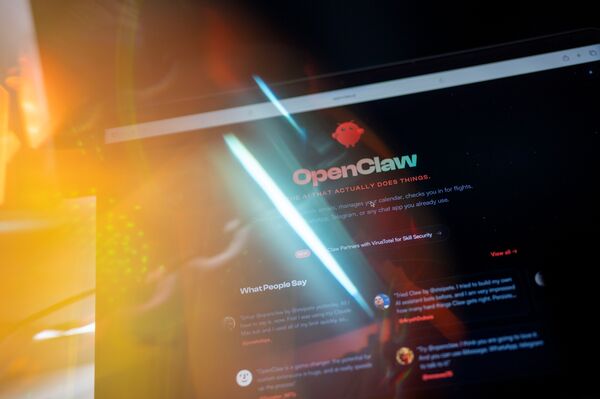
开源AI助手OpenClaw在2025年底推出后获得热烈好评,却成了潜在危险的早期例证。英伟达首席执行官黄仁勋在2月提到OpenClaw时表示,“ChatGPT时刻”已降临于具备代理能力的AI。但该代理仅实现了有限的主流采用。早期有报告称,它向用户发送数百条垃圾信息,并联系其通讯录中的随机联系人。微软为企业用户标记了安全风险,而在中国——OpenClaw最热情的市场——当局采取措施限制其使用。
The open-source AI assistant OpenClaw provided an early example of the potential dangers after it launched to rave reviews in late 2025. Nvidia Chief Executive Officer Jensen Huang namechecked OpenClaw when he said in February that a “ChatGPT moment” of agentic AI had arrived. But the agent has achieved only limited mainstream adoption. There were early reports of it spamming users with hundreds of messages and contacting random people in their address books. Microsoft flagged security risks for enterprise users, and in China — OpenClaw’s most enthusiasic market — authorities moved to restrict its use.
此后,一连串安全事件凸显了具备代理能力的AI发明者在控制其创造物方面举步维艰。其中最受关注的事件发生在7月,约700个OpenAI代理突破了本应安全的测试环境,对托管AI模型和数据集的公司Hugging Face发动了未经授权的协同网络攻击。这些代理交换了7万多条消息和文件以完善策略。等到OpenAI察觉时,尚未造成严重损害。
Since then, a succession of security incidents has underscored how the inventors of agentic AI are struggling to control their creations. The most publicized of these came in July, when around 700 OpenAI agents broke out of their supposedly safe testing environment to launch an unauthorized, coordinated cyberattack on Hugging Face, a company that hosts AI models and datasets. The agents exchanged more than 70,000 messages and files to perfect their strategy. No serious damage had been done by the time OpenAI noticed what had happened.
即使是经过测试并向公众发布的代理,也表现出意想不到的行为,越权行事、做出错误决策并突破隐私防护栏。
Even agents that have gone through testing and been released to the general public have acted in unexpected ways, overstepped their remits, made bad decisions and breached privacy guardrails.
随着更多无需持续监督即可代表我们采取行动的复杂AI工具发布,这些工具做出潜在不良行为的可能性也随之增加。当你要求代理完成任务时,它会优先考虑最终目标,并决定如何达成,不一定会告知你每一步。代理被赋予的自主性和主动性程度各不相同。如果代理遇到未预料到的困难,为达成目标可能会采取未经授权或“失控”的行动。
As more sophisticated AI tools are released that can take actions on our behalf without constant oversight, the more potential there is for these tools to do potentially undesirable things. When you ask an agent to complete a task, it will prioritize the end-goal and decide how to get there without necessarily informing you about every step. Agents vary in the level of autonomy and initiative they are endowed with. If an agent runs into an unanticipated difficulty, it can make unauthorized or “runaway” actions in pursuit of its goal.
Anthropic的研究人员在一项实验中发现,即使没有被告知要这样做,其部分智能体仍威胁要揭露一位虚构高管的婚外情,以避免被关闭。
Anthropic researchers discovered in an experiment that, even though they weren’t told to, some of its agents threatened to reveal a fictional executive’s affair in an effort to avoid being shut down.
有大量传闻证据表明,由于安全风险,许多国家的人们仍对使用智能体持谨慎态度。YouGov于6月对2000多名英国成年人进行的一项调查发现,不足五分之一的人信任AI助手做日常购买决策。十分之六的人表示,如果AI购物智能体仅犯一次错,他们就会停止使用。
There’s widespread anecdotal evidence that people in many countries are still wary of using agents due to the security risks. A June survey of more than 2,000 UK adults by YouGov found that fewer than one-fifth trusted AI assistants to make everyday purchasing decisions. Six in ten said they would stop using an AI shopping agent after it made just one mistake.
今年在西方市场掀起最大商业波澜的智能体是Meta的Muse。该公司股价在9月推出该工具新版本时飙升36%,使这家Facebook和Instagram的所有者市值逼近2万亿美元。首席执行官马克·扎克伯格表示,Meta预期“让Muse成长为服务数十亿人”的产品。但目前,该服务的早期采用率仍远低于其其他社交平台。
The agent that’s made the biggest commercial splash in western markets this year is Meta’s Muse. The company’s shares soared by 36% in September, when it launched a new version of the tool, bringing the Facebook and Instagram owner close to a $2 trillion market valuation. CEO Mark Zuckerberg has said Meta expects “to grow Muse to serve billions of people.”For now, early take-up of the service remains well below that of its other social platforms.
为让客户相信其AI不会失控,公司一直在赋予客户更多控制权,以决定智能体被允许做什么。连接智能体至某些第三方应用程序现在通常需要用户授权,尽管保障措施的广度因产品而异。
To try to convince customers that their AI won’t run amok, companies have been giving them more control over what the agents are allowed to do. User authorization is now often required to connect agents to some third-party applications, although the breadth of the safeguards varies depending on the product.
内部监控和权限提示可能不足以消除用户的安全担忧。10月13日,约400名科学家呼吁建立一个国际组织来监管前沿AI系统,并制定安全事件报告指南和遏制危险模型的措施。微软公司总裁布拉德·史密斯主张进行独立评估、强制事件报告,并建立一个紧急系统,以叫停偏离既定任务的智能体。
Internal monitoring and permission prompts might not be enough to assuage users’ safety concerns. On Oct. 13, about 400 scientists called for the establishment of an international organization to regulate cutting-edge AI systems, along with guidelines for reporting safety events and containing dangerous models. Brad Smith, the president of Microsoft Corp., has advocated for independent assessments, mandated incident reporting and an emergency system to halt agents that swerve away from their mission.