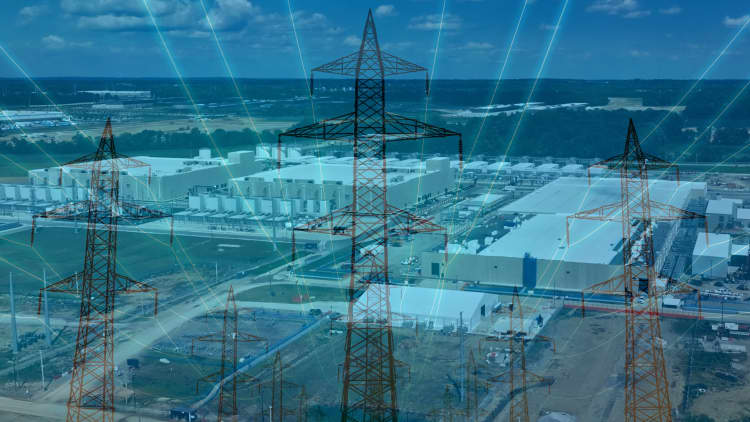
OpenAI、Meta、SpaceX、Amazon、Google等公司计划建设的巨型1吉瓦(GW)数据中心,是本届中期选举的一个关键议题,主要源于对电力和用水的担忧。
Huge 1GW data centers from OpenAI, Meta, SpaceX, Amazon, Google and others were a key issue in the midterms, largely due to concerns over power and water use.
液冷技术使许多现代AI数据中心的内部用水量保持在低位,但在炎热气候下,外部冷却仍需要大量电力或水资源。
Liquid cooling keeps water use low inside many modern AI data centers, but external cooling still requires large power or water draw in hot climates.
CNBC实地探访了数据中心并采访了研究人员,旨在弄清数据中心用水的真实情况。
CNBC visited data centers and spoke to researchers to find out the truth about how data centers use water.
本周选民明确表达了希望对人工智能数据中心加以限制的意愿,在41项拟议的投票提案中,有40项获得通过,这些提案将对全国各地社区计划建设的2000多座新设施中的部分设施施加限制。
Voters made it clear this week that they want to see limits put on data centers for artificial intelligence, passing 40 of 41 proposed ballot measures that would place restrictions on some of the more than 2,000 new facilities planned for communities around the nation.
用水和用电是费率缴纳者最关心的两大问题。但要计算每个数据中心究竟从当地资源中抽取了多少水电,是一项极其困难的任务,因为运营商通常只报告全公司范围的用量数据,而非按站点分列。
Water and power top the list of ratepayers' concerns. But calculating how much each data center draws from local resources is an elusive task, with operators typically reporting usage figures companywide instead of site by site.
据加州大学河滨分校数据中心研究员、教授任少雷(Shaolei Ren)称,Meta、Google、Amazon和SpaceX等公司的巨型1吉瓦AI数据中心,每天最多可消耗1000万加仑水。
Giant 1-gigawatt AI data centers from the likes of Meta Google Amazon and SpaceX can consume up to 10 million gallons of water per day, according to Shaolei Ren, a data center researcher and professor at University of California, Riverside.
具体数字差异巨大,取决于数据中心内部采用何种硬件、建在何处,以及用何种方法为服务器和整栋建筑降温。
The exact number varies greatly depending on what type of hardware is inside a data center, where it's built, and what method is used to cool the servers and the building as a whole.
数据中心用水方式的复杂性,给建设方和反对方都留下了散布误导信息的空间。CNBC采访了专家,以还原更清晰的图景。
The complex ways data centers use water have left room for misinformation from both the builders and those fighting against them. CNBC talked to experts to get a clearer picture.
风冷与液冷 数据中心需要强有力的内部冷却手段,以防止芯片和服务器过热。
Air vs. liquid cooling Data centers need serious internal cooling methods to keep chips and servers from overheating.
传统数据中心装填的是用于网络或存储等用途的低功耗服务器,通常采用风冷。大型风扇将热空气从服务器吹走并排出建筑物外部。
Legacy data centers, filled with lower-power servers used for things like networking or storage, are often air-cooled. Large fans move hot air away from the servers and outside the building.
但现代 AI 数据中心内部塞满了高功率、高密度的图形处理单元(GPU),Ren 表示这些芯片运行温度极高,服务器甚至能“煮熟鸡蛋”。据 Equinix 可持续发展负责人 Christopher Wellise 称,水的冷却效率比空气高约 3000 倍。
But modern AI data centers are filled with high-power, denser graphics processing units, or GPUs, which Ren said can run so hot that the servers can "boil your eggs." Water is about 3,000 times more efficient for cooling down these GPUs, according to Equinix sustainability head Christopher Wellise.
Wellise 在接受 CNBC 采访时表示:“GPU 的功耗极高、温度极高,如果仅靠风冷,你需要接近飓风级别的风力才能将其冷却下来。”
GPUs "run at such a high wattage, a high temperature, you would need nearly hurricane-force winds to actually cool them down if you were just using air," Wellise told CNBC in an interview.
这就是为什么最新的机架级 AI 系统——Nvidia 的 Vera Rubin 和 Advanced Micro Devices 的 Helios——都依赖液冷技术。大多数大型 AI 数据中心采用闭环液冷系统,日常运行中用水量极少。
That's why the latest rack-scale AI systems, Nvidia 's Vera Rubin and Advanced Micro Devices ' Helios, rely on liquid cooling. Most large AI data centers use a closed-loop liquid cooling system that uses very little water on a daily basis.
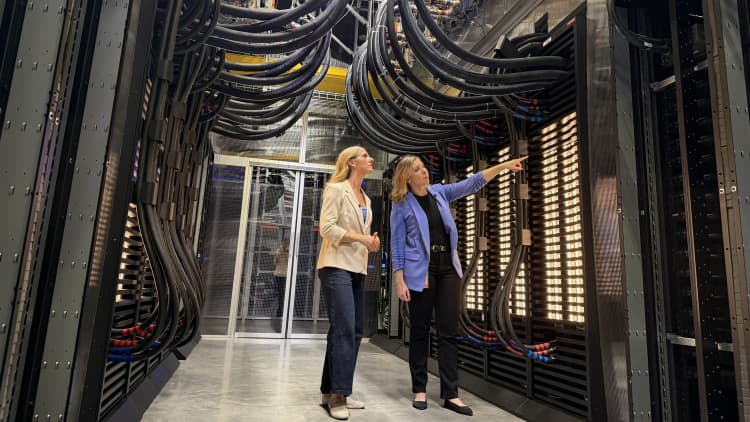
在位于加利福尼亚州圣何塞的一个 Equinix 数据中心,CNBC 近距离观察了用于给一排八个 Nvidia Grace Blackwell 机架降温的闭环液冷系统,这些机架归 AI 营销初创公司 Alembic 所有。
At an Equinix data center in San Jose, California, CNBC got an up-close look at the closed-loop liquid cooling system used to keep temperatures down in a row of eight Nvidia Grace Blackwell racks owned by AI marketing startup Alembic.
Equinix 建设的是托管式数据中心,Alembic 等公司租用空间运行自己的服务器机架,而 Equinix 提供电力、网络连接、互联互通和冷却设施。
Equinix builds colocation data centers, where companies like Alembic rent space to run their own server racks, while Equinix supplies the power, network connections, interconnectivity and cooling.
与许多数据中心运营商一样,Equinix 不披露单个站点的用水量。2025 年,Equinix 整体运营消耗了 12 亿加仑水,较上一年增长 10%。
Like many data center operators, Equinix doesn't disclose water consumption at individual sites. In 2025, Equinix operations as a whole consumed 1.2 billion gallons of water, up 10% from a year prior.
尽管像 Equinix 在圣何塞所用的那样采用了闭环内部冷却,但总用水量更多取决于数据中心外部发生的另一个冷却过程。
Despite closed-loop internal cooling like what Equinix uses in San Jose, total water consumption is far more dependent on an additional cooling process that happens outside the data center.
“我们如何将封闭循环中的热量排放到环境中?”任说。“这就是用水量的来源。”
"How do we reject the heat from the closed loop to the ambient environment?" Ren said. "That's where the water usage comes in."
例如,在印第安纳州黎巴嫩,Meta正在建设一个1吉瓦的数据中心,该公司称其采用“闭环液冷系统,循环使用同一水源,全年大部分时间将零用水”。然而,根据该公司律师事务所的说法,该站点的水分配量到2031年可能增至每天800万加仑。Meta表示,该数字代表最热天的峰值用水量。“我们预计很少达到这个最高用水水平,目前预计每年只有几天,”Meta在一份声明中对CNBC表示。
In Lebanon, Indiana, for example, Meta is building a 1GW data center that it says uses a "closed-loop, liquid-cooled system that recirculates the same water and will use zero water for a majority of the year." Water allocation for the site, however, could ramp up to 8 million gallons per day by 2031, according to the company's law firm. Meta says that figure represents peak usage on the hottest days. "We anticipate rarely reaching this maximum usage level, currently projected as only a few days per year," Meta told CNBC in a statement.
这是因为一年中最热的天数需要更多水来进行该外部冷却过程,从那个独立的内部闭环系统中移除热量。
That's because the hottest days of the year will require more water for that external cooling process, removing the heat from that separate internal closed-loop system.
用水少,耗电多 数据中心的这种外部冷却过程主要有两种方法:干式冷却和蒸发式冷却。虽然干式冷却用水量远少,但可能需要耗电量大得多,尤其是在许多这些AI数据中心正在建设的炎热气候地区。
Less water, more power There are two primary methods for this external cooling process at a data center: dry cooling and evaporative cooling. While dry cooling uses far less water, it can require far more power, especially in hotter climates where many of these AI data centers are being built.
“没有一种万能药,”威利斯说。“到某个时刻,你需要将热量排放到大气中。权衡就发生在这里。”干式冷却依靠风扇将空气吹过换热器,利用环境空气将其冷却。当外部温度较高时,这些风扇效果较差,因此数据中心会先开启制冷装置来冷却空气。
"There's no sort of silver bullet," Wellise said. "At some point you need to eject that heat out to the atmosphere. And that's where those trade-offs occur." Dry cooling relies on fans to blow air across heat exchangers, using the ambient air to cool it down. Those fans are less effective when the outside temperature is high, so data centers turn on refrigeration units to cool down the air first.
“这是一个非常耗电的过程,这正是我们夏季出现电力短缺的原因,”任说。“因为其他人都开空调了。”与此同时,蒸发式冷却耗电量非常小。热水通过冷却塔或暴露在空气中的湿垫循环,蒸发的部分会带走热量。在最热的天数,大量水分会通过蒸发流失。在这两个极端之间,混合方法很常见,因为公司试图寻找平衡点。
"That's a very power-intensive process, and that's exactly why we have power shortages in the summer," Ren said. "Because everybody else turns on their AC." Evaporative cooling, meanwhile, uses very little power. The hot water circulates through cooling towers or over wet pads that are exposed to air, and the portion that evaporates carries heat away with it. Large amounts of water can be lost through that evaporation on the hottest days. In between these two extremes, hybrid methods are common as companies try to find a balance.
一些数据中心,如 Equinix(Equinix)位于圣何塞的设施,在较冷月份使用干式冷却,在室外炎热时使用蒸发冷却。在印第安纳州,Meta 依靠干式冷却,并在较热月份通过喷雾降温空气来控制功耗,而不单纯依赖制冷机组。
Some data centers, like Equinix's in San Jose, use dry cooling in the colder months and evaporative cooling when it's hot outside. In Indiana, Meta relies on dry cooling and keeps power consumption down in hotter months by spraying a mist to cool the air instead of relying solely on refrigeration units.
打造更凉爽的芯片 在一些数据中心项目附近,Meta、Amazon(亚马逊)、Microsoft(微软)等公司正在建设水处理厂,以帮助处理和回收所需用水。例如,Meta 在爱达荷州库纳的数据中心附近投资 1 亿美元建设新的供水和废水系统。
Creating cooler chips Near some data center projects, Meta, Amazon, Microsoft and others are building water treatment plants to help treat and recycle the necessary water. Meta, for example, spent $100 million on a new water and wastewater system near its data center in Kuna, Idaho.
在田纳西州孟菲斯郊外,Elon Musk(埃隆·马斯克)承诺投资 8000 万美元建设一座水回收厂,旨在将处理过的城市废水转化为 SpaceX(SpaceX)Colossus 数据中心的冷却用水。那里的首个数据中心 Colossus 1 于 2024 年迅速投入运行,但水处理厂的建设于今年 4 月被叫停。
Outside Memphis, Tennessee, Elon Musk pledged $80 million to build a water recycling plant that's meant to turn treated municipal wastewater into cooling water for SpaceX's Colossus data centers. The first data center there, Colossus 1, came online rapidly in 2024, but construction on the water treatment plant was put on hold in April of this year.
据当地公用事业公司 Memphis Light, Gas and Water 称,Colossus 1 的用水配额高达每天 128 万加仑,尽管尚未达到这一阈值。
Colossus 1 has a water allocation of up to 1.28 million gallons per day, although it hasn't yet reached that threshold, according to the local utility, Memphis Light, Gas and Water.
科技公司还在一些数据中心园区内自建发电厂,以确保足够的电力供应,但这些电厂也消耗大量水资源。Colossus 从其现场安装的燃气轮机获取能源,这些轮机因涉嫌违反《清洁空气法》和噪音污染而面临多起诉讼。
Tech firms are also building their own power plants on some data center campuses in an effort to secure enough supply, but those also consume a large amount of water. Colossus gets energy from gas-powered turbines it installed on-site, which have been the subject of multiple lawsuits over alleged Clean Air Act violations and noise pollution.
与此同时,一些芯片公司正直接致力于降低芯片发热量,从而从源头上减少所需冷却。
Meanwhile, some chip companies are directly working on ways to bring the heat of a chip down so less cooling will be needed to begin with.
韩国初创公司 DeepX 制造的一款 AI 处理器,据称运行温度比竞品低达 100 华氏度。
South Korean startup DeepX makes an AI processor it says runs up to 100°F cooler than competitors.
Hyundai Motor(现代汽车)将在其机器人产品中采用 DeepX 芯片。
Hyundai Motor will use the DeepX chip in robotics offerings.
SK海力士是全球领先的高带宽内存制造商,该公司7月向CNBC表示,正在研发一种名为iHBM的低发热内存技术,可将热阻降低30%。
SK Hynix the world's leading maker of high-bandwidth memory, told CNBC in July that it's working on a low-heat memory technology called iHBM that can reduce thermal resistance by 30%.
在Equinix,韦利斯表示,每个新站点都会进行水资源风险分析,以确定在水资源匮乏地区部署哪种外部冷却方式。
At Equinix, Wellise said each new site undergoes a water risk analysis to determine which external cooling method to deploy in areas with scarce water.
“社区开始问对的问题了。他们担心水资源消耗,”韦利斯说。“我们非常重视资源消耗和资源使用。”为AI数据中心供电的竞赛正在重塑美国的电网
"Communities are beginning to ask the right questions. They're concerned about water consumption," Wellise said. "We take resource consumption, resource use very seriously." The race to power AI data centers is reshaping America's electric grid