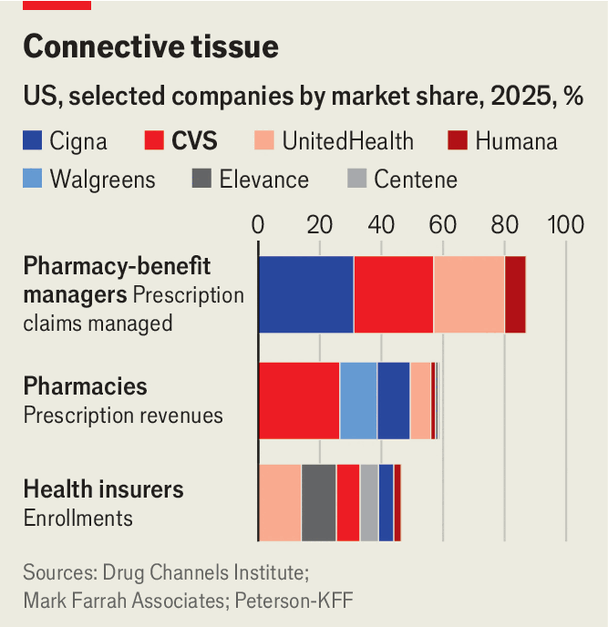
20世纪60年代,马萨诸塞州的两兄弟共同创办了一家名为“消费者价值商店”的连锁药店。如今,CVS已成为美国最大的此类企业。然而,随着时间的推移,它的业务早已超越了药房范畴:首先是拓展了与药企谈判批量折扣的蓬勃业务,随后又推出了自有健康保险计划。在所有这三个市场上,它都是美国最大的公司之一(见图表)。
In the 1960s two brothers in Massachusetts co-founded a drugstore chain called the Consumer Value Stores. Today CVS is America’s largest such business. Yet over time it became much more than a pharmacy, first by expanding into the booming business of negotiating bulk discounts with drugmakers, and then by offering its own health-insurance plans. In all three markets it is one of America’s largest companies (see chart).
11月4日,CVS宣布将拆解这一垂直整合模式,拆分为两家公司。一家将主要由其保险部门和负责谈判药价的药品福利管理公司(PBM)组成,年收入约3000亿美元。另一家将接管其零售药店和步入式诊所,两者合计年销售额略超900亿美元。按受影响收入规模衡量,这是十多年来最大规模的拆分,也是医疗保健行业史上最大规模的拆分。这也标志着该行业的一个转折点。
On November 4th CVS announced that it would unwind this vertically integrated model, by splitting in two. One half will be made up primarily of its insurance arm and the pharmacy-benefit manager (PBM) that negotiates drug prices, with annual revenue of around $300bn. The other will take its retail pharmacies and walk-in clinics, which together make a little over $90bn in sales a year. Measured by revenue affected, it is the largest break-up in over a decade, and the largest ever in health care. It also signals a turning point for the industry.
2018年CVS收购健康保险公司Aetna时,曾宣称该交易开启了美国医疗保健的新模式。企业通过整合并控制美国错综复杂的医疗体系的大块版图,将变得更加高效。一度,保险部门成为痛点;两年前,因公司误判其健康计划参保患者的服务成本,利润大幅下滑。但自那以后,CVS首席执行官David Joyner已让Aetna起死回生——并证明了垂直整合模式的盈利能力。
When CVS purchased Aetna, a health insurer, in 2018, it hailed the deal as the start of a new model for American health care. Companies would become more efficient by integrating and controlling large swathes of the country’s convoluted health system. At times the insurance arm has been a source of pain; two years ago profits were plummeting after the company misjudged the cost of services for patients on its health plans. But since then David Joyner, the boss of CVS, has restored Aetna to health—and proved the profitability of the vertically integrated model.
那么为何要放弃它?原因可能在于日益敌对的政治环境。美国立法者——无论共和党还是民主党——都开始批评垂直整合的医疗保健企业,指责它们将高昂成本转嫁给消费者。
So why abandon it? The explanation may lie in an increasingly hostile political environment. Lawmakers in America—both Republicans and Democrats—have become critical of vertically integrated health-care firms, blaming them for passing high costs onto consumers.
批评者尤其关注药店与药品福利管理机构(PBM)之间的联合。与PBM合并,使连锁药店得以分享这些中间商从制药公司获取的返利中往往不透明的那一部分,并将更多业务导向自家门店。政界人士如今谴责这种做法具有反竞争性质。2025年,阿肯色州成为首个通过法律、禁止药店与PBM整合的州,但在CVS等公司提出挑战后,该法目前被搁置在法院审理中。南加州大学的尼拉杰·苏德认为,其他州很快会跟进。田纳西州已经跟进。
Critics have been particularly focused on tie-ups between pharmacies and PBMs. Combining with PBMs allowed drugstore chains to share in the often opaque cut of rebates that these middlemen took from pharma companies, and to direct more business to their stores. Politicians now decry this as anti-competitive. In 2025 Arkansas became the first state to pass a law barring the integration of pharmacies with PBMs, though it is held up in the courts following a challenge from CVS and others. Neeraj Sood of the University of Southern California thinks other states will soon follow. Tennessee already has.
投资者似乎对分拆计划感到不安。公告发布后,CVS股价下跌了13%。这可能反映出分拆后零售业务前景不佳。CVS的药店业务是市场领导者,表现优于沃尔格林等竞争对手——沃尔格林已于2025年被私有化。但据银行摩根大通的分析师估计,其调整后营业利润率已从2021年的7.1%降至今年的4.7%。威胁无处不在。礼来和诺和诺德等制药商正绕过药店,直接向消费者销售减肥针剂及其他药物。包括亚马逊在内的电商企业也在挤入药店业务。
Investors appear nervous about the break-up plan. CVS’s share price fell by 13% following the announcement. That may reflect the poor prospects for the retail arm following a split. CVS’s pharmacy business is the market leader, and has fared better than competitors like Walgreens, which was taken private in 2025. But adjusted operating margins have fallen from 7.1% in 2021 to 4.7% this year, reckon analysts at JPMorgan Chase, a bank. Threats abound. Drugmakers such as Eli Lilly and Novo are bypassing pharmacies by selling weight-loss jabs and other medicines directly to consumers. E-commerce firms including Amazon are also muscling into the drugstore business.
此外,就连CVS的保险与福利业务部门也可能不久后进入政界人士的视线。苏德博士说:“如果每家保险公司都有自己的PBM,就没有动力让新的PBM进入市场”,因为许多潜在客户已经被瓜分完毕。美国医疗保健领域的垂直整合走向终结,或许才刚刚开始。
Moreover, even CVS’s insurance-and-benefits arm may come into politicians’ cross-hairs before long. “If every insurer has their own PBM, there’s no incentive for new PBMs to come onto market,” says Dr Sood, as many of the potential customers are already spoken for. The end of vertical integration in American health care may just be getting started.