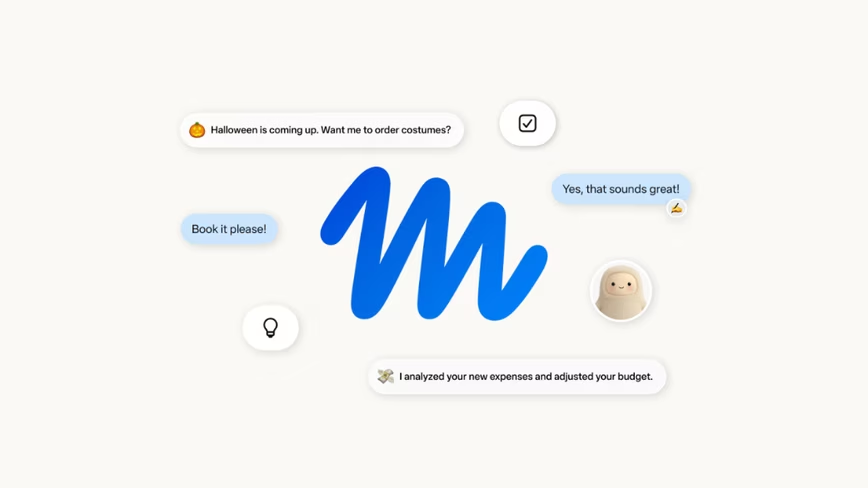
Meta为其个人AI智能体Muse新增了实时语音对话功能,用户可以直接与它交谈,而无需打字。此次更新还为Muse配备了一个动画头像,会随着对话的进行做出反应。
Meta has added live voice conversations to Muse, its personal AI agent, so users can talk to it instead of typing. The update also gives Muse an animated avatar that reacts as the conversation goes on.
该功能目前已在手机、网页和Mac端的Muse应用中上线,但暂时仅限美国用户使用。用户点击应用右上角的电话图标即可发起通话。
The feature is available now in the Muse app on phones, the web and Mac, but only in the US for the moment. Users start a call by tapping the phone icon in the top-right corner of the app.
通话过程中,用户可以随时打断Muse,它会立即作答。Muse还能在对话继续进行的同时在后台处理任务,例如在用户外出散步时。
During a call, users can interrupt Muse at any point, and it answers straight away. Muse can also keep working on tasks in the background while the conversation continues, for example, while the user is out on a walk.
除了语音之外,头像还会展现与对话语气相符的面部表情和手势。它还会在用户仍在说话时做出反应。
Alongside the voice, the avatar shows facial expressions and gestures that match the tone of the conversation. It also reacts while the user is still speaking.
用户可以选择看到多少内容。他们可以仅使用语音交谈,将头像保留在对话旁边,或将其全屏打开。此外还有数百种具有不同个性的声音,用户可以随时切换。
Users can choose how much of it they see. They can talk with voice only, keep the avatar next to the conversation, or open it full screen. There are also hundreds of voices with different personalities, and users can switch between them at any time.
在Connect大会上,Meta还表示用户将能够通过描述来塑造声音,例如要求不同的语速或口音。
At Connect, Meta also said users would be able to shape a voice by describing it, for example by asking for a different speed or accent.
Meta建议用户利用该功能进行头脑风暴、规划旅行,或为求职面试或演讲做练习。
Meta suggests using the feature to brainstorm ideas, plan a trip or practise for a job interview or a presentation.
这些头像运行于Muse Realtime Avatar,这是由Meta Superintelligence Labs(该公司的主要AI部门)构建的模型。Meta在9月的Connect大会上首次展示了这项技术。
The avatars run on Muse Realtime Avatar, a model built by Meta Superintelligence Labs, the company’s main AI unit. Meta first showed the technology at its Connect conference in September.
Meta表示,在Meta自家评分人员进行的测试中,人们对其头像的偏好超过了竞争对手Runway和HeyGen的头像。不过,Meta也表示,并非其所有演示都反映了应用中实际可用的头像。
In tests run by Meta’s own raters, people preferred its avatars to those of rivals Runway and HeyGen, the company said. However, Meta has also said that not all of its demonstrations reflect the avatars available in the app.
Muse本身于9月推出,是Meta对ChatGPT等AI智能体的回应。它运行于Meta在4月推出的Muse Spark系列模型,目前已能在零售商处购物、发送电子邮件,并控制Mac上的应用。
Muse itself launched in September as Meta’s answer to AI agents such as ChatGPT. It runs on the Muse Spark family of models, which Meta introduced in April, and it can already shop with retailers, send emails, and control apps on a Mac.
此次发布是Meta在人工智能领域大举投入的一部分,其中包括位于路易斯安那州的Hyperion数据中心。
The launch is part of Meta’s heavy spending on AI, which includes its Hyperion data centre in Louisiana.
接下来,Meta的人工智能眼镜以及Muse Charm将支持语音对话。Muse Charm是该公司在Connect大会上展示的一款小型夹扣式设备。Meta尚未公布这两者的具体日期。
Voice conversations will come next to Meta’s AI glasses and to Muse Charm, a small clip-on device the company showed at Connect. Meta has not yet given a date for either.