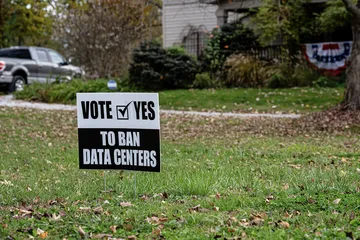
新当选的一批民主党州长在竞选时打出了对人工智能发展踩刹车的旗号。
A new crop of Democratic governors-elect campaigned on putting the brakes on artificial intelligence development.
凯尔·斯托克(Kyle Stock)与米凯拉·V·桑顿(Miquéla V Thornton)报道:反对数据中心的呼声一直在全国各地不断积聚,一次是一个暂停令,或者是被阻止的一个项目。随后,几乎在一夜之间,中期选举使广阔的监管版图转向了反对人工智能基础设施建设的一方。
By Kyle Stock and Miquéla V Thornton Data center opposition had been building across the country, one moratorium or blocked project at a time. Then, virtually overnight, the midterm election tilted a broad swath of the regulatory map against the AI buildout.
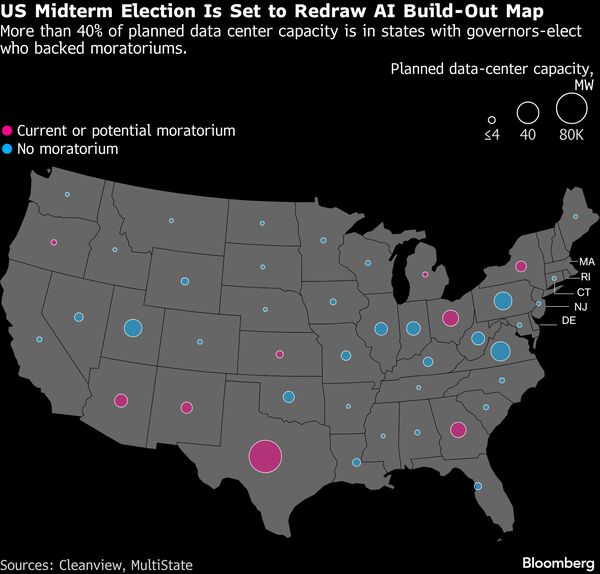
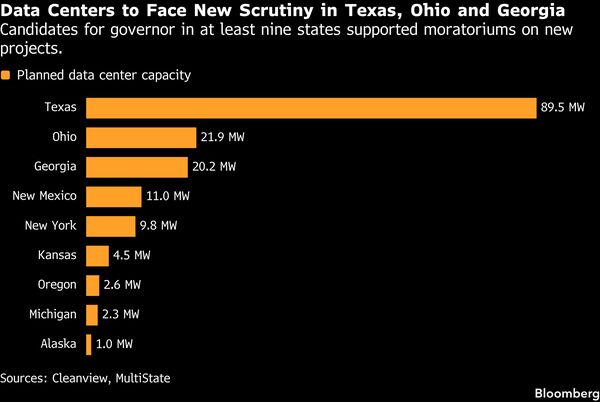
俄亥俄州、佐治亚州、密歇根州、新墨西哥州和得克萨斯州新当选的州长在竞选时承诺停止——或至少暂停——全州的数据中心建设,而纽约州和俄勒冈州的当选州长则承诺延长已经实施的暂停期。呼吁对数据中心实施暂停令的州长候选人在阿拉斯加州和堪萨斯州也处于领先地位,尽管这两场竞选尚未分出胜负。
Newly elected governors in Ohio, Georgia, Michigan, New Mexico and Texas campaigned on a promise to stop — or at least pause — data center construction statewide, while those in New York and Oregon pledged to prolong pauses already in place. Gubernatorial candidates calling for a moratorium on data centers also lead in Alaska and Kansas, though those races have not been called.
市场情报公司Cleanview的数据显示,总体而言,美国约40%的待建数据中心容量计划在那些新当选州长已承诺停止或暂停此类建设的州内进行。彭博经济研究(Bloomberg Economics)的数据显示,这还不包括已获批或有望通过的46项地方投票法案,这些法案同样会阻碍开发进程;其中至少有17项是针对大型数据中心的彻底禁令。
All told, about 40% of pending data center capacity in the US is planned to be built in states where newly elected governors have promised to stop or pause such construction, according to data from Cleanview, a market intelligence company. That’s on top of 46 local ballot measures approved or on track to pass that also stall development, according to Bloomberg Economics; at least 17 of those are outright bans on large-scale data centers.
彭博行业研究(Bloomberg Intelligence)政策分析师贾斯廷·特雷西(Justin Teresi)表示:“如果你是一名数据中心开发商,这显然不是一个很好的夜晚。”
“It was obviously not a very good night if you’re a data center developer,” said Justin Teresi, a Bloomberg Intelligence policy analyst.
这些政治胜利凸显了选民对处理ChatGPT和Claude查询的大型工业仓库的强烈抵制。这些潜在的暂停令威胁到了许多科技巨头的开发计划,这些科技巨头正竭力建造更多的计算能力。
The political victories underscore the growing voter backlash against the massive industrial warehouses crunching ChatGPT and Claude queries. The potential moratoriums threaten development plans for a host of tech giants frantically trying to build more of that computing capacity.
投资者为余波做好了准备。由于预期监管将收紧,科技股于周四暴跌,标准普尔500指数跌幅超过4%,以科技股为主的纳斯达克100指数下跌6.4%,蒸发了2.3万亿美元的市值。
Investors braced for the fallout. Tech stocks plummeted Thursday in expectation of tighter regulation, with the S&P 500 Index dropping more than 4% and the technology-centric Nasdaq 100 falling 6.4%, erasing $2.3 trillion in market value.
自OpenAI于2022年公开发布ChatGPT以来,科技股一直助推着美国股市的牛市,在截至周三收盘的四年期间里,标普500指数的涨幅超过了一倍。科技目前占该基准指数市值的一半以上。
Since 2022, when OpenAI publicly released ChatGPT, technology stocks have fueled a bull run in US equities, with the S&P 500 more than doubling in the four-year period through Wednesday’s close. Technology now accounts for more than half the value of the benchmark index.
随着投资者和出借方对大量借贷以及涌入这场热潮的数千亿美元变得谨慎,选举结果正给人工智能数据中心开发商及其客户本已面临的压力火上浇油。
The election results are adding to the pressure AI data center developers and their customers were already facing as investors and lenders grow wary of the heavy borrowing and the hundreds of billions of dollars being poured into the boom.
与此同时,据研究集团“数据中心观察”(Data Center Watch)称,到2026年第二季度,地方反对活动已经阻碍了至少45个项目。
Local opposition efforts, meanwhile, had already hampered at least 45 projects in the second quarter of 2026, according to Data Center Watch, a research group.
尽管对数据中心的监管已成为一个日益受到两党关注的问题,但本周的“蓝色浪潮”选举意味着,许多关于人工智能的严厉竞选言论可能会体现在各州的政策中。彭博新能源财经(BloombergNEF)的一份新报告显示,民主党目前控制着美国一些数据中心集中地(包括弗吉尼亚州、宾夕法尼亚州和亚利桑那州)的州政府关键部门,并可能会推行导致建设停滞的公用事业和许可政策。
Though data center oversight has become an increasingly bipartisan issue, this week’s blue wave election means much of the tough campaign talk on AI might be reflected in state policy. Democrats now control key branches of state government in some of the country’s data center hotbeds, including Virginia, Pennsylvania and Arizona, and are likely to pursue utility and permitting policies that stall construction, according to a new report from BloombergNEF.
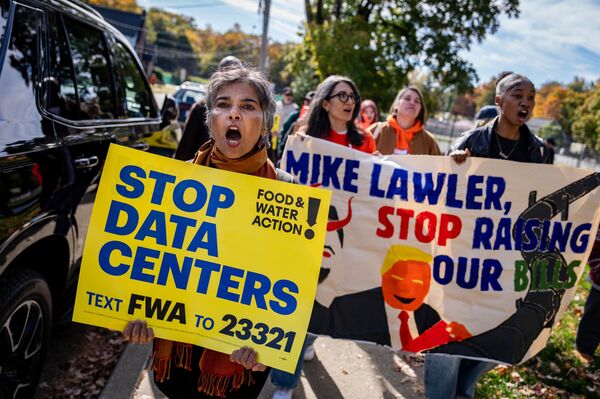
行业联盟“数据中心联盟”(Data Center Coalition)负责州政策和政府事务的执行副总裁丹·迪奥里奥(Dan Diorio)表示,禁止数据中心的社区面临着投资、就业和税收转移到别处的风险。
Dan Diorio, executive vice president of state policy and government affairs for the Data Center Coalition, an industry alliance, said communities that prohibit data centers risk seeing investment, jobs and tax revenue move elsewhere.
“这些资金将流向那些没有把自己封闭起来的其他社区,”迪奥里奥说,“或者流向那些没有把自己封闭起来的州。”作为回应,超大规模数据中心(即最大的云计算服务提供商)预计将全面调整和转移开发计划。彭博行业研究(Bloomberg Intelligence)科技分析师曼迪普·辛格(Mandeep Singh)表示,周二的选举结果可能会使科技公司预计在2027年用于人工智能基础设施的1.4万亿美元支出缩减约5%至7%。这包括对芯片、网络设备、土地以及用于数据中心建设的其他材料的支出。
“That’s going to go to other communities that have not shut themselves off,” Diorio said, “or to states that have not shut themselves off.”Hyperscalers, the largest cloud-computing providers, are expected to overhaul and shift development plans in response. Tuesday’s results stand to shrink the $1.4 trillion that technology companies were expected to spend on AI infrastructure by roughly 5% to 7% in 2027, according to Bloomberg Intelligence technology analyst Mandeep Singh. That includes spending on chips, networking equipment, land and other materials for data center construction.
辛格表示,这些削减以及预期的审批放缓可能会导致高达10吉瓦的数据中心产能无法像原计划那样在明年上线。
Those cuts and the anticipated slowdown in approvals may translate into as many as 10 gigawatts of data center capacity failing to come online next year as planned, Singh said.
彭博行业研究的另一位分析师特雷西说:“我们讨论的问题已经从谁会通过暂停令,变成了现在我到底能在哪里建设这种设施?”
“We’ve gone from the question of who is going to pass a moratorium to where can I even construct one of these things now?”Teresi, also with Bloomberg Intelligence, said.
GLJ Research的戈登·约翰逊周二晚间在一份报告中表示,那些尚未备齐电力和环境许可的得克萨斯州数据中心项目“可能会转向路易斯安那州、俄克拉荷马州,或者无处可去”。从政治角度来看,候选人关于冻结人工智能建设的承诺似乎是不需要动脑筋的事。根据昆尼皮亚克大学9月的一项民意调查,近四分之三的美国人现在反对在其社区建设数据中心,高于3月份的大约三分之二。俄亥俄北方大学10月的一项民意调查发现,该州57%的受访者将对全面禁止大型数据中心的提案投“赞成”票。
Gordon Johnson of GLJ Research said in a note late Tuesday that Texas data center projects that don’t already have electricity and environmental permits lined up will “probably go to Louisiana, Oklahoma or nowhere.”From a political perspective, candidate promises to freeze the AI build-out appeared to be a no-brainer. Nearly three in four Americans now oppose a data center in their community, up from about two-thirds in March, according to a September Quinnipiac poll. An October poll from Ohio Northern University found that 57% of respondents in the state would vote “yes” on a total ban on large-scale data centers.
全国旨在限制数据中心建设的46项选票议案中,近一半在俄亥俄州,且几乎全部轻松通过。其中一些否决了特定项目,例如EdgeConneX公司位于阿什维尔的综合设施,或者要求提供财务担保,而另一些则对数据中心的水电使用设定了限制;大约有11个俄亥俄州城镇通过了全面或接近全面禁令。
Nearly half of the country’s 46 ballot measures to restrict data center construction were in Ohio and nearly all of them passed easily. Some rejected specific projects, such as EdgeConneX’s complex in Ashville, or required financial guarantees, while others set limits on data center power and water use; some 11 Ohio towns passed total or near-bans.
辛辛那提大学的政治学家大卫·尼文表示,该州一直是数据中心建设的“狂野西部”。得益于相对便宜的土地以及持续数十年的销售税豁免,俄亥俄州已经拥有大约200个数据中心,位居全美第五。
The state has been “the Wild West” of data center construction, said David Niven, a political scientist at the University of Cincinnati. Thanks to relatively cheap land and sales tax exemptions extending for decades, Ohio already has about 200 data centers, the fifth-most in the country.
尼文说:“这种强烈反弹的实际后果在最近几个月才真正显现出来。数据中心在俄亥俄州选民普遍不满的情绪中起到了关键作用。”克利夫兰凯斯西储大学能源公共政策专家约书亚·巴谢奇(Joshua Basseches)表示,地方投票提案将比任何州长采取的行动产生更直接、更迅速的影响,因为城市和乡镇掌控着分区规划和房产税。
“The practical consequences of the backlash really only took off within the last few months,” said Niven. “Data centers played a key part in the sort of general dissatisfaction that Ohio voters felt.”Local ballot measures will have a more direct and immediate effect than any gubernatorial action, as cities and townships control zoning and property taxes, said Joshua Basseches, an energy public policy expert at Case Western Reserve University in Cleveland.
尽管如此,一旦俄亥俄州当选州长埃米·阿克顿(Amy Acton)于1月就职,她就可以发布行政命令,暂停州内的数据中心审批,或者通过她对关键州级机构(如公共公用事业委员会)的任命,加强对数据中心运营的审查。在选举前,阿克顿的竞选口号是:“俄亥俄州欢迎商业,但我们绝不出售。”至于更具长久性的变革,比如延长其前任推出的临时税收抵免冻结期,则需要立法机构的支持。
Still, once Ohio Governor-elect Amy Acton takes office in January, she can issue executive orders halting state data center permitting, or dial up scrutiny over their operations through her appointments to key state agencies, such as the public utilities commission. Ahead of the election, Acton’s stump mantra was: “Ohio is open for business, but we are not up for sale.”More permanent changes, such as extending the temporary tax credit freeze rolled out by her predecessor, would require legislative buy-in.
即使各州没有强行实施暂停令或禁令,考虑到州和地方对许多土地使用决策拥有管控制权,对于超大规模数据中心而言,其发展环境正变得日益充满敌意。
Even if states don’t impose outright moratoriums or bans, the landscape for hyperscalers looks increasingly hostile given state and local power over many land-use decisions.

品浩(PIMCO)公共政策主管莉比·坎特里尔(Libby Cantrill)表示:“无论如何,我们预计人工智能建设的阻力会大大增加——获取许可证和其他批准所需的时间会更长,数据中心开发商也不得不作出更多妥协。”
“We expect to see a lot more sand in the gears of the AI build-out regardless — with more time required to secure permits and other approvals, as well as more concessions that data center developers will have to make,” said Libby Cantrill, PIMCO’s head of public policy.
艾奥瓦州和内华达州的新任州长已承诺停止发放人工智能税收减免。佛罗里达州下一任州长拜伦·唐纳兹(Byron Donalds)则承诺推出一项法案,要求数据中心自行提供电力,而不是接入电网。
Incoming governors in Iowa and Nevada pledged to stop AI tax breaks. Byron Donalds, the next governor of Florida, has promised a measure that would require data centers to source their own electricity, rather than plugging into the grid.
曾在近期选举的最后阶段,那些曾大力支持人工智能扩张的政治人物转而采取了更为批判的立场。阿克顿在俄亥俄州的竞选对手、共和党人维韦克·拉马斯瓦米(Vivek Ramaswamy)曾提出一项计划,要求数据中心为附近居民提供免费电力。
Politicians who once championed the artificial intelligence expansion veered to more critical stances in the final stretch of the recent election. Republican Vivek Ramaswamy, Acton’s challenger in Ohio, floated a plan that would require data centers to provide free electricity for nearby residents.
州级和地方政府咨询公司MultiState副总裁摩根·斯卡伯罗(Morgan Scarboro)表示:“如果一位州长候选人采取了更进一步的举措,另一位就会效仿。这是一个很难仅凭引言就看出是哪个党派在发言的问题。”商业咨询公司艾斯纳安珀(EisnerAmper)的律师莎拉·阿德金森(Sarah Adkisson)表示,政府可能会转向“先证明、后获得”的模式,即在开发商兑现就业、投资或收入承诺后再授予税收减免。
“If one gubernatorial candidate went further, the other would follow,” said Morgan Scarboro, vice president at MultiState, a state and local government consulting firm. “This is an issue where it’s very difficult to just look at a quote and know which party is speaking.”Sarah Adkisson, an attorney at business advisory firm EisnerAmper, said governments may shift toward a “prove it first, then you get” model, awarding tax breaks after developers deliver on jobs, investment or revenue.
甚至在选举之前,科技公司就已经在制定策略,以改善它们希望建设项目的社区中的关系。例如,OpenAI周四表示,将在谈判数据中心交易时避免使用保密协议,并确保居民不用为这些项目所需的电力支付费用。
Even before the election, tech companies were already coming up with strategies to improve relations in the communities where they wanted to build. OpenAI, for example, said Thursday it will avoid nondisclosure agreements when it negotiates data center deals and ensure residents don’t pay for the electricity to power those projects.