得克萨斯州州长选举爆出惊人冷门,民主党在全国范围内大获全胜,这威胁着要遏制美国历史上规模最大的支出热潮。这可能会扰乱美国经济的一个关键增长引擎。
A stunning upset in the Texas governor race and sweeping Democratic victories across the country threaten to curtail the biggest-ever spending boom in US history. That could disrupt a key growth engine for America’s economy.
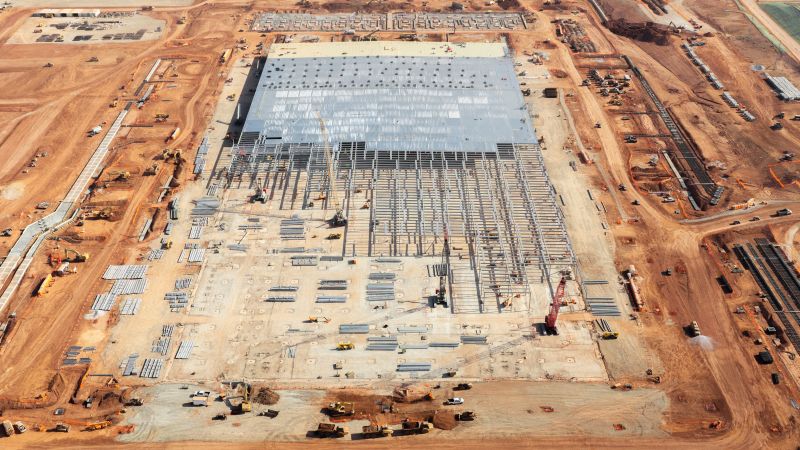
据高盛测算,到明年1月,由支持扩大或延长人工智能建设暂停令的民主党人掌控的州,将占美国规划数据中心产能的45%。仅得克萨斯州一地,就将承担美国规划中人工智能基础设施建设的四分之一。
Come January, states controlled by Democrats who support expanding or extending AI construction moratoriums will account for 45% of America’s planned data center capacity, according to Goldman Sachs. A quarter of America’s planned AI infrastructure buildout is set to take place in Texas alone.
这并不意味着美国一半的规划数据中心将按下暂停键。人工智能需求极其旺盛。唐纳德·特朗普依然是总统,他已在挥舞否决权的“大帽子”。即便民主党州长想阻止每一个数据中心的建设,也无力做到。
That doesn’t mean half of America’s planned data centers are on hold. Demand for AI is off the charts. Donald Trump is still president, and he’s already waving around his veto hat. And Democratic governors couldn’t stop every data center from being constructed even if they wanted to.
但周二的选举仍代表了一场范式转移,可能改变美国持续不断的人工智能支出狂潮的步伐与路径——据荷兰国际集团(ING)经济学家测算,这一投资热潮今年占美国经济总增长的比重高达四分之一。
But Tuesday’s election nevertheless represents a paradigm shift that could alter the pace and path of America’s nonstop AI spending spree – an investment boom that has, according to ING economists, accounted for as much as a quarter of total US economic growth this year.
这些经济红利已成现实,支撑了成千上万个就业岗位。人工智能有潜力彻底改变我们的工作方式。
Those economic benefits are already real, supporting thousands of jobs. And AI has the potential to revolutionize the way we work.
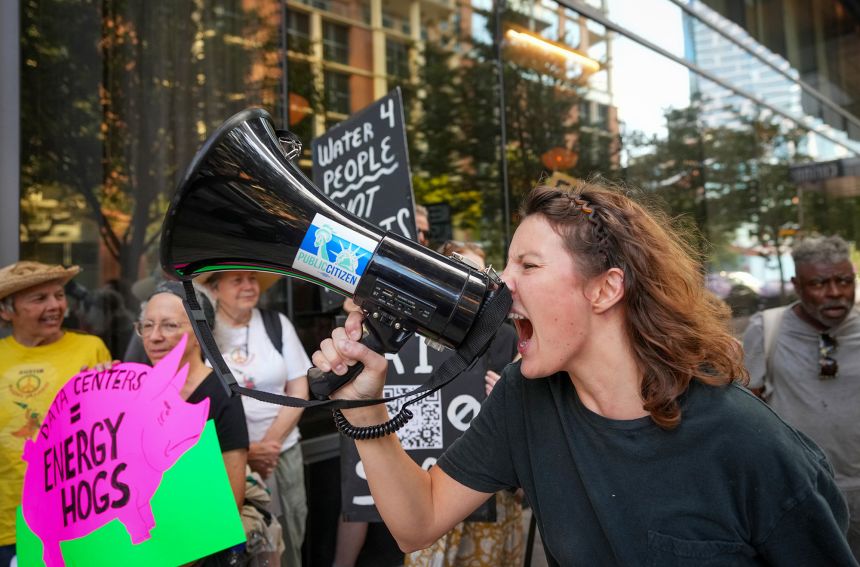
但人工智能数据中心放缓建设也可能带来重要的积极因素。它能遏制导致通胀反弹、并引发公众对该技术及其承载数据中心普遍反感的无序增长。它还能遏制一些在华尔街引发严重质疑的商业模式。
But an AI data center slowdown could come with important silver linings. It could rein in unfettered growth that has contributed to rebounding inflation and led to widespread public antipathy toward the technology and the data centers that house it. It could also curtail some questionable business models that have raised serious skepticism on Wall Street.
踩下刹车,最终可能让人工智能——以及美国经济——走上一条更可持续的道路。
Tapping the brakes could ultimately put AI – and the US economy – on a more sustainable path.
据哥伦比亚商学院经济学家斯泰因·范·尼韦尔堡预测,在可预见的未来,人工智能基础设施支出预计将每年接近1万亿美元。作为美国国内生产总值的百分比,这将超过现代美国历史上所有其他投资热潮——包括铁路建设。
AI infrastructure spending is expected to approach $1 trillion a year, every year, for the foreseeable future, according to Columbia Business School economist Stijn Van Nieuwerburgh. As a percentage of America’s gross domestic product, that would outpace every other investment boom in modern US history – including the construction of the railroads.
周二选举的结果可能会放缓这一支出,对人工智能所支撑的数以千计的就业岗位和巨额经济发展产生深远影响。
The outcome of Tuesday’s elections could slow that spending, with vast consequences for the thousands of jobs and massive amounts of economic development that AI supports.
民主党在内华达州、佐治亚州、俄亥俄州和得克萨斯州赢得了州长席位,这些州的候选人以收紧数据中心监管为竞选纲领。当选州长提出的建议包括取消税收优惠、收紧气候和用电限制,以及允许地方政府自行实施数据中心建设暂停令。
Democrats gained gubernatorial seats in Nevada, Georgia, Ohio and Texas, where candidates campaigned on tightening data center regulations. Proposals from the governors-elect include ending tax breaks, tightening climate and electricity restrictions and allowing local governments to impose their own moratoriums on data center construction.
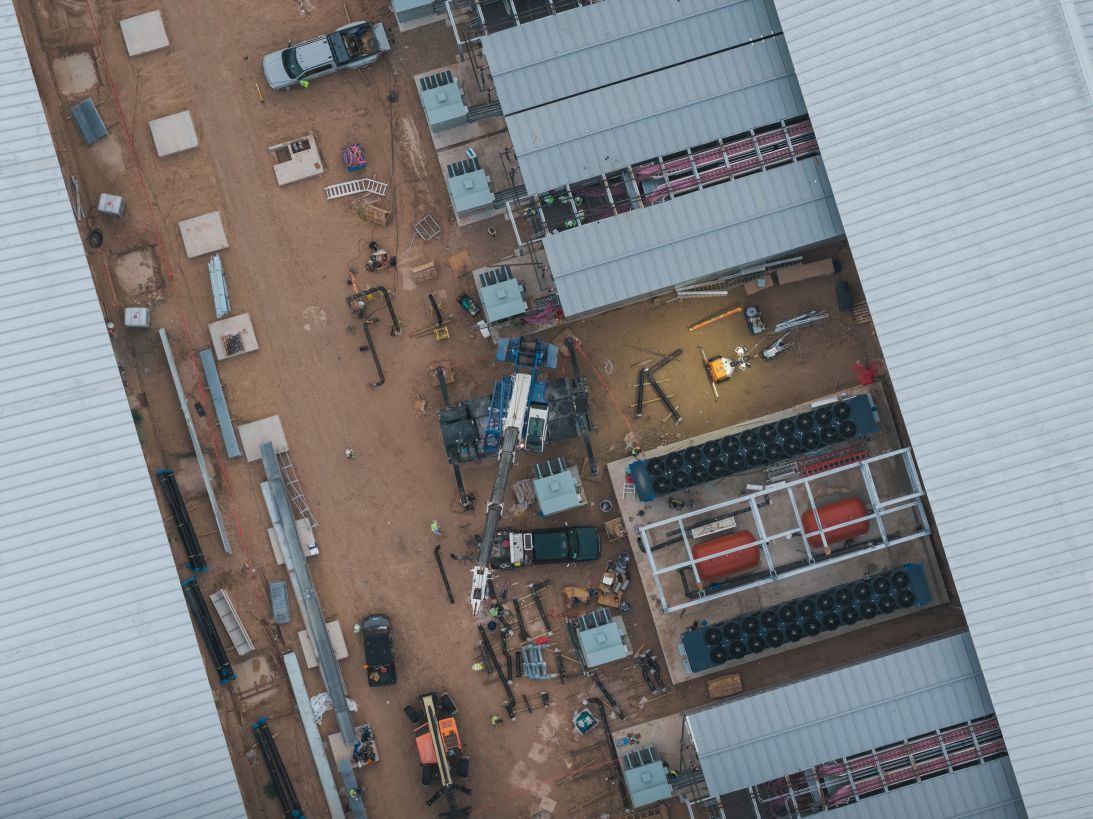
但得克萨斯州才是关键所在。富国银行估计,得克萨斯州规划数据中心产能每削减10%,大型科技公司就会将其人工智能基础设施支出削减惊人的1.6%(当支出以万亿美元计量时,这是一笔巨款)。
But Texas is the big kahuna. Wells Fargo estimates that for every 10% reduction in planned Texas data center capacity, Big Tech companies will reduce their AI infrastructure spending by a stunning 1.6% (a lot of money when you’re measuring spending in the trillions of dollars).
科利律师事务所基础设施、能源和房地产业务联合负责人莫娜·达贾尼表示,州和地方政客对这笔支出拥有很大的管辖权和影响力:足以改变某些项目是否获得融资。
State and local politicians have a lot of jurisdiction and sway over that spending: enough to change whether some projects get financed, said Mona Dajani, co-chair of Cooley’s infrastructure, energy and real estate practice.
达贾尼指出,数百个仍在等待许可、公用事业服务或税收激励的数据中心开发项目可能特别容易受到冲击。但即使是正在进行的建设项目也可能受到威胁。得克萨斯州法律为部分项目的许可提供了“祖父条款”保护,使其免受未来地方许可要求变更的影响——但这无法解决州级许可变更或当选州长吉娜·伊诺霍萨可能撤销的电力服务担保问题。
Hundreds of data center developments that are still awaiting permits, utility service or tax incentives could be particularly exposed, Dajani noted. But even active construction projects could be threatened. Texas law grandfathers in some projects’ permits, protecting them from future changes to local permitting requirements – but that doesn’t resolve state permitting changes or electrical service guarantees that Governor-elect Gina Hinojosa could vacate.

等待批准可能会给AI公司带来显著的成本增加,Dajani表示:利息、设备承诺和公用事业费用都将继续累积,即使项目处于搁置状态。在某个时候,现有项目可能不再具有财务可行性。
The wait for approvals could add significant costs for AI companies, Dajani said: Interest, equipment commitments and utility expenses will all continue to accrue, even while a project is on ice. At some point, existing projects could stop being financially viable.
如果发生这种情况,AI公司——它们已经竭力建设数据中心以满足预期需求——可能无法实现其爆发式的支出目标。
If that happens, AI companies – who have already strained to build out data centers fast enough to meet their anticipated demand – may not be able to meet their explosive spending targets.
卡内基梅隆大学战略与技术研究所研究主任Harry Krejsa表示:“这是一个州和地方领导人拥有地缘政治级别影响力的罕见案例。”
“This is a rare case where state and local leaders have influence of geopolitical-level import,” said Harry Krejsa, director of studies at the Carnegie Mellon Institute for Strategy & Technology.
数据中心并非民主党独有的议题:美国人在为数据中心建设设置护栏方面表现出了两党共识。
Data centers aren’t exclusively a Democratic issue: Americans have displayed bipartisan consensus for putting guardrails around data center buildouts.
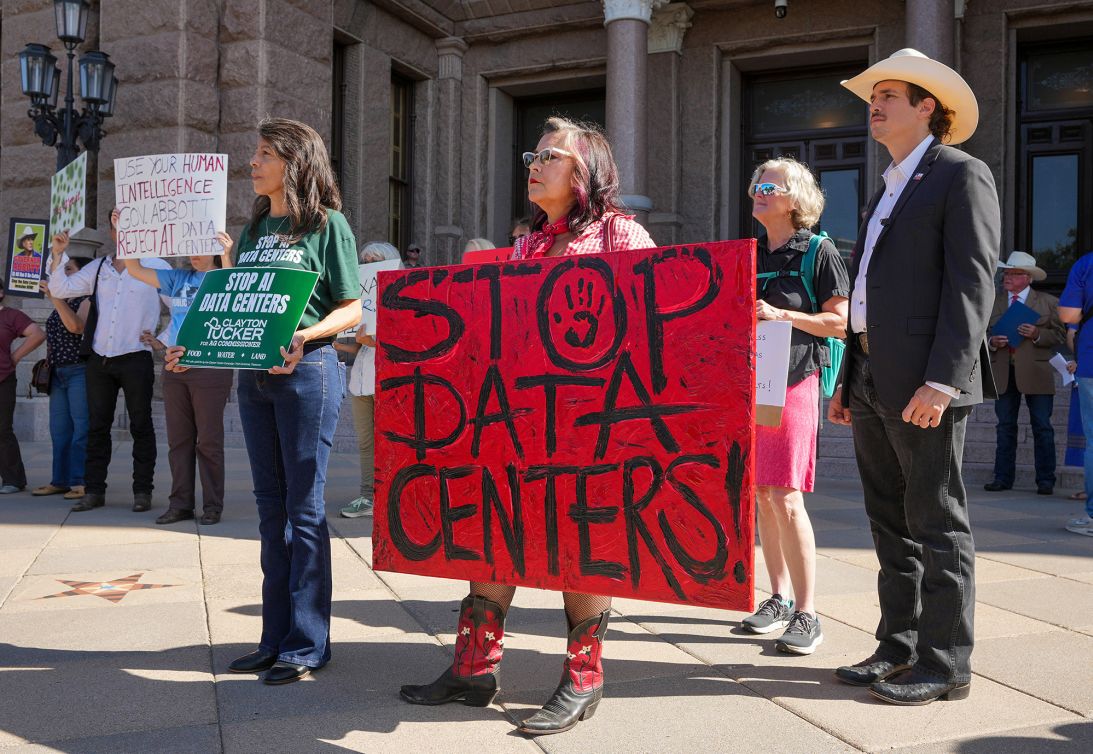
得克萨斯州共和党州长Greg Abbott已经实施了数据中心暂停令,Hinojosa竞选时主张将其延长,直到立法者制定更强有力的AI法规。
Texas Republican Governor Greg Abbott had already imposed a data center moratorium that Hinojosa campaigned on extending until lawmakers establish stronger AI regulations.
但Trump曾猛烈抨击任何阻碍AI增长和支出的尝试,理由是经济和国家安全——特别是在与中国的高风险竞赛中。许多原本可能支持AI法规(包括数据中心建设框架)的共和党政客保持了沉默。尽管如此,有迹象表明AI建设热潮可能处于不可持续的路径上。
But Trump had railed against any attempts to stymie AI’s growth and spending, citing economic and national security – particularly in the high-stakes race against China. Many Republican politicians who may have otherwise supported AI regulations, including frameworks for data center construction, remained silent. Still, there’s evidence that the AI buildout could be on an unsustainable path.
根据斯坦福大学《AI指数报告》,截至去年底,美国拥有5,427个数据中心;据数据中心研究公司Aterio统计,AI公司已宣布在美国新建3,969个数据中心的计划。但只有约800个正在建设中,AI专家对许多已宣布项目的可行性提出了质疑。
The United States had 5,427 data centers at the end of last year, according to Stanford University’s AI Index Report, and AI companies have announced plans for 3,969 new US data centers, according to Aterio, a data center research company. But only about 800 are under construction, and AI experts have raised doubts about the viability of many of the announced projects.
如果周二的选举结果引发投资放缓,那可能会削减该行业的一些冗余。
If Tuesday’s election results trigger an investment slowdown, that could trim some of the industry’s fat.
CoreWeave 是一家出租算力的“新云”企业,近期预计将出现大幅亏损,导致其债券收益率飙升至 15% —— 进入了危险区域。这尤其令人担忧,因为其预期投资回报率仅为 9% 左右。
Example A: CoreWeave, a neocloud business that rents out computing capacity, recently projected such extensive losses that its bond yields surged to 15% – the danger zone. That was particularly troubling, because its expected return on investment was only around 9%.
换句话说,CoreWeave 在扩建数据中心产能的每一美元支出上都在亏钱。
In other words, CoreWeave loses money on every single dollar it spends on expanding its data center capacity.
资金雄厚的超大规模云服务商 —— 亚马逊、谷歌、Meta 和微软 —— 没有这个问题。但近几周它们的股价遭遇重挫,因为投资者对它们被视为不可持续的巨额支出失去耐心,这些支出可能要数年才能带来利润。
Deep-pocketed hyperscalers – Amazon, Google, Meta and Microsoft – don’t have that problem. But their stocks have been slammed in recent weeks as investors grow impatient with what they view as an unsustainable amount of spending that may not return profits for years.
RSM US 首席经济学家乔·布鲁塞拉斯表示:“AI 在这里得到了喘息。”
“AI is catching a break here,” said Joe Brusuelas, chief economist at RSM US.
布鲁塞拉斯预计,如果 AI 放缓,经济增速将从上一季度的 3.4% 降至 2.4% 左右。这仍属于稳健的长期增长。美国经济规模巨大且多元化,原本流向数据中心的投资可以转向其他领域。布鲁塞拉斯说:“增速在放缓,但并不意味着我们将陷入衰退。”
Brusuelas expects growth to slow from last quarter’s 3.4% pace to something closer to 2.4% if there is an AI slowdown. That’s still solid long-term growth. And America’s economy is massive and diverse. Investment that otherwise would have gone to data centers can go elsewhere. “It’s slowing, but it doesn’t mean we’re going to have a recession,” Brusuelas said.
这也为 AI 企业提供了一个契机,让它们在未来的 AI 数据中心部署上更加审慎,并走上更可持续的轨道。
It also presents an opportunity for AI companies to get smart about their future AI data center rollouts – and get put on a more sustainable course.
对数据中心建设的盲目扩张导致大量资金在不可行的项目中打了水漂 —— 这是抢占先机、争当最大的激烈竞争造成的附带损害。据风险顾问公司 Marsh 全球数字基础设施业务负责人迈克·马修斯称,数据中心项目已面临 2000 亿美元的延期。
The helter-skelter approach to data center construction has resulted in significant amounts of money getting flushed down the toilet in unworkable projects – collateral damage from massive competition to be first and biggest. Data centers already face $200 billion in project delays, according to Mike Mathews, global digital infrastructure practice leader at risk adviser Marsh.
一种更理性、更顾及政治敏感性的做法,能为承接数据中心的社区和 AI 企业自身创造更长远的利益。
A more rational, politically sensitive approach could create longer-term benefits for the communities that host the data centers and for the AI companies themselves.
这有先例可循。在上一个十年里,谷歌等公司为云计算革命建设数据中心,宣称将以可再生能源实现可持续建设——甚至在这样做尚不具备成本效益时便已如此承诺。类似的、基于社区的模式能为 AI 公司提供所需算力,并赋予其长期运营数据中心所需的政治与社会许可。
There’s precedent for that. In the previous decade, the Googles of the world built out data centers for the cloud computing revolution, promoting the fact that they’d be built sustainably with renewable energy – even before it was cost-effective to do that. A similar, community-based approach could provide AI companies with the compute they need and give them the political and social license to operate their data centers for the long haul.
“俗话说:想走得快,就独自前行;想走得远,就结伴同行,”克雷萨说。“如果在国内挥霍了经营的政治许可,那将成为保持与中国竞争力的更大障碍。”
“Like the saying goes: If you want to go fast, you go it alone; if you want to go far you go together,” said Krejsa. “If you squander political license to operate at home, that’ll be a bigger impediment to remaining competitive with China.”