东京——在华尔街隔夜发生科技股抛售潮后,亚洲与人工智能热潮相关的股市于周五暴跌,原因是投资者在民主党在美国中期选举中取得全面胜利后,担心数据中心建设可能会出现延误。
TOKYO -- Asian stock markets tied to the artificial intelligence boom plummeted on Friday following a tech sell-off on Wall Street overnight, as investors fretted about possible delays in the construction of data centers following a sweeping Democratic victory in the U.S. midterm elections.
在台湾,基准加权指数在开盘几分钟内创纪录地暴跌了3,737.67点,盘中触及37,837.05点的低点。据台湾官方通讯社报道,这是有记录以来最大的盘中点数跌幅。加权指数随后收窄了部分跌幅,收盘下跌4.5%,报39,701.64点,创下4月底以来的最低点。
In Taiwan, the benchmark Taiex plunged a record 3,737.67 points within minutes of the market opening, hitting an intraday low of 37,837.05. According to Taiwan's official news agency, it was the largest intraday point decline on record. The Taiex trimmed some of its losses to close down 4.5% at 39,701.64, its lowest point since the end of April.
对该指数影响巨大的台湾积体电路制造股份有限公司股价下跌近5%。
Shares in Taiwan Semiconductor Manufacturing Co., which heavily influences the index, fell nearly 5%.
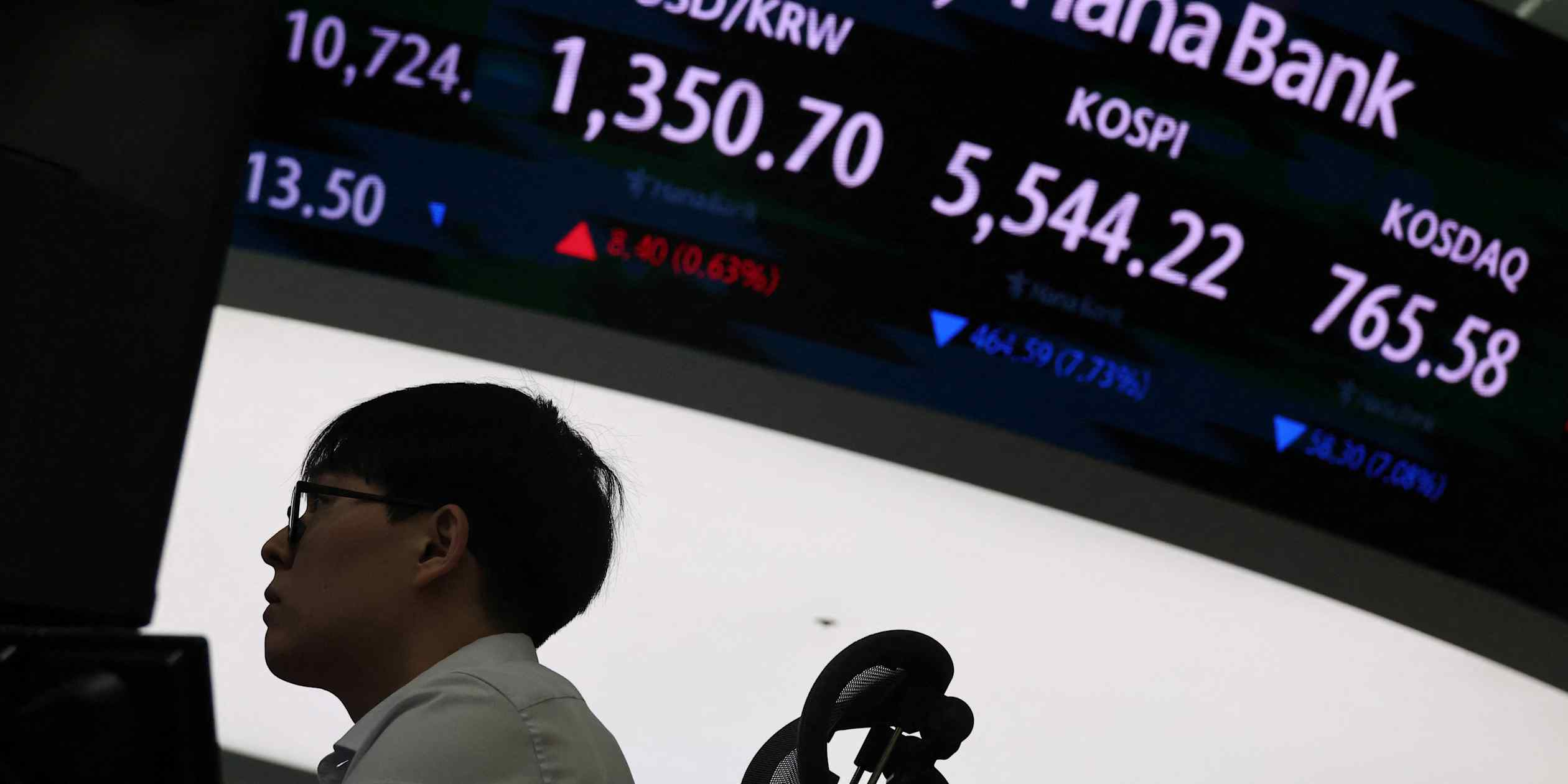
台湾股市的暴跌与其邻近地区保持一致。在韩国,综合股价指数(KOSPI)一度下跌8.7%,随后收盘下跌6%,创下3月底以来的最低点。权重股SK海力士和三星电子分别暴跌10%和6%。韩国交易所上午盘中触发了熔断机制,以冷却抛售情绪。
Taiwan's share plunge tracked those of its neighbors. In South Korea, the KOSPI fell 8.7% at one point before closing down 6%, its lowest point since end of March. Index heavyweights SK Hynix and Samsung Electronics skidded 10% and 6%, respectively. The Korea Exchange imposed a circuit breaker during morning trading to cool off the selling.
受期货下跌拖累,日本股市下挫。基准日经平均指数一度暴跌超过4,300点,跌幅达7.1%,自5月中旬以来首次跌破6万点大关。该指标收盘创下近七个月来的最低水平,下跌3,643.13点,跌幅6%,报57,434.77点。该指数创下了有史以来第三大点数跌幅。东证股价指数也大跌6%。
Led by a decline in futures, Japanese stocks tumbled. The benchmark Nikkei Stock Average briefly dropped over 4,300 points, or 7.1%, to below the 60,000 threshold for the first time since mid-May. The gauge ended the day at its lowest level in nearly seven months, falling 3,643.13 points, or 6%, to 57,434.77. The index logged its third biggest point drop ever. The broader Tokyo Stock Price Index also tumbled 6%.
跌幅领头羊为铠侠控股、软银集团和爱德万测试等主要人工智能相关股票。显示未来预期波动率的日经平均波动率指数一度触及48,创下七个多月来的最高水平。
The falls were led by major AI-related stocks such as Kioxia Holdings, SoftBank Group and Advantest. The Nikkei Stock Average Volatility Index, which indicates the expected future volatility, briefly reached 48, its highest in over seven months.
在周二的中期选举中,民主党赢得了参议院和众议院的多数席位,反对数据中心的人士成为了最大的胜利者之一。
In Tuesday's midterm elections, the Democrats won a majority in both the Senate and House of Representatives, with opponents of data centers among the biggest victors.
民主党还在得克萨斯州和佐治亚州等规划了众多数据中心项目的州赢得了多场州长选举。这加剧了人们对更严格的监管可能会放慢人工智能投资增长步伐的担忧。
Democrats also secured a string of gubernatorial victories in states such as Texas and Georgia, where numerous data center projects are planned. That stoked concerns that tighter regulation could slow the pace of AI investment growth.
与民主党左翼结盟的参议员伯尼·桑德斯和众议员亚历山大·奥卡西奥-科尔特斯等政界人士呼吁暂停全国数据中心建设。桑德斯周四在社交媒体上发文写道:“美国人不希望大科技巨头寡头破坏环境、掏空就业并威胁人类的未来,”他并补充道:“立即暂停全国数据中心建设。”
Figures such as Sen. Bernie Sanders and Rep. Alexandria Ocasio-Cortez aligned with the Democratic left have called for a national data center moratorium. "Americans don't want Big Tech oligarchs wrecking the environment, gutting jobs and threatening humanity's future," Sanders wrote in a social media post on Thursday, adding, "NATIONAL DATA CENTER MORATORIUM NOW."
安本投资公司亚太区股票主管普鲁克萨·伊姆通通指出:“在投资者本已对人工智能资本支出规模背后的融资和回报提出质疑之际,民主党取得的席位增长加剧了人们对加强审查数据中心发展的担忧。”亚洲股市的抛售背靠美国股市隔夜的大幅下跌,其中以科技股为主的纳斯达克指数创下六个月新低。道琼斯工业平均指数和标普500指数也收跌。
Pruksa Iamthongthong, head of Asia-Pacific equities at Aberdeen Investments, noted that "Democrats' gains have increased concerns around greater scrutiny of data center development at a time when investors were already questioning the financing and returns behind the scale of AI capital spending." The sell-off in Asia comes on the back of a massive decline in U.S. stocks overnight, where the tech-heavy Nasdaq marked a six-month low. The Dow Jones Industrial Average and the S&P 500 also closed down.
包括英伟达和美光科技在内的半导体相关股票股价大幅下跌。费城半导体指数(SOX)一度大跌12%。CoreWeave等与数据中心相关的股票也受到打击。
Semiconductor-related stocks including Nvidia and Micron Technology saw their shares fall sharply. The Philadelphia semiconductor-sector index (SOX) dropped as much as 12%. CoreWeave and other stocks tied to data centers were also hit.
根据惠誉评级旗下机构BMI的一份报告,数据中心建设存在未来几个季度“拖累投资”的潜在风险。此外,“财政巩固现在发生的可能性较小,债务上限谈判明年可能会变得充满敌性,考虑到本已高企的债券收益率,这可能会对投资者情绪和增长构成风险。”“避险”情绪蔓延至外汇交易员,日元兑美元汇率上涨。午后尾盘,日本货币兑美元上涨0.25%,至157.80日元左右。日本政府债券也遭到买入,导致收益率下降。10年期日本国债收益率一度跌至2.610%,创下6月下旬以来的最低水平。
According to a report by BMI, a unit of Fitch Solutions, there is risk of a possible "drag on investment over the coming quarters" for data center build-out. Additionally, "fiscal consolidation is less likely now, and debt ceiling negotiations are likely to turn acrimonious next year, which, considering already elevated bond yields, could pose risks to investor sentiment and growth." The "risk-off" sentiment spread to currency traders, with the yen rising against the dollar. The Japanese currency was up 0.25% at around 157.80 per dollar in the late afternoon. Japanese government bonds were also bought, taking yields lower. The 10-year JGB yield at one point fell to 2.610%, its lowest level since late June.
然而,一些分析师认为,虽然国会权力平衡可能会放慢人工智能数据中心的开发,但不会导致其完全停滞。道富投资管理公司首席固定收益策略师卢政彦辩称,虽然民主党掀起的“蓝色浪潮”引发了对“加强审查数据中心和人工智能基础设施”的前景,但“这并不意味着”人工智能资本支出周期的结束。他在一份报告中表示:“企业投资、战略竞争和对算力的需求依然完好,”并补充说,随着“市场重新聚焦于长期基本面,今晚公布的美国非农就业数据很可能是最近的催化剂,预计波动性将会平息”。
Some analysts, however, believe that while the balance of power in Congress is likely to slow AI data center development, it will not lead to a complete halt While the Democratic "blue wave" raises the prospect of "greater scrutiny around data centers and AI infrastructure, it does not signal the end" of the AI capital expenditure cycle, argued Masahiko Loo, chief fixed income strategist at State Street Investment Management. "Corporate investment, strategic competition and demand for compute remain intact," he said in a note, adding that volatility is expected to settle "as markets refocus on longer-term fundamentals, with tonight's U.S. non-farm payrolls likely the nearest catalyst."
安本的伊姆通通指出,所谓超大规模企业“正在美国境外建设基础设施,这可能有利于能够将新的算力容量投入运营的亚洲公司和供应链”。
Aberdeen's Iamthongthong pointed out that so-called hyperscalers "are building infrastructure outside the U.S., which could benefit Asian companies and supply chains that can bring new compute capacity online."