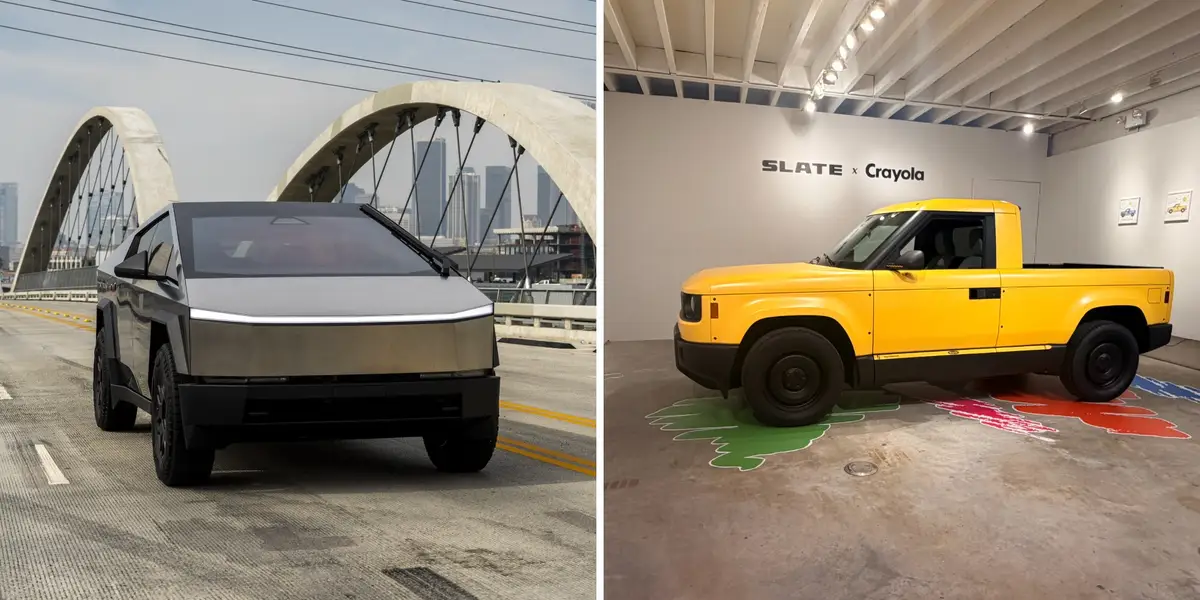
从理论上看,电动皮卡合乎情理:将美国长期最畅销的车辆——福特F-150、雪佛兰西尔维拉多、GMC西拉、Ram 1500——的排气管换成充电口。“兼具皮卡的所有功能、地位和吸引力,又没有通常很差的燃油经济性?”AutoPacific产品与消费者洞察经理罗比·德格拉夫对《商业内幕》表示,“听起来很棒,对吧?”但对许多皮卡买家而言并非如此。
On paper, EV trucks made sense: Take America's longtime best-selling vehicles — the Ford F-150, Chevy Silverado, GMC Sierra, Ram 1500 — and replace the exhaust pipes with a charging port. "All the capability, status, and desirability of a pickup truck minus that oftentimes poor fuel economy?" Robby DeGraf, the manager of product and consumer insights at AutoPacific, told Business Insider. "Sounds great, right?" For many truck buyers, it wasn't.
全尺寸电动皮卡从未像汽车制造商预测的那样流行,而且今年落后得更远。考克斯汽车公司的数据显示,其追踪的六款电动皮卡截至9月售出约32,500辆,比去年同期下降53%。这场退潮留下了被取消的卡车、减产以及数十亿美元与电动汽车相关的费用。自2025年以来,通用汽车在放慢电动汽车制造步伐的同时,支付了近110亿美元的减值损失;福特停产了其电动皮卡并记账19.5亿美元的费用;Ram REV甚至从未投入生产——但斯泰兰蒂斯仍支付了260亿美元的减值损失。周五,电动卡车行业遭受了又一次重大打击:特斯拉表示将停产赛博越野旅行车。
Full-size electric trucks never caught on as automakers predicted, and they are falling even further behind this year. Cox Automotive data shows that the six EV pickups it tracks sold about 32,500 units through September, down 53% from the same period last year. The retreat has left behind canceled trucks, production cutbacks, and billions of dollars in EV-related charges. Since 2025, GM has paid nearly $11 billion in write-downs as it has slowed its EV-building pace; Ford discontinued its electric pickup and recorded a $19.5 billion charge; and the Ram REV never made it to production — but Stellantis still paid $26 billion in write-downs. On Friday, the electric-truck industry took another major blow: Tesla said it will discontinue the Cybertruck.
在20世纪20年代初(注:原文如此,即2020年代初),底特律的汽车制造商受到特斯拉Model 3和Model Y意外成功的启发,希望推出自己的电动汽车选项。福特于2022年推出了全电动F-150 Lightning;通用汽车紧随其后,在2024年款推出了西尔维拉多电动版和西拉电动版;斯泰兰蒂斯则计划在2025年初发布Ram 1500 REV。甚至特斯拉也加入了全尺寸卡车的派对,于2023年推出了赛博越野旅行车。这些卡车不得不与更便宜、熟悉的燃油替代品竞争,并做出了妥协。
In the early 2020s, Detroit carmakers, inspired by Tesla's surprise success with the Model 3 and Model Y, wanted their own EV options. Ford launched the all-electric F-150 Lightning in 2022; GM followed with the Silverado EV and Sierra EV for the 2024 model year; and Stellantis planned to release the Ram 1500 REV in early 2025. Even Tesla jumped into the full-size truck party, launching the Cybertruck in 2023. Those trucks had to compete with cheaper, familiar gas-powered alternatives — and came with compromises.
“皮卡买家有着高期望,而将大型卡车电气化涉及真正的权衡,”考克斯汽车公司行业洞察总监斯蒂芬妮·瓦尔德斯·斯特雷蒂表示,“买家期望强劲的牵引力、有效载荷、续航里程、充电和整体实用性。”她表示,大型电动卡车需要庞大且昂贵的电池,而且牵引也会急剧缩短其续航里程。此外,“这些全尺寸电动皮卡过去和现在都相当昂贵,”德格拉夫补充道。例如,西拉电动版的起售价约为6.5万美元。
"Pickup buyers have high expectations, and electrifying a large truck involves real trade-offs," Stephanie Valdez Streaty, the director of industry insights at Cox Automotive, said. "Buyers expect strong towing, payload, range, charging, and overall utility." Large electric trucks need large, expensive batteries, she said, and towing can also sharply reduce their range. Plus, "these full-size EV pickup trucks are and were pretty dang expensive," DeGraff added. The Sierra EV, for example, starts around $65,000.
汽车制造商有了新的押注:不与全尺寸主力车型竞争的更小、更便宜的电动卡车。福特对该市场的切入点是Fathom,这是其通用电动汽车平台上的第一款车。福特表示,这款中型卡车将比F-150 Lightning更小且制造更简单,起售价低于2.9万美元。该公司尚未发布关键细节——包括饰板级别和续航里程数据——但将于明年秋季开始生产。Slate Auto正在进行更激进的经济性尝试。其极简的、双座的Blank Slate皮卡预计将于本月投入生产,起售价为24,950美元。
Automakers have a new bet: smaller and cheaper electric trucks that aren't competing with the full-size workhorses. Ford's entry to that market is the Fathom, the first vehicle on its universal EV platform. Ford says the midsize truck will be smaller and simpler to build than the F-150 Lightning, with a starting price under $29,000. It hasn't released key details — including trim levels and range figures — but production starts next fall. Slate Auto is making an even more radical affordability play. Its bare-bones, two-seat Blank Slate pickup is expected to enter production this month and starts at $24,950.
这种公式是否管用仍然是一个悬而未决的问题。“如果一家公司能够提供一款续航里程至少达到300英里的更小电动卡车,那么我认为它可能会行得通,”晨星公司负责汽车行业的资深股票分析师塞思·戈德斯坦表示,“但这将比制造不需要那么多动力的SUV或轿车更加困难。”
Whether that formula works remains an open question. "If a company can offer a smaller electric truck that has at least 300 miles of range, then I think it could work," Seth Goldstein, a senior equity analyst at Morningstar who covers the auto industry, said. "But it's going to be more difficult than building an SUV or a sedan where you don't need as much power."