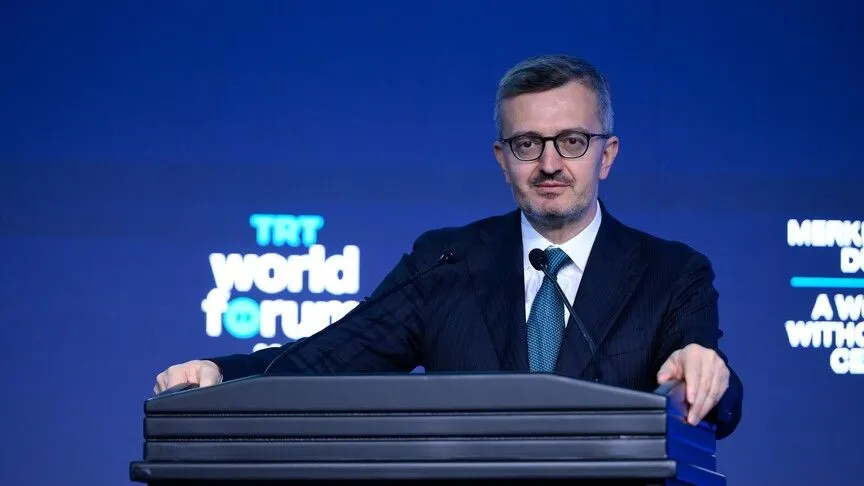
土耳其总统府传播局局长布尔哈内丁·杜兰周六警告称,科技公司在数字平台上日益增长的影响力,对媒体独立性、国家主权和文化认同构成了挑战。
Turkish Communications Director Burhanettin Duran warned Saturday that technology companies' growing influence on digital platforms poses challenges to media independence, national sovereignty and cultural identity.
杜兰在TRT世界论坛题为“算法时代谁掌权?公司、国家、公民”的小组讨论会上发言时指出,算法正日益取代传统的编辑把关人,决定哪些故事能触达受众、哪些则默默无闻。
Speaking at the TRT World Forum panel titled Who Is in Charge in the Algorithmic Age? Companies, Countries, Citizens, Duran argued that algorithms were increasingly replacing traditional editorial gatekeepers, determining which stories reach audiences and which remain unseen.
“算法并非中立。其背后有人为选择,服务于商业和政治利益,”他说。
"Algorithms are not neutral. Human choices lie behind them, serving commercial and political interests," he said.
他警告称,少数科技公司通过控制人们接触到的信息,能够塑造舆论,而记者和新闻机构则在努力维持财务独立性,因为数字平台从它们的报道中获益。
He warned that a handful of technology companies could shape public opinion by controlling the information people encounter, while journalists and news organizations struggle to maintain financial independence as digital platforms benefit from their reporting.
“新闻业无法仅靠曝光度生存,”他强调,呼吁提供财务支持、保障独立性并坚守强有力的职业操守。
"Journalism cannot survive on visibility alone," he said, stressing the need for financial support, independence and strong professional ethics.
数字主权作为国家优先事项 杜兰还对算法对集体记忆的影响表示担忧,认为年轻一代越来越依赖数字平台了解本国的历史、文化和认同。
Digital sovereignty as a national priority Duran also raised concerns about the impact of algorithms on collective memory, arguing that younger generations increasingly rely on digital platforms to learn about their countries' histories, cultures and identities.
他将数字主权描述为国家优先事项,表示各国必须有能力保护本国数据、维护文化认同,并在国际上传播本国叙事。
He described digital sovereignty as a national priority, saying countries must be able to protect their data, preserve their cultural identities and communicate their own narratives internationally.
杜兰为构建更公平的数字环境提出了三项原则,呼吁实现问责制、算法分发的公平性和多元性。
Outlining three principles for a fairer digital environment, Duran called for accountability, fairness in algorithmic distribution and plurality.
他还批评主要数字平台移除和限制关于加沙的报道,并援引阿纳多卢通讯社和土耳其广播电视公司(TRT)记者的死伤情况。
He also criticized the removal and restriction of reporting from Gaza on major digital platforms, citing the deaths and injuries suffered by journalists working for Anadolu and TRT.
加沙记者面临威胁 他回忆称,阿纳多卢通讯社的自由摄影师穆恩塔萨尔·萨瓦夫在以色列空袭中丧生,而土耳其广播电视台阿拉伯语频道的摄影师萨米·沙哈德在加沙报道时严重受伤,失去了右腿。
Journalists under threat in Gaza He recalled that Anadolu’s freelance cameraman Muntasar El-Sawaf was killed in an Israeli strike, while TRT Arabic cameraman Sami Shahadeh was seriously injured and lost his right leg while reporting from Gaza.
杜兰表示,此类限制可能阻碍有据可查的报道传达到国际受众,并警告称,压制事实信息可能会让虚假信息更具威力。
Duran said such restrictions could prevent documented reporting from reaching international audiences, warning that suppressing factual information could make disinformation more powerful.
他说:“未来必须掌握在人民手中,掌握在能够行使判断力、捍卫真相、并为自己的选择承担责任的人手中。”
"The future must remain in the hands of people, people who are capable of exercising judgment, defending the truth, and accepting responsibility for their choices," he said.
他总结道,算法应当遵循人类和伦理原则,而不应被允许决定数字世界的发展方向。
He concluded that algorithms should be guided by human and ethical principles rather than being allowed to determine the direction of the digital world.