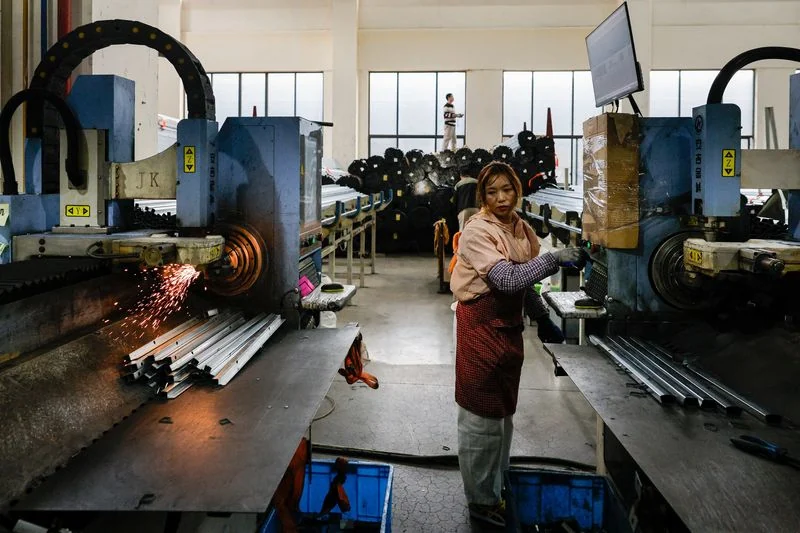
北京,11月9日——周一公布的数据显示,受全球油价上涨推高制造业成本影响,中国10月生产者通胀加速至近4年半来最快增速,与此同时,受疲软的国内需求拖累,消费者通胀有所降温。
BEIJING, Nov 9 - China’s producer inflation accelerated to its fastest rate in nearly 4-1/2 years in October as higher global oil prices raised manufacturing costs, even as consumer inflation cooled amid weak domestic demand, data showed on Monday.
中东战争令能源价格居高不下,推高了煤炭开采、石油和天然气开采加工、化工等高能耗行业的成本,这是推动生产者价格通胀的关键因素。
The war in the Middle East has kept energy prices high, raising costs for coal mining, oil and natural gas extraction and processing, chemicals and other energy-intensive sectors, a key driver of producer-price inflation.
但由于疲软的家庭需求制约了全球第二大经济体的支出,这些上游价格压力尚未完全传导至消费端。
But those upstream price pressures have yet to fully feed through to consumers as weak household demand constrains spending in the world’s second-largest economy.
国家统计局表示,10月生产者价格指数(PPI)同比上涨5.7%,高于9月的5.0%涨幅,也高于路透社调查预测的5.3%涨幅。据伦敦证券交易所集团(LSEG)数据,这是自2022年6月PPI同比上涨6.1%以来的最大年度涨幅。
The producer price index climbed 5.7% last month from a year earlier, the National Bureau of Statistics said, higher than both the 5.0% increase in September and a Reuters poll forecast of a 5.3% rise. It was the largest annual rise since June 2022, when the PPI rose by 6.1%, according to LSEG data.
消费者价格指数(CPI)同比上涨0.7%,低于9月的0.9%涨幅,略低于经济学家预期的0.8%涨幅。
The consumer price index rose by 0.7% year-on-year, after a 0.9% rise in September, to come in just below economists’ expectations for a 0.8% increase.
凯投宏观中国经济学家阮黄南(Nguyen Hoang Nam)表示:“我们认为,中东冲突带来的价格冲击将在未来几个月使通胀保持在高位。但其影响明年应会消退。”
"We think the price shock from the Middle East conflict will keep inflation elevated over the coming months. But its impact should fade next year," said Nguyen Hoang Nam, China economist at Capital Economics.
他预计生产者价格将重返通缩,此前中东战争爆发前正是这种情况,而消费者通胀将在2027年平均达到0.4%。
He expected a return to deflation in producer prices, as had been the case before the outbreak of war in the Middle East, while consumer inflation would average 0.4% in 2027.
外部冲击影响加大 上月数据显示,尽管家庭部门疲软,但得益于出口保持韧性,中国第三季度经济增速快于预期,不过贸易摩擦和日益不确定的全球前景正笼罩着经济展望。
GREATER IMPACT FROM EXTERNAL SHOCKS Data last month showed China’s economy grew faster than expected in the third quarter as exports remained resilient despite a weak household sector, but trade tensions and an increasingly uncertain global outlook are clouding the outlook.
中国国家发改委一位官员上月表示,外部冲击对经济活动的影响正在加大,供给强劲与国内需求疲弱之间的失衡依然突出。
External shocks are having a greater impact on activity, and the imbalance between robust supply and weak domestic demand remains pronounced, an official at China’s state planner said last month.
中国疲弱的股市,其中与人工智能相关的股票因对人工智能需求以及针对中国的出口限制的担忧而从高估值大幅下跌,可能进一步拖累消费支出。
China’s struggling stock market, where AI-related stocks have tumbled from lofty valuations on concerns about AI demand and export restrictions targeting China, could further weigh on consumer spending.
核心通胀(剔除波动较大的食品和能源价格)从9月的1.0%降至10月的0.8%,为经济内在价格压力提供了一个衡量指标。
Core inflation, which excludes volatile food and energy prices, eased to 0.8% in October from 1.0% in September, offering a gauge of underlying price pressures in the economy.
“CPI通胀保持低位,反映出国内需求依然疲弱。迄今尚未看到显著的政策刺激。出口增长异常强劲,这可能就是中国不急于推出新刺激措施的原因,”Pinpoint资产管理首席经济学家张芝伟说。
"The CPI inflation stayed at a low level which reflects that domestic demand remains weak. We have not seen significant policy stimulus so far. Export growth has been phenomenally strong, which may be the reason why China is not in a rush to launch new stimulus," said Zhang Zhiwei, chief economist at Pinpoint Asset Management.
中国为遏制人民币快速升值所做的努力——尽管出口依然强劲,但人民币升值已压缩出口商利润——以及一系列稳定资本市场的措施,尚未转化为消费者情绪的实质性回暖。
China’s efforts to curb the yuan’s rapid gains, which have squeezed exporters’ margins even as shipments remain strong, alongside a series of measures to stabilise the capital market, have yet to translate into a meaningful recovery in consumer sentiment.