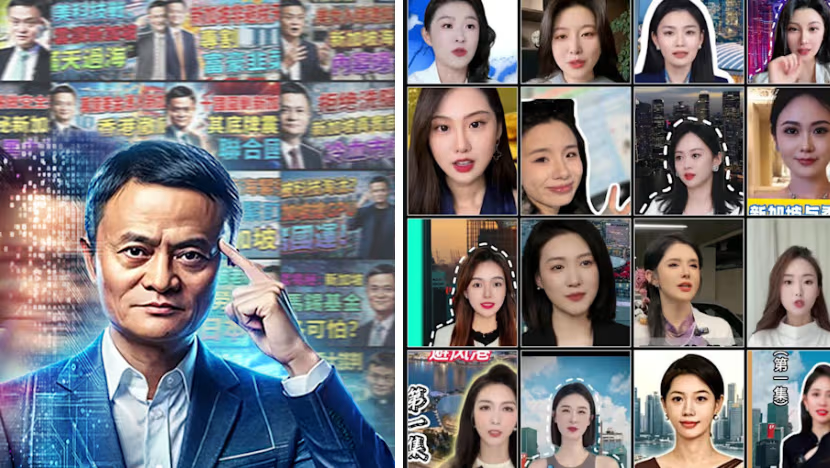
在过去一年里,数千条社交媒体帖文在流传,散布关于新加坡政治领导层、经济生存和外交政策的虚假信息,其中包括近期捏造的、指称新加坡插手邻国事务的指控。
Over the past year, thousands of social media posts have been circulating and spreading falsehoods about Singapore’s political leadership, economic survival, and foreign policy, including recent made-up allegations about Singapore’s hand in the affairs of its neighbours.
这些具有操纵性的帖文累计浏览量已达数千万次,要么倾向于某主要国家行为体的观点,要么旨在社会内部播下分裂的种子。它们旨在制造社群间的紧张关系、影响舆论,或对新加坡的国家利益和对外关系造成损害。这些只是CNA近期调查揭露的部分虚假信息行动。欢迎来到虚假信息行动的世界。
These manipulative posts, which have already chalked up tens of millions of views, either favour the view of a major state actor or look to sow seeds of division within society. They are designed to create tensions between communities, influence public opinion or to have damaging implications for Singapore's national interests and relations with other countries. These are just some of the campaigns uncovered by recent investigations by CNA. Welcome to the world of disinformation campaigns.
利用合成语音、知名人士图像或AI生成的美女形象——这些行动引用虚构统计数据、捏造指控、扭曲叙事或歪曲事实。
Using synthetic voices, images of famous individuals, or beautiful AI-generated women– these campaigns cite fictitious statistics, made-up allegations, skewed narratives, or distortions of fact.
借助AI,它们制作成本低廉、重复频次高、通过社交媒体平台广泛分发。它们也常由协同账号网络放大传播。
With AI, they are cheap to produce, repeated often and distributed widely using social media platforms. They are also often amplified by coordinated networks of accounts.
现代虚假信息的一个特征是,并不总是由完全捏造的素材构成。虚假信息叙事有时建立在真实事件、真实图像、真实人物或准确信息之上。这种真假掺杂会使此类虚假信息内容更难识别,也更具迷惑性。正是在此背景下,我们在一年前成立了CNA Verify。
One feature of modern disinformation is that it does not always consist of entirely fabricated material. Disinformation narratives are sometimes built around genuine events, authentic images, real people, or accurate information. This blending of fact and fiction can make such disinformation content harder to recognise and more convincing to audiences. It was against this backdrop that we set up CNA Verify a year ago.
超越单一虚假声明的调查 CNA Verify由新闻室内的一个专门团队组成,负责调查虚假信息行动和影响力行动,特别是针对新加坡的行动。调查虚假信息与事实核查之间存在重要区别。
LOOKING BEYOND INDIVIDUAL FALSE CLAIMS CNA Verify comprises a dedicated team within our newsroom to investigate disinformation campaigns and influence operations, particularly those targeting Singapore. There is an important distinction between investigating disinformation and fact-checking.
核查事实、验证信息是值得信赖的新闻工作的基本职责。CNA 的每一位记者、制作人和编辑都应将其作为日常工作的组成部分来履行。这并非保留或外包给专门团队的任务。
Checking facts and verifying information are basic responsibilities of trusted journalism. Every reporter, producer and editor at CNA is expected to do this as part and parcel of their daily work. It is not a task reserved or outsourced to a specialist team.
CNA Verify 的职责不同。其重点在于调查虚假信息行动——它们如何组织、使用何种战术,以及误导性叙事如何被制造和传播。
CNA Verify has a different remit. Its focus is to investigate disinformation operations - how they are organised, the tactics used, and how misleading narratives are created and spread.
这意味着要超越单个虚假声明,去审视制造和传播误导性信息所用的战术、协同网络的行为模式、捏造的身份,以及用于操纵或欺骗受众的其他手段。
This means looking beyond individual false claims to examine tactics used to create and disseminate misleading information, patterns of behaviour of coordinated networks, fabricated identities and other methods used to manipulate or deceive audiences.
自 1 月以来,CNA Verify 已发布十余份报告,展示了数起此类行动的性质、范围和意图。该工作依托调查性报道,同时运用开源情报、数字取证、数据分析等专业技术。
Since January, CNA Verify has published a dozen reports that illustrate the nature, extent, and intent of several such campaigns. The work draws on investigative reporting, as well as specialised techniques such as open-source intelligence, digital forensics, and data analysis.
CNA Verify 利用 AI 辅助分析,检视大量视频、文字记录和社交媒体活动,寻找可能表明存在协同的模式。这些工具帮助记者发现人工难以挖掘的线索和关联。
CNA Verify uses AI-assisted analysis to examine large collections of videos, transcripts, and social media activity, looking for patterns that may indicate coordination. These tools help our journalists identify leads and connections that would be difficult to uncover manually.
但调查结果仍须由记者核查、分析、评估和报道,适用的编辑标准与新闻室其他业务同样严格。
But the findings must still be checked, analysed, assessed, and reported by journalists applying the same stringent editorial standards as the rest of our newsroom.
确认虚假信息行动的最终责任方尤为困难。涉事者可能隐瞒身份、利用中间人,或跨多个平台和司法管辖区运作。
Establishing who is ultimately responsible for a disinformation operation is particularly difficult. Those involved may conceal their identities, use intermediaries, or operate across multiple platforms and jurisdictions.
在多起调查中,团队发现了提示存在协同活动的模式,却无法确切认定是谁在指挥。
In several investigations, the team found patterns suggesting coordinated activity without being able to establish definitively who directed it.
多项调查已促成实际行动。社交媒体平台已移除CNA Verify标记的账号,虚假声称与新加坡机构有关联的网站已下线,而源于报道的问题也已在国会提出。
Several of the investigations have led to action. Social media platforms have removed accounts flagged by CNA Verify, websites falsely claiming links to Singapore institutions have gone offline, and questions arising from the reporting have been raised in parliament.
CNA Verify 属于公共服务新闻范畴 我们为何投入新闻室资源,去审视那些可能被忽视或无法解释的活动?因为它们对新加坡及其人民具有影响。
CNA VERIFY PART OF PUBLIC SERVICE JOURNALISM Why are we committing newsroom resources to examine activities that may otherwise go unnoticed or unexplained? Because they have implications for Singapore and its people.
对CNA而言,维持受众信任取决于报道的准确性、平衡性、背景深度与深度。调查虚假信息现已成为这一责任的一部分。传播虚假信息的手段仍在不断演变。
For CNA, maintaining the trust of our audiences depends on the accuracy, balance, context, and depth of our reporting. Investigating disinformation is now part of that responsibility. The methods used to spread disinformation are continuing to evolve.
我们正在探索的一个新兴领域,是对大语言模型(LLM)所用信息的蓄意操纵,有时被称为“LLM投毒”。
One emerging area we are exploring is the deliberate manipulation of information used by large language models (LLMs), sometimes referred to as "LLM poisoning".
随着更多人转向使用AI驱动的搜索和聊天机器人获取信息,蓄意植入网络的虚假或误导性材料被检索进其回答中的风险随之而来。
As more people turn to AI-powered search and chatbots for information, there is a risk that false or misleading material deliberately planted online could be retrieved in their answers.
虚假信息制造者正探索利用这些大语言模型的方式,包括创建看似可信的来源,或向数字空间大量灌输信息以影响AI生成的回答。与误导性的社交媒体帖文不同,此类信息可能作为看似权威的回答的一部分触达用户,而用户却不知其来源。
Disinformation actors are exploring ways to exploit these LLMs, including by creating apparently credible sources or flooding the digital space to influence AI-generated responses. Unlike a misleading social media post, such information may reach users as part of a seemingly authoritative answer, without them being aware of its origins.
这对CNA而言仍是一个相对较新的领域。我们仍在学习并积累专业能力。
This is still a relatively new area for CNA. We are still learning and building our expertise.
我们也认识到,单一新闻室无法调查每一场虚假信息行动。因此,我们希望与亚太地区其他志同道合的新闻室团队建立关系,交流知识、分享技术并探索合作机会。通过报道,我们希望加深公众对这些虚假信息行动的理解。我们希望这项工作为您信任CNA提供另一理由。
We also recognise that no single newsroom can investigate every disinformation campaign. So, we hope to build relationships with like-minded teams in other Asia-Pacific newsrooms to exchange knowledge, share techniques and explore opportunities for collaboration. Through our reporting, we hope to deepen public understanding of these disinformation operations. We hope this work will give you another reason to place your trust in CNA.