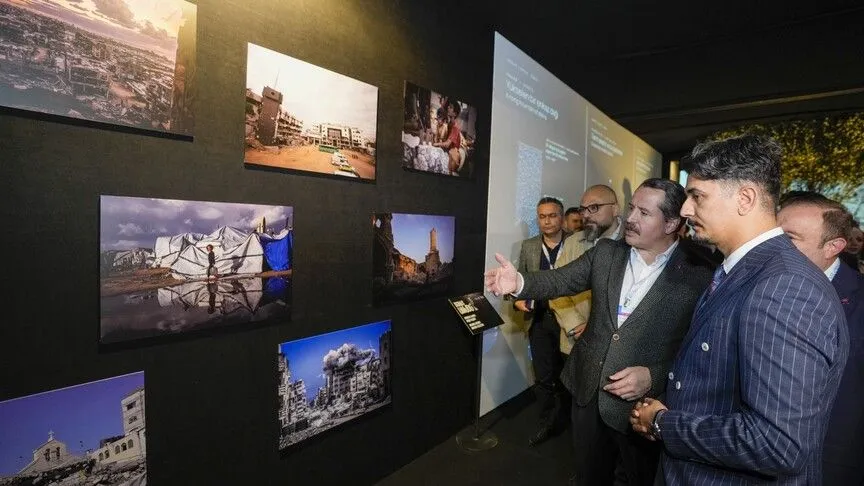
土耳其工会在《联合国气候变化框架公约》第三十一届缔约方会议(COP31)上举办了一场展览,聚焦于象征巴勒斯坦人对故土依恋的坚韧橄榄树,以及代表流离失所家庭持久回归希望的钥匙。
Exhibition centers on a resilient olive tree symbolizing Palestinians' attachment to their homeland and keys representing displaced families' enduring hope of return Turkish labor unions highlighted the humanitarian and environmental devastation in Gaza at COP31 with an exhibition.
这场名为《回归的希望:Al-Awda——橄榄树的故事》的展览在土耳其地中海城市安塔利亚开幕,该市正主办此次联合国气候峰会。
The Hope of Return: Al-Awda – The Story of the Olive Tree opened in Türkiye's Mediterranean city of Antalya, which is hosting the UN climate summit.
土耳其公务员工会联合会(Memur-Sen)和国际劳工联合会(ILC)组织了此次展览。
The Turkish Confederation of Civil Servant Unions (Memur-Sen) and the International Labour Confederation (ILC) organized the exhibition.
展览还展出了阿纳多卢通讯社在加沙工作的摄影记者拍摄的部分照片,以及巴勒斯坦画家和平面艺术家的作品。
The exhibition also features a selection of photographs taken by Anadolu Agency photojournalists working in Gaza, alongside works by Palestinian painters and graphic artists.
该展览将于11月9日至20日在COP31绿色区会议中心门厅对访客开放。
The exhibition will remain open to visitors at the COP31 Green Zone Congress Center foyer from Nov. 9 to 20.
通过互动装置,访客从加沙曾充满活力的街道“走”到战争造成的满目疮痍,并伴随着在废墟中录制的个人证言。
Through interactive installations, visitors journey from Gaza's once-vibrant streets to the devastation wrought by the war, accompanied by personal testimonies recorded amid the rubble.
展览陈列了从巴勒斯坦带日常物品,作为生活被冲突打断的无声见证。
The exhibition displays everyday objects brought from Palestine as silent witnesses to lives interrupted by the conflict.
展厅中央矗立着一棵受损却依然坚韧的橄榄树,象征着巴勒斯坦人民对故土的持久依恋。
At its center stands a damaged yet resilient olive tree, symbolizing the Palestinian people's enduring attachment to their homeland.
这棵树扎根过去、伸向未来,尽管遭到广泛破坏,它依然代表着和平、团结和生命的希望。
Rooted in the past and reaching toward the future, the tree represents peace, solidarity and the promise of life despite widespread destruction.
一幅由代表加沙房屋的钥匙拼成的巴勒斯坦地图,也凸显了流离失所的巴勒斯坦家庭的困境。
A map of Palestine made from keys representing homes in Gaza also highlights the plight of displaced Palestinian families.
许多在1948年被迫离开的巴勒斯坦家庭带走了他们的房屋钥匙,坚信他们终将返回,并将钥匙代代相传。此后,这些钥匙成为了巴勒斯坦人回归权力的强有力象征。
Many Palestinian families forced to leave in 1948 took their house keys with them, believing they would eventually return, and passed them down through generations. The keys have since become powerful symbols of the Palestinian right of return.
对比加沙毁灭前后状况的动画视觉效果,进一步说明了冲突造成的后果。加沙的环境毁灭 该展览还突显了加沙环境破坏的规模。
Animated visuals comparing Gaza before and after the destruction further illustrate the consequences of the conflict. Gaza's environmental devastation The exhibition also highlights the scale of environmental destruction in Gaza.
展览展示了关于爆炸性弹药、碳排放、基础设施受损、农业损失和文化遗产的数据。
It presents figures on explosive munitions, carbon emissions, damaged infrastructure, agricultural losses, and cultural heritage.
根据这些数据,投放在加沙的弹药爆炸力相当于1945年投放在广岛的原子弹爆炸力的约13倍。
According to the figures, the explosive force of munitions dropped on Gaza is equivalent to approximately 13 times the force of the atomic bomb dropped on Hiroshima in 1945.
展览还指出,冲突前60天产生的碳排放量超过了20个国家的年排放量。
The exhibition also states that carbon emissions generated during the first 60 days of the conflict exceeded the annual emissions of 20 countries.
农业破坏是另一个核心焦点,展示的数据表明,加沙的橄榄树数量已从袭击前的约200万棵降至仅15万棵。
Agricultural destruction is another central focus, with the displayed figures indicating that the number of olive trees in Gaza has fallen from approximately 2 million before the attacks to just 150,000.
展览进一步报告称,加沙约81%的建筑物受损,留下了超过6100万吨瓦砾。
The exhibition further reports that approximately 81% of structures in Gaza have been damaged, leaving more than 61 million tons of rubble.
同时,据报告,97%的农业用地无法使用,加沙54处水务设施中有45处据称不再运作。
Meanwhile, 97% of agricultural land is reportedly unusable, and 45 of Gaza's 54 water facilities are said to be no longer operational.
破坏还波及加沙的历史和文化遗产,325处历史文化遗址中据报有208处被毁。
The destruction extends to Gaza's historical and cultural heritage, with 208 of 325 historical and cultural sites reported to have been destroyed.
通过这些数据,组织者旨在表明,袭击不仅影响了建筑物和基础设施,还影响了加沙的土壤、水资源、空气质量和历史遗产。
Through these figures, the organizers seek to demonstrate that the attacks have affected not only buildings and infrastructure but also Gaza's soil, water resources, air quality and historical heritage.
在展览出口处,一个互动装置允许参观者为加沙和人类提交寄托希望与团结的数字留言。
At the exhibition's exit, an interactive installation allows visitors to submit digital messages of hope and solidarity for Gaza and humanity.