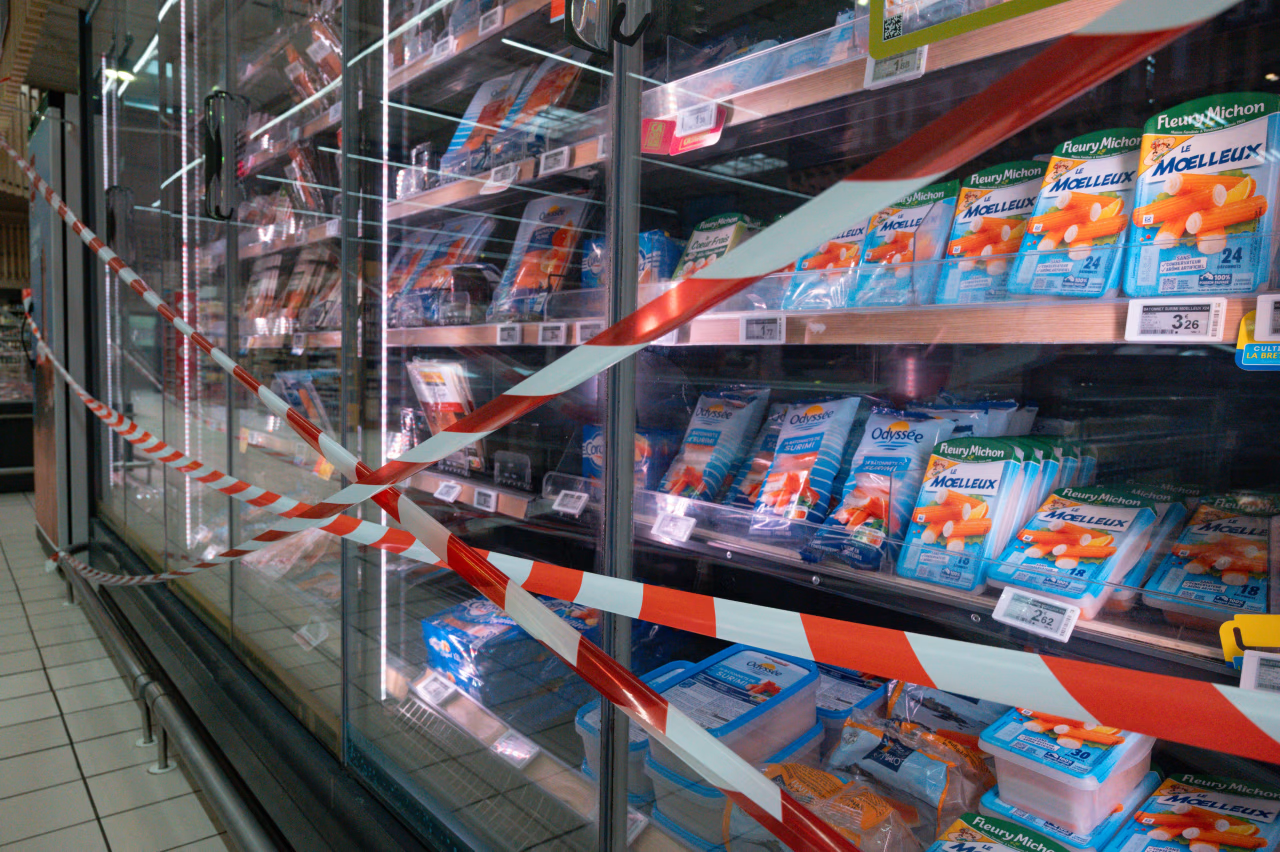
你打开冰箱想找点早餐,可里面温度超过 120 华氏度(约 49 摄氏度),所有食物都坏了。上个月,这种事在法国数百家超市发生了。商用冰箱开始升温,有的缓慢,有的迅速,都是因为除霜循环出了问题。食物变质,至少引发了 15 起火灾。截至 11 月初,其他九个欧洲国家的杂货店也遭到了袭击。
You open your refrigerator for some breakfast, but it’s over 120 degrees in there and all your food is spoiled. It happened in hundreds of supermarkets across France last month. Commercial refrigerators began to warm up, some gradually, others quickly, thanks to the defrost cycle. Food spoiled and at least 15 fires started. As of early November, grocery stores in nine other European countries had also been attacked.
这是一起网络攻击,法国情报机构将其归咎于伊朗。联网控制器让美国的杂货店冷冻柜、血液储备、军用物资和药品保持低温。类似的控制器还运行着我国供水系统和能源电网中的水泵、阀门和变电站。脆弱的关键服务就藏在显而易见的地方。
This was a cyberattack, attributed to Iran by French intelligence. Internet-connected controllers keep grocery-store freezers as well as blood supplies, military stores and medications cold across America. Similar controllers run pumps, valves and substations in our nation’s water systems and energy grids. Vulnerable critical services are hiding in plain sight.
许多攻击手段很基础,利用的是连在互联网上、仍用默认密码且控制薄弱的设备。变化的是速度。10 月,人工智能工具发现了一个隐藏多年的关键漏洞,它存在于运行全球约 70% 网站的编程语言中。补丁随之发布,但消息泄露,攻击者迅速行动。网站瘫痪,所有者手忙脚乱地应对。
Many attacks are basic, exploiting devices connected to the internet with default passwords and weak controls. What is changing is speed. In October, artificial-intelligence tools uncovered a critical flaw hidden for years in the programming language that runs roughly 70% of the world’s websites. Patches followed, but word leaked and attackers moved in. Sites went dark while their owners scrambled.
这就是倒计时。AI 正在缩短从发现弱点到攻击者可利用这一窗口期。仍按人类速度工作的防御者将输掉这场竞赛。
That is the countdown clock. AI is shrinking the time between when a weakness is found and when attackers can exploit it. Defenders who still work at human speed will lose that race.
同样的 AI 也能为防御者所用:发现暴露的系统,排出最重要的优先级,编写修复方案。对于无法打补丁的老旧设备,AI 可以创造变通办法,比如一条防火墙规则或一个设置更改。问题在于防御者能否足够快地应用 AI。
The same AI can work in defenders’ favor: finding exposed systems, ranking which matter most, and writing a fix. For old equipment that can’t be patched, AI can create workarounds, such as a firewall rule or a settings change. The question is whether defenders can apply AI fast enough.
最重大的国家风险集中在少数关键节点,这算是不幸中的万幸。可能引发全国性连锁故障的环节,掌握在几百家运营商及其共享供应商手中:大型输电变电站、联邦电汇系统和自动清算所(ACH)支付系统、服务大城市的水务公用事业、核心电信网络和911急救系统、区域创伤中心以及健康记录供应商。较小的运营商也很重要,往往充当软性切入点,但优先保护这些关键的少数目标,能为修补其余漏洞争取时间。
The most significant national risk is concentrated, fortunately. Failures that would cascade across the country run through a few hundred operators and their shared vendors: large transmission substations, the Fedwire and ACH payment systems, water utilities serving big cities, core telecom networks and 911 systems, regional trauma centers and the health-record vendors. Smaller operators matter too, often as soft entry points, but protecting the critical few first buys time to fix the rest.
但美国的防御体系并未针对这一威胁进行组织。大多数监管仅检查控制措施是否存在,而不考量系统暴露程度,也不考量运营商能多快遏制缺陷。医院仅被要求以“及时”方式修补已知存在漏洞的系统。监管职责分散在从联邦能源监管委员会、环境保护局到联邦通信委员会和卫生与公众服务部等多个监管机构手中,标准各异。
But America’s defenses aren’t organized for this threat. Most regulation checks whether a control exists, not how exposed a system is or how fast an operator can contain a flaw. Hospitals are required only to patch systems known to be vulnerable in a “timely” manner. Oversight is split among regulators from the Federal Energy Regulatory Commission and the Environmental Protection Agency to the Federal Communications Commission and the Department of Health and Human Services, with varying standards.
无人对整个行业是否安全负责。部分行业进展较远。金融服务和电力行业的首席执行官已投身于应对人工智能赋能的网络威胁;其他行业则滞后。关键基础设施联盟等努力——由摩根大通首席执行官杰米·戴蒙担任主席——表明企业领袖已准备好组织起来保障其行业安全。
Nobody is accountable for whether an entire sector is safe. Some sectors are further along. Financial services and electricity have CEOs engaged with AI-enabled cyber threats; others lag. Efforts such as the Alliance for Critical Infrastructure, chaired by JPMorgan Chase CEO Jamie Dimon, show that corporate leaders are ready to organize to secure their sectors.
还可以做得更多。白宫的超级情报部队应为五大领域设定国家目标:电力、银行与支付、水务、电信和医院。目标应衡量结果,而非文书工作。任何控制系统都不应暴露在互联网上。关键漏洞必须在数天内修补或隔离。必须开展演练,证明每个关键运营商——公用事业、支付清算所、医院网络——能在没有IT系统的情况下运行72小时。
Much more can be done. The White House’s Super Intelligence Force should set national targets for five sectors: power, banking and payments, water, telecom, and hospitals. The targets should measure outcomes, not paperwork. No control systems should be exposed to the internet. Critical vulnerabilities must be patched or walled off within days. Drills must be run that prove each critical operator—utility, payment clearinghouse, hospital network—can run for 72 hours without its IT systems.
各领域的监管机构应采用相同的目标。每个领域的一两位首席执行官应向白宫汇报进展。达到目标的运营商应获得法律保护,免受指控其在保护系统方面存在疏忽的挑战;未达标的则应面临监管机构更严格的审查。
Each sector’s regulator should adopt the same targets. One or two CEOs from each sector should report progress to the White House. Operators that hit their targets should earn legal protections from challenges alleging that they were negligent in protecting their systems; those that miss them should face closer scrutiny from regulators.
发挥公私伙伴关系的作用。信息共享与分析中心(ISAC)可追溯至20世纪90年代末,行业协调委员会(SCC)则是在“9·11”事件后成立,它们将运营商与政府联系起来,主要传递威胁警报。它们应成为备战引擎:运行共享AI工具扫描成员的暴露面,敦促供应商解决可能影响整个行业的缺陷,组织互助,并制作月度记分卡,让首席执行官了解其公司与同行的对比情况。
Put public-private partnerships to work. Information Sharing and Analysis Centers, which date to the late 1990s, and Sector Coordinating Councils, created after 9/11, connect operators with the government, mainly passing along threat alerts. They should become engines for preparedness: running shared AI tools to scan members for exposure, pressing vendors on flaws that may affect a whole sector, organizing mutual aid, and producing monthly scorecards that show CEOs how their companies compare with peers.
其次,利用 AI 快速修复缺陷。那些一旦失效会造成最大破坏的运营商和技术供应商,应被要求与 AI 实验室合作,扫描其代码和固件,并生成修复方案和变通办法。AI 实验室应与工业控制系统制造商合作,为标准设备构建数字孪生,以便在修复方案接触实际电网或水厂之前进行测试。发现的问题应通过“金鹰”系统流转,“金鹰”是政府新建立的 AI 赋能的漏洞信息交换中心,其范围应从软件扩展到工业设备。
Next, use AI to fix flaws fast. Operators and technology suppliers whose failure would cause the greatest disruption should be required to work in partnership with AI labs to scan their code and firmware and produce fixes and workarounds. AI labs should work with makers of industrial control systems to build digital twins of standard equipment, so fixes can be tested before they touch a live grid or water plant. Findings should flow through Gold Eagle, the administration’s new AI-enabled vulnerability clearinghouse, which should expand from software into industrial equipment.
设备制造商(其中许多是外国企业)应被要求在最后期限前根据发现的问题采取行动,作为向关键运营商销售产品的条件。成功的标准应是缺陷被遏制的速度,以及基本服务能否在攻击下持续运行。
Equipment makers, many of them foreign, should have to act on findings by a deadline as a condition for selling to critical operators. Success should be measured by how quickly flaws are contained and whether essential services can keep running under attack.
最后,云服务提供商、电信公司和 AI 实验室应确定可在全国范围内生效的防御措施。这将需要适当的法律框架来保护参与企业。它们还可以建立一支经过审查的应急响应预备队,以应对重大事件。
Finally, cloud providers, telecom companies and AI labs should identify defenses that can work nationwide. Appropriate legal frameworks will be needed to protect participating companies. They can also establish a reserve corps of vetted responders for major incidents.
不能让小型运营商掉队。农村医院、电力合作社和小型供水系统往往是进入大型网络的最容易途径,而大多数无力承担自己的安全防护。这是非营利组织可以发挥作用的地方。我所在的 Andreessen Horowitz 最近成立了“保障美国基础设施基金会”,首先聚焦于农村医院。
Smaller operators can’t be left behind. Rural hospitals, electric co-ops and small water systems are often the easiest way into larger networks, and most can’t afford their own security. This is a place where nonprofits can help. Andreessen Horowitz, where I work, recently launched the Securing America’s Infrastructure Foundation, which is starting with a focus on rural hospitals.
如果没有华盛顿铺平道路,这一切都不会发生。在没有法律保护的情况下,首席执行官们不会共享敏感数据,也不会主动寻找漏洞。《2015年网络安全信息共享法案》提供了这种保护,但将于12月11日到期。国会应保留目前众议院国防法案中关于延长10年的重新授权条款。监管机构应为达到成果目标并经董事会签字确认的公司提供安全港保护。需要资金用于公用事业费率回收,以更换无法保障安全的老旧设备,并为供水系统提供循环贷款基金。
None of this happens unless Washington clears the way. CEOs won’t share sensitive data or hunt for vulnerabilities without legal cover. The Cybersecurity Information Sharing Act of 2015 provides cover, but it expires Dec. 11. Congress should keep the 10-year reauthorization now in the House defense bill. Regulators should offer a safe harbor to companies that meet the outcome targets with board sign-off. Money is needed for utility rate recovery for replacing old equipment that can’t be secured and revolving loans funds for water systems.
根据我管理针对老旧基础设施攻击应对工作的经验,更换过时设备将需要两到五年时间。在12个月内,可以控制几百家最关键运营商的风险。这就是为什么遏制风险必须放在首位。
From my experience managing responses to attacks on dated infrastructure, replacing outdated equipment will take two to five years. Containing risk at the few hundred most critical operators can be done within 12 months. That’s why containment comes first.
我们已经知道,以人工智能速度发动的针对美国基础设施的攻击会是什么样子:自动化代理扫描暴露的基础设施,为每个控制器编写漏洞利用代码,并在一夜之间攻击数千个站点。下一次攻击的目标不会是冰柜。将是水泵、断路器和医院系统。我们拥有防范此类攻击的工具。让我们开始行动吧。
We already know what an AI-speed attack on American infrastructure would look like: an automated agent scanning for exposed infrastructure, writing an exploit for each controller and hitting thousands of sites overnight. Next time it won’t be freezers. It will be pumps, breakers and hospital systems. We have the tools to prevent it. Let’s get to work.
纽伯格女士是安德森·霍洛维茨公司的普通合伙人兼全球事务主管,也是斯坦福大学的杰出研究员。她曾于2021年至2025年担任白宫网络与新兴技术副国家安全顾问。
Ms. Neuberger is a general partner and head of global affairs at Andreessen Horowitz and a distinguished fellow at Stanford. She served as the White House’s deputy national security adviser for cyber and emerging technology, 2021-25.