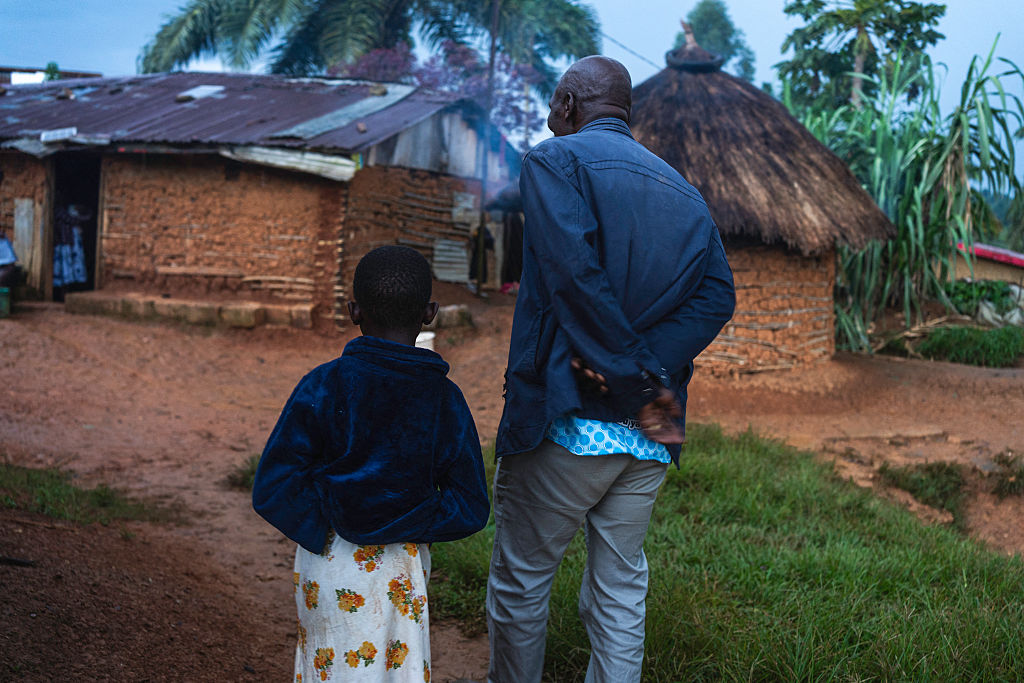
刚果民主共和国(刚果(金))正因一场埃博拉疫情而陷入困境,据估计已造成近5400人死亡。世界卫生组织(WHO)将其描述为该国“有史以来报告的最大规模埃博拉疫情”。
The Democratic Republic of the Congo (DRC) is reeling from an outbreak of Ebola that is estimated to have killed nearly 5,400 people. The World Health Organization (WHO) has described it as “the largest Ebola outbreak ever reported” in the country.
该疫情最早于5月5日在伊图里省东北部的蒙布瓦卢被发现,当时世卫组织接到报告,称这座约13万人口的金矿城镇出现异常疾病和死亡聚集。最早已知的疑似病例是一名医护人员,于4月24日出现症状,后在省会布尼亚的一家医疗机构死亡。
The outbreak was first detected in Mongbwalu, a gold-mining town of around 130,000 people in Ituri province in northeastern Congo, after the WHO was alerted on May 5 about an unusual cluster of illness and deaths. The earliest known suspected case was a healthcare worker who developed symptoms on Apr. 24 and later died at a medical facility in Bunia, the provincial capital.
5月15日,实验室检测确认此次疫情由邦迪布焦病毒引起。此后,疫情已蔓延至八个省份,约65%的新增病例发生在社区中,表明存在广泛的未被发现的传播。该病毒主要通过直接接触感染者的血液或其他体液,或接触受污染的物品和表面传播。作为一种人畜共患病,埃博拉也可从受感染的野生动物传播给人类。
On May 15, laboratory tests confirmed that the outbreak was caused by the Bundibugyo virus. Since then, the epidemic has spread to the eight provinces, with about 65% of new cases occurring in the community, suggesting widespread undetected transmission. The virus spreads primarily through direct contact with an infected person’s blood or other bodily fluids, or through contact with contaminated materials and surfaces. As a zoonotic disease, Ebola can also pass from infected wildlife to humans.
疫情现正快速蔓延,并已超越刚果国界,波及乌干达、肯尼亚和尼日利亚。世卫组织、非洲疾病控制与预防中心(非洲CDC)及其他公共卫生专家已确定了遏制疫情的若干障碍:缺乏针对邦迪布焦病毒的有效疫苗、刚果东部的武装冲突、医疗基础设施不足,以及国际卫生援助的削减。
The epidemic is now spreading fast and far beyond the borders of Congo, reaching Uganda, Kenya, and Nigeria. The WHO, the Africa Centers for Disease Control and Prevention (Africa CDC), and other public health experts have identified several obstacles to containing the outbreak: the lack of an effective vaccine against the Bundibugyo virus, armed conflict in eastern Congo, inadequate healthcare infrastructure, and cuts to international health assistance.
这一清单遗漏了一个更深层的问题:一场持续数十年的治理危机。埃博拉在刚果尤为难以控制,因为其统治阶层长期以来很少关心大多数刚果人的健康与福祉。
What this list leaves out is a deeper problem: a decades-long crisis of governance. Ebola is particularly difficult to control in Congo because its ruling class has done little to care for the health and well-being of most Congolese.
特朗普政府削弱美国和国际机构,使问题更加严重。拆解美国国际开发署(USAID)、终止外国援助项目、裁减美国疾病控制与预防中心(CDC)人员、以及退出世界卫生组织(WHO),均削弱了疾病监测、疫情防备和应急响应能力。
The Trump Administration has compounded the problem by weakening the American and international institutions. Dismantling the United States Agency for International Aid (USAID), ending foreign assistance programs, cutting staff at the U.S. Centers for Disease Control and Prevention (CDC), and withdrawing from the WHO have undermined disease surveillance, outbreak preparedness, and emergency response.
资金削减也削弱了对刚果(金)疾病检测、社区监测、医疗物资和一线卫生系统的支持。
Funding cuts have also weakened support for disease detection, community surveillance, medical supplies, and frontline health systems in Congo.
冷战遗毒 刚果(金)长期腐败、治理薄弱的根源可追溯至数十年前。1965年,即该国从比利时独立五年后,陆军参谋长蒙博托·塞塞·塞科发动政变夺权。他在冷战期间向美国靠拢,以绝对权力统治,利用政府机器为自己和最高级官员敛财,而忽视国家基本职能。
The cold warrior’s curse The roots of endemic corruption and weak governance in Congo reach back decades. In 1965, five years after the country’s independence from Belgium, Mobutu Sese Seko, the army chief, seized power in a coup. He aligned himself with the U.S. during the Cold War and ruled with absolute power, using the machinery of government to enrich himself and his most senior officials while neglecting the basic functions of the state.
在蒙博托统治的最后几十年里,全国公务员——士兵、警察、医生和教师——薪资微薄。即便这点微薄薪水,也经常被比他们高一两级的官员克扣。这就是蒙博托留给继任者的体制,延续至今。
During the final decades of Mobutu’s rule, civil servants across the country—soldiers, police officers, doctors and teachers—were paid a pittance. Even their meager salaries were routinely stolen by officials a rung or two above them. This was the system Mobutu bequeathed to his successors. It endures today.
这种治理失败的后果显而易见。埃博拉不仅夺去偏远农村社区居民的生命,也在基桑加尼等城市肆虐。基桑加尼人口超过150万,距离东部冲突区甚远。相当比例的埃博拉死亡病例发生在医疗机构之外。
The consequences of this failure of governance are stark. Ebola is killing people not only in remote, rural communities but also in cities such as Kisangani, home to more than 1.5 million people and far from the conflict in eastern Congo. A substantial proportion of Ebola deaths have occurred outside healthcare facilities.
在最近为期两周的报告期内,世卫组织发现,约65%的死亡发生在社区而非治疗中心。这些死亡暴露了早期检测、及时转诊和获得适当医疗服务方面的失败。基桑加尼的死亡病例表明,刚果(金)冲突区以外的公共卫生系统已近乎全面崩溃。
During a recent two-week reporting period, the WHO found that approximately 65% of deaths occurred in communities rather than treatment centers. These deaths expose the failures in early detection, timely referral, and access to appropriate medical care. The deaths in Kisangani suggest a near-total breakdown of the public health system in Congo beyond the conflict zone.
刚果(金)的医疗体系自20世纪90年代以来一直在恶化,当时经济崩溃、政治动荡和国家机构瓦解削弱了政府为基本公共服务提供资金和服务的能力。始于1996年和1998年的两次连续刚果战争摧毁了医疗设施,导致社区流离失所,并中断了基本服务。对外援的依赖日益加深。微薄的政府投入、薄弱的问责制、分散的捐助者支持以及高昂的治疗费用,使大多数刚果人无法获得基本服务。
Congo’s health care system has been deteriorating since the 1990s, when economic collapse, political instability, and crumbling state institutions eroded the government’s ability to finance and deliver basic public services. The two successive Congo wars, which began in 1996 and 1998, destroyed health facilities, displaced communities, and disrupted essential services. Dependence on foreign aid grew. Meager government investment, weak accountability, fragmented donor support, and high cost of treatment continued to put access to essential services beyond the reach of most Congolese.
如今,刚果(金)的医疗体系已支离破碎。历届政府为修复它做得很少。在基桑加尼等城市,基本医疗服务几乎无法获得。农村地区的情况更糟。医护人员拿不到工资,士气低落。
Today, Congo’s health care system is in tatters. Successive governments have done little to repair it. In cities like Kisangani, basic health care is barely available. Conditions are much worse in rural areas. Health care workers go unpaid, and morale is low.
8月,卫生部长罗杰·坎巴承认,为埃博拉疫情应对增补的薪资名单中,有15%至20%属于“幽灵工人”,即薪资微薄的官员为贪污资金而虚构的雇员。许多在一线抗击埃博拉的医护人员今年大半时间未领到工资;8月,许多此类工人在疫情激增之际举行了罢工。
In August, Roger Kamba, the health minister, acknowledged that 15% to 20% of the names added to payrolls for Ebola response belonged to “ghost workers,” fictitious employees invented by poorly paid officials to siphon off funds. Many frontline health workers fighting Ebola have not been paid for most of this year; in August, many of those workers went on strike while the epidemic surged.
非洲的教训 事情本不必如此。今年早些时候,埃博拉病毒从刚果迅速蔓延到邻国乌干达。尽管疫情在刚果肆虐,乌干达却将其控制住了。据《柳叶刀》报道,乌干达卫生部“在没有新增本地确诊病例42天后,于7月28日宣布疫情结束”。根据透明国际和自由之家的说法,刚果是世界上最腐败、治理最不善的国家之一。与刚果一样,乌干达也贫穷,面临腐败、治理薄弱和资源短缺等挑战。
African lessons It does not have to be this way. Earlier this year, Ebola spread rapidly from Congo into neighboring Uganda. While the epidemic raged on in Congo, Uganda contained it. According to The Lancet, Uganda’s Ministry of Health “announced the end of the outbreak on July 28, after 42 days without a new confirmed locally transmitted case.”Congo is among the most corrupt and poorly governed countries in the world, according to Transparency International and Freedom House. Like Congo, Uganda, too, is poor, facing challenges of corruption, weak governance, and shortage of resources.
但乌干达已建立起能够快速应对疫情的公共卫生机构。多年来应对埃博拉和其他病毒性出血热的经验,使其卫生官员积累了丰富的制度经验,当病毒跨越边境时,他们运用了这些经验。
But Uganda has built public health institutions that can respond quickly to epidemics. Years of tackling Ebola and other viral hemorrhagic fevers have given its health officials substantial institutional experience, which they drew on as the virus crossed the border.
乌干达卫生部迅速识别病例、隔离患者、开始治疗,并追踪和监测其接触者。疫情期间,官员们识别了800多名接触者,阻止了本地传播。他们还加强了医疗机构和社区的监测,强化了感染预防和控制措施,并在边境口岸协调应对工作。
Uganda’s Ministry of Health rapidly identified cases, isolated patients, began treatment, and traced and monitored their contacts. Officials identified more than 800 contacts during the outbreak and halted local transmission. They also stepped up surveillance in health facilities and communities, strengthened infection prevention and control measures, and coordinated the response at border crossings.
这些系统使乌干达能够在输入性感染引发持续的社区传播之前发现它们。有效的疫情控制不仅依赖医疗工具,还依赖能够迅速行动、跨部门协调、维持公众信任并在传播广泛之前接触社区的正常运作的公共机构。
Those systems allowed Uganda to detect imported infections before they could spark sustained community transmission. Effective epidemic control depends not only on medical tools but also on functioning public institutions that can act quickly, coordinate across sectors, maintain public trust and reach communities before transmission becomes widespread.
包括世界卫生组织、非洲疾控中心、欧盟、世界银行和联合国儿童基金会在内的国际合作伙伴,已协助这两个国家应对埃博拉疫情。但向刚果(金)提供援助面临重重困难。武装冲突、基础设施受损、难以进入受影响社区,导致部署应对团队、运送医疗物资、开展监测和接触者追踪均十分艰难。薄弱的医疗体系、一线工作人员短缺、资金缺口以及协调不力,进一步加剧了挑战。
International partners including the WHO, Africa CDC, the European Union, the World Bank and the United Nations Children’s Fund have helped both countries respond to Ebola. But delivering assistance to Congo is a struggle. Armed conflict, damaged infrastructure, and restricted access to affected communities make it difficult to deploy response teams, deliver medical supplies, and conduct surveillance and contact tracing. A weak healthcare system, shortages of frontline workers, funding gaps, and poor coordination compound the challenges.
几十年来,刚果(金)在接连不断的人道主义危机中严重依赖美国国际开发署。该机构的解体、美国退出世卫组织,以及对疾控中心的资金削减,削弱了国际社会应对疫情的能力。在国际支持下,拥有相对强大卫生体系的乌干达等国能够遏制埃博拉。但像刚果(金)这样因腐败导致医疗体系空心化的国家,在国际机构自身遭到削弱的情况下,更难获得有效帮助。
For decades, Congo relied heavily on USAID during successive humanitarian crises. The agency’s dismantling, America’s withdrawal from the WHO, and cuts to the CDC have weakened international response to epidemics. With international support, countries with relatively strong health systems, such as Uganda, can contain Ebola. But countries such as Congo, where corruption has hollowed out the healthcare system, are harder to help when international institutions themselves have been weakened.
后果远不止于刚果(金)一国。该国人口超过1亿,是撒哈拉以南非洲面积最大的国家,与九个国家接壤。其体制失灵造成的问题会溢出国境。在肯尼亚和尼日利亚——这两个均不与刚果(金)接壤的国家——检测出埃博拉病例,显示出疾病管控失败的影响能扩散多远。
The consequences reach far beyond Congo. The country has a population of more than 100 million people, is the largest in sub-Saharan Africa, and borders nine other countries. The consequences of its dysfunction create problems that spill across its borders. The detection of Ebola cases in Kenya and Nigeria, neither of which borders Congo, shows how far the effects of failed disease control can travel.
其他国家和机构试图帮助填补空白。欧盟、世界银行、德国、英国、非洲各国政府以及中国均提供了资金和其他资源。中国在刚果(金)的钴、铜领域拥有巨大利益,承诺提供1800万美元援助,并派遣医疗专家协助应对疫情。
Other countries and institutions have tried to help fill the gap. The European Union, the World Bank, Germany, Britain, African governments, and China have contributed funding and other resources. China, which has substantial interests in Congo’s cobalt and copper sectors, pledged $18 million in assistance and deployed medical experts to help tackle the outbreak.
这些捐助至关重要。但遏制疫情爆发取决于对一线卫生工作者、社区监测、接触者追踪、实验室检测和治疗的持续资金支持。
These contributions matter. But containing the outbreak depends on sustained funding for frontline health workers, community surveillance, contact tracing, laboratory testing, and treatment.
刚果(金)在治理和公共卫生方面的失败无法迅速得到修复。国际援助必须抵达受影响社区,并为当地卫生工作者提供行动所需的手段。特朗普政府削弱了帮助遏制疫情爆发的机构,从而导致刚果(金)乃至更广泛地区的人们面临更大风险。
Congo’s failures of governance and public health cannot be repaired promptly. International assistance must reach affected communities and offer local health workers the means to act. By weakening the institutions that help contain outbreaks, the Trump Administration has contributed to placing people in Congo, and far beyond it, at greater risk.