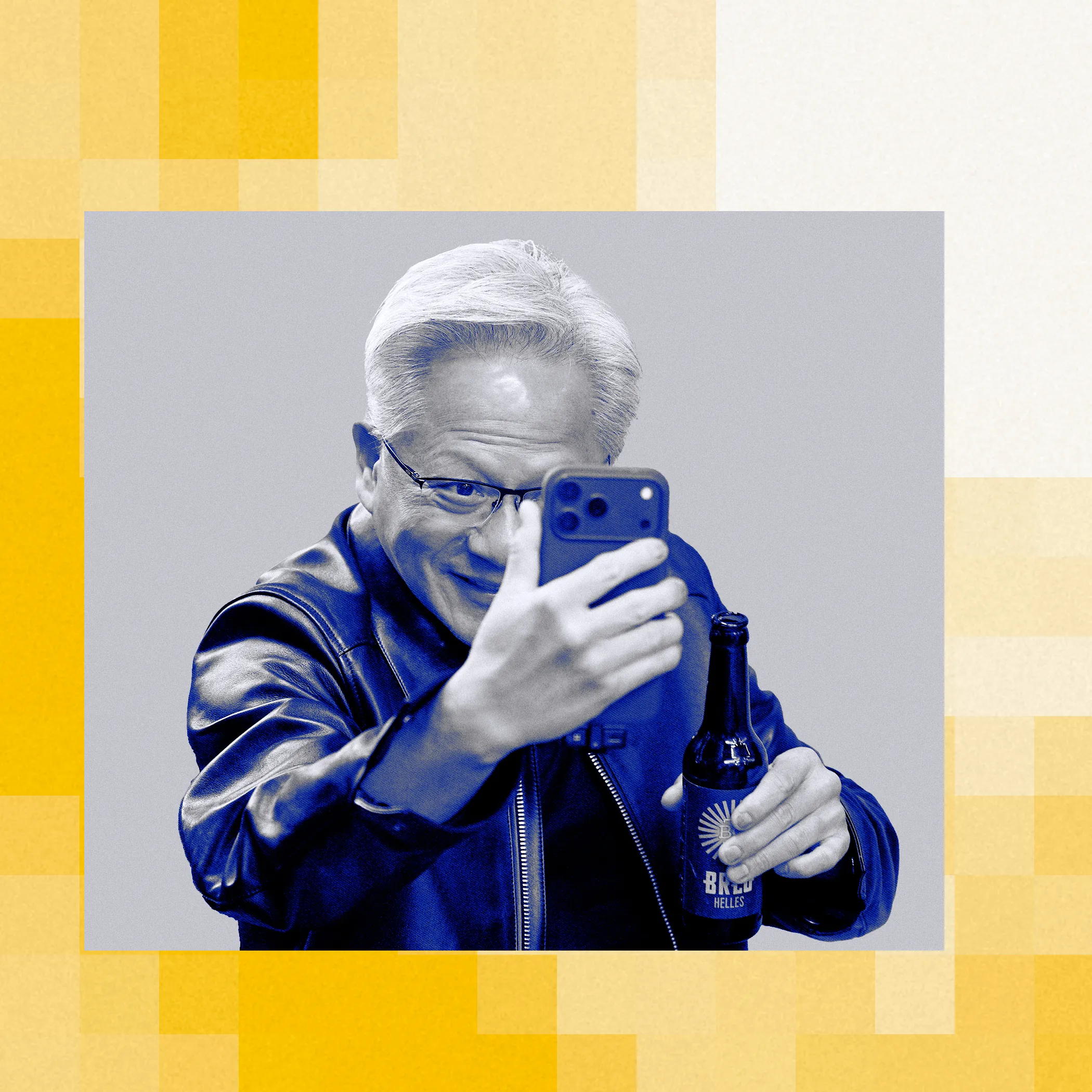
那是2024年7月,黄仁勋有些兴奋不已。我同意前往科罗拉多州丹佛市,在SIGGRAPH会议上采访英伟达首席执行官。SIGGRAPH是计算机图形学博士和从业者的年度聚会。那年年初,我曾为《连线》杂志的一篇专题报道与黄仁勋进行过一次长时间的面对面采访,这次采访显然进行得不错——无论是对《连线》杂志,还是对英伟达的高管传播团队而言——因此我被邀请在此次会议上再次采访黄仁勋。又一个机会去盘问现代世界最具影响力公司的首席执行官?当然,我欣然同意。我开始准备。
It was July of 2024, and Jensen Huang was punchy. I had agreed to travel to Denver, Colorado, to interview the Nvidia CEO at SIGGRAPH, the annual confab of computer graphics PhDs and practitioners. Early that year I’d conducted a lengthy sit-down interview with Huang for a WIRED magazine feature, which apparently went well enough—both for WIRED and for Nvidia’s executive communications team—that I had been asked to interview Huang again at this conference. Another opportunity to grill the CEO of the modern world’s most consequential company? Yes, of course. I began preparing. What ensued was, in a word, bizarre.
接下来发生的事情,用一个词来形容就是:怪异。在会议前的第一次准备电话中——这类电话通常是公关人员试图从记者那里套出具体问题,以防被突袭——一位年轻、面貌略显熟悉的女性主导了谈话。她是麦迪逊·黄,黄仁勋的女儿。她显然很聪明,令人尊敬。她向我介绍了黄仁勋将在SIGGRAPH舞台上展示的幻灯片,并建议了几个关键时刻,我可以在那些时刻引导他谈论这些幻灯片。幻灯片?引导黄仁勋?这算什么“采访”?
During the first prep call for the conference, the type of call in which PR handlers typically try to coax specific questions out of journalists to prevent an ambush, a youngish, vaguely familiar woman took the lead. This was Madison Huang, Jensen’s daughter. She was clearly intelligent, commanding respect. She told me about the slides Jensen would be presenting on stage at SIGGRAPH and offered suggestions for key moments when I might tee him up to talk about the slides. Slides? Tee up Jensen? What kind of “interview” was this? I raised my concerns with both my editors and Nvidia.
我向我的编辑和英伟达表达了担忧。我们达成一致:我会问我打算问他的问题,其中包括关于数据中心环境影响的问题,而且黄仁勋也会参考幻灯片。姑且这么说吧,采访并不顺利。(它在YouTube上。)至今,英伟达的前任和现任员工有时会告诉我,我“处理”整件事做得不错。黄仁勋专横跋扈,回避了我的一些问题,并且在我们的会谈结束后立即,与一群比我更崇拜他的听众进行了一场即兴问答环节。
We agreed that I would ask the questions I intended to ask him, which included questions about the environmental impact of data centers, and that Huang would also be referring to slides. Let’s just say the interview didn’t go smoothly. (It’s on YouTube.) To this day, former and current Nvidia workers sometimes tell me that I “handled” the whole thing well. Huang was domineering, evaded some of my questions, and, immediately after our session concluded, did an impromptu Q&A session with a much more adoring crowd than me. Then I was guided offstage, and Meta CEO Mark Zuckerberg hopped on, where he and Huang had a lovey-dovey fireside chat. As a longtime journalist I’m used to occasional adversarial interactions; I really don’t lose sleep over them.
随后,我被引导下台,Meta首席执行官马克·扎克伯格上台,他与黄仁勋进行了一场亲密无间的炉边谈话。
This was just a CEO being a CEO.
作为一名资深记者,我习惯了偶尔的对抗性互动;我真的不会为此失眠。这不过是一个CEO在做CEO。黄仁勋后来同意在2024年12月再次与我会面。但那次在丹佛的采访让我意识到,黄仁勋有多么想要掌控叙事。不仅仅是想要;他默认自己会做到。而且在很大程度上,他确实做到了。直到本周。
Huang later agreed to meet with me again, in December 2024. But that interview in Denver had underscored for me how much Jensen Huang wanted to control the narrative. Not just wanted to; he assumed he would. And to a large extent he did. Until this week. Narrative has always been a critical part of Huang’s success. He was not just your average electrical engineering nerd who toiled away on something that would eventually find a product-market fit.
叙事一直是黄仁勋成功的关键部分。他并非一个普通的电气工程极客,默默钻研某个最终能实现产品与市场匹配的东西。据黄仁勋自己讲述,他是一位移民创始人,一个弱势者,一个追求(并最终娶到)大学恋人的“妻子控”,一个早期在Denny's餐厅用餐的艰苦奋斗的创业者。一位周日也工作、因总听到竞争对手的蹄声而睡眠不佳的远见者。一位将孩子带入公司怀抱的父母。一位如此热爱Nvidia,以至于在手臂上纹了公司标志的抽象版本的人。
By Huang’s own telling, he was an immigrant founder, an underdog, a wife guy who chased (and eventually married) his college sweetheart, a scrappy startup guy who dined at Denny’s in the early days. A visionary who worked Sundays and who didn’t sleep well because he always heard the hoofsteps of competitors. A parent who brought his kids into the corporate fold. A man who loved Nvidia so much he tattooed an abstract version of the company logo on his arm. Huang built the highest-valued publicly traded company in history. That part’s not just fairy tale.
黄仁勋打造了历史上市值最高的上市公司。这部分不仅仅是童话。这是真的。现在,这开始回到2024年1月,当我与他进行第一次面对面会面时,黄仁勋一开始就谈到了讲故事的重要性。以下是摘录:黄仁勋:我非常钦佩的一位领导者和人物是Shantanu Narayen,Adobe的首席执行官。他说他一直想当记者,因为他喜欢讲故事。
It’s true. Now, it’s starting to Back in January 2024, when I sat down with him for our first-ever in-person meeting, Huang right off the bat talked about the importance of storytelling. Here’s an excerpt: Jensen Huang: Somebody who I really admire, as a leader and a person, is Shantanu Narayen, the CEO of Adobe. He said he always wanted to be a journalist because he loved telling stories.
《连线》:似乎有效地讲述企业故事,是建立企业的重要部分。是的。制定战略就是讲故事。构建文化也是讲故事。你多次说过,你并不是基于演示文稿推销Nvidia的理念。没错。这真正关乎的是讲故事。
WIRED: It seems like an important part of building a business, being able to tell its story effectively. Yes. Strategy setting is storytelling. Culture building is storytelling. You’ve said many times you didn’t sell the idea of Nvidia based on a pitch deck. That’s right. It was really about telling the story.
当然,即便如此,黄仁勋当时也已陷入中美人工智能战争的十字准星,受制于监管机构,正如我当时所写。唐纳德·特朗普当年连任后,黄仁勋再次施展其讲故事的本领,游说特朗普政府放宽出口管制,以便能将公司部分芯片销往中国。
Of course, even then, Huang was caught up in the crosshairs of the US–China AI war and at the mercy of regulators, as I wrote at the time. After Donald Trump’s reelection that year, Huang once again deployed his storytelling skills and lobbied the Trump administration to loosen export controls, so he could sell some of his company’s chips to China.
黄仁勋传说中另一个关键部分是,他运营着一个“扁平”的组织,几十名高管直接向他汇报。(有时报道称是“60”人;内部人士曾告诉我,有时更接近35人。)黄仁勋曾表示,这种结构使英伟达“能够快得多地适应,而我们需要这样,因为我们的技术发展速度极快。”黄仁勋还以掌控业务各个方面而闻名——参与每一场重要会议,似乎了如指掌每一个运转环节,并始终掌握采购、供应链以及公司芯片分配的动态。
Another crucial part of the Huang lore is that he ran a “flat” organization, with a few dozen top executives reporting to him. (This is sometimes reported as being “60” people; insiders have told me at times it’s closer to 35.) Huang once said the structure allowed Nvidia “to adapt a lot more quickly, which we need because our technology is moving so quickly.”Huang was also known to be controlling of all aspects of the business—participating in every significant meeting, seemingly aware of every moving part, and staying in the loop on sourcing, supply chains, and the company’s allocation of chips. This is where Huang’s cult of leadership, and his Nvidia storytelling, may have come to a stupidly disappointing final chapter.
正是在这里,黄仁勋的领导崇拜及其英伟达叙事,可能迎来了一个愚蠢而令人失望的最终章节。正如一名前员工所说,黄仁勋不可能既了解英伟达业务的每一个细节,又可能对芯片可能流向何处——无论是比喻意义上还是字面意义上——装作一无所知。他明显的判断失误,如今迫使他辞去自己一手创办的公司,并粉碎了这位始终洞察先机的创始人的神话。这当然不是黄仁勋若仍掌控局面所会选择的叙事结局。
As one former employee put it, Huang can’t simultaneously have had knowledge of every element of Nvidia’s business and then potentially feign ignorance about where the chips may have fallen, both figuratively and literally. His apparent lapses in judgment have now led him to resign from the very company he coaxed into existence, and have shattered the mythos of its ever-prescient founder. It’s certainly not the narrative ending Huang would have chosen, were he still in control. This is an edition of Steven Levy’s and Lauren Goode's Backchannel newsletter.