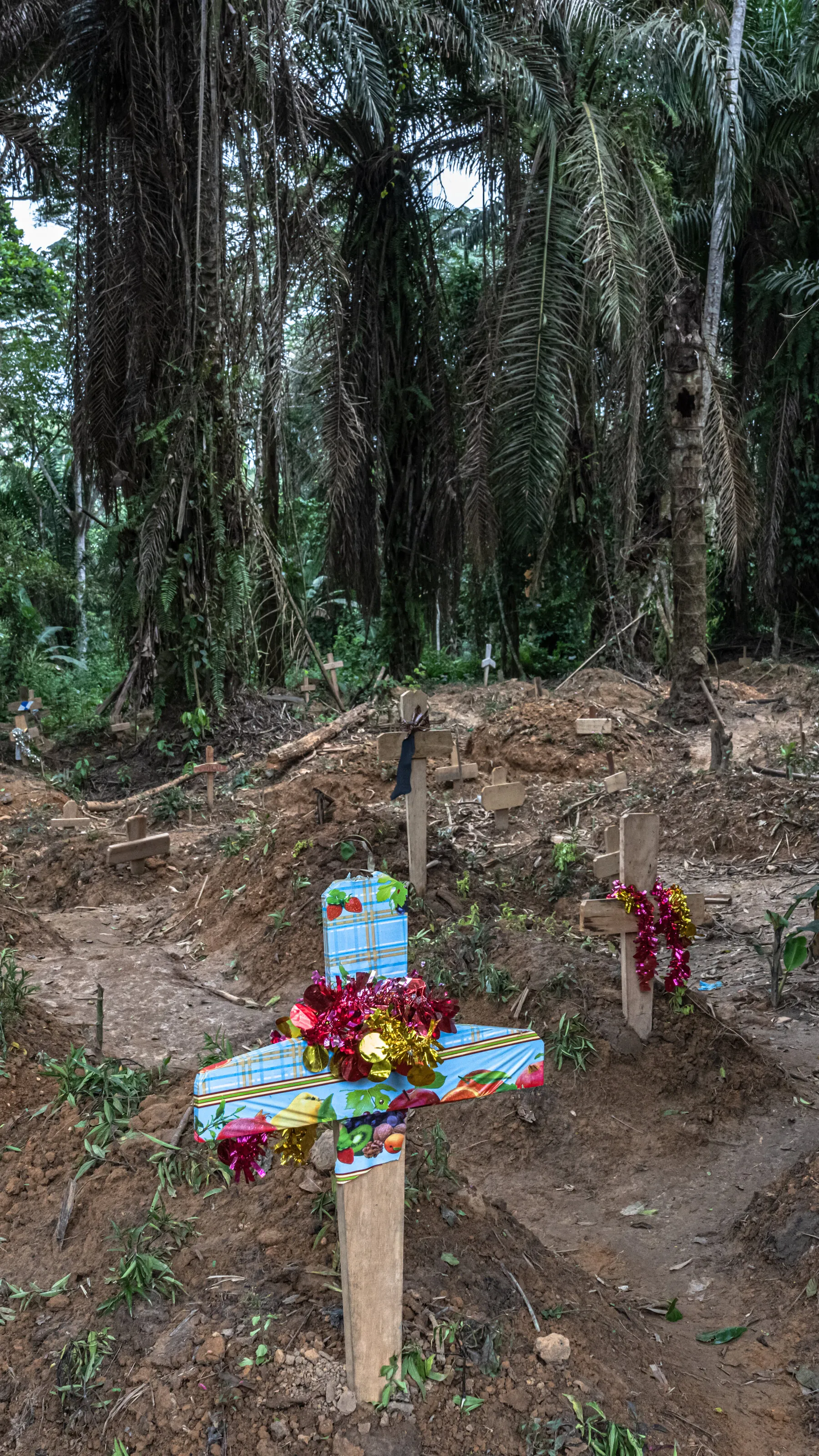
死于埃博拉的人数如此之多,以至于他们的尸体被一层层堆叠在医院大门口棚屋里的临时架子上。该镇的主墓地已满,新坟只能挤在路边棕榈树之间。
So many people are dying of Ebola that their bodies have been stacked, one atop the other, on makeshift racks in a shed by the hospital gate. The town’s main cemetery is full, so fresh graves are being squeezed in between palm trees by the side of the road.
药品、输液和基本防护物资极为匮乏,这个被围困的刚果城镇四分之三的埃博拉患者死亡。六个月后,埃博拉继续在刚果民主共和国东部留下致命的痕迹。
Medicine, IVs and basic protections have been so scarce that three-quarters of Ebola patients in this besieged Congolese town have died. Six months on, Ebola continues to hack a deadly trail across eastern Democratic Republic of Congo.
疫情最初在五月被发现时,就像一场巨大的单一大火,感染集中在一个省内的几个城镇。
When the outbreak was first detected in May, it resembled a single, giant blaze, with infections concentrated in a handful of towns in one province.
此后,它已演变成一个更大、更难捉摸的敌人,悄悄蔓延至八个省份,并在穿越世界上最大的雨林之一时分裂成无数个热点地区。
It has since morphed into a far bigger, more elusive foe, creeping into eight provinces and splintering into numerous hot spots as it moves through one of the world’s great rainforests.
现在不是一场大火,而是许多火点,散布在面积约相当于英国的广大区域。
Instead of one big fire, there are many now, scattered across a vast area about the size of Britain.
卫生工作者已将最初发现疫情的地方的病毒控制住,但其他地方的感染病例正在激增。深入雨林的小城比亚卡托,一度占据全国新增病例的四分之一。然而,这个饱受困扰的小镇居民几乎被完全抛弃,面对历史上增长最快的埃博拉疫情,他们几乎没有什么防御手段。
Health workers have corralled the virus where it was first detected, but infections are soaring elsewhere. Biakato, a small town deep in the rainforest, suddenly accounted for as many as one-quarter of new cases nationally. Yet its beleaguered residents were left almost entirely on their own, with dangerously little to defend themselves against the fastest-growing Ebola outbreak in history“We see the same mistakes as before,” said Dr. Jean-Jacques Muyembe, who helped discover Ebola in 1976 and now heads Congo’s National Institute for Biomedical Research.
“我们看到和以前一样的错误,”让-雅克·穆延贝博士说。他于1976年参与发现埃博拉病毒,现任刚果生物医学研究所所长。“这就像从零开始。非常令人失望。”不仅如此,遏制疫情的运动还面临一个可怕的新威胁:伊斯兰国。
“It’s as if we were starting from zero. It’s very disappointing.”And if that were not enough, the campaign to contain the epidemic has run into a terrifying new threat: the Islamic State.
十月中旬,我和摄影师丹尼尔·贝雷胡拉克到达比亚卡托时,埃博拉疫情已使该镇不堪重负。筋疲力尽的卫生工作者报告称,一个月内出现了300例病例,而上个月只有20例。
Ebola was already swamping Biakato when I got to the town in mid-October with the photographer Daniel Berehulak. Exhausted health workers reported 300 cases in the span of a month, up from 20 the month before.
但那里只有两名医生,他们数月未领薪水,感到被彻底抛弃。通常会涌入并建立埃博拉治疗中心的援助人员,正被多年来一直在该地区制造恐怖的反叛武装分子吓退。比阿卡托是雨林深处的一个小城,感染病例激增。
But there were only two doctors, they hadn’t been paid in months, and they felt utterly abandoned. The aid workers who would normally pour in and set up an Ebola treatment center were being scared off by rebel fighters who have been terrorizing the region for years. Biakato, a small town deep in the rainforest, has experienced a surge of infections.
至少到目前为止,该城一直为遭受伊斯兰国武装分子猎杀的刚果人提供避难所。
Until now, at least, the town has offered a haven to Congolese preyed upon by Islamic State fighters.
医护人员在临时治疗中心对一名儿童的遗体进行消毒并为其下葬做准备。
Health care workers disinfect and prepare the body of child for burial at a makeshift treatment center.
联合国官员表示,他们的担忧在近日悲惨地成为了现实:与伊斯兰国有关联的反叛武装分子在该地区一系列袭击中杀死了106人。最致命的事件之一发生在比阿卡托以南25英里处,武装分子纵烧房屋、商店和医疗设施,迫使埃博拉患者弃床而逃。成千上万居民也逃离家园,这场逃亡很可能进一步传播疾病。
Their fears were tragically realized in recent days when the rebels, who are affiliated with the Islamic State, killed 106 people in a series of attacks across the region, U.N. officials said. One of the deadliest episodes occurred 25 miles south of Biakato, where militants torched homes, shops and health facilities, forcing Ebola patients to flee their beds. Thousands of residents also fled in an exodus likely to further spread the disease.
即使在冲突持续三十年的刚果东部,来自名为“民主力量联盟”(简称A.D.F.)的武装分子也被认为特别残暴。他们在广袤的森林中游荡,定期从藏身处窜出发动袭击。平民被斩首、肢解和绑架。儿童被迫为该组织作战。大规模屠杀发生在葬礼和教堂中。
Even by the standards of eastern Congo, where conflict has raged for three decades, the fighters — from a group called the Allied Democratic Forces, or A.D.F. — are considered especially brutal. They roam the sprawling forests, periodically springing from their hiding places to mount attacks. Civilians are beheaded, mutilated and abducted. Children are forced to fight with the group. Mass killings have taken place at funerals and churches.
2019年,该组织效忠于伊斯兰国,据最近一项估计,它是世界上对平民第二致命的组织。现在,其恐怖手段正在阻碍抗击埃博拉的斗争。
In 2019, the group pledged allegiance to the Islamic State, and by one recent estimate it is the world’s second-deadliest group for civilians. Now, its terror tactics are hobbling the fight against Ebola.
一项拯救比阿卡托的初步努力正在进行中。援助组织正在使用直升机飞越危险的森林,并已开始建设一个治疗中心。即便如此,与感染浪潮作斗争的当地志愿者表示,他们陷入了两难困境。
A tentative effort to rescue Biakato is underway. Aid groups are using helicopters to fly over the perilous forests and have begun to build a treatment center. Even so, the local volunteers battling to hold back the tide of infections say they are in an impossible bind.
“我们这边有阿尔及利亚防卫军,另一边是埃博拉,”红十字会收集埃博拉死亡者遗体的团队负责人让-勒弗朗克·萨卡拉说。“我们真的被夹在中间了。”让-勒弗朗克·萨卡拉,红十字会收集埃博拉死亡者遗体的团队负责人。
“We’ve got the A.D.F. on one side, and Ebola on the other,” said Jean-Lefranc Sakara, head of a Red Cross team that collects the Ebola dead from their houses. “We are well and truly caught in the middle.”Jean-Lefranc Sakara, head of a Red Cross team that collects the Ebola dead.
丹尼尔和我在经过两小时颠簸的雨林路程后到达比亚卡托。道路两侧是一堵树墙,间或出现鬼村,荒废的建筑在草木中几乎看不见。
Daniel and I reached Biakato after a jolting two-hour ride through the rainforest. A wall of trees rose on either side, interrupted in places by ghost villages, their deserted buildings barely visible behind grass and weeds.
五年前,武装分子开始在这条林间走廊上活动,伏击过往车辆并袭击定居点。大多数居民随后逃离。
The fighters started preying on this forested corridor five years ago, ambushing passing traffic and raiding settlements. Most residents have since fled.
“一旦孩子们不再安全,”一名突然从灌木中出现的男子说,“所以大家都搬到比亚卡托。”他说完便匆忙离去,消失在高草中。
“It wasn’t safe for children any more,” said a man who suddenly emerged from the bushes, “so everyone moved to Biakato.”He hurried away, vanishing into the tall grass.
这条穿越雨林的泥路全长85英里,已成为疫情的主干线。路两端的贝尼镇和曼巴萨镇病例激增。路中点正是比亚卡托。
This muddy track, running 85 miles through the rainforest, has become the central artery of the outbreak. Cases are soaring in the towns of Beni and Mambasa, at either end of the road. Halfway along it lies Biakato.
自5月以来,此次疫情已导致超过5,000人死亡,专家担忧其传播速度如此之快,可能会超过2014至2016年西非疫情——有记录以来最严重的一次,死亡人数超过11,000人。直到9月,专家们仍认为已经对这场疫情有所掌控,但根据《纽约时报》获取的官方数据,近期几周传播率再次上升,意味着疫情仍未得到控制。
Since May, more than 5,000 people have died in this outbreak, and experts fear it is growing so fast that it may surpass the devastating West Africa epidemic of 2014 to 2016, the largest on record, which killed more than 11,000. As recently as September, experts thought they were getting a handle on this one, but in recent weeks the transmission rate has risen again, according to official figures obtained by The New York Times, meaning it is still out of control.
在贝尼-曼巴萨走廊所穿越的地区,传播率是平均水平的两倍,专家称这表明埃博拉基本上在失控传播。
Here in the district traversed by the Beni-Mambasa corridor, the transmission rate is double the average, suggesting that Ebola is spreading largely unchecked, experts say.
随着我们继续前行,比亚卡托映入眼帘,其锡制屋顶在绿色的海洋中闪闪发光。在城镇边缘,市政工作人员引导我们通过一个洗手站。在镇中心,摩托车轰鸣,人们涌入小商店和黄金柜台。农民在巨大的垫子上晾晒可可豆,这是他们利润丰厚的农作物,用于制作巧克力。到10月,比亚卡托已被埃博拉疫情淹没。城镇郊外的一个埃博拉卫生检查站。可可豆是比亚卡托重要的收入来源。
As we pressed on, Biakato came into view, its tin roofs sparkling amid the sea of green. On the edge of town, municipal workers guided us through a hand-washing station. In the center, motorbikes roared as people flowed into small shops and gold counters. Farmers dried cacao beans on giant mats, their lucrative crop used to make chocolate. By October, Biakato was swamped with Ebola. An Ebola health checkpoint on the outskirts of town. Cacao beans are an important source of revenue for Biakato.
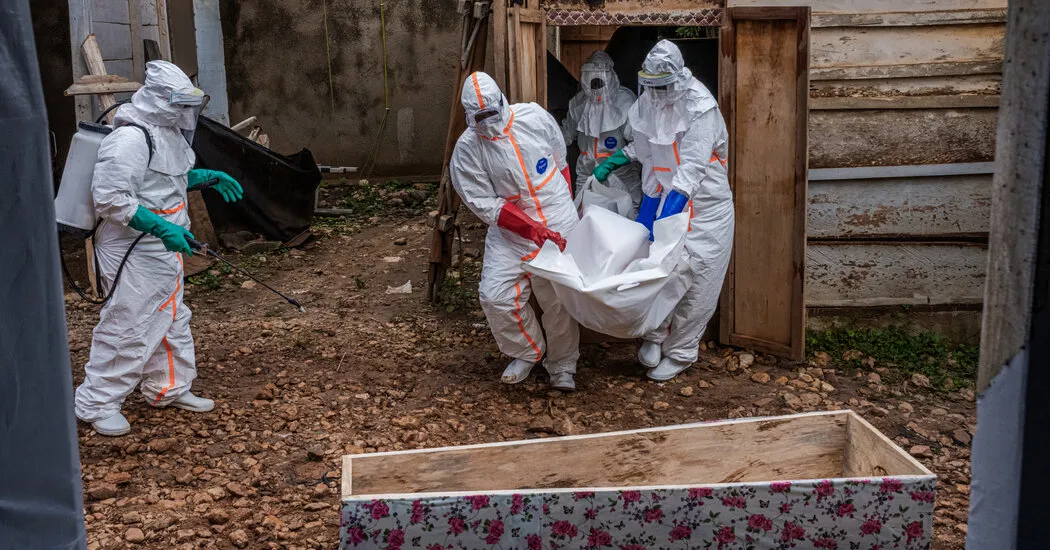
在镇上的医院,一片混乱。家属聚集在大门旁,有人嚎啕大哭,装在尸袋里的埃博拉受害者遗体被抬出。儿科病房内设立了一个隔离区。病人无精打采地坐在外面的台阶上,有些人明显虚弱,他们与熙熙攘攘的公共区域仅用一圈脆弱的橙色围栏隔开,几乎无法阻止疾病传播。
At the town hospital, chaos reigned. Families clustered by the gate, some wailing, as the bagged bodies of Ebola victims were carried out. An isolation area had been set up inside a pediatric ward. Patients sat listlessly on the steps outside, some visibly weak, separated from a bustling public section by a flimsy strip of orange fencing that did almost nothing to contain the disease.
埃博拉患者及其亲属聚集在围栏旁,近距离交谈。一名患者与一名探视者共用一瓶果汁,来回传递,冒着通过受感染唾液传播病毒的风险。镇上的记录显示,情况恶劣到75%的埃博拉患者死亡。
Ebola patients and their relatives gathered by the fence, chatting at close quarters. One patient shared a bottle of juice with a visitor, passing it back and forth, risking transmission through infected saliva. Conditions were so bad that 75 percent of Ebola patients had died, the town’s records showed.
七个孩子的母亲埃斯佩朗斯·孔比已在病房住了两周。她看起来比大多数患者强壮,但目睹的死亡和痛苦让她备受创伤。
Espérance Kombi, a mother of seven, had been in the ward for two weeks. She looked stronger than most patients, but was traumatized by the deaths and suffering she had witnessed.
“我需要第二颗心脏才能忍受我在里面看到的一切,”她指着病房门说,“这一颗不够用了,”她补充道,拍了拍胸口。
“I need a second heart to endure what I’ve seen in there,” she said, pointing to the ward door. “This one is not enough,” she added, tapping her chest.
直到最近,暴力袭击仍是比亚卡托最迫切的担忧。5月,伊斯兰国分支的武装分子冲进城镇,杀害21人。根据与刚果政府的协议,来自邻国乌干达的士兵开始在街道巡逻,以防范袭击。
Until recently, violence was the most pressing concern in Biakato. In May, fighters with the Islamic State affiliate stormed into the town, killing 21 people. Soldiers from nearby Uganda began patrolling the streets, under an agreement with the Congolese government, to ward off attacks.
但动荡仍在城外持续。最近局势变得如此危险,一群来自森林的狩猎采集者——他们的祖先在那里生活了几个世纪——只好在镇上的天主教堂旁避难。
But the upheaval continues just outside town. It got so dangerous recently that a group of hunter-gatherers from the forest, whose ancestors had lived there for centuries, took shelter beside the town’s Catholic church.
18岁的爱丽丝·格洛丽亚坐在门阶上,仍因自己的遭遇而神情恍惚。9月,武装分子把我和家人从农场抓走。连续四个夜晚,她抱着1岁的婴儿被押着穿过森林。
Alice Gloria, 18, sat on a stoop, still dazed by her ordeal. In September, fighters snatched her and her family from their farm. For four nights, she was marched through the forest, her 1-year-old baby in her arms.
她低声说,夜里武装分子多次强奸她。“是那些年纪较大的男人干的。”18岁的爱丽丝·格洛丽亚遭叛军绑架,但得以逃脱。
At night, the fighters raped her repeatedly, she said in a whisper. “The older men did it.”Alice Gloria, 18, was kidnapped by rebels but was able to escape.
格洛丽亚在第五天逃脱,当时武装分子袭击了另一处农场。她抱着女儿走了三天,直到抵达比亚卡托。但她的丈夫奥古斯丁没能和她们一起逃出来。他还在森林里,生死不明。“仍然没有消息,”她说。
Ms. Gloria escaped on the fifth day, as the fighters attacked another farm. She walked for three days, carrying her daughter, until they reached Biakato. But her husband, Augustin, couldn’t escape with them. He was back in the forest, his fate unknown. “Still no news,” she said.
该镇首席医疗官乔布·巴克瓦塔说,起初埃博拉似乎可能绕过比亚卡托。第一例有记录的病例是一名金矿工人,他6月从蒙布瓦卢镇返回后死亡。但在随后的几个月里,随着病毒肆虐其他地区,比亚卡托只有零星病例:6月又增1例,7月14例,8月20例。
At first, it seemed that Ebola might bypass Biakato, said Job Bakwata, the town’s chief medical officer. The first recorded case was a gold miner who returned from the town of Mongbwalu in June, then died. But in the months that followed, as the virus ravaged other areas, Biakato had only a dribble of cases: one more in June, 14 in July, 20 in August.
随后在9月中旬,感染病例激增,令这座饱受摧残的城镇不堪重负。
Then in mid-September, infections surged, overwhelming the battered town.
红十字会志愿者萨卡拉全身心投入到了应对工作中。他曾是一名神学院学生,四年前为了寻求安全搬到了比亚卡托。武装分子袭击了他在北基伍省山区的家,杀害了他的一名姐妹和三名兄弟。“我祖父让我离开,”他说,“我们来这里是为了重新开始。”埃博拉疫情爆发后,他放下一切,带领一个小组收集并消毒埃博拉死者的遗体。
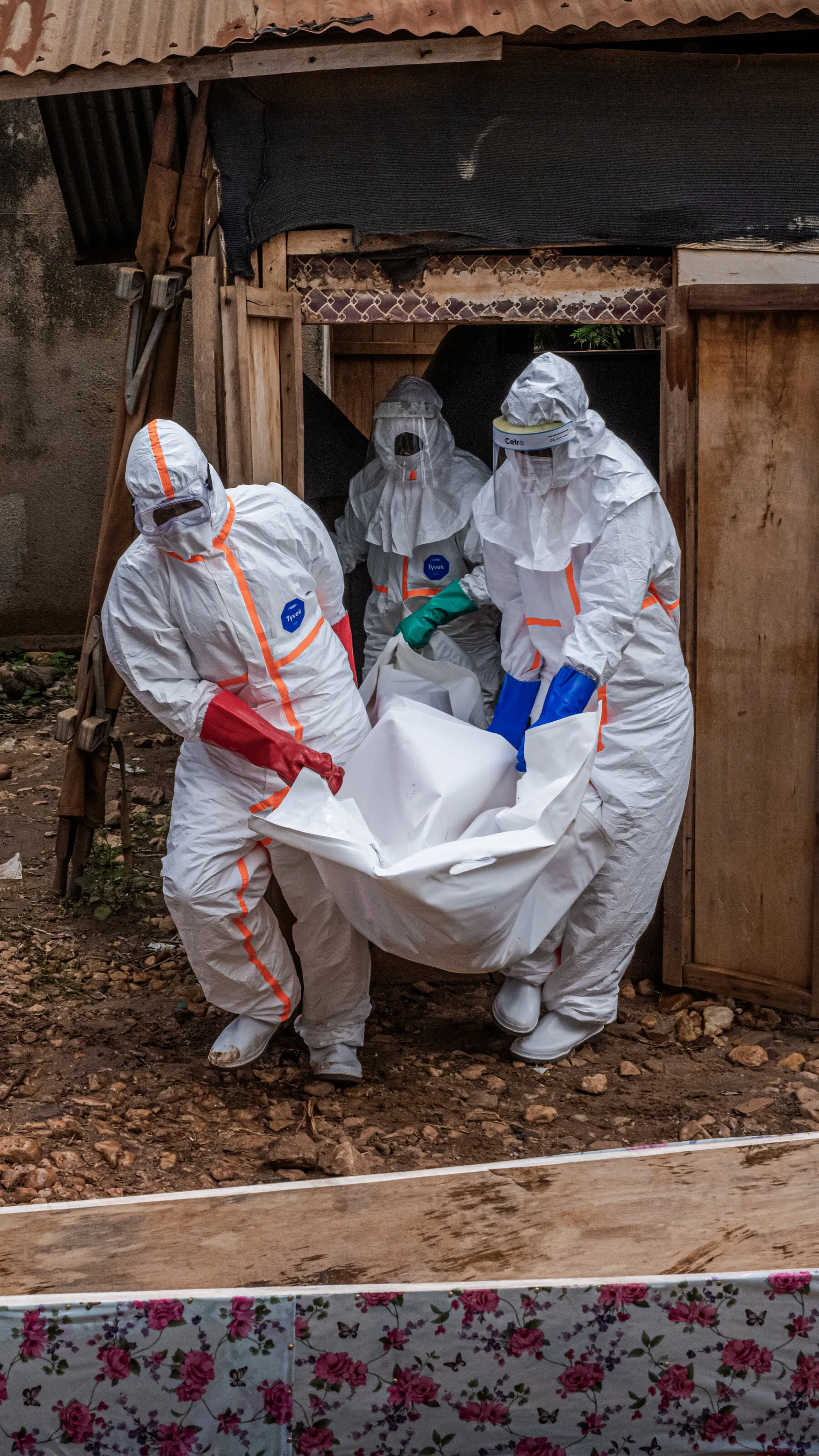
Mr. Sakara, the Red Cross volunteer, threw himself into the response. A onetime seminarian, he had moved to Biakato four years earlier in search of safety. The rebels had attacked his home in the mountains of North Kivu, killing a sister and three brothers. “My grandfather told me to get out,” he said. “We came here to start over.”After Ebola hit, he dropped everything to lead a small team that collects and disinfects the bodies of Ebola victims.
他说,如此近距离接触病毒令人生畏。志愿者们有防护服,但几乎没有接受过培训,他在刚去世的埃博拉患者家中感到恐惧,拖把擦拭他们被感染的血液,或将被污染的床垫拖到室外。
Working that close to the virus was daunting, he said. The volunteers had protective suits but little training, and he felt terrified in the homes of Ebola victims who had just died, mopping up their infected blood or dragging their contaminated mattresses outside.
他所在的小组还面临着他们试图拯救的人的敌意。哀悼者在他们试图安葬死者时投掷石头,向他们倾泻侮辱,并指责他们以某种方式从疫情中牟利。“他们称之为‘埃博拉生意’,”他说。
His team also faced hostility from the very people they are trying to save. Mourners hurled stones as they tried to bury the dead, showering them with insults and accusing them of somehow profiting from the outbreak. “They call it ‘Ebola business,’” he said.
这种敌意对阻止病毒进一步传播的努力是一场灾难。埃博拉死者死后传染性最强,这可能将失管的葬礼变成超级传播事件。乌干达士兵与刚果士兵一起在镇上巡逻。
That hostility was a disaster for the effort to stop the virus from spreading further. Ebola victims are at their most contagious after they die, which can turn unmanaged funerals into superspreader events. Ugandan soldiers patrolling the town alongside Congolese soldiers.
可可农兼金矿工伊斯梅尔·姆巴富莫贾,在镇外一座埃博拉死者的新公墓里。比亚卡托的周日弥撒。
Ismail Mbafumoja, a cacao farmer and gold miner, in a new cemetery for Ebola victims on the edge of town. Sunday Mass in Biakato.
他说,在过去一周里,他12人小组中有4名成员因担心生命安全而退出。无人站出来替补。“你们无法想象我们正在经历什么,”他说。
Over the previous week, four members of his 12-person team had quit, fearing for their lives, he said. Nobody had stepped forward to replace them. “You cannot imagine what we are going through,” he said.
武装分子和许多居民有一个共同点:两群人都是被可可和黄金吸引来到比亚卡托的。在镇外的一片林间空地上,伊斯梅尔·姆巴富莫贾从树枝上摘下一个色彩鲜艳的荚果,劈开,舀出一颗裹着白色果肉的褐色种子。“可可,”他说。
Rebels and many residents have one thing in common: Both groups were drawn to Biakato by cacao and gold. In a forest clearing outside town, Ismail Mbafumoja plucked a colorful pod from a branch, split it open and scooped out a brown seed coated in white pulp. “Cacao,” he said.
直到最近,他最大的担忧还是保护他的农作物免受伊斯兰国战士和刚果士兵的侵害,他都认为这两者都是威胁。但现在,由于埃博拉受害者的葬礼太多,他几乎没有时间耕种。“我参加过多少场葬礼,数不过来,”他说。
Until recently, his biggest worry was guarding his crop against Islamic State fighters and Congolese soldiers, both of whom he considered a threat. But now he had little time to farm at all because of all the funerals for Ebola’s victims. “I can’t count how many I’ve been to,” he said.
这位农夫在一位邻居家门口停下脚步。他说,家里没人,因为住在这里的一个孩子刚刚去世。“是埃博拉,”他说。
The farmer paused outside a neighbor’s house. Nobody was home, he said, because a child who lived here had just died. “Ebola,” he said.
比亚卡托的患者如此急需的医疗,就在40英里外的贝尼就能找到。
The care Biakato’s patients so urgently needed could be found just 40 miles away, in Beni.
由无国界医生组织运营的一个治疗中心提供了埃博拉治疗的黄金标准。身着白色防护服的医生在帐篷病房里工作。严格遵守安全规程。中心有200多名工作人员,大约每名患者配备六人。中心甚至还有心理医生来处理患者的创伤。
A treatment center run by Doctors Without Borders offered the gold standard in Ebola care. Doctors in white suits worked in tented wards. Strict safety protocols were observed. There were over 200 staff members, about six per patient. The center even had psychologists to manage patient trauma.
“我们从之前的疫情中吸取了很多教训,”该中心副主管萨姆·阿诺德说。
“We’ve learned a lot from previous outbreaks,” said Sam Arnold, the facility’s deputy head.
一名医护人员在贝尼无国界医生组织的埃博拉患者治疗中心接受消毒。
A health care worker being disinfected at the Doctors Without Borders treatment center for Ebola patients in Beni.
比亚卡托却没有这样的设施,尽管病例数在激增。2013年,四名无国界医生组织的工作人员在北基伍省一个村庄遭受ADF袭击时被绑架。一人在13个月后逃脱,另外三人至今下落不明。
There was nothing of the sort in Biakato, despite the surging cases. In 2013, four Doctors Without Borders workers were abducted in an A.D.F. raid on a village in North Kivu Province. One escaped after 13 months; the other three have never been found.
世界卫生组织正在牵头努力向比亚卡托提供援助,该组织在该镇也有自己的痛苦历史。在该地区上一次疫情期间,即2019年,武装人员袭击了该组织在比亚卡托的招待所,杀害了三名埃博拉应对人员。官员将暴力归咎于马伊马伊,这是当地民兵的统称。
The World Health Organization, which is leading the effort to get help to Biakato, has its own painful history in the town. During the last outbreak in this area, in 2019, armed men attacked its guesthouse in Biakato, killing three Ebola responders. Officials blamed the violence on the Mai-Mai, a term for local militias.
这使得卫生官员不得不走钢丝。行动太慢,比亚卡托可能成为埃博拉的深层储层,将感染扩散到整个地区。行动太快,他们又面临袭击风险,例如援助人员被杀或被绑架,这可能导致整个努力崩溃。
That leaves health officials walking a tightrope. Proceed too slowly, and Biakato could become a deep reservoir of Ebola, spreading infection across the region. Move too quickly, and they risk an attack, like a killing or a kidnapping of aid workers, that could collapse the entire effort.
当地居民的不信任也是一个问题。官员表示,经过数十年的战争和多次失败的军事行动,人们对政府的信任已彻底崩塌。本应保护社区的刚果士兵也在掠夺社区,索要贿赂或从黄金中牟利。当埃博拉出现时,当地人将这种疾病视为又一个压制他们的阴谋。
Mistrust among local residents is also a problem. After decades of war, and numerous failed military operations, faith in the government has collapsed, officials said. The same Congolese soldiers who are supposed to protect the community also prey on it, seeking bribes or profiting from gold. When Ebola came along, locals saw the disease as yet another plot to suppress them.
“他们不信任外来者,”联合国驻刚果埃博拉疫情协调员朱利安·哈内斯说。“经验教会了他们不信任。”随着感染病例在9月开始上升,世卫组织的一个小组返回比亚卡托,看看如何提供帮助。起初预兆不祥。卫生工作者某天清醒发现一只无头羊被扔在他们的旅馆外面——这是表示他们不受欢迎的信号,刚果埃博拉应对负责人史蒂夫·阿胡卡博士说。
“They don’t trust outsiders,” said Julien Harneis, the United Nations Ebola coordinator in Congo. “Experience has taught them not to.”As infections began to rise in September, a W.H.O. team returned to Biakato to see how they might help. The omens were ominous, at first. The health workers woke one morning to find a headless sheep dumped outside their hotel — a sign they were not welcome, said Dr. Steve Ahuka, the head of Congo’s Ebola response.
但几周内,埃博拉疫情变得如此压倒性,以至于比亚卡托那些不信任的领袖们开始恳求援助。
But within weeks, Ebola had become so overwhelming that Biakato’s distrustful leaders were pleading for help.
10月12日,阿胡卡博士和世卫组织高级官员凯瑟琳·斯莫尔伍德重返比亚卡托,受到截然不同的接待。当地领袖围成一圈把斯莫尔伍德围在中间,在为2019年的杀戮道歉后,恳请她派遣援助。
On Oct. 12, Dr. Ahuka and Catherine Smallwood, a senior W.H.O. official, returned to Biakato to a very different reception. Local leaders formed a circle around Ms. Smallwood and, after apologizing for the 2019 killings, implored her to send help.
“他们请我把过去留在过去,”她回忆道。“那是一个极其动人的时刻。”从那时起,世卫组织部署了官员并整顿了混乱的卫生中心。刚果政府建立了一个实验室检测患者。瑞士援助组织Medair派遣了医护人员。患者注视着医护人员在比亚卡托一家埃博拉治疗中心外互相消毒。一名患者在隔离区(左),以及治疗中心的一名医护人员。比亚卡托一家野外实验室的实验室技术人员处理疑似埃博拉样本。即便如此,这可能仍然不够。
“They asked me to put the past in the past,” she recalled. “It was an extremely touching moment.”Since then, the W.H.O. has deployed officials and revamped the chaotic health center. The Congolese government set up a lab to test patients. Medair, a Swiss aid organization, has sent medics. Patients look on as health care workers sanitize each other by an Ebola treatment center in Biakato. A patient in an isolation area left, and a health care worker at the treatment center. Laboratory technicians at a field laboratory handle samples of suspected Ebola in Biakato. And yet, even that may not be enough.
为了根除病毒,卫生工作者需要追踪感染者的每一位已知密切接触者。只要盟军民主力量(A.D.F.)仍在威胁农村地区,这种调查工作就无法开展。
To stamp out the virus, health workers need to trace every known contact of an infected person. That kind of investigative work is impossible in the countryside while the A.D.F. still threatens it.
埃博拉专家穆延贝博士敦促政府考虑一种过去不可想象的做法:与“伊斯兰国”取得联系。
Dr. Muyembe, the Ebola expert, urged his government to consider what was once unthinkable: reaching out to the Islamic State.
“绝对必须想办法与这些人取得联系,”他说,“必须告诉他们:‘这也是你们面临的风险。’”他承认,即使只是探索性的尝试,这种做法也很难实行。刚果政府官方拒绝与盟军民主力量谈判,美国已将该组织列为恐怖组织。“但我们必须这么做,”穆延贝博士敦促道。
“You absolutely have to find a way to get in touch with these people,” he said. “You have to tell them, ‘This is a risk you face, too.’”Such an approach, even if exploratory, would be difficult, he admitted. Congo’s government officially refuses to negotiate with the A.D.F., a group the United States has designated as a terrorist organization. “But we have to do it,” Dr. Muyembe urged.
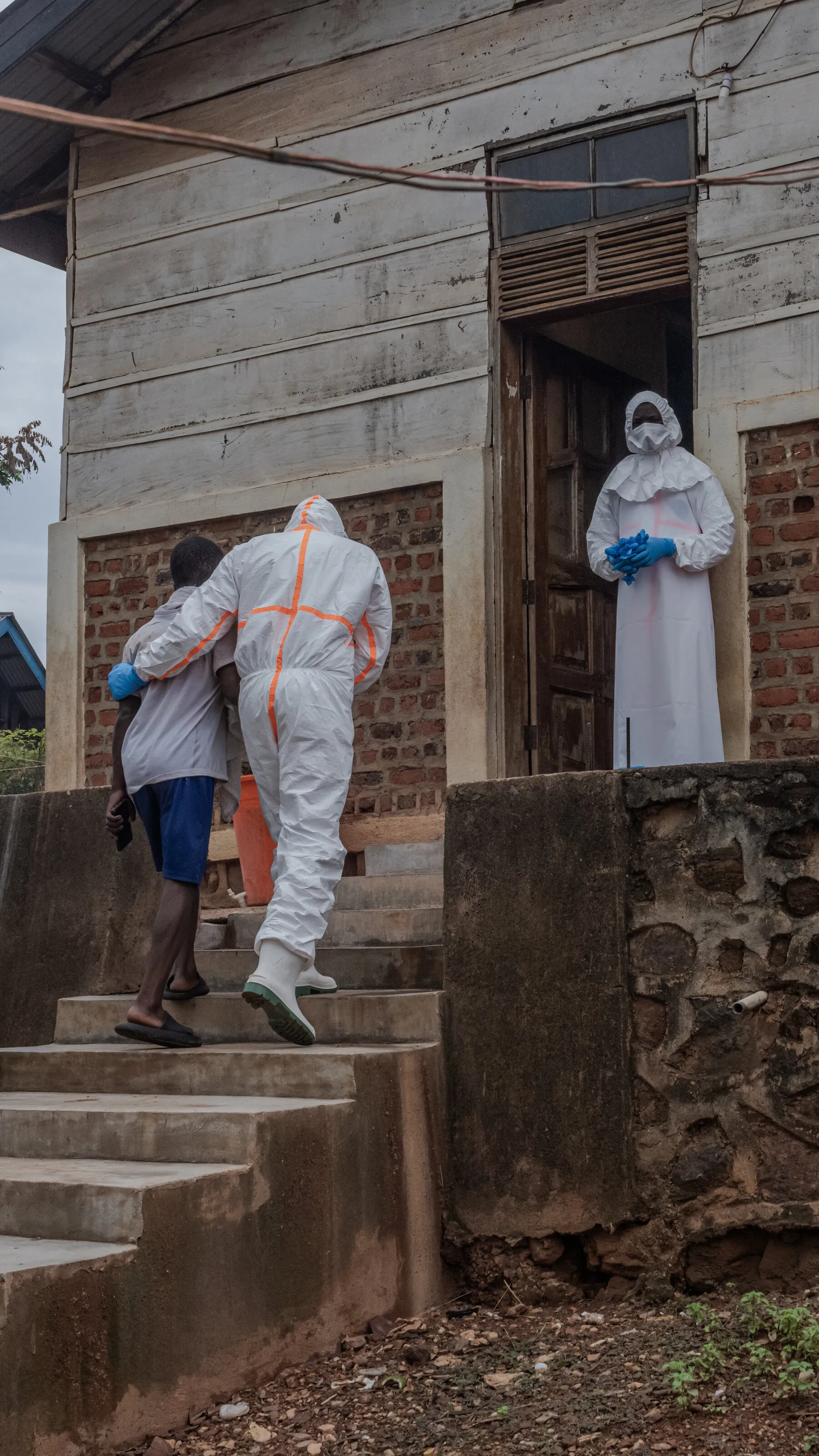
否则,他说,埃博拉“将无法遏制”。27岁的莫伊塞·卡林德拉濒临崩溃,在身穿白色防护服的医护人员搀扶下,艰难地走上了埃博拉病房的台阶。
Otherwise, he said, Ebola “will be impossible to contain.”On the verge of collapse, Moïse Kalindera, 27, struggled up the steps of the Ebola ward, assisted by a medical worker in a white suit.
数周来,亲属们辗转将他从一家诊所送到另一家诊所,在日益焦急的寻医过程中四处奔波。当他被确诊感染埃博拉时,家属拒绝相信。
For weeks, relatives had been ferrying him from one clinic to another, in an increasingly frantic search for a cure. When he tested positive for Ebola, they refused to believe it.
“我们认为他是被下毒了,”他的妹妹孔索莱看着他蹒跚着走进病房门说。
“We think he has been poisoned,” his sister, Consolée, said as she watched him shuffle through the ward doors.
卡林德拉被安置在一个小房间里,与另一名年轻男子同住,后者给了他走出困境的希望。
Mr. Kalindera was placed in a small room with another young man who offered hope of a way out.
31岁的农场工人热尔曼·坎永古对埃博拉毫无幻想。在与病毒搏斗数周后,他终于开始康复,且刚刚检测呈阴性。再有一个这样的结果,他就能出院了。
Germain Kanyungu, a 31-year-old farmhand, had no illusions about Ebola. After fighting the virus for weeks, he was finally recovering and had just tested negative. One more result like that and he would be free.
他迫不及待了。“一旦我出去,”他说,“我再也不回比亚卡托了。”埃博拉患者、27岁的莫伊塞·卡林德拉在比亚卡托的诊所内。31岁的农场工人热尔曼·坎永古(右)在埃博拉诊所内。
He couldn’t wait. “Once I get out of here,” he said, “I’m never coming back to Biakato.”Moïse Kalindera, a 27-year-old Ebola patient, at the clinic in Biakato. Germain Kanyungu, right, a 31-year-old farmhand, at the Ebola clinic.
一口装着埃博拉死者遗体的棺材已准备就绪,待运往比亚卡托安葬。
A coffin holding an Ebola victim is ready to be taken for burial in Biakato.
那天晚上,两个年轻人在孤零零的埃博拉病房里聊了起来,卡纽古后来回忆道。他们分享笑话,开怀大笑。卡纽古帮室友进食,并在他吐露对死亡的恐惧时安慰他。
That night, the two young men got to talking in the lonely Ebola ward, Mr. Kanyungu later recounted. They shared jokes and laughed. Mr. Kanyungu helped his roommate eat and comforted him when he confided his fears of dying.
第二天,孔索莱和一位兄弟前来探视。但两人都没穿任何防护装备,那兄弟甚至用裸手倒掉了卡林德拉的尿桶——卡纽古认为这是极其鲁莽的冒险。
The next day, Consolée and a brother came to visit. But neither wore any protection, and the brother emptied Mr. Kalindera’s urine bucket with his bare hands — a risk that Mr. Kanyungu found utterly reckless.
那天晚上,卡林德拉的病情急剧恶化。他呕吐、腹泻,哀求喝水。一名护士试图留置静脉输液管,却找不到血管。不久后,他在睡梦中安静地离世。
That night, Mr. Kalindera deteriorated sharply. He vomited, suffered diarrhea and begged for water. A nurse tried to insert an IV line, but failed to find a vein. Soon after, he died quietly in his sleep.
无人前来收尸,卡纽古只能陪着死去的同伴度过那个夜晚,无法入眠。
Nobody came to collect the body, leaving Mr. Kanyungu to spend the night alongside his dead companion, unable to sleep.
“我不想再进去了,”第二天清晨,他在阳光下坐在室外说道,“我看过太多人死去了。”一辆卡车开来,将卡林德拉那口印有花纹的棺材运往镇外几英里处的一片林间空地,那里正安葬着埃博拉死者。
“I don’t want to go back inside,” he said the next morning, sitting outside in the sun. “I’ve seen too many people die.”A truck arrived to carry Mr. Kalindera’s flower-print coffin to a forest clearing, a few miles outside town, where Ebola victims were being buried.
一百多座新挖的坟墓挤在一丛参天棕榈树间,树叶形成拱顶般的树冠,覆盖着这座临时公墓。朴素的木十字架上没有名字。掘墓人倚靠着铲子,有人从啤酒瓶里猛灌几口。空气中飘散着大麻烟味。
Over 100 freshly dug graves were squeezed amid a cluster of towering palm trees whose fronds formed a vaulted canopy over the impromptu cemetery. Plain wooden crosses bore no names. Gravediggers leaned on shovels, some swigging from beer bottles. The smell of hashish wafted through the air.
萨卡拉的红十字会志愿者抬着棺材朝一个敞开的坑穴走去,在墓穴间狭窄的空隙中艰难保持平衡。一人脚下一滑,导致棺材晃动,随即重重砸入墓穴。围观者或面露痛苦之色,或惊呼出声。
Mr. Sakara’s Red Cross volunteers maneuvered the coffin toward an open pit, struggling to keep their balance in the narrow spaces between graves. One slipped, causing the coffin to lurch, then fall into the grave with a thud. Onlookers grimaced or cried out in shock.
没有神父,没有祷告,掘墓人迅速将肥沃疏松的泥土铲入墓穴。哭喊声充斥四周。泥土落在卡林德拉棺材上时,一名女子瘫倒在地:“哦,莫伊兹!”
With no priest and no prayers, the gravediggers quickly scooped the rich, loamy earth into the grave. Wailing filled the air. One woman fell to the ground as soil hit Mr. Kalindera’s coffin. “Oh, Moïse!” she cried.
孔索莱缺席了——家人担心她去病房探视可能已被感染,强行将她隔离。在比亚卡托郊外挖掘黄金。
Consolée was absent — family members had forced her into isolation, fearing her visit to the ward might have infected her. Digging for gold on the outskirts of Biakato.
卡林德拉先生的棺材发出一声沉闷的巨响落入坑中,红十字会志愿者正将其安放妥当。家属和朋友聚集在一起,为卡林德拉先生哀悼。
Mr. Kalindera’s coffin dropped with a thud as Red Cross volunteers maneuvered it into the pit. Family members and friends gathered to mourn Mr. Kalindera.
几码之外,另一组人开始挖掘下一个墓穴。第三组人抬着一具棺材前来下葬。一名哀悼者转向我们。
Yards away, another group began digging the next grave. A third group arrived, bearing a coffin for burial. One mourner turned toward us.
“这是白人的错,”她大声说道,“你们把埃博拉带到了这里。” 嘲笑声爆发了,由掘墓人带头。“你们害死了他!但愿你们高兴!”“咱们冲上去揍他们!”
“This is the fault of the white people,” she said loudly. “You brought Ebola here.”Jeering erupted, led by the gravediggers. “You killed him! I hope you are happy!”“Let’s attack them!”
我们身旁的两名男子在争论我们是否真的是记者。另一人走上前,递过来一把锄头。“拿着,白人,”他对我说,“帮我们挖。” 一名掘墓人挥舞着一把玩具木枪,然后指向我。
Two men beside us debated whether we were really journalists. Another walked up, holding out a hoe. “Take it, white man,” he said to me. “Help us dig.”One of the gravediggers waved a toy wooden rifle, then pointed it at me.
当我们溜走时,几把泥土落在我们头上,是从卡林德拉先生墓穴的方向扔过来的。
As we slipped away, handfuls of soil fell on our heads, thrown from the direction of Mr. Kalindera’s grave.
第二天,坎永古先生离开了埃博拉病房,摘下白色口罩,露出灿烂的笑容。他的第二次检测结果呈阴性。他要回家了。比亚卡托的圣斯蒂芬教堂。
The next day, Mr. Kanyungu left the Ebola ward, removing his white face mask to reveal a broad smile. His second test had come back negative. He was going home. St. Stephen Church in Biakato.
刚果快速蔓延疫情的新震中,是一个饱受叛军暴力创伤的地区。救援人员正努力提供援助。
The new epicenter of Congo’s fast-spreading outbreak is a region scarred by rebel violence. Responders are struggling to help it.