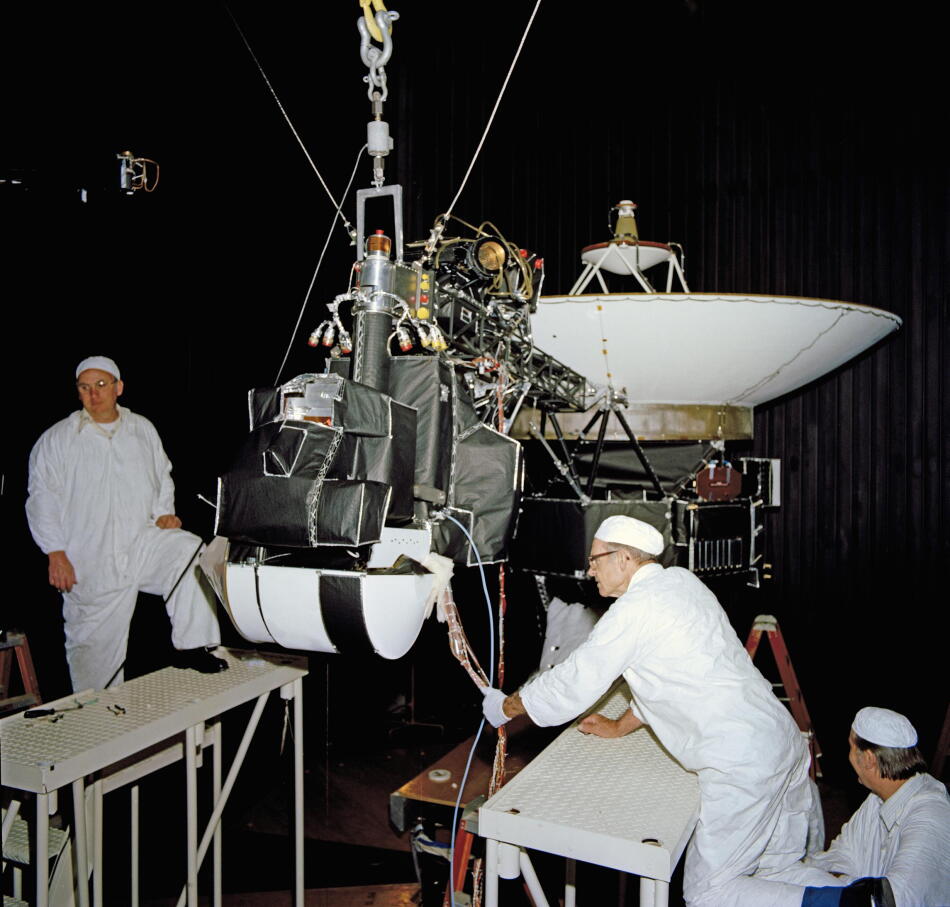
NASA的旅行者1号即将成为人类首个距离地球一光日的物体。这是一个令人震撼的距离,超过160亿英里。
NASA's Voyager 1 is about to become humanity's first object to reach one light-day from Earth. That's a mind-blowing distance of more than 16 billion miles.
佛罗里达州卡纳维拉尔角讯(美联社记者马西娅·邓恩报道)——NASA的旅行者1号即将成为人类首个距离地球一光日的物体,它正不断深入星际空间。对于49年前发射的这艘航天器来说,这是一个超过160亿英里(260亿公里)的令人震撼的距离。
MARCIA DUNN CAPE CANAVERAL, Fla. — NASA’s Voyager 1 is about to become humanity’s first object to reach one light-day from Earth as it pushes ever deeper into interstellar space That’s a mind-blowing distance of more than 16 billion miles (26 billion kilometers) for the spacecraft launched 49 years ago.
当旅行者1号周三达到这个非凡的里程碑时,它的无线电信号将以光速精确花费24小时才能到达地球——换句话说,就是一光日。NASA预计,这艘航天器还需要18000年才能达到一整光年,而要接近另一颗恒星,则需要超过两倍的时间。
When Voyager 1 reaches that remarkable milestone on Wednesday, its radio signals will take precisely 24 hours traveling at the speed of light to reach Earth — in other words, one light-day. NASA is looking at another 18,000 years before the spacecraft achieves a full light-year and more than double that before it comes near another star.
项目经理苏珊娜·多德将旅行者1号视为地球的大使,它在星际间疾驰,同时为地球带来“奇妙感”。
Project manager Suzanne Dodd sees Voyager 1 as Earth’s ambassador hurtling between stars while providing a “sense of wonder” on the home front.
“它是一件国家瑰宝,”她告诉美联社记者。“真是非凡。”为了庆祝这个时刻,NASA敦促来自各地的人们在周二日落后拿出手机或手电筒,制造一道金色的光波,用摩斯电码将字母V-G-R(即旅行者号的呼号)拼写进夜空中。
“It’s a national treasure,” she told The Associated Press. “Really extraordinary.”To celebrate this moment, NASA is urging people from all corners to grab their phone or a flashlight to create a wave of golden light after sunset Tuesday, using Morse code to spell the letters V-G-R, Voyager’s call sign, into the night sky.
尽管存在老航天器典型的偶发问题,旅行者1号及其孪生航天器仍在以每小时38000英里(61000公里)的速度朝着太空中不同的地点飞驰,并持续发回科学和工程数据。尽管旅行者1号比其孪生航天器早两周于1977年发射,但旅行者2号要到2035年才能达到一光日的标志。
Despite sporadic problems typical of old age, Voyager 1 and its twin continue to send back science and engineering data as they zoom toward different points in space at 38,000 mph (61,000 kph). Although launched two weeks before its sibling in 1977, Voyager 2 won’t reach the one light-day mark until 2035.
旅行者1号分别于1979年和1980年飞掠木星和土星,令科学家欣喜不已,随后离开太阳系。它于2012年抵达NASA定义的星际空间——星系之间的广阔区域。旅行者2号造访了木星、土星、天王星和海王星,也发回了令人惊叹的照片,随后于2018年进入星际空间。
Voyager 1 swept past Jupiter and Saturn to scientists’ delight in 1979 and 1980, respectively, before exiting the solar system. It reached what NASA defines as interstellar space — the expansive region between star systems — in 2012. Voyager 2 visited those two planets plus Uranus and Neptune, also sending back stunning photos, before entering interstellar space in 2018.
旅行者号探测器几乎每天都会传回关于其前所未探索环境的详细数据:磁场的强度和方向,以及周围压力、尘埃和银河宇宙射线的相关信息。据多德介绍,它们有点像气象卫星,多德自1984年起就参与了旅行者号项目。
Almost every day, the Voyagers beam back details about their never-before-explored environment: the strength and direction of the magnetic field as well as tidbits about the surrounding pressure, dust and galactic cosmic rays. They’re a bit like weather satellites, according to Dodd, who’s worked with the Voyagers since 1984.
位于加利福尼亚州帕萨迪纳的美国国家航空航天局喷气推进实验室的精简飞行控制团队大约每周发送一次指令。当探测器出现问题时,工作强度会增加,有时会得到几位曾参与该项目的退休人员的协助。
The skeleton flight control team at NASA’s Jet Propulsion Laboratory in Pasadena, California, sends commands about once a week. The operation ramps up when spacecraft problems arise, with help sometimes coming from a couple of retirees who once worked on the project.
9月,控制人员完成了为钚动力探测器节省电力的最新努力,随后在10月曾短暂失去与其的联系。他们仍在设法弄清通信中断的原因。
In September, controllers completed the latest power-conserving effort for the plutonium-powered spacecraft, then in October briefly lost contact with it. They’re still trying to figure out why communication was disrupted.
据多德说,所有这些专业知识和热情让旅行者1号像“自信的小火车”一样持续运行,并不断刷新吉尼斯世界纪录。除了比任何其他人造物体飞得更远,旅行者1号还在1990年拍摄了距离地球最远的照片:从海王星之外看到的标志性“淡蓝小点”。
All this expertise and love have kept Voyager 1 chugging along like “the little engine that could,” according to Dodd, while racking up entries in Guinness World Records. Besides venturing farther than any other human-made object, Voyager 1 in 1990 snapped the most distant picture of Earth: the iconic “Pale Blue Dot” as seen from beyond Neptune.
康奈尔大学天文学家卡尔·萨根是成像团队成员,他在1990年向世界展示这张照片时说:“在那个蓝点上,那是你认识的每个人、你听说过的每个人、曾经生活过的每一个人的家园。在伟大的宇宙舞台面前,这是一个非常小的舞台。”
“On that blue dot, that’s where everyone you know and everyone you ever heard of and every human being who ever lived, lived out their lives. It’s a very small stage in a great cosmic arena,” Cornell University astronomer Carl Sagan, part of the imaging team, said as he introduced the picture to the world in 1990.
行星学会的比尔·奈在一份声明中说,虽然如今在世的大多数人在旅行者号发射时尚未出生,“但我们所有人——地球上的每一个人——都受到了这些任务的影响。”该学会由萨根于1980年共同创立,萨根于1996年去世。“金唱片”也是萨根努力的成果。
While the majority of people alive today were not yet born when the Voyagers launched, “all of us — everyone on Earth — have been touched by these missions,” the Planetary Society’s Bill Nye said in a statement. The society was co-founded in 1980 by Sagan, who died in 1996. The Golden Record also resulted from Sagan’s effort.
每艘“旅行者”号都携带一张直径12英寸(30厘米)的镀金留声机唱片,上面收录了55种语言的问候语以及图像和图表。萨根录入了当时6岁的儿子尼克的声音:“来自地球儿童的问候。”他还附上了一根唱针和给任何拾获者的使用说明。
Each Voyager carries a 12-inch (30-centimeter) gold-plated phonographic record containing greetings in 55 languages as well as images and diagrams. Sagan included the voice of his son Nick, then 6: “Hello from the children on Planet Earth.”He added a stylus and instructions for any finders-keepers out there.
“这是1977年地球生命的一个时间胶囊,”多德说。“我希望也许1000年后,有什么东西、有人能找到它。”
“It’s a time capsule of life on Earth from 1977,” Dodd said. “I hope something, someone, finds it maybe 1,000 years from now.”