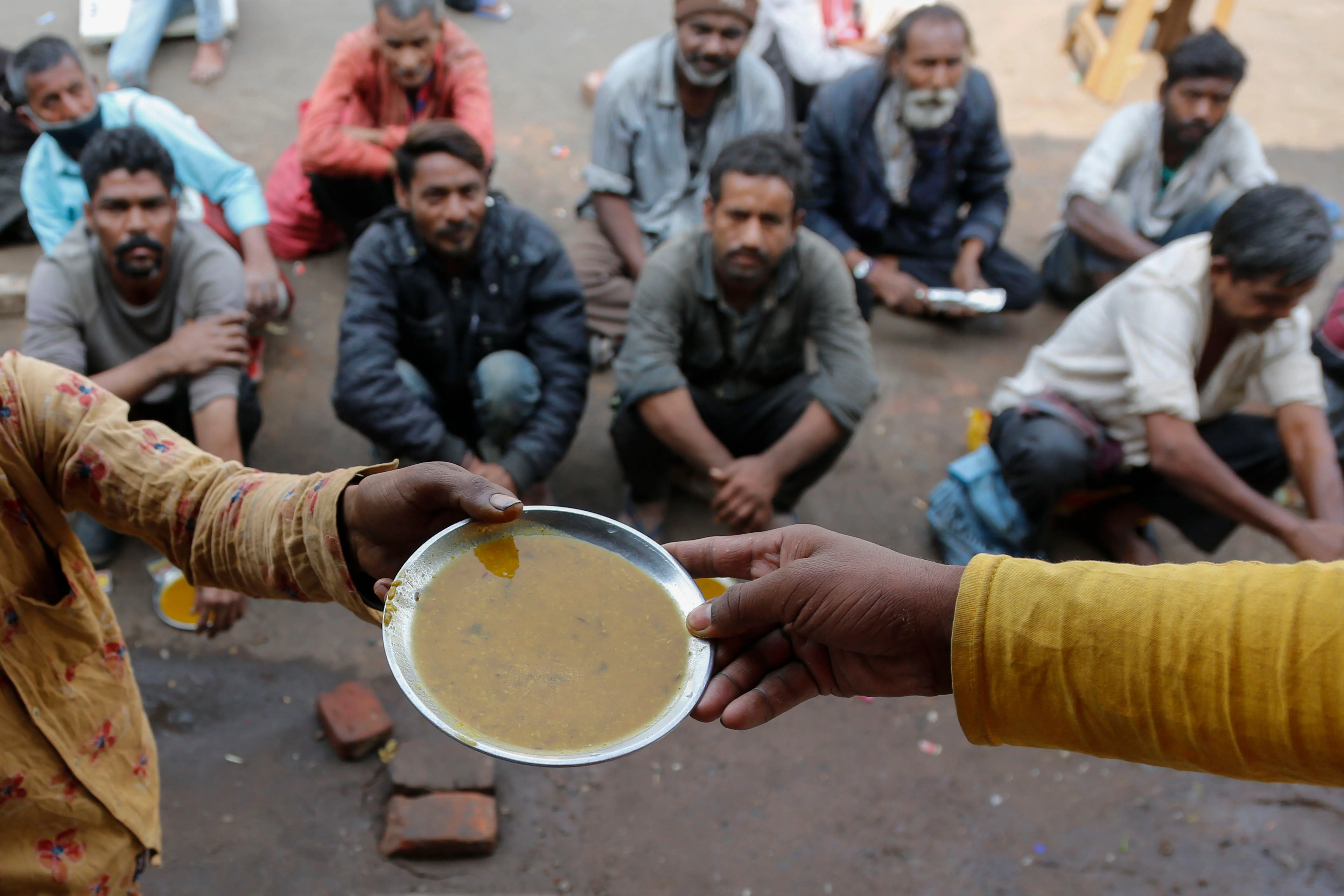
印度拉杰萨曼德和新德里——25岁的海玛·普拉贾帕特(Hema Prajapat)说,即使是“胃里长满荆棘”,也没有饥饿带来的痛楚深。
Rajsamand and New Delhi, India – Hema Prajapat, 25, says even “thorns growing inside her stomach” would not hurt as much as hunger does.
到了每个月末,她家的厨房橱柜空空如也;她的丈夫哈里·普拉贾帕特(Hari Prajapat)越陷越深地负债;他们越来越多的食物被留给9岁的儿子迪万什(Divyansh)。但海玛的家庭不再贫困——至少在纸面上是这样。
By the end of each month, her kitchen shelves are empty; her husband, Hari Prajapat, sinks deeper into debt; and an increasing share of their food supplies is set aside for their nine-year-old son, Divyansh. But Hema’s family is no longer poor – at least on paper.
她三口之家每月花费1.1万卢比(合117美元)。这比基于世界银行贫困线、三口之家约7380卢比(合78美元)的月度门槛高出约49%。
She spends 11,000 rupees ($117) a month on her household of three. That is about 49 percent more than the roughly 7,380 rupees ($78) monthly threshold for a family of that size, based on the World Bank’s poverty line.
作为世界上人口最多的国家,印度不再统计其贫困人口。该国已有十多年没有发布官方的基于消费的贫困估算数据。这使得世界银行得以利用更新的消费调查和自身的贫困门槛,提供具有国际可比性的估算。
India, the world’s most populous country, no longer counts its poor. It has not published an official consumption-based poverty estimate in more than a decade. That leaves the World Bank to provide internationally comparable estimates, using newer consumption surveys and its own poverty thresholds.
世界银行最近的一份报告显示,在2011年至2023年期间,印度有近5亿人摆脱了贫困,极端贫困率在此期间从27.1%下降到2.6%。
A recent World Bank report says India lifted nearly 500 million people out of poverty between 2011 and 2023, with extreme poverty dropping from 27.1 percent to 2.6 percent during the period.
唯一能与这一规模相媲美的减贫努力由中国实现,中国在四十多年里使8亿多人口摆脱了极端贫困。
The only comparable poverty-reduction effort on this scale was achieved by China, which lifted more than 800 million people out of extreme poverty over four decades.
多位经济学家表示,印度的成就是重大的,世界银行计算这些数字的机制无可挑剔,尽管他们也辩称,这个地球上人口最多的国家在宣布战胜贫困之前,仍有很长的路要走。
Several economists have said India’s achievement is significant, and that the World Bank’s mechanism for calculating these numbers is beyond reproach, even as they have argued that the planet’s most populous nation still has a long way to go before it can claim to have defeated poverty.
其他经济学家则对世界银行的宏大结论以及在总理纳伦德拉·莫迪(Narendra Modi)政府领导下印度不愿进行自身贫困估算的做法提出了质疑。
Other economists have questioned the World Bank’s sweeping conclusions and India’s unwillingness under Prime Minister Narendra Modi’s government to carry out its own poverty estimates.
但在很大程度上被这种学术与政治层面的分歧所掩盖的,是数百万印度人的现实生活:他们已跨越所谓的贫困线,却依然过着长期匮乏的生活,处境脆弱,一个冲击就可能让家庭失去一切珍视的东西。
But masked by that largely academic and political split is the lived reality of millions of Indians who have crossed the supposed poverty threshold yet lead a life marked by persistent deprivation, and a precarity that leaves families one shock away from losing everything that matters to them.
“这条贫困线、这个标准,非常低。没有人能靠这个数额过上有尊严的生活,”希玛对半岛电视台记者说,她坐在一座小花园里,那里是她兼职做看护的地方。
“This poverty line, this bar, is very low. No person can live a dignified life [on this amount],” Hema told Al Jazeera, sitting in a small garden where she moonlights as a caretaker.
“他们连空调车都下过吗?”她反问道,讽刺那些为世界银行撰写报告的官员。
“Did they even get out of their AC cars?” she asked, taking a dig at the officials who prepared the report for the World Bank.
印度拥有14亿人口,是全球增长最快的经济体之一——按名义国内生产总值(GDP)计算位居第四,尽管近来接连遭遇新冠疫情、乌克兰战争和中东战争等冲击。
India, home to 1.4 billion people, is one of the fastest-growing global economies – the fourth-largest by nominal gross domestic product (GDP), despite repeated recent shocks including the COVID-19 pandemic and the ongoing wars in Ukraine and the Middle East.
它同时也是世界上最不平等的国家之一,最富有的1%人口拥有全国40%的财富——世界银行报告也强调了这一担忧。
It is also one of the world’s most unequal countries, with the top 1 percent of its population owning 40 percent of its wealth – a concern highlighted in the World Bank report as well.
希玛11岁时被嫁给了一名男子,对方属于拉贾斯坦邦拉杰萨曼德县一个世代烧制陶罐的家庭。
Hema was 11 when she was married off to a man who belongs to a family of traditional clay-pot makers in Rajsamand district of Rajasthan state.
当卖陶罐已无法满足家庭经济需求时,她的丈夫哈里开始摆摊卖帕尼普里,一种流行的印度小吃。因疫情,这份生意没维持多久。希玛开始找工作。
When pot sales could no longer meet their financial needs, her husband, Hari, started a street food stall selling pani puri, a popular Indian snack. That did not last long because of the pandemic. Hema started to look for work.
过去一年里,她在邻里打扫卫生、洗碗,月入5000卢比(约合53美元),但匮乏并未结束。“我们每一样东西都得从市场上买,”她说。家里没有农田。
For the past year, she has been cleaning houses and washing utensils in the neighbourhood for 5,000 rupees ($53) a month, but the deprivation did not end. “We have to buy every single thing from the market,” she said. The family has no agricultural land.
世界银行指出,女性劳动力参与率上升是印度贫困率改善的因素之一,尽管女性获得稳定且报酬合理的就业机会仍是一大挑战。
The World Bank pointed to rising female labour force participation as one of the factors behind India’s improving poverty rates, although women’s access to secure and adequately paid employment remains a challenge.
“自我开始工作以来,我们的家境有了一些好转,但现在钱花得更快了,我们甚至背负了更多的债务,”赫玛(Hema)说。她还表示,自己无法理清这背后的账目。
“Since I started working, our home has seen some comfort, but the money is now vanishing faster, and we are even more in debt,” Hema said, adding that she is unable to figure out the maths behind it.
“近年来价格翻了数倍,无论我们赚多少钱都觉得不够,”她对半岛电视台说。
“The prices have multiplied in recent years, and whatever we earn falls short,” she told Al Jazeera.
世界银行也指出,印度政府通过国家粮食安全项目,每月向近8亿公民提供免费或补贴粮食,这有助于解决极端贫困问题。
The World Bank also noted that the Indian government’s provision of free or subsidised foodgrains to nearly 800 million citizens every month under its national food-security programme has helped tackle extreme poverty.
但生活成本的上升意味着,政府的补贴和救济金正与赫玛这样的家庭所承受的日益严重的经济压力展开赛跑。根据印度政府的消费价格指数,2016年9月至2025年9月期间,印度的整体消费价格至少上涨了51%。同期的工资涨幅并未跟上这一步伐。
But a rising cost of living has meant that government subsidies and handouts are racing against growing economic pressures on families like Hema’s. India’s overall consumer prices rose by at least 51 percent between September 2016 and September 2025, according to the government’s Consumer Price Index. Wage rises in this period have not kept pace.
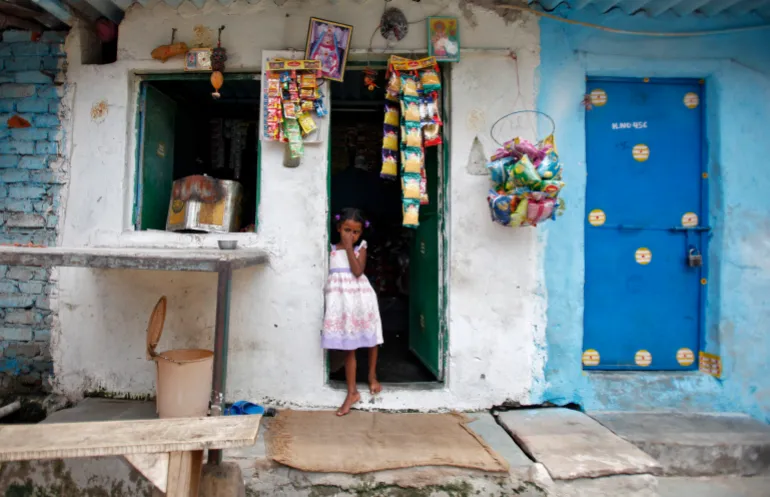
一些政府计划发挥了帮助作用,例如为儿童开设的公立学校,或提供免费或补贴医疗服务的国营医院。
Some government schemes help, such as public schools for children or state-run hospitals that provide free or subsidised healthcare.
但赫玛表示,免费医疗并不能给人们带来太多信心。两个月前,当她的儿子迪维扬(Divyansh)得了重感冒和流感时,她急忙把他送往一家私立医院,因为公立医院的等候时间通常更长,病房拥挤,医生超负荷工作,资源有限。“我为他感到害怕。他的烧越来越厉害,”她说。
But Hema says free healthcare does not inspire much confidence in people. When her son Divyansh had a bad cold and the flu two months ago, she rushed him to a private hospital as waiting times at public hospitals are often longer, with crowded wards, overstretched doctors and limited resources. “I was scared for him. His fever was getting worse,” she said.
在私立医院的治疗花费了赫玛大约6000卢比(合64美元)——这超过了她一个月的收入。“我不想让我的儿子习惯私立医院或他们的药物。我不能每次都带他去那里,”她说。
Treatment at the private hospital cost Hema about 6,000 rupees ($64) – more than what she makes in a month. “I do not want my son to get used to private hospitals or their drugs. I cannot take him to one every time,” she said.
数百万似乎正在跨越世界银行贫困线的印度家庭生活在边缘,拼命挣扎,试图避免被重新推回贫困。
Millions of Indian households that appear to be rising above the World Bank’s poverty threshold live on the edge, desperately trying to avoid being pushed back.
新德里的发展经济学家桑托什·梅赫罗特拉表示,印度的贫困线过低。他说,只需“一次冲击”就会让人重新跌回贫困线以下。“这种冲击可能是大流行、干旱、洪水,甚至是一场婚礼。”海玛的邻居苏希拉·萨尔维就遭遇了这样一次冲击。
Santosh Mehrotra, a developmental economist in New Delhi, said the poverty threshold in India is too low. All it takes is “one shock” to be pushed back into it, he said. “That shock could be a pandemic, drought, flood, or even a wedding.”Hema’s neighbour Sushila Salvi received one such shock.
去年12月,31岁的萨尔维意识到自己“终于又怀孕了”——这是相隔14年后的二胎。萨尔维不信任公立医院,想在私人诊所完成所有产检和治疗。
In December last year, Salvi, 31, realised she was “finally pregnant” again – her second child after a gap of 14 years. Salvi did not trust government hospitals and wanted to get all her treatment at a private clinic.
在某些方面,她早有准备。过去八年里,她学会了化妆技术,在拉杰萨曼德地区的小城坎克罗利开了一家只有一个座位的小美容院。她一直在为14岁女儿的高等教育存钱。女儿目前就读于一所公立学校。“但怀孕后,我无法依赖公立医院,”她说。
In some ways, she had prepared for it. Over the previous eight years, she learned makeup skills and opened a small, one-seater salon in Kankroli, a small town in Rajsamand. She had been saving for her 14-year-old daughter’s higher education. The daughter currently goes to a government school. “But when I got pregnant, I could not rely on government hospitals,” she said.
产检和分娩费用花了她近6.5万卢比(约合695美元),耗尽了她的积蓄。她不得不让女儿退掉每月600卢比(约合6美元)的课外辅导班。
Maternal care cost her nearly 65,000 rupees ($695) and drained her savings. She had to pull her daughter out of extra tuition classes that cost her 600 rupees ($6) a month.
曾参与农村经济和扶贫政府工作的梅赫罗特拉表示,世界银行的贫困线“也有问题,因为它没有区分农村和城市人口”,尽管两者的现实截然不同。
Mehrotra, who previously worked with the government on rural economies and poverty, said the World Bank’s poverty threshold is “also problematic because it does not draw a distinction between the rural and the urban populations” despite their different realities.
37岁的西玛·库马尔住在新德里郊区,一个三口之家每月花费2万卢比(约合214美元)。
Seema Kumar, 37, lives on the outskirts of New Delhi and spends 20,000 rupees ($214) on her family of three.
当开支失控时,比如逢年过节或17岁儿子过生日,她就会借贷度日。但有些冲击来得无声无息。
She turns to loans when expenses spiral, such as during a festival or her 17-year-old son’s birthday. But some shocks come unseen.
上周印度庆祝排灯节(灯节)期间,人们燃放烟花爆竹,作为世界上污染最严重的城市之一,新德里的空气质量创下新低。
As India celebrated Diwali, a festival of lights, last week, and people burst firecrackers, air quality in New Delhi – one of the world’s most polluted cities – hit a record.
第二天清晨,浓重有毒的烟雾笼罩全城,西玛一家三口照常外出上班上学。到了晚上,儿子嗓子疼,全家人都流鼻涕,西玛则因剧烈头痛早早躺下休息。
The next morning, as dense and toxic smog hung over the city, all three members of Seema’s family left for work. By evening, her son had developed a sore throat, everyone in the family had a runny nose, and Seema went to bed with a terrible headache.
“我甚至没钱为儿子买个口罩,他们却说我不再穷了,”西玛(Seema)对半岛电视台说。
“I could not buy a mask for my son, and they say I am not poor any more,” Seema told Al Jazeera.
回到拉杰萨曼德,当赫玛(Hema)在社区的花园里扫地时,她打电话给丈夫哈里(Hari),提醒他他们的孩子那天要做例行体检。
Back in Rajsamand, as Hema swept the garden in her neighbourhood, she called Hari, her husband, reminding him that their child was due for a routine medical checkup that day.
哈里说,由于中东冲突导致油价上涨,他再也加不起油了。赫玛提出帮他摩托车的油箱加满油,以便去最近的医院。
Hari said he could not afford to refill petrol any more due to the increase in oil prices caused by the conflict in the Middle East. Hema offered to refill his motorcycle’s tank to go to the nearest hospital.
“我唯一的希望是儿子能有一番作为,”赫玛说,“如果我哪怕一天不工作——更不用说一个月了——我们就可能回到极度贫困和匮乏的日子。”
“My only hope is that my son makes something out of his life,” said Hema. “If I do not work for a single day – let alone a month – we can go back to the days of extreme poverty and deprivation.”