25岁的餐馆员工纳夫乔特·辛格想买一部买不起的iPhone,月薪5万印度卢比(约合521美元),于是他贷了一笔小贷,才得以购买。随后他又买了PlayStation游戏机和电视,还为学习葡萄酒与烈酒课程以及回家旅行贷了款。
When 25-year-old restaurant worker Navjot Singh wanted an iPhone he couldn’t afford on his monthly salary of 50,000 Indian rupees ($521), taking out a small loan made the purchase possible. A PlayStation and television set followed, along with loans for a wine and spirits course and a trip home.
很快,还款就吞噬了辛格近一半的工资。为了维持开支,他减少了外出就餐和购买衣物,取消了健身房会员,最终放弃了打台球。
Soon, repayments were eating up nearly half of Singh’s paycheck. To keep up with the bills, Singh cut back on eating out and buying clothes, canceled his gym membership and eventually gave up playing snooker.
“贷款是买我想要的任何东西的简便方式。人生只有一次,”辛格说。“月供起初看起来很方便,但你不会意识到自己会多么快地陷入还款循环。”辛格的经历揭示了印度消费热潮下的一个脆弱之处,这一热潮帮助支撑了世界上增长最快的主要经济体。更便宜的贷款和更广泛的信贷获取,帮助数百万渴望进入中产阶级的印度人增加了支出,但借贷增长速度远快于收入和高薪工作。
“Loans were an easy way to buy whatever I wanted. You live only once,” Singh said. “Monthly installments seem convenient at first, but you don’t realize how quickly you can get sucked into a cycle of repayments.”Singh’s experience points to a vulnerability beneath India’s consumption boom, which has helped underpin growth in the world’s fastest-expanding major economy. Cheaper loans and greater access to credit have helped millions of aspiring middle-class Indians spend more, but borrowing is rising much faster than incomes and well-paying jobs.
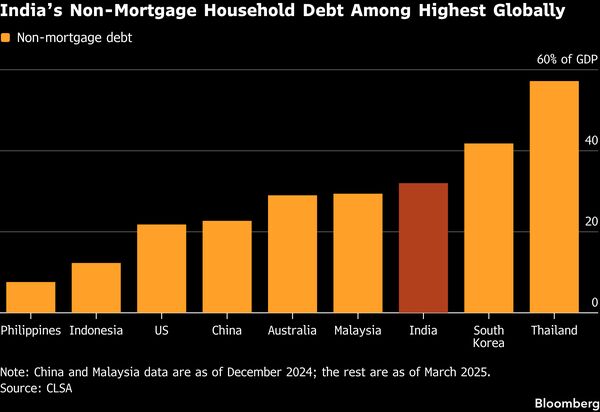
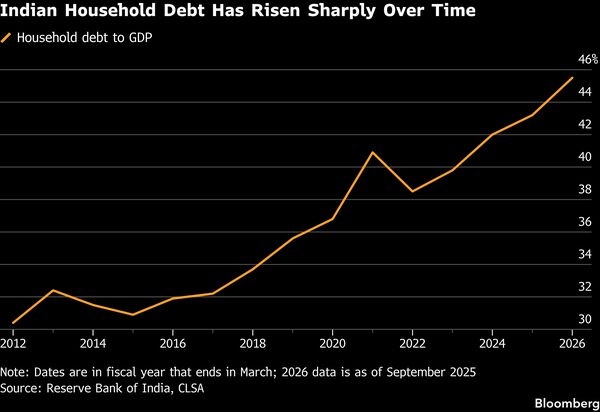
根据央行数据,家庭借贷在截至3月的12个月内激增36%,使消费债务达到国内生产总值的创纪录46%。虽然与美国和澳大利亚等高负债国家的家庭相比仍然较低,但根据香港经纪及投资集团CLSA的估计,若不计抵押贷款债务,印度消费者是世界上最受限制的消费者之一。
Household borrowing surged 36% in the year through March, taking consumer debt to a record 46% of gross domestic product, according to central bank data. While low in comparison to heavily indebted households in countries like the US and Australia, when excluding mortgage debt Indian consumers are among the most constrained in the world, according to estimates from CLSA, a Hong Kong-based brokerage and investment group.
随着利率开始上升,印度消费者现在面临着最大的考验。印度储备银行5.5%的基准利率已是亚洲最高之一,该行上个月时隔近四年首次加息。经济学家预计,未来几个月还将再加息75至100个基点。
Consumers in India are now facing their biggest test as interest rates start to rise. The Reserve Bank of India’s 5.5% benchmark rate is already among the highest in Asia after its first increase in nearly four years last month. Economists expect another 75-100 basis points of hikes in coming months.
印度的消费热潮将“在经历几次加息后迎来第一次重大现实检验,”马塞勒斯投资管理公司创始人、《拐点:中产阶级危机与未来工作》作者索拉布·穆克吉说。他指出,“炸药厂里的三根潜在火柴”可能会终结这场消费狂欢:多次加息、黄金价格下跌——许多印度家庭将黄金作为贷款抵押品——以及白领岗位流失。
India’s spending boom will “face its first big reality check when we go through a few rate hikes,” said Saurabh Mukherjea, the founder of Marcellus Investment Managers and author of Breakpoint: The Crisis of the Middle Class and the Future of Work. He highlights “three potential matchsticks in the dynamite factory” that could end the consumer party: multiple rate hikes, a slump in the price of gold — since many Indian families use gold as collateral for loans — and white-collar job losses.
已经有几个迹象指向收紧。社会与经济进步中心的数据显示,2025-26财年借贷增长速度大约是可支配收入的四倍。而且,尽管薪资有所上涨,但扣除通胀后涨幅微薄:根据基于定期劳动力调查的数据,2025年前三年,常规受薪工人的平均实际收入增长不足4%。
There are several signs already pointing to a squeeze. Figures from the Centre for Social and Economic Progress showed borrowing rose roughly four times as fast as disposable income in 2025-26. And while salaries have risen, the gains have been modest after inflation: average earnings for regular salaried workers increased less than 4% in real terms in the three years through 2025, according to figures based on the Periodic Labour Force Survey.
另一个警示信号来自黄金抵押贷款。印度家庭在面临财务压力时,通常会用黄金首饰作为贷款抵押品。根据印度评级与研究公司的数据,截至3月的这一年,此类贷款增长了近45%,几乎是整体银行信贷增速的三倍。
Another warning sign comes from borrowing against gold. Indian families typically use gold jewelry as collateral for loans when facing financial strain. This type of borrowing jumped nearly 45% in the year through March, almost three times the pace of overall bank credit, according to India Ratings and Research.
住在孟买郊区工人阶级社区的维沙尔·盖克瓦德对借贷循环深有体会。在新冠疫情期间失业后,他开始借贷来支付日常开支和年迈父母的医疗费用。
Vishal Gaikwad, who lives in a working-class neighborhood on the outskirts of Mumbai, knows the cycle of borrowing all too well. After losing his job during the Covid pandemic, he started borrowing to cover daily expenses and medical costs for his aging parents.

如今,这位35岁的男子在完成一天办公室工作后,又转而从事外卖送餐零工,只为应付四笔独立贷款——这些债务分散在银行、他母亲名下,以及一位朋友替他借款以偿还高利贷。婚姻等个人里程碑已被无限期搁置;每一盘可支配的卢比都用于偿还利息和支付生病母亲的医疗费用。
Now, the 35-year-old switches to food delivery gig work after completing his day at an office job just to stay ahead of four separate loans — debts accumulated across banks, in his mother’s name, and via a friend who borrowed on his behalf to clear a high-interest local lender. Personal milestones like marriage have been shelved indefinitely; every spare rupee goes toward servicing interest and covering medical bills for his ailing mother.
“如果没有这两份工作,生存将会很困难,现在我母亲也病倒了,”盖克瓦德说。不过,他不会考虑违约:“我借的每一卢比都会还。无论要忍受多少艰辛。”上个月,包括巴贾吉金融和皮拉马尔金融在内的主要非银行贷款机构表示,陷入困境的借款人越来越多地通过黄金贷款来维持其他已违约的信贷设施。
“Without both jobs, survival will be difficult, and now my mother is also falling sick,” Gaikwad said. Still, defaulting is not an option he will entertain: “I will repay every rupee I borrowed. No matter how much hardship I have to endure.”Last month, major non-bank lenders such as Bajaj Finance and Piramal Finance noted that distressed borrowers are increasingly taking out gold loans to stay afloat on credit facilities that are already in default elsewhere.
“过去几年家庭债务的积累速度很快。这一步伐令人惊讶,并且在某种程度上令人担忧,”澳新银行经济学家迪拉杰·尼姆说。“关键问题不在于家庭债务是否已经变得不可持续,而在于信贷增长是否还能像近年来那样,以同样的速度支持消费。”信贷获取的增加推动了贷款激增。印度迅速扩张的数字贷款行业为小额借贷开辟了新渠道,低于10万卢比的贷款现在占其账簿的三分之二以上,而三年前这一比例为55%。
“The build-up in household debt over the last few years has been rapid. The pace has been surprising and, to some extent, concerning,” said Dhiraj Nim, an economist at ANZ Bank. “The key question is less whether household debt has become unsustainable and more whether credit growth can continue to support consumption at the same pace as it did in recent years.”Increased access to credit has helped drive the surge in lending. India’s rapidly expanding digital-lending industry has opened a new channel for small-ticket borrowing, with loans below 100,000 rupees now accounting for more than two-thirds of their books, up from 55% three years ago.
所有这些支出意味着,近年来印度一直能够以7%或更高的速度增长。财政部长尼尔马拉·西塔拉曼本周指出,强劲的支出正在鼓励企业投资和扩大产能。
All that spending has meant India has been able to grow at a 7% pace or higher in recent years. Finance Minister Nirmala Sitharaman this week pointed to signs that robust spending is encouraging companies to invest and expand capacity.
“消费确实已经回升,这带来了清晰的前景,因此我看到私营部门正在进行投资,”西塔拉曼周一表示。她反驳了关于薪资增长疲软可能拖累需求的担忧。“我仍然认为印度的消费故事将保持不变。”但这种支出越来越以储蓄为代价,并伴随着更高的债务偿还。根据CLSA基于官方数据的估计,截至2025年3月的年度中,约13%的家庭收入用于偿债,而此前十年大部分时间这一比例为10%至11%。
“Consumption having really come up has given that clear visibility, and therefore I’m seeing investments happening from the private sector,” Sitharaman said Monday. She pushed back against concerns that weak wage growth could weigh on demand. “I still think India’s consumption story will be intact.”But that spending is increasingly coming at the expense of savings and with higher debt repayments. About 13% of household income in the year through March 2025 was used to service debt, up from 10%-11% for much of the previous decade, according to estimates by CLSA based on official data.
相比之下,美国、英国和中国的这一比例约为8%至9%,尽管这些经济体的家庭相对于收入的债务负担要大得多。
That compares with about 8%-9% in the US, UK and China, despite households in those economies carrying substantially more debt relative to income.
迄今为止,几乎没有广泛偿债压力的迹象,印度储备银行目前也未敲响警钟。印度银行的不良贷款率接近数十年来的低点,贷款机构也越来越多地将个人信贷转向收入较高、信用状况更好的借款人。
There’s little evidence so far of widespread repayment stress, and the RBI isn’t sounding the alarm bells yet. Bad-loan ratios at Indian banks are near multi-decade lows, and lenders have increasingly shifted personal credit toward borrowers with higher incomes and stronger credit profiles.
即便如此,债务上升仍是令人担忧的问题,尤其是家庭正在使用储蓄和信贷来维持消费。
Even so, rising indebtedness is a source of concern, especially since households are using savings and credit to maintain their consumption.
“这不可能永远持续下去,”CLSA的尼希尔·古普塔表示。“我们不知道终点在哪里,因为我们以前在印度从未见过这样的情景。但我们确实知道,持续的时间越长,就越难维持下去。”
“This cannot go on forever,” said CLSA’s Nikhil Gupta. “We don’t know where the end point is because we haven’t seen an episode like this play out in India before. But we do know that the longer it continues, the more difficult it becomes to sustain.”