
越南散户投资者正在抛售股票,转而购买银行发行的高收益票据,以锁定接近 10% 的利率,因为本地和外国投资者都对表现不佳的股市失去了兴趣。
Vietnam’s retail investors are dumping equities and buying high-yielding notes from banks to capture interest rates nearing 10%, as locals and foreigners fall out of favor with the poor-performing stock market.
近几个月来,银行上调存款利率以争夺资金,吸引了该国 1400 万散户投资者中的很大一部分涌向一种长期被视为过时的金融产品。此举发生之际,规模约 3920 亿美元的股票市场在 2026 年下跌约 3%,有望录得四年来首次年度亏损。
Banks lifted deposit rates in recent months to compete for funding, sucking in a swathe of the country’s 14 million retail investors to a financial product long considered out of fashion. The move came as the roughly $392 billion equity market dropped about 3% in 2026, on course for its first annual loss in four years.
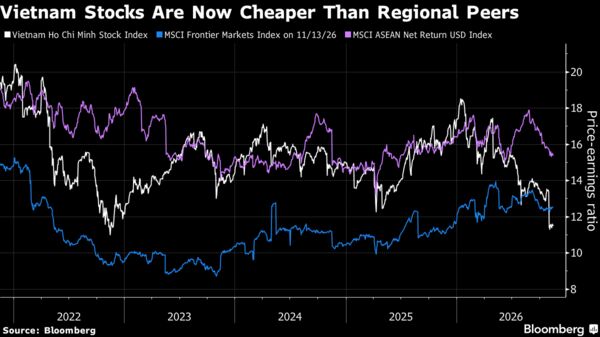
越南经济增速创全球大流行以来最快,信贷扩张支撑了最大银行的盈利能力。尽管如此,海外资管机构持续抛售股票,加上本地个人投资者更青睐高收益银行票据的安全性,导致基准股指较过去五年的市盈率低约 24%。
Vietnam’s economy is growing at the fastest pace since the global pandemic as an expansion in credit buffers profitability at the largest banks. Still, persistent selling of equities by oversees money managers and local individual investors preferring the safety of high returning bank notes has left the benchmark stock index about 24% below its price-earnings multiple of the past five years.
但这还不足以吸引因下跌而受创的投资者回归,比如 47 岁的河内居民阮忠(Trung Nguyen,音译)。
For now, that’s not cheap enough to tempt back investors who’ve been stung by the falls, like Trung Nguyen, a 47-year-old Hanoi resident.
“这个市场真的太可怕了,”他在将剩余积蓄转入银行存款、经历了一年亏损后说道。他说,交易越多,亏损越多。“手里只剩几亿盾,目前我就把它存在银行赚利息,等市场复苏再重新进场。”据彭博汇编的数据,胡志明市证券交易所(越南主要交易所)10 月成交额降至 5.68 亿美元,为 2020 年 8 月以来的最低月度水平。
“This market is truly terrifying,” he said, after shifting his remaining savings into bank deposits following a year of losses. The more he traded, he said, the more money he lost. “With a few hundred million dong left, for now, I’m just putting it in a bank to earn interest while waiting for the market to recover before jumping back in.”Turnover on the Ho Chi Minh City Stock Exchange, Vietnam’s main bourse, fell to $568 million in October, its lowest monthly level since August 2020, according to data compiled by Bloomberg.
据 VnDirect 证券股份公司汇编的数据,越南投资者证券账户中的现金在第三季度末降至约 64.9 万亿盾(约 25 亿美元),较一年前下降 49%,为 2024 年第四季度以来的最低水平。
Cash held in Vietnamese investors’ securities accounts dropped to about 64.9 trillion dong ($2.5 billion) at the end of the third quarter, down 49% from a year earlier and the lowest level since the fourth quarter of 2024, according to data compiled by VnDirect Securities JSC.
越南商业银行的存款利率连续11个月上涨,直到10月下旬中央银行下令商业银行下调利率,旨在抑制资金成本并限制揽储竞争。即便如此,据市场观察人士称,部分银行柜面利率仍高达7%,另有银行在协商更高利率。
Banks deposit rates at Vietnamese lenders increased for 11 consecutive months before the central bank ordered commercial banks to cut interest rates in late October, seeking to rein in funding costs and limit competition for deposits. Still, some banks are offering rates as high as 7% at the counter, while others are negotiating even higher rates, according to market observers.
对48岁的河内居民Thuy Linh来说,寻找最优利率本身已成为一种投资操作。她有15亿越南盾待存,已接触多家银行,拿到最高9.1%的报价,主要来自中小型银行。“现在的存款利率依然非常有吸引力,”她说。
For Thuy Linh, a 48-year-old Hanoi resident, the search for the best rate has become an investment exercise in itself. With 1.5 billion dong to put away, she has approached several banks and secured offers as high as 9.1%, primarily from smaller and medium-sized lenders. “The deposit rates are still very attractive now,” she said.
情绪的转变发生在越南致力于让股市更易于国际投资者进入之际。该国推出一系列改革以改善市场准入,并获得富时罗素期盼已久的新兴市场地位升级,这一里程碑预计将为其股票市场引入数十亿美元资金。
The change in mood comes as Vietnam has been working to make its stock market more accessible to international investors. The country has conducted a series of reforms to improve market accessibility and has secured a long-awaited emerging-market upgrade from FTSE Russell, a milestone expected to attract billions of dollars into its equity market.
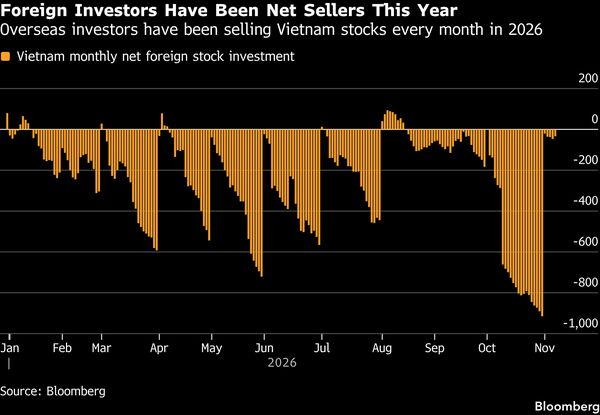
但这些改革尚未转化为外资回流。据彭博汇编数据,今年以来海外投资者净卖出越南股票46亿美元,几乎追平去年全年48亿美元的创纪录净流出。
But those reforms have yet to translate into a return of foreign capital. Overseas investors have sold a net $4.6 billion of Vietnamese shares so far this year, nearly matching last year’s record outflow of $4.8 billion for the full year, according to data compiled by Bloomberg.
“现在银行存款利率很有吸引力,”新加坡Kenno Asset Management Pte.首席投资官Chris Hunt表示,“流动性紧张,银行在争夺资金,而贷款需求依然旺盛,这使得现在成为风险厌恶者的良机。”
“Right now bank deposit rates are attractive,” said Chris Hunt, chief investment officer at Kenno Asset Management Pte. in Singapore “Liquidity is tight and banks are competing for funds while demand for loans remains high, which makes this a good time for the risk adverse.”
他补充道:“外国投资者可能需要一点时间才能找回状态,”并暗示明年富时罗素指数(FTSE Russell Index)持续分阶段纳入可能成为催化剂。他依然乐观地认为国际投资者最终会回归,理由是越南10年的前景依然“非常有吸引力”。目前,争夺投资者资金的直接竞争来自银行,而非海外基金经理。对于像50岁河内居民Quang Le这样的个人投资者来说,选择更多取决于眼下钱能赚多少,而非越南的长期经济前景。
“Foreigners may need a little time to find their mojo again,” he added, suggesting possible catalysts may be the continued phased inclusion of the FTSE Russell Index next year. He remains optimistic that international investors will eventually return, arguing that Vietnam’s 10-year outlook remains “very compelling.”For now, the immediate competition for investors’ money is coming from banks rather than overseas fund managers. For individual investors such as Quang Le, a 50-year-old Hanoi resident, the choice is less about Vietnam’s long-term economic prospects than what his money can earn today.
分析师预计,随着信贷增速超过存款增速,资金面压力将持续,这可能迫使贷款机构维持高位利率,以吸引支持放贷所需的资本。据越南国家银行数据,8月底住户银行存款达到创纪录的11.43千万亿越南盾,凸显流入银行体系的资金池不断扩大。
Analysts expect funding pressures to persist as credit growth outpaces deposit growth, potentially forcing lenders to keep rates elevated to attract the capital needed to support lending. Household bank deposits reached a record 11.43 quadrillion dong at the end of August, according to the State Bank of Vietnam, underscoring the growing pool of money flowing into the banking system.
“金价停滞、房地产市场冻结、股市表现平淡,而银行利率极具吸引力,最好也最安全的做法就是把钱存在银行,”Quang说。他在一家银行存了约20亿越南盾,锁定了9%以上的利率。“别的地方哪里能拿到这么高的回报,还不用天天操心?”
“With gold prices stagnant, the real estate market frozen and the stock market lackluster, while bank interest rates are highly attractive, the best and safest course of action is to keep your money in the bank,” Quang said. He had deposited about 2 billion dong at a bank, securing an interest rate of more than 9%. “Where else can you get such a high return without having to worry about it every day?”