印度税务官员正在审议投资者和经济学家提出的建议,即提高股票衍生品税收、降低股票交易税费,以遏制投机押注并鼓励更广泛地参与股票市场,知情人士透露。
Indian revenue officials are reviewing proposals from investors and economists to raise taxes on stock derivatives while lowering levies on share trading, in a bid to curb speculative bets and encourage broader participation in the equity market, according to people with knowledge of the matter.
知情人士称,一份入围建议清单将在财政部长尼尔马拉·西塔拉曼(Nirmala Sitharaman)预计于2月发布预算前夕呈报其最终考量。这些人要求不具名,因商议属私密性质。其中一位人士称,建议包括将股票买卖的证券交易税(STT)降低50%。
A shortlist of recommendations will be presented to Finance Minister Nirmala Sitharaman for final consideration closer to her budget announcement due February, the people said, asking not to be identified as the deliberations are private. The proposals include a 50% reduction in the securities transaction tax on buying and selling of stocks, one of the people said.
证券交易税是一种流转税,按每笔合格交易的价值征收,无论盈亏。
The STT is a turnover tax paid on the value of every eligible trade regardless of profit or loss.
这些举措旨在纠正印度股票交易税收待遇长期存在的失衡,即衍生品较低的税费刺激了期权等高风险押注,而现货交易却长期低迷。印度股票衍生品成交量是现货市场的227倍,而美国为4倍、德国为29倍。
The moves are aimed at correcting longstanding imbalances in India’s tax treatment of stock trading, where a lower levy on derivatives had spurred risky wagers on options while cash trading languished. Equity derivatives account for 227-times the turnover in Indian cash markets, compared with four-times in the US and 29-times in Germany.
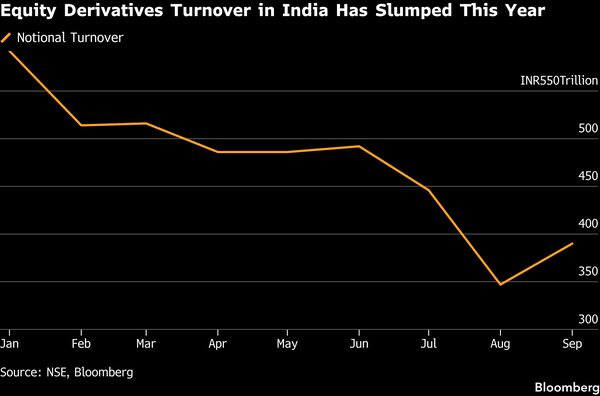
激增部分源于个人投资者涌入期权市场,期权允许交易者以相对较小的前期付款进行杠杆押注。许多人遭受重创。根据印度证券交易委员会(SEBI)数据,截至2026年3月止一年间,近88%的个人股票衍生品交易者亏损,合计净亏损约9170亿卢比(约合100亿美元)。期权占这些亏损的92%。
The surge was driven in part by individual investors drawn to options, which allow traders to make leveraged bets with relatively small upfront payments. Many suffered heavy losses. Nearly 88% of individual traders in equity derivatives lost money in the year through March 2026, according to the Securities and Exchange Board of India, with their combined net losses totaling about 917 billion rupees ($10 billion). Options accounted for 92% of those losses.
知情人士称,官员们还在研究降低证券长期资本利得税(LTCG)的建议。持有上市股票超过一年的长期收益税率为12.5%,短期收益则征收20%税率。
Officials are also looking at a proposal to lower the long-term capital gains tax (LTCG) on securities, the people said. Long-term gains on listed equities held for more than a year are taxed at 12.5%, while short-term gains attract a 20% levy.
财政部未回复寻求置评的电子邮件。西塔拉曼上月表示,她将考虑投资者对股市税收的担忧,但未承诺作出改变。
The Finance Ministry didn’t respond to an email seeking comments. Sitharaman had said last month she would consider investor concerns about stock-market taxation without committing to changes.
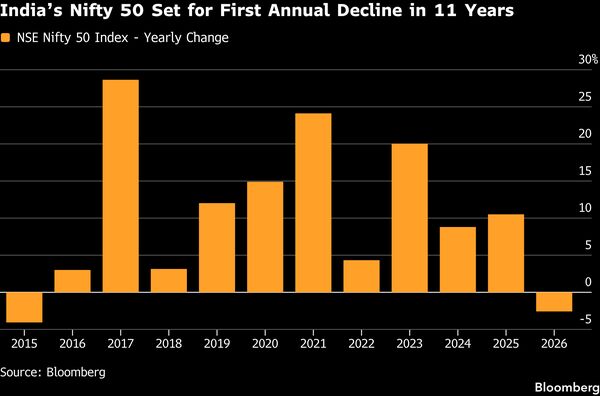
这些讨论之际,印度股市正面临11年来的首次下跌。近几周股市有所反弹,因全球芯片股抛售促使投资者分散配置至其他市场。不过,反转风险依然存在。
The discussions come as Indian shares are heading for their first decline in 11 years. They’ve rebounded in recent weeks as a global selloff in chip stocks pushed investors to diversify into other markets. However, a risk of reversal remains.
过去两年,印度采取了一系列措施遏制投机交易。在2026年2月预算中,政府将股票期货的证券交易税(STT)从0.02%上调至0.05%。期权权利金以及期权行权的税率上调至0.15%。
India has taken a series of steps to curb speculative trading in the last two years. In February 2026 budget, the government increased STT on equity futures to 0.05% from 0.02%. The tax on options premium, as well as the exercise of options, was increased to 0.15%.
周一,印度中央直接税委员会主席拉维·阿格拉瓦尔表示,政府正在审查利益相关方关于长期资本利得税(LTCG)和证券交易税变更的提议。
On Monday, Ravi Agrawal, chairman of India’s Central Board of Direct Taxes, said the government is reviewing stakeholder proposals for changes to LTCG tax and STT.
阿格拉瓦尔在新德里的一个活动上说:“最终,正在进行一项分析。利益相关方提出的任何问题或观点都在接受审查。”
“Ultimately, an analysis is being done,” Agrawal said at an event in New Delhi. “Whatever issues have been flagged or points raised by stakeholders are being examined.”