德国汽车业日趋严峻的危机引发了一场高风险的博弈,焦点在于工厂工人享有的最珍贵福利之一:35小时工作制。梅赛德斯-奔驰集团股份公司的高管们上周表示,如果员工不同意增加工作时间,他们将暂停国内投资,关闭工厂也可能随之而来。据报道,他们坚决要求每周额外工作三小时且不增加薪酬。
An intensifying crisis in Germany’s auto industry has triggered a high-stakes battle over one of the most prized entitlements its factory workers have: the 35-hour work week. Executives at Mercedes-Benz Group AG said last week they’re halting domestic investments, and plant closures could be next, if employees don’t agree to work more. They’re reportedly insisting on three extra hours of labor per week with no additional pay.
工人感到不满是可以理解的,但我希望他们能够配合。随着德国工业裁减数万名员工,且利润受到日益激烈的中国竞争的挤压,35小时工作制已不再具有可持续性。
It’s understandable workers are upset, but I hope they cooperate. With German industry shedding tens of thousands of jobs and profits getting crushed by intensifying Chinese competition, a 35-hour week doesn’t feel tenable.
诚然,更长时间的劳作并不是万灵药。劳动力仅占造车总成本的一小部分,德国工业的困境有着诸多原因,包括高昂的能源价格、过度的官僚作风以及飙升的社会保障缴款。北京被低估的货币也起到了一定作用。
Admittedly, toiling longer isn’t a panacea. Labor accounts for only a fraction of the total costs of building a car, and Germany’s industrial woes have myriad causes, including high energy prices, excessive bureaucracy and soaring social security levies. Beijing’s undervalued currency has played a role too.
不过,这场清算不仅仅是一个制造问题。它是关于德国惊人偏低的平均工作时长这场更广泛且日益激烈的辩论的一部分。许多德国人做兼职——这往往是因为缺乏托儿服务。与此同时,病假缺勤率高得惊人。
The reckoning isn’t just a manufacturing issue, though. It’s part of a broader and increasingly acrimonious debate about Germany’s surprisingly low average working hours. Many Germans work part time — often due to a lack of childcare. Meanwhile, sickness absences are shockingly high.
保守派政客和大型雇主希望同胞更加努力工作,以提升德国作为商业地点的吸引力,并让经济重新恢复增长。至少,这可以帮助抵御该国糟糕的人口结构:随着退休人数超过进入劳动力市场的新人,德国适龄劳动人口将急速下降。
Conservative politicians and large employers want their compatriots to work harder, to improve Germany’s attractiveness as a business location and get the economy growing again. At the very least, it can help counteract the country’s lousy demographics: the population of working-age Germans is set to fall fast as retirements outpace new entrants to the workforce.
尽管全职就业的德国人平均每周工作约40小时,但大约五分之一的人在集体劳工协议仅要求35小时的行业工作。这包括汽车、工程和钢铁工人。这些规定是20世纪80年代西德一场来之不易的劳资纠纷的历史遗留问题,该纠纷导致每周工作时间逐渐缩短。
Although Germans in full-time employment work about 40 hours per week on average, roughly a fifth work in sectors where collectively bargained labor agreements require just 35 hours. This includes automotive, engineering and steel workers. Those stipulations are a legacy of a hard-won labor dispute in western Germany in the 1980s that led to a gradual shortening of the working week.
当时的逻辑是,较短的工作日将有助于减少高失业率,因为公司随后需要雇佣更多员工来完成任务。德国金属工业工会当时标榜的座右铭——“更多时间去生活、去爱、去笑”——充满情感、人情味且颇具诗意。谁不赞成这些呢?但这样的妥协日积月累,随着时间的推移,与东欧、中国和美国的工厂相比,它们让德国的汽车工厂竞争力下降。
The logic at the time was that a shorter working day would help reduce high unemployment, as companies would then need to hire more staff to get tasks done. The IG Metall trade union’s motto back then — “More time to live, love, and laugh” — was emotive, humane and rather poetic. Who isn’t in favor of those things? But such concessions add up, and over time they’ve made Germany’s car plants less competitive compared with those in eastern Europe, China and the US.
多年来,梅赛德斯及其德国同行在中国赚取的巨额利润是一剂良药,使丰厚的员工福利得以维持,并保持了与有组织劳工的和平。高管们最近承认,曾有一段时间,中国市场贡献了大众近一半的利润。
For many years the massive profits Mercedes and its German peers made in China were a salve that enabled generous worker perks and kept the peace with organized labor. At one point China accounted for close to half of VW’s profits, executives acknowledged recently.
但随着中国消费者转而选择本土品牌,这笔意外之财正在快速蒸发。比亚迪股份有限公司、吉利汽车控股有限公司和奇瑞汽车股份有限公司都在增加出口,并在欧洲寻找工厂,以规避关税和即将出台的本地化零部件规定。匈牙利和西班牙是热门目的地。
But that windfall is fast evaporating as Chinese consumers opt for domestic brands instead. BYD Co., Geely Automobile Holdings Ltd. and Chery Automobile Co. are all increasing their exports and hunting for factories in Europe to circumvent tariffs and forthcoming local content rules. Hungary and Spain are popular destinations.
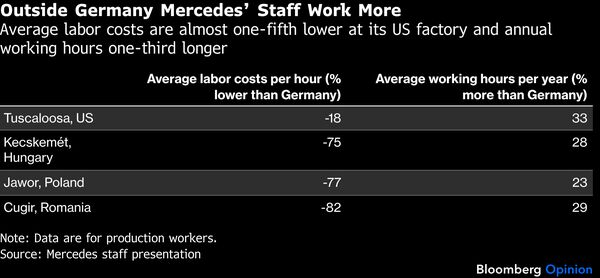
值得注意的是,中国车企迄今对德国保持了一定距离,比亚迪特许顾问阿尔弗雷多·阿尔塔维拉在《明镜周刊》上讽刺地评论称,作为一个生产地,“德国甚至不是德国人的第一选择”。他可能是对的:梅赛德斯的匈牙利工厂已成为其在欧洲最大的工厂。考虑到该厂员工平均每年工作的小时数比其德国工厂的劳作者多出28%,这也就不足为奇了。梅赛德斯的北美员工则更加勤奋。
It’s notable that the Chinese have so far given Germany a wide berth, with BYD special advisor Alfredo Altavilla wryly commenting in Der Spiegel that as a production location “Germany isn’t even the first choice for Germans.”He might be right: Mercedes’s Hungary plant has become its largest in Europe. That’s not surprising when you consider that its employees there work 28% more hours per year on average compared with those toiling at its German factories. Mercedes’ North-American workforce is even more industrious.
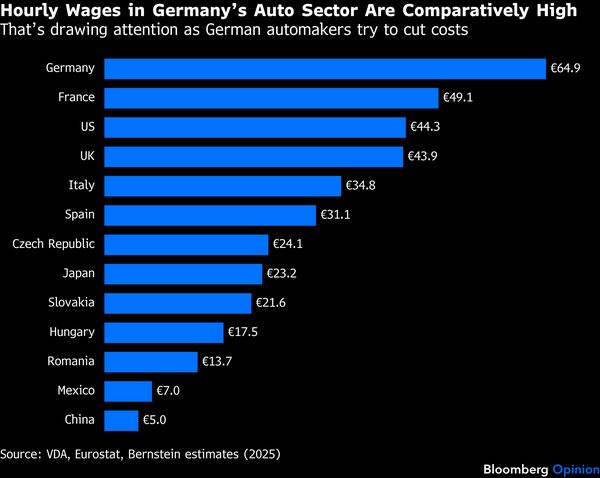
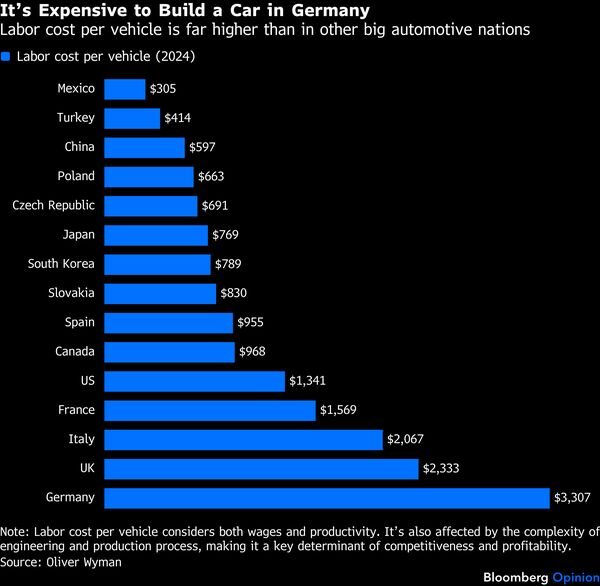
德国汽车工人的薪酬非常高,部分原因在于他们还享有各种假期和利润分享奖金。更高的工资当然值得高兴,特别是如果它们是更高生产力的结果。但遗憾的是,事实已不再如此。正如这张图表所示,德国生产每辆车的劳动力成本极其不利。
Germany’s auto workers are very well paid in part because they’re also entitled to various holiday and profit-share bonuses. Higher wages are of course something to cheer, especially if they’re the result of much better productivity. But regrettably that’s no longer the case. Labor cost per car produced in Germany is highly unfavorable as this chart shows.
出格的要求在劳资谈判中是司空见惯的,它允许雇主和工人代表随后做出妥协,同时仍能宣称取得胜利。工会认为,当前的劳工协议并不像描绘的那样死板。但梅赛德斯老板奥拉·卡列纽斯似乎坚决要改革35小时工作制,哪怕这意味着惹人生气。他还要求白领员工每周至少回办公室上班四天。
Outrageous demands are par for the course in labor negotiations, allowing employers and worker representatives to later give ground and still claim victory. Trade unions argue that the current labor agreements aren’t as rigid as portrayed. But Mercedes boss Ola Källenius seems resolute about reforming the 35-hour week, even if that means upsetting people. He’s also demanding white-collar workers come back to the office at last four days a week.
不可否认,管理层的失误也是汽车行业陷入困境的部分原因。例如,在梅赛德斯,通过提高车价将品牌进一步推向高端市场的尝试适得其反。(明智的是,梅赛德斯高管现在正主动放弃部分薪酬。)与此同时,在2019年至2025年期间,股东们享受了超过300亿欧元(折合约330亿美元)的股息和股票回购。
There’s no denying management missteps are partly to blame for the car industry’s predicament. At Mercedes, for example, an attempt to push the brand further upmarket by raising vehicle prices backfired. (Sensibly, Mercedes executives are now offering to forgo part of their pay.) Shareholders meanwhile enjoyed more than €30 billion ($33 billion) of dividends and share buybacks between 2019 and 2025.
在德国汽车需求下降的情况下敦促员工更多工作,感觉有悖常理。但考虑到梅赛德斯大约三分之二的员工都在德国,提升这些工厂的竞争力至关重要。在此之前,梅赛德斯更愿意在其他地方投资和制造车辆,这是合乎逻辑的。升35小时工作制在其存在的时候是很美好的。如果每天多工作半小时左右就能防止另一家德国工厂关闭,这绝对是值得付出的牺牲。
Prodding staff to work more when demand for German autos is falling feels counterintuitive. But considering roughly two-thirds of Mercedes’ workforce is based in Germany, boosting the competitiveness of those plants is vital. Until that happens, it’s logical that Mercedes prefers to invest and build vehicles elsewhere. The 35-hour week was nice while it lasted. If working an additional half hour or so per day prevents another German factory from closing, surely that’s a sacrifice worth making.