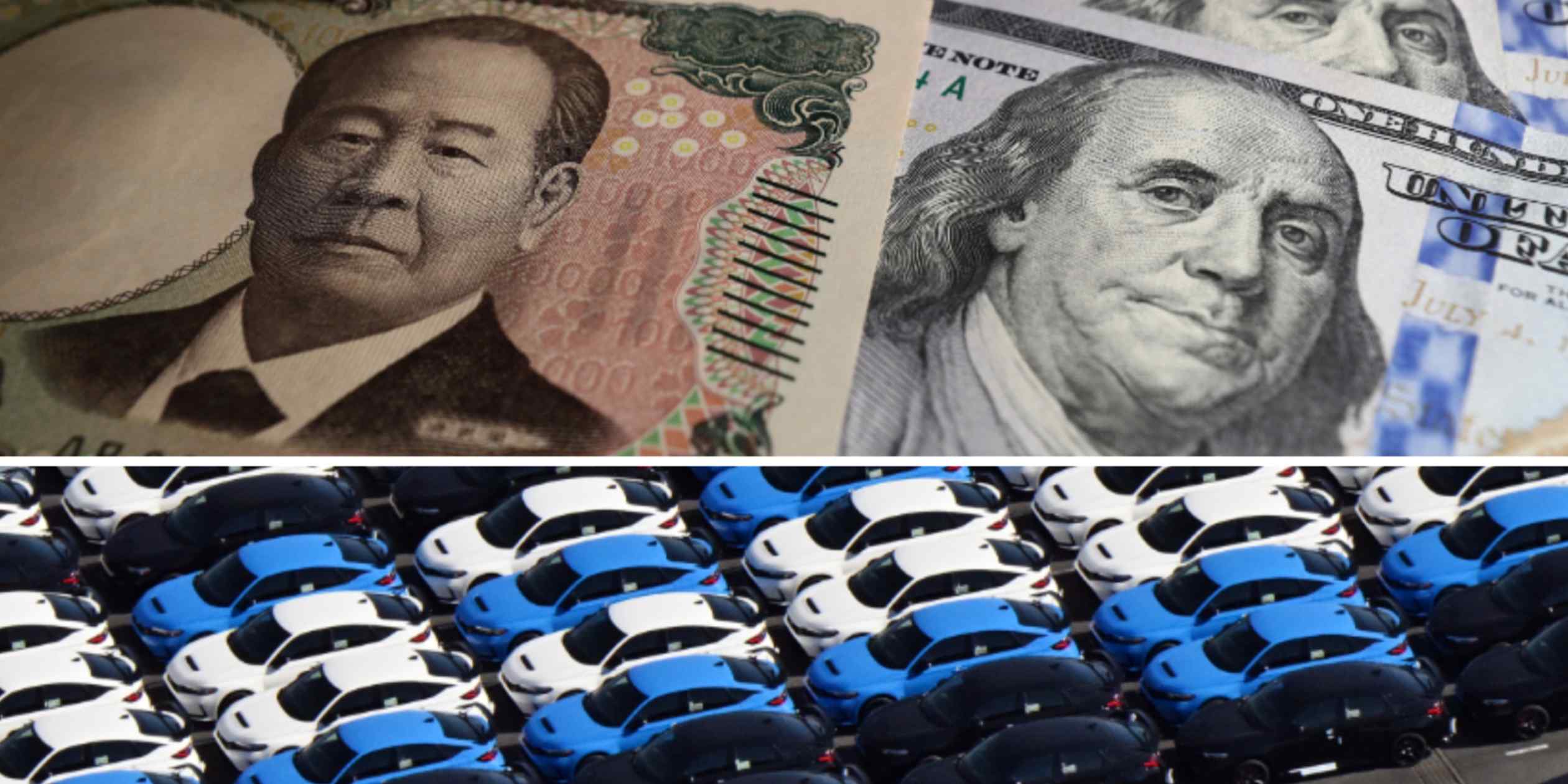
东京讯——日本七家主要汽车制造商截至9月的前六个月整体营业利润,若非日元贬值带来的提振,将出现同比下降。日元贬值的影响约占总利润的三分之一。
TOKYO -- Overall operating profits at seven major Japanese automakers for the six months through September would have declined on the year without a boost from the yen's depreciation that accounted for about a third of the total.
包括丰田汽车和本田汽车在内的这些制造商上半年总利润增长约20%,达到约3.4万亿日元(214亿美元)。日元疲软贡献了1.1万亿日元,创下四年来最高。该期间日元兑美元平均汇率约为159日元,比一年前贬值13日元。
Total first-half profits at the manufacturers, including Toyota Motor and Honda Motor, grew roughly 20% to about 3.4 trillion yen ($21.4 billion). The soft yen contributed 1.1 trillion yen, the most in four years. The Japanese currency averaged about 159 to the dollar for the period, 13 yen weaker than a year earlier.
丰田汽车的营业利润增长9%,达到2.19万亿日元,其中6850亿日元来自日元贬值,抵消了原材料成本上升带来的4650亿日元打击。每贬值1日元兑美元,丰田的营业利润约增加500亿日元。
Toyota's operating profit rose 9% to 2.19 trillion yen, with 685 billion yen coming from the weak yen, absorbing a 465 billion yen hit from higher material costs. Every 1-yen depreciation against the dollar boosts the company's operating profit by about 50 billion yen.
在铃木汽车,汇率因素为营业利润贡献了520亿日元,远超整体同比利润增幅151亿日元。
At Suzuki Motor, exchange rates contributed 52 billion yen to operating profit, well over the overall year-on-year profit gain of 15.1 billion yen.
若不计汇率影响,七家汽车制造商的营业利润总计约2.32万亿日元,低于一年前。扣除日元贬值影响后,七家公司中有四家的利润下降,分别是丰田、铃木、斯巴鲁和三菱汽车。有利的汇率正在掩盖日益严峻的环境带来的影响。
Without the impact of exchange rates, operating profits at the seven automakers totaled about 2.32 trillion yen -- lower than a year earlier. Profits excluding yen depreciation declined at four of the seven companies: Toyota, Suzuki, Subaru and Mitsubishi Motors. Favorable exchange rates are papering over the impact of an increasingly challenging environment.
日本汽车制造商的销售在中国大幅下降,面临本土竞争对手的激烈价格竞争。本田汽车截至9月的前六个月在亚洲(不含日本)销售了约27.3万辆汽车,同比下降超过30%。
Japanese automakers' sales have fallen significantly in China amid intense price competition with local rivals. Honda sold about 273,000 vehicles in Asia excluding Japan in the six months through September, down more than 30% on the year.
中东局势动荡推高了成本。铝和铜等原材料成本上升,使日产汽车的营业利润下降了700亿日元,但得益于日元贬值带来的480亿日元提振,以及车辆成本和研发方面超过1000亿日元的节省,该公司仍保持盈利。
The turmoil in the Middle East has driven up costs. Higher costs for raw materials such as aluminum and copper dragged down operating profit by 70 billion yen at Nissan Motor, though it remained in the black thanks to a 48 billion yen boost from the weak yen and over 100 billion yen in savings on vehicle costs and research and development.
汽车制造商高管越来越担忧。尽管丰田的利润和营收有所改善,但“关税影响和中东影响依然存在,我们还没有真正战胜它们,”丰田执行副社长宫崎洋一在11月5日的财报电话会议上表示。
Automaker executives sound increasingly concerned. Although profits and revenue at Toyota have improved, "the tariff impact and Middle East impact still are there, and we have not really defeated that," Executive Vice President Yoichi Miyazaki said in a Nov. 5 earnings call.
“恢复竞争力至关重要,这样即使日元走弱带来的顺风减弱,他们仍能盈利,”东海东京情报实验室高级分析师杉浦诚二表示。
"It's vital to restore competitiveness so they can still make money even if the tailwind from the weak yen abates," said Seiji Sugiura, senior analyst at Tokai Tokyo Intelligence Laboratory.
这些措施可能包括通过降低成本来提升利润,并让高毛利车型在销售组合中占更大比重,同时通过软件定义汽车等领域的研发来增强未来竞争力。
Measures will likely include shoring up profits by reducing costs and having high-margin models make up a larger share of the sales mix, as well as enhancing future competitiveness through R&D in fields such as software-defined vehicles.