一份新报告发现,学校实施手机禁令与数学和阅读成绩增长的综合指标出现小幅但具有统计显著性的改善相关。但关于禁令有效性的文献有限,而且问题仍然存在:适度的学业改善是否值得执行禁令所涉及的成本和人力。
School phone bans were associated with a small but statistically significant improvement in a combined measure of math and reading achievement growth, a new report found. But the literature on the effectiveness of bans is limited, and the question remains whether modest academic improvements are worth the cost and labor involved in enforcing them.
哈佛大学研究人员分析了标准化考试成绩,发现实施手机禁令的学校学生取得的进步略大——每年约0.01个标准差,研究人员估计这相当于多出一到两周的学习时间。
Harvard University researchers analyzed standardized test scores and found that students in schools with phone bans made slightly greater gains—about 0.01 standard deviations per year, which researchers estimate is equivalent to one to two additional weeks of learning.
这项研究于周二发布,分析了2021-22学年至2025-26学年期间约4600所学校的约330万名学生的数据,其中包括使用Yondr手机袋的学校和作为对照的学校。
The study, released Tuesday, analyzed data from approximately 3.3 million students across 4,600 schools—including schools using Yondr pouches and comparison schools—from 2021–22 through 2025–26.
研究人员得出结论,与手机禁令相关的成绩提升可能部分抵消自智能手机普及以来学生每年经历的学业下滑。
Researchers concluded that performance gains associated with phone bans could potentially offset some of the annual academic decline students have experienced since smartphones became commonplace.
“自2013年左右以来,学生成绩一直在逐渐下滑,不仅在美国,在一些西欧国家以及加拿大也是如此,”哈佛大学教育政策研究中心教务主任、这项新研究的首席研究员汤姆·凯恩对《时代》杂志表示。“令人惊讶的是,直到现在,我们实际上还没有太多研究来建立这种联系。”凯恩说,智能手机类似于教育系统中的“一个漏洞”,而全校范围的禁令是“堵住”这个漏洞最具成本效益的方法之一。“(为了)多付一周的教师工资,需要花费更多的钱,”他指出。
“There’s been a gradual decline in student achievement, not just in the U.S. but in a number of Western European countries, as well as Canada, since around 2013,” Tom Kane, the faculty director of the Center for Education Policy Research at Harvard University, and a lead researcher on the new study, tells TIME. “Surprisingly, we actually haven't had much research on drawing that connection until now.”Kane says that smartphones are akin to “a leak” in the education system, and that schoolwide bans are one of the most cost-effective ways to “plug” the leak. “It would cost a lot more money [to] pay a teacher for another week of work,” he points out.
凯恩表示,手机禁令换回的一到两周时间,可以帮助弥补学生成绩下降中“相当大的一部分”;他认为,这种好处很可能会不断累积,禁令实施时间越长,学生表现改善得越多。研究人员观察到,成绩下降是逐年逐渐发生的,因此他们认为,其反向效应也会以同样的方式显现。
Kane says that the one to two weeks gained back by phone bans can help make up for a “significant share” of the decline in student achievement—and he believes that the benefits are likely to be cumulative, increasingly improving student outcomes the longer they are enforced. Researchers observed that the decline in performance happened gradually, year over year, and they therefore believe that its countereffects will behave the same way.
研究发现,实施手机禁令不仅会对学生成绩产生“温和但稳定的积极影响”,而且在小学、初中和高中各个年龄段都呈现出“一致”的效果。
The study found not just a “modest yet steady positive impact” on student achievement when phone bans are enacted, but a “consistent” effect across elementary, middle, and high school ages.
金·惠特曼是“无干扰学校政策项目”的联合创始人,也是学校手机禁令的倡导者。她认为,执行禁令的负担应该从单个教师转移到全校政策和州级立法上。她告诉《时代》周刊,哈佛大学的这项研究验证了这一做法。
School phone ban advocates like Kim Whitman, a co-founder of Distraction Free Schools Policy Project, believe the burden of enforcement should shift from individual teachers to school-wide policy and state-level legislation. She tells TIME that the Harvard study validates this approach.
惠特曼说:“我很高兴看到,现在有证据表明,从上课铃响到下课铃响的全程禁令能带来学业上的改善。”她还从一位母亲的角度补充说,她看到“手机挤占了孩子们在童年时期需要经历的许多体验,而这些体验对他们成功过渡到成年至关重要”。惠特曼说:“学校应该是一个让孩子们能够学习的庇护所,免受手机和社交媒体持续不断的压力,也应该提供一个环境,让他们能够培养独立自律和成年后茁壮成长所需的执行功能技能。”
“I'm thrilled to see there is now evidence of academic improvements for the bell-to-bell bans,” Whitman says. From the perspective of a mother, she adds that she has seen how “phones displace the multitude of experiences children need to have in childhood to transition successfully into adulthood.”“Schools should be a sanctuary where kids can learn, free from the constant pressures of phones and social media, and should also provide an environment where they can develop independent self-discipline and the executive functioning skills needed to thrive as an adult,” Whitman says.
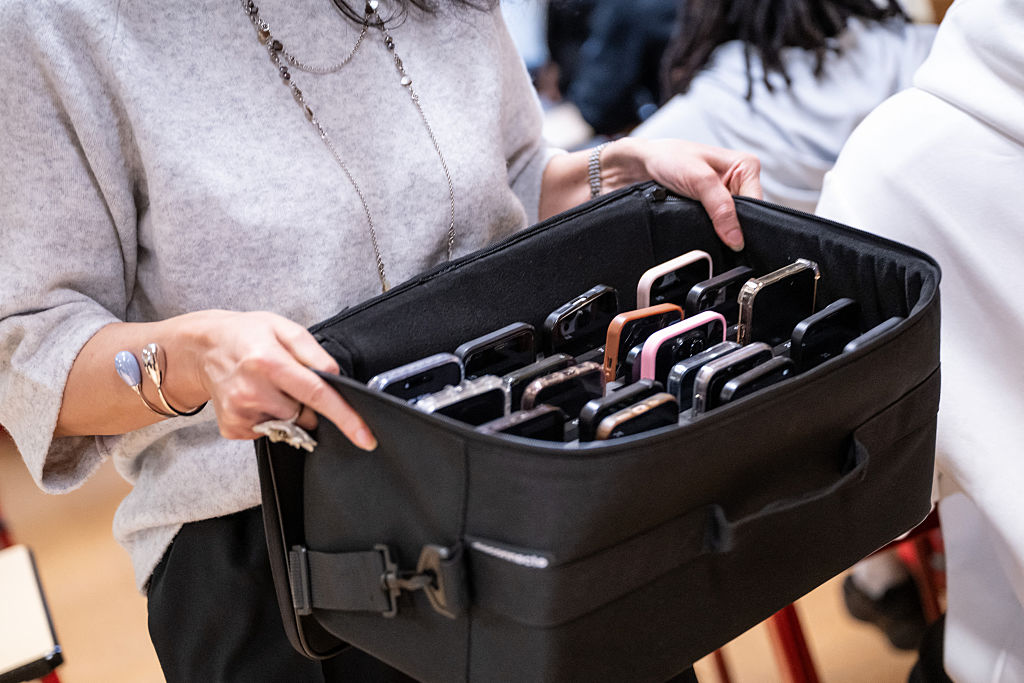
打造无手机学校并不一定需要Yondr手机袋。一些学校把手机集中收进收纳箱;另一些学校则要求学生把手机留在储物柜里。研究人员认为,如果严格执行,其他方法也可能产生类似效果。
Creating a phone-free school does not necessarily require Yondr pouches. Some schools collect phones in centralized bins; others require students to leave them in lockers. Researchers believe other approaches could produce similar effects if strictly enforced.
据《教育周刊》报道,美国至少有40个州和华盛顿特区要求学区禁止或限制学生使用手机。但这种广泛采用已超出对禁令是否有效的研究——近期大规模研究对禁令的学业益处得出了不同估计。学校手机禁令能提高学习成绩吗?
At least 40 states and Washington, D.C., require school districts to ban or restrict student cellphone use, according to Education Week. But that widespread adoption has outpaced research into whether the bans work—and recent large-scale studies have produced differing estimates of their academic benefits. Do school phone bans improve learning?
今年4月首次通过美国国家经济研究局(NBER)发布的一项全国性研究发现,可锁定的手机袋减少了学生使用手机,但在采用后的前三年对平均考试成绩影响甚微。研究人员还发现,几乎没有证据表明出勤率或学生对网络霸凌的感受有所改善。该研究将覆盖约4600所公立学校的Yondr采购记录与考试成绩、行政数据和调查数据结合起来。
A national study first released through NBER in April found that lockable phone pouches reduced student phone use but had little effect on average test scores over the first three years after adoption. Researchers also found little evidence of improvements in attendance or students’ perceptions of online bullying. The study combined Yondr purchasing records covering approximately 4,600 public schools with test scores, administrative data, and surveys.
两项研究的研究人员都表示,尽管方法和解读存在差异,但他们的估计大体上是一致的。
Researchers from both studies say their estimates are broadly compatible, despite differences in methods and interpretation.
凯恩指出,NBER研究确实发现高中数学成绩有统计学上的显著提高——这与他报告中的结论一致。但他表示,由于哈佛大学研究的是更大的数据集,他的团队能够更精确地检测到较小的变化。
The NBER study did find statistically significant improvements in high school math scores, Kane points out—which aligns with his report’s takeaways. But because Harvard University was looking at larger data sets, he says, his team was able to detect smaller changes more precisely.
NBER研究的首席研究员托马斯·迪伊也认为,“这两项研究之间存在惊人的一致性。”他说,两个研究团队都报告了非常小的年度变化,但他们的解读不同。
Thomas Dee, a lead researcher for the NBER study, agrees that “there's a surprising degree of harmony across these two studies.”Both research teams reported very small annual changes, he says, but they interpreted them differently.
迪伊说,哈佛大学的研究将学习成果的增量增长解读为“学生在小程度上有所学习的证据”。“我们可能会发现他们是对的,但用我们现有的数据,我对这种推断并不放心。”迪伊和凯恩还一致认为,关于社交媒体使用——无论校内还是校外——如何影响学生成绩的研究还远远不够。
The Harvard study takes the incremental increase in learning outcomes and interprets it as “evidence of students gaining some learning in a small way,” Dee says. “We may find that they are right, but I'm not comfortable with that extrapolation with the data we have.”Dee and Kane also agree that there is not nearly enough research on how social media use—both on and off school grounds—is impacting student achievement.
“我们仍然不知道学习成绩下滑有多大比例是校外使用社交媒体造成的,”凯恩承认。“一种假设是,孩子们花在社交媒体上的总时间在削弱他们的注意力持续时间;另一种假设是,深夜使用导致睡眠不足。”惠特曼认为,全校范围的禁令在塑造校外手机使用方面仍然很有作用,并且可能增强已有的益处。“学校是响亮的信号传递者,因此学校允许什么,有助于家长决定他们在家中应该允许什么,”她说。
“We still don't know how much of the decline of learning is due to out-of-school use of social media,” Kane admits. “One hypothesis is about the aggregate amount of time kids are spending, deadening their attention spans; another is that it’s late-night use causing sleep deprivation.”Whitman argues that campus-wide bans are still instrumental in shaping out-of-school phone use—and could enhance any established benefits. “The schools are loud messengers, so what they allow in school helps parents determine what they should allow in their homes,” she says.
迪伊表示,需要更多研究来了解随着技术发展,哪些政策会随着时间推移改善学生的学习。这些信息有助于为进一步的政策制定提供依据。在那之前,他认为各个学校最能判断哪种手机禁令方式对其学习社区最有效。
Dee says more research is needed to understand which policies will improve student learning over time as technology evolves. The information could help inform further policymaking. Until then, he believes that individual schools will be best at determining which phone ban techniques will be most effective for their learning communities.
“如果由我来给学校提建议,我会鼓励他们采纳手机禁令,切实执行,并自己认真观察是否奏效,”他说。学校手机禁令有哪些担忧?
“If I were to advise schools, I would encourage them to adopt a phone ban, enforce it really well, and work for yourself really to see if it's working,” he says. What are the concerns about school phone bans?
即使在支持课堂限制的人当中,对于紧急情况下的使用、实施成本以及禁令应扩展到什么程度,仍存在疑问。
Even among those who support classroom restrictions, questions remain about emergency access, implementation costs, and how far bans should extend.
学校安全与紧急情况下的使用一些家长认为,手机是保障安全的重要生命线,他们表示希望在学校发生紧急情况时能联系到孩子,孩子也能联系到他们。
School safety and emergency access Some parents argue that phones are essential lifelines for safety, expressing the desire to be able to reach their child, and vice versa, in the event of an emergency at the school.
皮尤研究中心2024年的一项研究发现,虽然大多数成年人赞成上课期间禁用手机,但认为有必要全天禁用的人较少。在反对课堂禁令的人中,十分之六将家长能否联系到孩子列为反对的主要原因。
One study from the Pew Research Center in 2024 found that while most adults approved of phone bans during class, fewer felt it was necessary to have all-day bans. Among opponents of classroom bans, 6 in 10 cited parents’ ability to reach their children as a major reason for their opposition.
同年,全国家长联盟的一项调查发现,在孩子带手机去学校的家长中,78%将紧急情况下的使用列为这样做的原因。
That same year, a National Parents Union survey found that 78% of parents whose children took cellphones to school cited emergency access as a reason for doing so.
希望实验室和“数据为了进步”组织10月开展的一项研究基于487名高中生的回答发现,64%的受访者支持在课堂上禁用手机,而80%的受访者反对全天限制使用手机。
An October study from Hopelab and Data for Progress, drawing on responses from 487 high school students, found that 64% supported classroom bans, while 80% opposed all-day restrictions.
纽约州金斯顿的初中教师阿曼达·里奇泰利告诉《时代》周刊,最初提出使用Yondr手机袋的想法时,家长们表示反对。解决办法是正面回应他们的担忧,并就紧急情况下如何保持联系提供替代建议。
Amanda Riccitelli, a middle school teacher in Kingston, New York, tells TIME that parents initially pushed back when the idea for Yondr pouches was introduced. The solution was to address their concerns head-on and provide alternative suggestions for being in touch during an emergency.
“我们告诉家长,他们可以通过(微软)Teams给孩子发消息,”她说。学区还向家长保证,学生在必要时可以使用教室或前台的有线电话给家人打电话。
“We told parents that they could message their children on [Microsoft] Teams,” she says. The district also reassured parents that students could use the landline phones in the classrooms or the front office to call their families if and when necessary.
成本与预算压力 反对者还指出了在全州范围内实施禁令所涉及的成本。纽约市向公立学校拨款1600万美元,用于帮助实施全州范围的手机及可联网设备禁令。在洛杉矶,学区在手机禁令实施产品上花费了600多万美元,其中包括在Yondr产品上花费的542万美元。
Cost and budget pressures Opponents have also pointed out the costs involved with implementing statewide bans. New York City allocated $16 million to public schools to help implement the statewide cellphone and internet-enabled device ban. In Los Angeles, the school district spent more than $6 million on phone-ban implementation products, including $5.42 million on Yondr products.
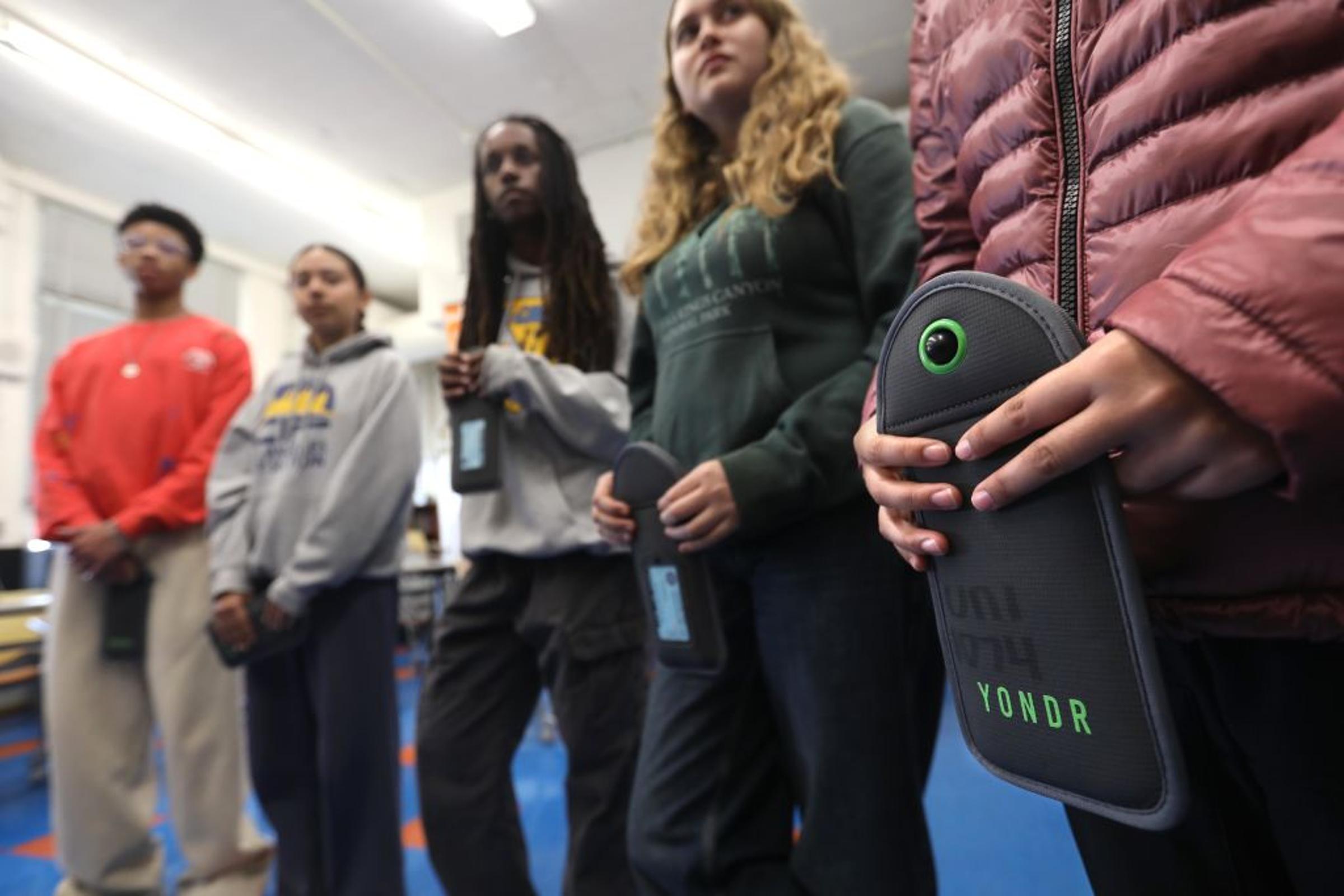
像Yondr生产的这种磁封手机袋是最受欢迎的手机禁令实施方式之一,因为学生白天可以把手机袋带在身边。这意味着学校管理人员和教师无需没收这些设备,也无需在白天对它们承担责任。学生通常将手机放入指定的手机袋,在工作人员的监督下锁好,然后在放学时到指定站点解锁取回。但据哈佛大学的估算,每个学生约25美元的费用意味着,购买这些手机袋可能是一笔不小的开支。
Magnetically sealed phone pouches, like those made by Yondr, are among the most popular phone ban implementation methods because students can keep the pouches with them during the day. This means that administrators and teachers do not need to confiscate the devices or bear responsibility for them during the day. Students typically place their phones in assigned pouches and lock them under staff supervision, then unlock them at designated stations when leaving school. But at approximately $25 per student, according to Harvard’s estimate, purchasing them can represent a substantial expense.
这些成本出现之际,各学区正面临日益加大的财政压力:兰德公司与重塑公共教育中心联合开展的一项全国代表性调查发现,在2026年春季,54%的学区负责人将预算短缺列为他们最紧迫的三项挑战之一,这一比例高于2025年的33%。
Those costs come as districts face mounting financial pressures: A nationally representative survey by RAND and the Center on Reinventing Public Education found that 54% of district leaders ranked budget shortfalls among their three most pressing challenges in spring 2026, up from 33% in 2025.
教师对执行学校手机禁令的看法 根据《教育周刊》研究中心在2月和3月开展的一项调查,教育工作者似乎普遍支持学校手机禁令。该调查访问了全美79名学区负责人、122名学校负责人和395名教师,发现约七成受访者表示,手机限制改善了课堂行为和学生的参与度,而认为在学习效果和身心健康方面有裨益的受访者比例较小。
What teachers say about enforcing school phone bans Educators seem to broadly support school phone bans, according to an EdWeek Research Center survey conducted in February and March. It surveyed 79 district leaders, 122 school leaders, and 395 teachers across the U.S. and found that about 7 in 10 respondents said cellphone restrictions improved classroom behavior and student engagement, while smaller shares reported benefits for learning and well-being.
但对禁令的支持并不保证禁令会得到一致执行——凯恩、迪和惠特曼表示,这正是这些政策能否成功的关键所在。
But support for a ban does not guarantee it will be enforced consistently—a challenge Kane, Dee, and Whitman say is central to whether the policies succeed.
“我认为执行是关键,而这在许多学区一直是个难题,”惠特曼说。她指出,由于缺乏有关执行方式的数据,针对具体政策及其效果的研究可能受到限制。
"I believe enforcement is key, and that has been a struggle for many districts,” Whitman says. She points out that research concerning specific policies and outcomes may be limited by a lack of data surrounding enforcement methods.
例如,佛罗里达州的一些学校要求学生在上学期间将手机放在看不见的地方,但并不实际禁止学生接触手机。于是,教师的任务就变成全天监督学生,并在规定未被遵守时实施惩罚。
Certain Florida schools, for example, require students to keep their phones out of sight during the school day, but they do not physically prohibit access. Teachers, then, are tasked with monitoring students throughout the day and doling out consequences when the guidelines are not being followed.
“无手机政策如果包含无法取用手机的存放方式,实际上会减轻教师的压力,并将这一责任转移给学校管理者,”惠特曼说。
“Phone-free policies, when they include inaccessible storage, actually lessens the pressure on teachers and transitions that responsibility to administrators,” Whitman says.
美国国家经济研究局2025年10月对佛罗里达州一个大学区的研究发现,停学处分最初有所增加,随后在第二年考试成绩有所提高。
An October 2025 NBER study of a large Florida school district found an initial increase in suspensions, followed by improved test scores in the second year.
4月开展的更广泛的美国国家经济研究局研究重现了这些发现。该研究观察到,在实施手机禁令的第一年,纪律处分有所增加,相当于停学率上升了约15%。但研究指出,这些纪律处分在随后几年会逐渐减少。
The findings were replicated in the broader NBER study from April, which observed an increase in disciplinary actions during the first year of cellphone bans corresponding to roughly a 15% increase in suspension rates. Those disciplinary actions fade in subsequent years, however, the study noted.
“可能是因为教师试图执行禁令时,学生与学校的纪律事件产生了交集,”迪伊推测道。“也可能是因为禁令前在课堂上刷手机的学生不再有这个选项(于是转而在这段时间里惹上麻烦)。”新泽西州是少数几个在2026-27学年首次实施学校手机禁令的州之一。泽西市中学教师丹妮尔·舍克表示,这一举措得到了教师和学生的支持。
“It might be that students interact with disciplinary incidents at schools as teachers try to enforce the bans,” Dee hypothesizes. “It could also be that students who scrolled during class before the bans no longer have that option [and get into trouble during that time instead].”New Jersey is among a handful of states whose school phone bans went into effect for the first time during the 2026-27 school year. Danielle Schoeck, a secondary school teacher in Jersey City, says that the move has received support from both teachers and students.
“我认为学生明白这是为了他们好——我没听到他们抱怨,”她说,并补充道:“我注意到他们在教学过程中的注意力有所提高。”但她表示,每个学区执行全州禁令的方式不同,而且依据各自的标准,这意味着禁令“执行方式并不一致”。
“I think students understand that it's for their best interest—I haven't heard them complain,” she says, adding: “I have noticed that their attention during instruction has improved.”But each school district implements the statewide ban differently, and according to their own criteria, she says, meaning that it’s “not enforced in a consistent way.”
“去年我们学校使用了Yondr手机袋,但允许学生把手机袋拿在手里,这几乎毫无用处,”舍克说,因为学生能找到办法绕过或撬开手机袋。“我女儿在街那头的学校,学生上学期间把手机放进一个锁在办公室里的箱子里,花费为零美元,而且(这)更有效。”里奇泰利描述了她的学校在维持有效禁令方面遇到的类似困难,该校使用Yondr已进入第三年。虽然她说没有看到学生成绩有任何显著变化,但她认为手机袋对学生的安全很重要。
“Last year my school had Yondr pouches, but the students were allowed to hold them in their hands, which was about as useless as it gets,” Schoeck says, since the students could find ways to bypass or break open pouches. “My daughter's school, down the street, has students put their phones in a bin that is locked in the office during the school day, costing them zero dollars, and [it] is more effective.”Riccitelli describes similar difficulties maintaining an effective ban at her school, now in its third year of using Yondr. While she says she hasn’t seen any significant change in student achievement, she argues that the pouches are important for student safety.
“我们学区采用Yondr手机袋,是因为之前有很多学生在录制不当内容,比如走廊里的打架,”她说,“我们发现他们用手机欺凌和骚扰他人。”她表示,这些由学生自行保管的Yondr手机袋起初帮助减少了部分此类问题。
“Our district adopted Yondr bags because we were having a lot of students recording inappropriate things—like fights in the hallways,” she says. “We were seeing they were using the cellphones for bullying and harassment.”The Yondr pouches, which are kept with the students, at first helped to reduce some of those issues, she says.
然而,到了学校实施手机禁令的第三年,里奇泰利说,规避禁令的问题有所增加;学生们用手表访问应用,或者声称自己没带手机来学校。
By the third year of her school’s phone ban, however, Riccitelli says there was an uptick in problematic circumvention; students were using smartwatches to access apps or claiming that they did not bring a phone with them to school.
“我们不可能对成千上万的孩子搜身,也不可能对每个人都执行规定,”她说,并指出学生们也开始意识到这一点。她所在学区的领导和教职员工现在正在开会,决定这些禁令是否仍然有效,或者是否还值得继续实施。
“We can't shake down thousands of kids and enforce the rules on everyone,” she says, noting that students are starting to realize this, too. Her school district leaders and faculty members are now having meetings to decide whether the bans are still working—or worthwhile.