发布于:2026-11-19T08:36:26+08:00 2026年最后几个月,中国对原油的需求回升速度快于预期。油价下跌促使资金紧张的炼油厂用尽政府发放的进口配额,并鼓励加工商重建因数月战事而消耗的库存。
Published: 2026-11-19T08:36:26+08:00 China’s appetite for crude is recovering faster than expected in the final months of 2026, as lower oil prices push cash-strapped refiners to use up government-granted import allowances and encourage processors to rebuild stockpiles depleted by months of war.
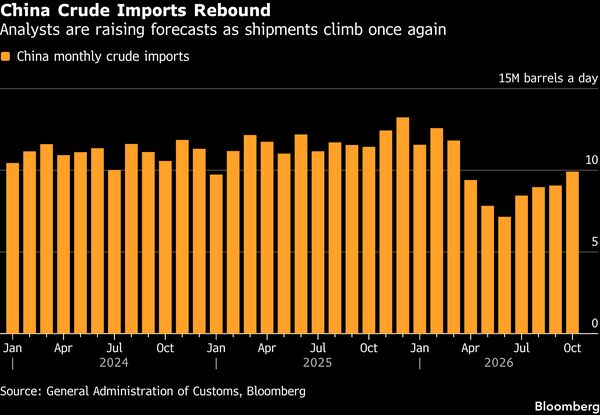
Energy Aspects和FGE NexantECA分别将第四季度进口预测上调至每日1010万桶和1020万桶,Rystad Energy则将预测上调至980万桶。
Energy Aspects and FGE NexantECA have raised fourth-quarter import forecasts to 10.1 million and 10.2 million barrels a day respectively, while Rystad Energy increased its estimate to 9.8 million.
这些数字正逐渐接近中国2025年日均1160万桶的水平。当时中国正利用低价充实战略和商业库存。这也标志着从6月715万桶的低点大幅反弹。
The figures are heading closer to China’s average of 11.6 million barrels a day in 2025, when the country was taking advantage of cheap prices to build up strategic and commercial inventories, and mark a significant rebound from June’s lows of 7.15 million.
中国需求回归之际,全球正重新滑向供应过剩,尽管中东冲突仍在持续。石油仍在从波斯湾流出,压低了基准价格,市场现在的关键问题是,这个全球最大进口国究竟能吸收多少,以及北京恢复囤油是否足以在新的一年继续为油价提供支撑。
China’s return comes just as the world tips back toward oversupply, despite the ongoing conflict in the Middle East. With oil still flowing out of the Persian Gulf, dampening benchmark prices, the key question for the market now is just how much the world’s top importer can absorb — and whether Beijing’s return to stockpiling will be enough to continue providing a floor into the new year.
“更大的图景是,中国的石油需求不仅仅是在从战争中恢复。需求结构也在变化,这使得旧的增长模式更难重现,”经纪商Pepperstone Group的策略师吴迪林(音)表示。“对于2027年,我认为中国支付的价格以及它希望存入多少库存,对进口的影响将大于国内燃料消费的突然跃升。”的确,国内需求依然低迷,有大量证据表明对传统燃料的需求正在减弱。
“The bigger picture is that China’s oil demand isn’t just recovering from the war. The structure of demand is changing too, and that makes the old growth model harder to repeat,” said Dilin Wu, a strategist at broker Pepperstone Group. “For 2027, I think the price China pays and how much it wants to put into storage will matter more for imports than a sudden jump in domestic fuel consumption.”Indeed, homegrown demand has remained muted, with plenty of evidence of a weakening appetite for conventional fuels.
高盛估计,9月汽油和柴油需求比一年前低约每日70万桶。随着电动汽车和卡车占领道路,高盛预计这一降幅中略超过一半将持续存在。唯一的亮点可能来自石化行业,该行业的去库存迹象已经很明显。
Goldman Sachs Inc. estimates gasoline and diesel demand in September was about 700,000 barrels a day lower than a year earlier. It expects that just over half of that loss will linger, as electric cars and trucks take over roads. The only bright spot may come from petrochemicals, where destocking has been evident.
北京咨询公司JLC表示,炼油商前景好转也起到了帮助作用。柴油裂解价差——独立炼油商使用进口原油加工利润的粗略指标——已扭亏为盈,而国有竞争对手的利润一直保持强势。
The rosier picture for refiners has helped. Diesel crack spreads — a rough proxy for processing margins at independent players using imported crude — have flipped to a profit, while margins at state-owned rivals have remained strong, according to Beijing-based consultancy JLC.
一些政府津贴的时间也所剩无几,包括独立炼油商的原油进口许可,一些炼油商希望在年底前使用,而额外的燃油出口配额则让炼油商有更多空间将多余产品运往海外,维持产能。Vortexa Ltd.首席中国分析师Emma Li表示,炼油商使用剩余配额可能使11月和12月的日加工量增加约100万桶。
Time is also running out for some government allowances, including crude-import permits for independent refiners that some are seeking to use before year-end, while additional fuel-export quotas give processors more scope to ship surplus products overseas, sustaining capacity. Refiners’ use of their remaining quotas could lift runs by about 1 million barrels a day in November and December, according to Emma Li, lead China analyst at Vortexa Ltd.
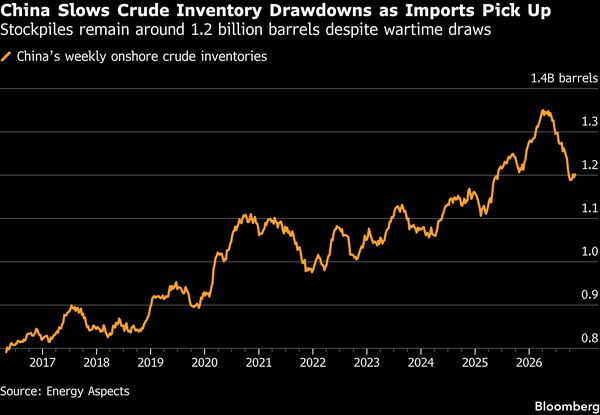
但真正的驱动力是北京长期以来对能源安全的担忧。据Energy Aspects称,10月份囤货量已达到1300万桶,即约每天41万桶。
But the real driver has been Beijing’s perennial concern with energy security. Already in October, stockpiling amounted to 13 million barrels — or about 410,000 barrels a day, according to Energy Aspects.
如果价格保持低位,这种情况将在未来几周和几个月持续下去。Energy Aspects分析师孙健楠表示,11月的囤货量预计每天超过88万桶,12月每天65万桶。
That will continue for the coming weeks and months if prices remain cooler, with stock builds estimated at over 880,000 barrels a day for November and 650,000 barrels a day the month after, said Jianan Sun, an analyst with Energy Aspects.
哥伦比亚大学全球能源政策中心高级研究学者Erica Downs表示:“补充战争期间动用的石油库存可能会推动进口增加。”
“The replenishment of oil inventories tapped during the war is likely to boost imports,” said Erica Downs, a senior research scholar at Columbia University’s Center on Global Energy Policy.
FGE NexantECA高级石油分析师Samuel Kong表示,为满足这种日益增长的需求,中国一直在抢购波斯湾原油的现货供应,而随着套利经济效益改善,巴西和西非原油也变得更具吸引力。这些采购,加上国际贸易商销售的伊拉克原油,有助于替代伊朗供应,后者仍受美国海上封锁的严重限制。
To meet this improving appetite, China has been snapping up spot supplies of Persian Gulf crude, while Brazilian and West African crude has also become more attractive as arbitrage economics improve, said Samuel Kong, senior oil analyst at FGE NexantECA. These purchases, along with Iraqi crude marketed by international traders, have helped to replace Iranian supply, still severely constrained by a US naval blockade.
“我认为北京将继续按月管理原油进口——当油价跌至每桶80美元时,将恢复战前的采购量,”独立咨询公司胡同研究合伙人郭珊说。
“I think Beijing will continue to manage crude imports on a monthly basis — and will resume pre-war purchases when the price drops to $80 a barrel,” said Guo Shan, partner at independent advisory firm Hutong Research.
国际能源署预计,受海湾国家出口恢复推动,全球石油市场将在第四季度重回供应过剩。布伦特原油本月已下跌约五分之一。
The International Energy Agency expects global oil markets to return to a supply surplus in the fourth quarter, driven by recovering Gulf exports. Brent has already fallen by roughly a fifth this month.