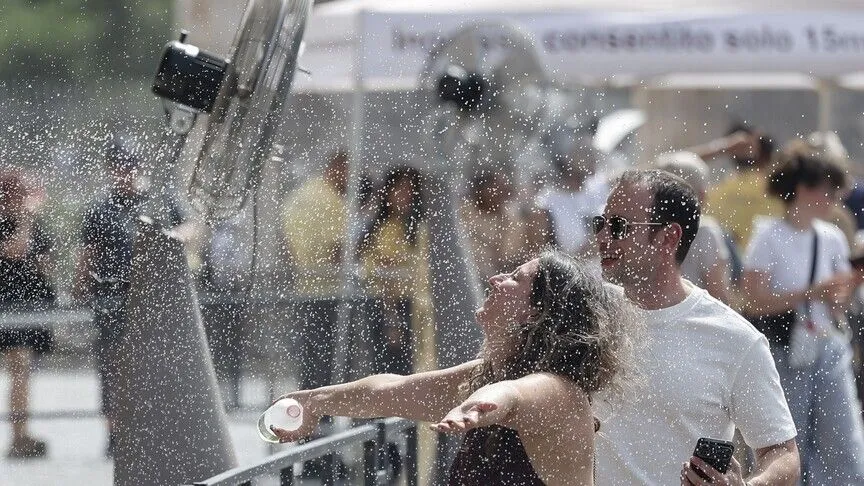
国际能源署周四表示,随着气温上升和家庭收入增加,全球建筑制冷需求首次超过取暖需求。
Global demand for cooling buildings is overtaking demand for heating for the first time, the International Energy Agency (IEA) said Thursday, citing rising temperatures and household incomes.
该机构在《2026年世界能源展望》中表示,更高的收入正使空调更容易为各家庭所用,尤其是在新兴和发展中经济体。
In its World Energy Outlook 2026, the agency said higher incomes are making air conditioning more accessible to households, particularly in emerging and developing economies.
报告称,在中国以外的新兴和发展中经济体,85%的家庭面临高温,然而这些家庭中拥有空调的比例不到五分之一。
Outside China, 85% of households in emerging and developing economies face high temperatures, yet fewer than one in five of those households has an air conditioner, the report said.
根据该机构既定政策情境,到2035年,全球用于制冷的电力消耗预计将增加1700太瓦时。国际能源署表示,这一预测已经考虑了全球平均气温的逐渐上升。
Under the agency's Stated Policies Scenario, global electricity consumption for cooling is projected to increase by 1,700 terawatt-hours by 2035. The projection already accounts for a gradual increase in average global temperatures, according to the IEA.
然而,该机构警告称,随着更多家庭购买空调并更频繁地使用空调,更强烈、更频繁且持续时间更长的热浪可能会推动电力需求显著上升。
However, the agency warned that more intense, frequent and prolonged heat waves could drive electricity demand significantly higher as more households purchase air conditioners and use them more often.
在此类情况下,到2035年,预计用于制冷的电力消耗增幅可能达到约2400太瓦时,比既定政策预测高出约40%。
Under such conditions, the projected increase in electricity consumption for cooling could reach approximately 2,400 terawatt-hours by 2035, about 40% above the stated policies projection.
报告称,额外的需求将给电网带来更大压力,特别是在大量家庭同时需要制冷的用电高峰期。
The additional demand would place greater pressure on electricity grids, particularly during peak periods when large numbers of households require cooling simultaneously, the report said.
空调是推动全球电力消耗的几个因素之一,其他因素还包括工业电机、电动汽车、热泵和数据中心。
Air conditioning is among several factors driving global electricity consumption, alongside industrial motors, electric vehicles, heat pumps and data centers.
该机构表示,自2019年以来,全球电力需求平均每年增长3.3%,超过整体能源需求年增长率1.5%的两倍。
Since 2019, global electricity demand has increased by an average of 3.3% annually, more than double the 1.5% yearly growth in overall energy demand, according to the agency.
国际能源署表示,满足不断增长的电力需求并连接新的供应来源,将需要在电力基础设施方面进行大量投资。
Meeting rising electricity demand and connecting new sources of supply will require substantial investment in power infrastructure, the IEA said.
该机构估计,在未来十年内,全球将需要至少2500万公里的新输电线路。
The agency estimated that at least 25 million kilometers of new power lines will be needed worldwide over the next decade.
还需要升级或更换另外1500万公里的现有输配电线路,以支持不断增长的电力需求。
An additional 15 million kilometers of existing transmission and distribution lines will need to be upgraded or replaced to support growing electricity demand.