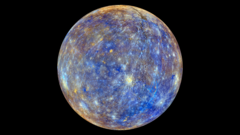
经过长达八年的旅程、飞行近60亿英里(约100亿公里)后,一艘名为“贝皮可伦坡号”(BepiColombo)的航天器即将抵达最终目的地,并进入水星轨道。
After an eight-year journey travelling almost six billion miles (10bn km), a spacecraft called BepiColombo is about to reach its final destination and get into orbit around Mercury.
它将进入一个极其恶劣的环境:水星是距离太阳最近的行星,温度可高达430摄氏度,也可骤降至零下180摄氏度,且时刻遭受强烈的太阳辐射轰击。
It will be entering an extremely hostile environment: Mercury is the closest planet to the Sun and temperatures can reach a fierce 430C and then plunge to -180C, and it is constantly blasted with intense solar radiation.
直到现在,这颗行星鲜有探测,但人们希望此次任务能解开水星的一些重大谜团。
Until now, the planet has been little explored but the hope is this mission will solve some of Mercury's major mysteries.
这些谜团包括:尽管离太阳很近,其陨石坑中为何存在冰层;以及遍布其表面的神秘“洼地”是如何形成的。
These include uncovering why there is ice in its craters despite its proximity to the Sun, and understanding the mysterious hollows that are dotted all over its surface.
莱斯特大学的艾玛·邦斯教授(Prof Emma Bunce)是该任务的首席研究员之一。她说:“我认为在内太阳系中,它有点‘不受宠’,但我认为这也是它如此引人入胜的原因之一。”
"I think it's a little bit of an under-loved planet in the inner Solar System, but I think that's one of the reasons why it is so compelling," said Prof Emma Bunce, from Leicester University, who is a principal investigator on the mission.
“从科学角度来看,我们非常想了解水星,有很多理由:它是如何形成的、如何演变的、如今是什么样子,以及它如何与太阳及其经历的极端空间天气相互作用。”
"There are lots of reasons, scientifically, why we really want to understand Mercury, how it formed, how it evolved, what it looks like today, but also how it interacts with the Sun and the extreme space weather that it experiences."
“贝皮可伦坡号”任务是欧洲航天局(ESA)与日本宇宙航空研究开发机构(JAXA)的合作项目,于2018年从法属圭亚那发射升空。由于航天器深入内太阳系,它不得不与太阳巨大的引力抗衡。
The BepiColombo mission, which is a collaboration between the European Space Agency (ESA) and Japanese Space Agency (JAXA), blasted off in 2018 launching from French Guiana. With the spacecraft heading deep into the inner Solar System, it has had to battle the Sun's immense gravitational pull.
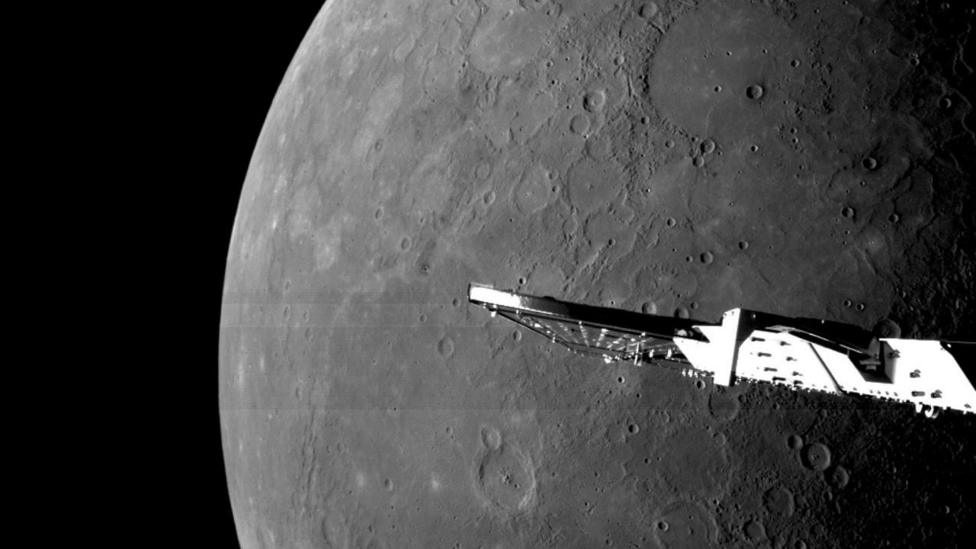
因此,它在整个旅程中一直“踩着刹车”,并走了一条非常迂回的路径——绕地球一圈、绕金星两圈、绕水星六圈——以充分减速从而进入轨道。
So it has had its brakes on for the entire journey, and has also taken a very convoluted path - looping once around the Earth, twice around Venus and six times around Mercury - to slow it down enough to get into orbit.
这段旅程本应耗时七年,但“贝皮可伦坡号”推进系统出现故障,导致本已漫长的航程延长了一年。
This journey should have taken seven years, but a problem with BepiColombo's propulsion system meant the already epic voyage was extended by a year.
进入轨道的最后一次机动极其危险:它需要执行一次长达37分钟的“急刹车”式转向,才能被水星引力捕获。一旦出现任何差错,探测器可能会飞掠水星。
The final manoeuvre to get into orbit is a perilous one: it needs to perform a 37-minute handbrake turn to be grabbed by the planet's gravity. If anything goes wrong, the spacecraft could hurtle past Mercury.
迄今为止,只有两艘航天器访问过水星——都是美国国家航空航天局的探测任务。
Only two spacecraft have visited Mercury until now - both Nasa missions.
“水手10号”在20世纪70年代曾三次飞掠水星,随后“信使号”航天器于2011年抵达水星,并在轨道上运行了四年。但关于这个微小世界,仍有太多东西有待发现。
Mariner-10 flew past the planet three times in the 1970s, and then the Messenger spacecraft arrived at Mercury in 2011 and spent four years in orbit. But there is still much to discover about this tiny world.
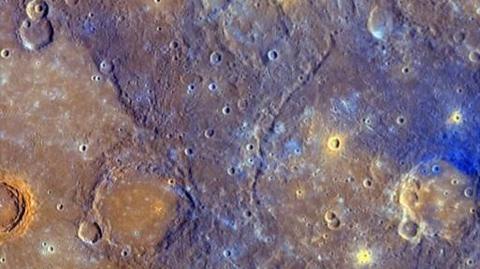
水星只比我们的月球稍大一点,表面遍布古老的火山、高耸的悬崖和巨大的陨石坑。水星上的时间流逝方式令人难以想象。
Mercury is only a bit bigger than our Moon, and is covered in ancient volcanoes, towering cliffs and colossal craters. And time on Mercury passes in a mind-bending way.
这颗行星绕太阳运行的速度极快,水星上的一年仅相当于88个地球日。但它绕自身轴旋转的速度极其缓慢,因此水星上的一天长达59个地球日。
The planet zips around the Sun so quickly, a year on Mercury lasts just 88 Earth days. But it turns incredibly slowly on its own axis, so a single day there lasts 59 Earth days.
除了研究水星极区陨石坑中为何存在冰之外,这项任务还将花时间研究水星表面奇特的小坑。
As well as investigating why Mercury has ice in its craters in the polar regions, the mission will also spend time studying strange dents in the planet's surface.
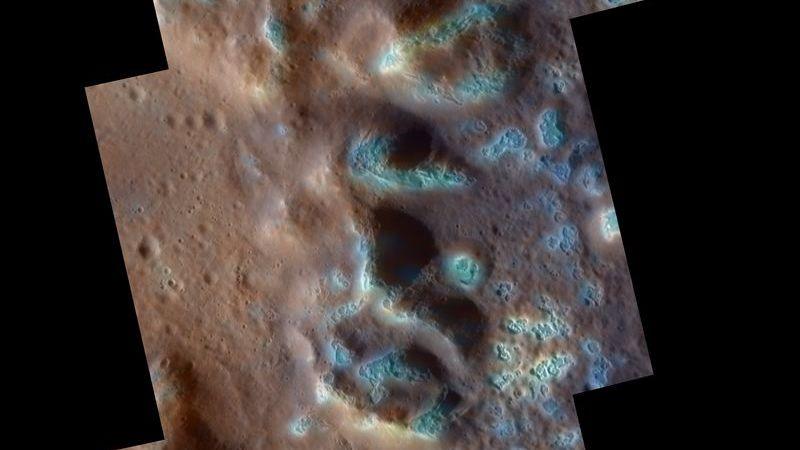
水星表面遍布着数千个这样的凹坑。它们很浅,但侧壁陡峭,常常成簇分布,而且从行星尺度来看还很年轻:大约有10万年的历史。
There are thousands of hollows all over it. They are shallow but with steep sides and often clustered together, and in planetary terms, they are young: about 100,000 years old.
科学家知道它们不是撞击坑——即太空岩石碰撞在表面留下的大型凹痕——但他们并不真正确定这些凹坑是什么,也不清楚它们是如何形成的。
Scientists know they are not impact craters - larger pockmarks on the surface caused by colliding space rocks - but they are not really sure what the hollows are or how they formed.
“贝皮科伦坡”探测器还将帮助研究水星另一个一直令研究人员困惑的方面。尽管这颗行星体积很小,却拥有一个巨大的金属核心。
BepiColombo will also help to study another aspect of Mercury that has been puzzling researchers. Despite the planet's tiny size, it has a huge metal core.
埃玛·邦斯教授说,这颗行星过去可能要大得多,但在其历史早期可能是“肇事逃逸”式撞击的受害者。“一种解释是,地幔在一次大型碰撞中被剥离了,”她解释说。
Prof Emma Bunce said that the planet could once have been much bigger, but was potentially the victim of a "hit and run" early in its history. "One of the explanations is that the mantle was stripped away in a large collision," she explained.
“或者是较长时期内多次碰撞的综合作用,剥离了它的外部区域、地幔和地壳,最终形成了我们今天看到的这颗行星。”她说,也有可能它就是在早期太阳系富含金属的区域以这种方式形成的。
"Or it's a combination of collisions over a longer period of time that then strips away its outer outer regions, its mantle and its crust, and leads to the planet that we see today." Or she said, it could have just formed that way in a metal-rich part of the early Solar System.
这可以说是一项不寻常的“买一送一”式任务——飞船上搭载了两艘航天器。抵达水星几周后,它们将分离。
Unusually, this is a sort of "buy one get one free" mission - there are two spacecraft onboard. A few weeks after arriving at Mercury they will separate.
欧洲航天局(ESA)的一艘航天器将近距离研究水星表面,另一艘属于日本宇宙航空研究开发机构(JAXA)的航天器将从远处观测这颗行星。
An ESA craft will study the surface close-up, the other, which belongs to JAXA, will view the planet from a distance.
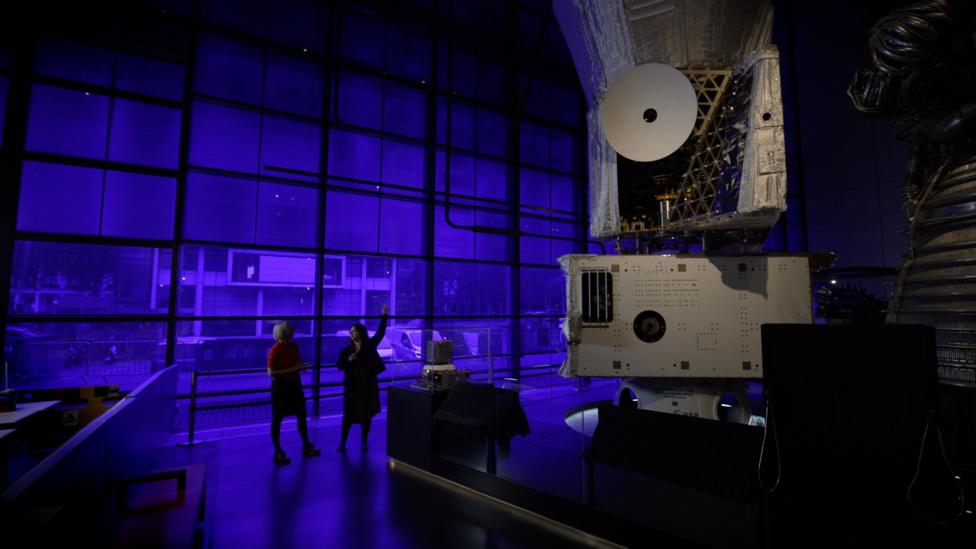
一座贝皮可伦坡号(BepiColombo)实物大小模型正在伦敦科学博物馆展出。组装过程中曾用它来测试飞船。
A life-size model of BepiColombo is on display at the Science Museum in London. It was used to test the craft while it was being put together.
制造该航天器的空中客车公司系统工程师杰西卡·马歇尔(Jessica Marshall)向我们展示了贝皮号的关键特征,并表示分离时刻对团队来说将是“令人神经紧绷”的。
Jessica Marshall, a systems engineer at Airbus, who built the spacecraft, showed us Bepi's key features - and said the moment of separation would be "nerve-wracking" for the team.
发射和漫长旅程期间,两艘航天器必须非常牢固地连接在一起,但八年后的现在,它们必须小心翼翼地断开连接。
The two spacecraft had to be very securely attached together for their launch and long journey, but now, eight years later, they have to delicately disconnect.
马歇尔说:“我们设计了一种特殊机制,对此进行了非常周密的考量。”
"We have designed a special mechanism that we have thought very carefully about," said Marshall.
“它经受住了太空恶劣辐射和巨大温差的考验,八年后,这个弹簧机制必须非常轻柔地释放……释放时它实际上还会扭转,以便让那艘航天器开始旋转。” 随着两艘搭载满仪器的轨道器抵达水星,贝皮可伦坡号团队希望能解开水星的谜团。当然,一旦抵达,他们可能会发现更多谜团。
"It's been exposed to the harsh radiation of space and highly different thermal temperatures, and after eight years this is a spring mechanism that has to then release very gently… As it releases, it actually also twists in order to start the spin of that spacecraft as well." With two orbiters at Mercury, both packed with instruments, the BepiColombo team hopes to find answers to Mercury's mysteries. Of course, they may uncover many more once they arrive.