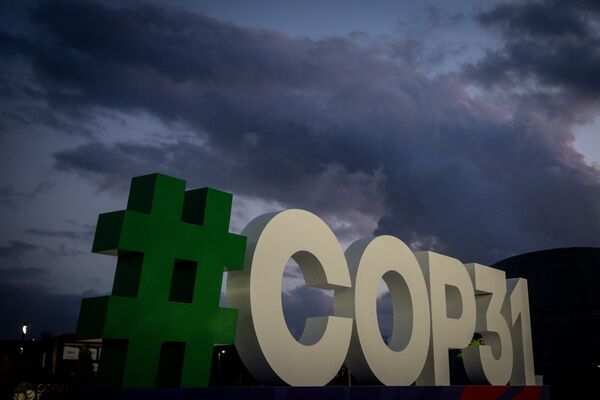
阿克沙特·拉西、珍妮弗·A·德劳希、约翰·安格和奥斯卡·博伊德报道 发布时间:2026-11-23T18:58:17+08:00 上周末,在土耳其安塔利亚举行的COP31气候峰会谈判以惊人的方式破裂,世界未能就加快能源转型进展达成任何共识协议。
By Akshat Rathi, Jennifer A Dlouhy, John Ainger and Oscar Boyd Published: 2026-11-23T18:58:17+08:00 Over the weekend, negotiations at the COP31 climate summit in Antalya, Turkey broke down in spectacular fashion, with the world unable to come up with any consensus deal to accelerate progress on the energy transition.
那么,问题出在哪里?又是否取得了任何成果?本周的《零》节目中,阿克沙特·拉西与彭博绿 reporters 约翰·安格和珍妮弗·A·德劳希交谈。过去两周他们一直在安塔利亚,目睹了COP31混乱的最后时刻。
So what went wrong and was anything achieved at all? This week on Zero, Akshat Rathi talks with Bloomberg Green reporters John Ainger and Jennifer A Dlouhy. They’ve been in Antalya for the past two weeks and were witness to the chaotic final moments of COP31.
我们的文字记录由软件和人工编辑共同生成,文本与音频之间可能存在细微差异。在印刷引用前,请以音频为准。
Our transcripts are generated by a combination of software and human editors, and may contain slight differences between the text and audio. Please confirm in audio before quoting in print.
阿克沙特·拉西 过去两周,近200个国家齐聚土耳其安塔利亚,参加COP31气候峰会。周日,这些国家之间的谈判以惊人的方式破裂,世界未能就如何加快应对气候变化达成共识。那么,问题出在哪里?又是否取得了任何成果?我正在与我的同事约翰·安格和珍妮弗·A·德劳希交谈,过去两周他们一直在现场。这里是《零》,我是阿克沙特·拉西。今天:多边主义的崩溃?珍、约翰,欢迎回到《零》。珍妮弗·A·德劳希 谢谢,阿克沙特,很高兴来到这里。约翰·安格 幸会,阿克沙特。
Akshat Rathi For the past two weeks, nearly 200 countries have gathered at the COP31 climate summit in Antalya, Turkey. On Sunday, negotiations between those countries broke down in spectacular fashion, with the world unable to come up with a consensus on how to accelerate the fight against climate change. So what went wrong? And was anything achieved at all? I'm talking to my colleagues, John Ainger and Jennifer A Dlouhy, who have been on the ground for the last two weeks. This is Zero, I am Akshat Rathi. Today: The collapse of multilateralism? Jen, John, welcome back to Zero. Jennifer A Dlouhy Thanks, Akshat, glad to be here. John Ainger Pleasure, Akshat. It's not very much sleep you've had over the last two days, so I'm really happy that you could make some time to talk through what have been dramatic events.
过去两天你没睡多少觉,所以我真的很高兴你能抽出时间来谈谈这些戏剧性的事件。考虑到地缘政治,考虑到本应谈判的内容,人们对COP31并没有太多期待。然而,我们却迎来了如今持续时间最长的COP。它超时了,多少小时?44小时加上其他多少小时?还有两周。而结果,根据所有头条新闻,根据你们发布的标题,是谈判的崩溃,是失败。发生了什么,约翰?
There was not that much expectation going into COP31, given geopolitics, given what was supposed to be negotiated. And yet we have had what is now the longest running COP. It ran over by, how many hours is it? 44 plus whatever hours? And two weeks. And the outcome, according to all headlines, according to the headline you guys put out, is a collapse of talks, is a failure. What happened, John?
嗯,这是个很好的问题,阿克沙特。我想最好的起点其实是几个月前,当时联合国首次警告说,我们正朝着超出《巴黎协定》所提出1.5°C目标的方向发展,而该协定仅仅是在11年前提出的。所以人们原本期待这次缔约方会议(COP)能对那份报告作出有意义的回应,尝试并有可能加快行动。
Well, that's a very good question, Akshat. So I guess probably the best place to start is actually a couple of months ago, when the UN warned for the first time that we are on track to overshoot the 1.5°C target outlined by the Paris Agreement just 11 years ago. So there was an expectation coming into this COP that it would respond in a meaningful way to that report, that it would try and potentially accelerate action.
本次COP的土耳其主席国提出了一个想法,到2035年将电气化提升至最终能源消费的35%,并表示这将带来显著的减排效果。他们基本上试图把这些主题纳入所谓的“覆盖决定”中。这基本上是一份包罗万象的文件,阐明COP进程、COP谈判在哪些方面取得了什么成果,并为前进方向定下基调。在过去几天里,我们看到这一进程步履蹒跚,最终戛然而止。
The Turkish presidency of this COP came forward with its idea to boost electrification to 35% of final energy consumption by 2035, which it said would have resulted in significant emissions cuts. And they basically tried to capture some of these themes in what's known as a cover decision, which basically is an all-encompassing document which sets out where and what the COP process, the COP talks, have achieved and sets a direction for the way forward. In the last couple of days, we've seen that process really stagger to a juddering end.
正如你所说,我们已经超时两天。基本上,所有这些头条新闻背后的原因是,我们无法就那份覆盖决定达成共识。主要问题在于,欧盟、一些小岛屿国家、最不发达国家等各方都试图大力推动摆脱化石燃料的转型,加快这一转型,未必是要在最终文本中写入确切的措辞,而是要有一个反映这一点的明确信息。
We have gone, as you said, two days over time. And basically, the reason behind all the headlines is that we could not reach a consensus on that cover decision. The main issue was that the likes of the European Union, some small island states, the least developed countries were all trying to make a big push on the transition away from fossil fuels, accelerating that transition and not necessarily getting that exact language in the final text, but to have a clear message that reflected that.
而最终,他们认为太多内容落在了所谓的碳捕集与封存上,他们基本上把这看作许多石油国家继续生产石油并在世界各地燃烧石油的后门。对他们来说,这太过分了。最终,他们决定拒绝这份文本,而我们已经没有时间提出新的文本了。所以今天早些时候我们就是这样收场的。
And in the end, they felt that too much was on so-called carbon capture and storage, which they saw basically as a backdoor for many petrostates to carry on producing oil and burning it around the world. And for them, that was a step too far. And in the end, they decided to reject this text, and we have run out of time to come forward with a new one. So that's how we ended things earlier today.
我们谈到了其中许多问题,但让我先给大家一个宏观的全景,因为对于那些没有关注的人来说,当他们读到“谈判失败”、“多边主义崩溃”这样的标题时,会觉得:“好吧,这些人在那里待了两周,成千上万、几万人出席了。他们到底有没有取得什么成果?”他们取得了什么成果,珍?我们会说这是失败和崩溃吗?
We've talked about many of those issues, but let me just take us to the high level picture, because for people who have not tuned in, when they read that headline of ‘a failure of talks’, ‘a collapse in multilateralism’, it feels like a view of, ‘well, these guys were there for two weeks, so many thousands, tens of thousands of people showed up. And did they achieve anything?’Did they achieve anything, Jen? Would we say this is failure and collapse?
我认为,按照COP31主席国自己制定的标准来看,这确实是一次失败。在这次会议开始前几周,土耳其和澳大利亚就明确表示,他们打算制定某种“覆盖文本”。目标是回应关于1.5℃限制被突破的警告,并支持土耳其一直在自愿推进的电气化倡议。所以他们为自己设定了这个目标。而现在,经过16天的会议,他们没有实现它。所以,这非常明确,就是没有做到他们自己说想要做的事情。
I think we would say it is a failure by the very metrics that the COP31 presidency laid out. Weeks before this conference began, Turkey and Australia made clear that they were intending to produce some kind of cover text. The goal was to respond to the warnings about the 1.5°C limit being breached and to embrace an electrification initiative that Turkey had been pushing forward on a voluntary basis. So they set out this target for themselves. And then here we are at the end of, you know, 16 days of this and they didn't achieve it. So very clearly, that is a failure to do what they said they wanted to do.
不过,一个非常重要的观点是,这些“覆盖文本”在COP会议中其实是一种相对新的事物。你知道,我们已经举办了31次这样的会议,以前并不常见大力推动大规模、广泛共识文件的情况。我认为部分原因是,巴黎会议显然是一个巨大的转折点,在某种程度上,COP主席国有时希望从这些峰会中带出某种“成果”。可以肯定的是,确实有很多很多的成果得以完成。
A really important point, though, is that these cover texts are really kind of a new thing in COPs. You know, we've had 31 of these and we didn't use to see a big push for big, broad consensus documents. I think part of that is that Paris was obviously a huge moment and to some degree COP presidencies sometimes want to come out of these summits with some kind of deliverable. To be sure, there are lots and lots of deliverables that do get done.
我们在这里的谈判轨道中看到了这种情况,但这次进入会议时,谈判轨道相对较窄。土耳其显然希望从中带出一些看起来宏大而大胆的东西。
We saw that happen here in negotiated tracks, but there were relatively narrow negotiating tracks this time going in. And Turkey clearly wanted to have something coming out of it that would look big and bold.
这些最后的全体会议,在进行过程中,所有这些事情都被敲槌通过,往往要持续很多小时。接近尾声时,有很多事情需要被敲槌通过。但也有紧张的时刻。也有出现情绪化一面的时刻,也有国家提出实质性论点,导致戏剧性转折。那么,哪些国家、哪些人物站出来发表言论,让这一时刻如此充满分歧变得清晰?
And these final plenary meetings, as they happen, where all these things are gaveled down, they tend to run for many hours. Toward the end, there's lots of things to be gaveled down. But there are moments of tension. There are moments where you get the emotional side, you get a substantive argument that a country makes that make for dramatic turns. So which countries and which characters came out to say things that made it clear why this moment is so fractious?
对我来说,我认为真正的关键在于,欧盟在这次联合国气候大会上采取了立场。当你看到联合国气候大会31届主席、土耳其环境部长穆拉特·库鲁姆,向在场的代表提出这份覆盖性决定时,你真的看到了爱尔兰部长达拉·奥布赖恩,他的国家目前担任欧盟轮值主席国。他站了起来。他在制造噪音。他确实在表明,他对这个决定不满意。他发表了一份非常、非常强烈的声明,称欧盟不会接受这个决定,实际上,这实际上是漂绿。
For me, I think it was really the fact that the European Union took a stand at this COP. When you saw the COP31 president, Murat Kurum, Turkey's environment minister, he put forward this cover decision to those delegates that were in the room. You really saw Ireland's minister, Darragh O'Brien, whose country is holding the rotating presidency of the bloc at the moment. He got to his feet. He was making noise. He was really signaling that he was not happy with this decision. And he came out with a very, very strong statement, indeed, that the EU would not accept this decision, and actually that it was greenwashing.
达拉·奥布赖恩:我们不会支持一份甚至不提及化石燃料的覆盖性决定或安塔利亚协定,化石燃料是气候变化的关键驱动因素。我们不会接受倒退的谈判。我们不会接受一个漂绿化石燃料的联合国气候大会。
Darragh O'BrienWe will not endorse a cover decision or an Antalya pact that does not even mention fossil fuels, which is the key driver of climate change. And we will not accept negotiating backward in time. And we will not accept a COP that greenwashes fossil fuel.
所以这是一个非常强硬的立场,因为过去几年里,我们看到欧盟在联合国气候大会谈判进入尾声之前发表了一些重大声明,称可能愿意退出谈判。但这是第一次,我们实际上看到了这种情况发生。所以这确实是一幕值得观看的景象。我还要补充一点,会议室里对土耳其主席相当不满的情绪。你看得出他看起来非常疲惫。就在欧盟发言之前,加纳发言,代表非洲国家集团表示,他们感到土耳其主席不尊重他们。
So that was a really strong stance because we have seen the EU in the last couple of years make some big statements in the run up to the end game of COP, saying that it might be willing to walk away from talks. But for the first time, we actually saw that happen this time round. So that was really quite something to behold. I would also just add that there was quite a mutinous feeling in the room against the Turkish president. You could see that he was looking incredibly tired. Just before the EU spoke, Ghana took to the floor to say that they felt, on behalf of the African group of nations, disrespected by the Turkish president.
Nana Dr. Antwi-Boasiako Amoah关于总统,您没有对54个国家群体表示尊重,我的国家也是如此。
Nana Dr. Antwi-Boasiako AmoahWith respect to the president, you have not shown respect to a group of 54 countries, and my country as well for that matter.
因此,有些国家非常强烈地反对这一点。在过去几天的筹备过程中,另一个非常强硬的国家是巴拿马。他们向COP主席国发了一封信,列出了一系列要求,包括限制石油产量。他们是那些说“看,我们不能支持这项协议。这是一项不成交的协议。我们拒绝这份文本”的国家之一。这些是我在全体会议现场发现的几个相当惊人的时刻。
So there were some countries coming out very strongly against this. Another country that has been very strong, kind of in the run up over the last few days has been Panama. They sent a letter to the COP presidency that laid out a list of demands, including capping oil production. And they were the one of the ones that kind of said, ‘Look, we cannot get behind this deal. This is a no deal. We're rejecting this text.’So those were three moments that I found quite stunning from the plenary floor.
是啊,有太多戏剧性的时刻了。我们不能把所有时间都花在讲这些上,但我确实被一个时刻深深打动:一位来自低洼的马绍尔群岛的代表非常热情地讲述,他们来参加这次COP是希望得到资金,希望得到减排,却一无所获。他们觉得捐助国或发达国家空手进了会议室。
Yeah, there were so many dramatic moments. We can't take all your time telling them, but I was really struck by a moment when a delegate from the low-lying Marshall Islands spoke very passionately about how they came to this COP hoping for finance, hoping for emission cuts and really not getting anything. They felt like donor countries or developed nations had entered the room empty handed.
他们还像欧盟一样发言。他们说,他们不会被迫在这里接受虚假的解决方案。同样,出于这个理念,我们不会以共识之名接受糟糕的结果。我真的觉得,这位代表想要传达的就是这一点:我们不会为了化石燃料利益而牺牲我们的未来。
And they also spoke just like the European Union did. They said we're not going to be forced to accept false solutions here. Again, to that idea that we're not going to accept a bad outcome in the name of consensus. I really thought that was what this representative was conveying, that we're not going to compromise our future to benefit fossil fuel interests.
另一方面,你也听到了沙特阿拉伯和俄罗斯的发言,这两者尤其引人注目。沙特阿拉伯确实牵头推动在文本中加快或采纳碳捕获技术,这项技术显然被视为一种可以继续燃烧化石燃料更长时间的方式。在全体会议上,沙特阿拉伯代表说:“有什么问题?这不是漂绿。”他坚称这不是漂绿。他指责其他国家排斥并关闭了处理二氧化碳排放的一个合法选项。
On the other side, you also heard interventions from Saudi Arabia and Russia that were particularly notable. Saudi Arabia had really led this push for an acceleration or an embrace in the text of carbon capture technology that obviously is viewed as a way to continue burning fossil fuels for longer. And in the plenary, the Saudi Arabian delegate said, ‘What's wrong? This is not greenwashing.’He insisted this was not greenwashing. He accused other countries of ruling out and foreclosing a legitimate option to dealing with carbon dioxide emissions.
随后,俄罗斯也发言称,关于化石燃料的措辞完全不可接受,即根本不提及化石燃料,并明确表示这是俄罗斯的红线。他还抨击欧盟的碳关税,并抱怨其他国家以气候政策之名进行贸易政策。
And then you also had Russia come out and say that the language on fossil fuel was just unacceptable, like there was going to be no mention of fossil fuel, making clear that was a red line for Russia. And he took a swipe at the EU's carbon levies and complained that other countries are doing trade policy in the name of climate policy.
在我看来,全体会议确实体现了,COP中发达国家与发展中国家的传统分歧正变得复杂得多。现在有太多不同的派别,它们在本次COP上都带来了不同的红线。在两周的时间里,这些红线变得更加深刻、更加难以调和,我认为这便是我们今天会走到这一步的原因。
To me, the plenary really spoke to how the common divisions of COP, which are developed versus developing nations, are becoming so much more complex now. You have just so many different factions and they all came in at this COP with different red lines. And over the two weeks, those lines got deeper and more intractable, and that's how I think we ended up at this place today.
有趣的是,到2035年电力占最终能源35%的目标——即“35 by 35”目标——确实得到了大约90个国家自愿加入承诺。他们希望将其写入最终文本,但当然,他们没有成功。但电气化并未成为大多数国家的争议焦点。似乎大家都有意达成协议,但正是 文本中的所有其他部分,才真正成了问题。
And interestingly, the 35% final energy coming from electricity by 2035 — the ‘35 by 35’ goal — did get something like 90 countries voluntarilyg up to the pledge. Their hope was that they would get it in this final text, and of course, they didn't. But electrification didn't become the sort of flashpoint for most countries. There seemed to be a desire to try to sign off, but it was all these other bits of the cover text that really became a problem.
我们在缔约方大会期间经常谈到这个问题:这些覆盖文本很复杂,但需要平衡。富裕国家在推动减排,推动发展中国家减排;而发展中国家则要求富裕国家拿出资金。当这种平衡达成时,覆盖文本才真正履行了它的任务。显然,实现这种平衡的大量工作必须由主席国来完成。
And we talk about this a lot when we are at COPs that these cover texts, they are complex, but they require balance. There is, from rich countries, a push to try and reduce emissions, push developing countries to reduce emissions. And from the developing countries, there's a demand from rich countries to show up with some finance. When this balance is struck, that's when a cover text really lives up to its task. And a lot of the work of that balance has to be done, obviously, by the presidency.
当你看到这些谈判破裂、覆盖文本未能达成时,代表们对主席国如何处理这些最终需要平衡的各种力量有何说法?
As you were looking at the collapse of these talks and the cover text not coming through, what were the delegates saying about how the presidency managed balancing these various powers that need to be balanced at the end?
人们有很多不满,尤其是过去几天里,对主席国处理此事的方式不满情绪不断累积。首先我应该说明,这在很大程度上与实际上存在两位主席有关。这是一种前所未有的安排:土耳其主办缔约方大会,担任第31届缔约方大会主席,澳大利亚主持谈判。但在实践中,各国告诉我们,他们不得不分别与两者打交道。
There was a lot of frustration, particularly building over the last few days with how the presidency was handling this. And to start, I should say, by the way, that that had a lot to do with the fact that there were essentially two presidents. This was an unprecedented arrangement with Turkey hosting the COP, being the COP31 president, Australia was the presider over negotiations. But in practice, countries were telling us that they had to deal with both of them in isolation.
所以你会看到,有些代表有时会先与土耳其代表会面,然后再向澳大利亚代表陈述自己的立场。显然,这不是一个十分高效的过程。此外,还有人对这次气候大会前所做的准备工作数量表示不满。因此,轮值主席国的一大挑战,就是在气候大会召开前做大量工作,争取对关键目标的支持。一位部长谈到,土耳其为争取支持其电气化倡议所做的所有工作。
So you would have delegates who sometimes then met with the Turkish representatives and then later would have to make their case to the Australian representatives. Obviously, that's not a terribly efficient process. There were frustrations, too, that were voiced about the amount of homework that was done ahead of this COP. So one of the challenges for presidencies really is to do a lot of work in the run up to a COP, trying to elicit support for key goals. One minister talked about all the work that was done by Turkey to recruit allies behind its electrification initiative.
但最终,他们并没有让欧洲人拿出更多资金。事实上,这一点在峰会开始前就已被排除。他们也没有帮助弥合关于科学及其在其中所起作用的部分分歧。所以这些准备工作没有做好,而要求200个国家在一周内就许多不同领域的高度分裂谈判达成共识,这本身就是很大的要求。
But in the end, they hadn't gotten the Europeans to show up with more money. That was ruled out early on, in fact, before the summit began. They hadn't helped bridge some of the divides over science and how that plays a role in all of this. So that homework hadn't been done, and it's a lot to ask 200 countries to come together in consensus over a week when they are doing these very fractured negotiations over many different areas.
在这些谈话的最后,东道国领导人会发挥重要作用,在此例中,土耳其的领导人是[总统雷杰普·塔伊普]埃尔多安,澳大利亚的领导人是[总理安东尼]阿尔巴尼斯,他们作为各自国家的领导人,会竭尽全力来弥合这些分歧。因此,曾有希望,你知道,土耳其与沙特阿拉伯关系非常好。例如,我们看到,当阿联酋和沙特关系良好时,在2023年的COP28上,这种关系对于推动某项议题通过确实很重要。难道我们没有看到土耳其轮值主席国真的竭尽全力,试图争取沙特加入吗?
One thing that then happens at the very, very end of these conversations is the leaders of the host countries, in this case, it would be [President Recep Tayyip] Erdogan for Turkey and [Prime Minister Anthony] Albanese for Australia, they really pull their weight as leaders of those countries to pull together these dividing lines. So there was some hope, you know, Turkey has really good relationships with Saudi Arabia. We saw, for example, when UAE and Saudi relationships were good in COP28 in 2023, that that type of relationship really mattered to get something across the line. Did we not see the Turkish presidency really pull that weight to try and bring the Saudis on board?
目前阶段我们不知道讨论进行到了多高层级。我们知道,过去几年里,领导人之间曾通电话,最引人注目的是在迪拜,试图让协议达成,阿联酋和沙特阿拉伯之间也曾通电话,试图把那份关于摆脱化石燃料转型的里程碑式协议纳入最终文本,那是一个重大时刻。这一次,确实有一种感觉,即沙特阿拉伯对这次主席国产生了很大影响。
Look, so we don't know at this current stage how high discussions went. We have known that in previous years, calls have been made between leaders, most notably in Dubai, to try and get agreements over the line, that calls were made between the UAE and Saudi Arabia to try and get that landmark deal on transitioning away from fossil fuels into the final text, which was a huge moment. This time round, there was definitely a sense that Saudi Arabia had a big influence over this presidency.
我们采访了多人,他们说,在谈判最后一晚的大部分时间里,沙特人几乎在主席国办公室里安营扎寨。所以你真的能感觉到,沙特阿拉伯在大力抵制这件事。至少我发现的一件有趣的事是,昨晚,也就是这些谈判的倒数第二晚,欧洲和一些进步国家,大约130个国家,提出了提案,基本上会表明在减排上更大的雄心。提案会谈到加速摆脱化石燃料的转型。其中还有关于资金的措辞。他们把这些交给了主席国,而我们第二天早上看到的文本基本上没有反映这一点。
We spoke to a number of people who said that the Saudis almost had kind of an encampment in the presidency offices for much of the last night of talks. So you could really get the sense that Saudi Arabia was pushing back hard against this. And one of the interesting things I found, at least, is last night on the penultimate night of these talks, you had Europe and progressive countries, around 130 nations, put forward proposals which basically would have signaled more ambition on emissions cuts. It would have talked about accelerating the transition away from fossil fuels. There was also language on finance there. They gave that to the presidency and the text that we saw the following morning basically didn't reflect that.
所以你能看到,主席国也许在玩这种把戏:他们认为一旦这项决定提交到全会,也许一些气候雄心更大的国家会像过去几年那样退让。我还想就你提到的电气化说一句,我不认为那是谈判结束时的一个大问题。但在两周的大部分时间里,一些缔约方确实有一种感觉,即土耳其真的在推动把电气化目标写进覆盖决定,牺牲了我们可能看到的许多其他要素。
So you kind of saw the presidency perhaps playing this game where they thought that once this decision got onto the plenary floor, that maybe some of the more climate ambitious countries would back down like they have done in previous years. I would just also like to say on your point about electrification, I don't think that was a big issue at the end of talks. But for much of the two weeks, there was definitely a sense among a number of parties that Turkey was really pushing this electrification goal in the cover decision at the expense of a lot of the other elements that we might have seen.
对发展中国家来说,这带来了相当大的不安,因为它们对更多自上而下的目标心存戒备,这些目标可能耗费大量资金,而它们并没有落实这些目标所需的资金。因此,在最后几天到来之前,这或许留下了一点不好的余味,为今天我们身处的局面埋下了伏笔。
And for developing countries, that was leading to quite a bit of discomfort because they were wary about more top-down targets, which would potentially cost a lot of money and for which they didn't have the financing in order to implement those goals. So that, in the run up to the final days, perhaps was leaving like a little bit of a bad taste in the mouth that set the stage for where we found ourselves today.
休息之后,是我与彭博绿色记者珍妮弗·A·德卢希和约翰·安格更多对话,谈COP出了什么问题,以及如何挽救。如果你喜欢本期节目,请抽空在你收听的平台上给《零》评分并留下评论。谢谢。
After the break, more of my conversation with Bloomberg Green reporters, Jennifer A Dlouhy and John Ainger about what went wrong at COP and how it could be salvaged. If you're enjoying this episode, please take a moment to rate and review Zero on whichever platform you're listening on. Thank you.
过去在COP上另一件很重要的事是美国的到场,美国来了,并且再次试图弥合这些分歧。通常是美国和欧盟一起行动,有时是美国和中国一起行动。珍,你在这些谈判中感受到美国的缺席了吗?你觉得如果美国在场,情况会不会不同?
Another thing that used to matter a lot at COPs was the presence of the US, which came in and again tried to bridge these divides. And you had the US and EU typically acting together, US and China acting together at times. Jen, did you feel the lack of the US in these talks? Do you think if the US was present, things could have been different?
美国还在某种意义上对沙特阿拉伯起到了重要的制约作用。在过去的COP上,美国能够遏制他们的一些冲动,而且效果非常显著。所以,我们在这里看到阿拉伯集团的影响力,该集团由沙特阿拉伯领导,尤其是在碳捕集这一问题上……我认为不可否认,如果美国在场,而且是在一位真正致力于COP进程和气候外交的总统领导下以强有力的方式到场,那很可能会有影响,可能会有努力,美沙之间的双边努力,来弥合这一分歧。
The US has importantly also acted as a check, in a way, on Saudi Arabia. They have been able to contain some of their impulses in past COPs and very meaningfully so. And so what we saw here with the influence of the Arab group, led by Saudi Arabia, particularly on this issue of carbon capture… I think undeniably had the US been here in a forceful way under a president that is really committed to the COP process and to climate diplomacy, that it could very well have mattered, that there could have been efforts, bilateral efforts between the US and Saudi Arabia, to bridge that divide.
当然,显而易见,欧盟也没有机会置身事外。通常在金融问题上,欧盟和美国处于某种程度上相似的阵营,致力于帮助处于气候变化前线的国家。而在这里,欧盟在这一问题上处于非常暴露的境地。当然,发展中国家对未能提供新的资金支持感到明显沮丧,甚至对无法承诺为已经达成的资金承诺设定明确目标的最后期限也感到沮丧。
Of course, obviously, the EU also didn't have a chance to hide. Normally the EU and the US are somewhat in similar camps when it comes to finance, to help countries on the front lines of climate change. And here the EU was very exposed on that issue. And there was, of course, obvious frustration from developing nations about the failure to deliver new finance, but even to commit to deadlines for determining explicit targets for finance promises that have already been agreed.
过去几年我们也讨论过,考虑到美国在这些缔约方大会之外的立场,中国是否会挺身而出承担领导角色。也许我们在最后看到了一些迹象,澳大利亚和中国发表了一篇联合署名文章,称“我们支持电气化目标,并希望帮助其他国家”。但我们确实没有看到中国大规模现身,这似乎已成常态。我们没有看到中国真正承担公开的领导角色。是这样吗?
We have also discussed in the past few years, given where the situation is with the US outside these COPs, whether China would step up and take on the leadership role. And maybe we saw some sign of that where there was an op-ed put out between the Australians and the Chinese at the very end saying, ‘Oh, we support the electrification goal and we would want to help other countries.’But we really did not see a lot of China showing up, and that has kind of become the norm. We are not seeing the Chinese really take on open leadership. Is that right?
我想说情况比较微妙,阿克沙特。中国显然非常投入这一进程,希望看到多边主义发挥作用。显然,中国从气候进展中获益良多,因为它向世界出售大量清洁技术产品,如太阳能电池板和电动汽车,这些将推动这一转型。
It's a nuanced picture, I would say, Akshat. China is clearly very invested in this process, it likes to see multilateralism work. And obviously, it stands to benefit a lot from progress on climate in the sense that it sells much of the clean tech in terms of solar panels and EVs to the rest of the world that will make this transition happen.
但与此同时,正如你所说,在美国退出《巴黎协定》后,中国一直不愿填补这一领导真空。这一点或许在本次峰会伊始表现得最为明显,当时我们在猜测中国是否会提名主办COP33,这是两年后的一个关键缔约方大会,将基本评估世界现状以及为遏制排放需要采取什么行动。我们在猜测中国是否会提名并主办该峰会。
But at the same time, as you said, China, in the wake of the US exit from the Paris agreement, has been reluctant to step into that leadership void. And perhaps nowhere was that more evident than right at the start of this summit when we were wondering whether China might put its name forward to host COP33, which is a key COP in two years time, which basically evaluates where the world is at and what needs to be done to curb emissions. We were wondering if China would put its name forward and host that summit.
而它很早就排除了那种情况不会发生的可能。所以这是一个很好的例子,说明中国当时还不愿意或还没有能力进入那个领导真空。我们并没有真正看到中国展开那种穿梭外交——在美国可能于最后几天进行的那种穿梭外交,去推敲措辞,试图打破各方在化石燃料转型等关键问题上的僵局。
And it ruled out very early on that that would not be the case. So that was a good example of China not yet being willing or able to enter into that leadership vacuum. And we didn't really see them doing that shuttle diplomacy that could have been expected in the final days that the US might have done crafting language to try and break the deadlock between different parties on key issues like the fossil fuel transition, for example.
会谈结束后,我们的收件箱里涌入了大量反应。其中一个引起我注意的是E3G的阿尔登·迈耶。他大致是说,“嘿,头条新闻说崩盘了,但请注意, 文本是可选的,有些东西还是通过了。”他指出了那些内容。他说,公正转型工作计划获得了批准,全球适应目标获得了批准,减缓工作计划被俄罗斯人和沙特人阻挠,谁知道那会走向何方。但在那些其他实质性项目上,约翰,我们对全球适应目标了解多少,这又如何契合COP今天的处境?
We've got a lot of reactions coming into our inbox after the talks. One of them caught my attention was from Alden Meyer of E3G. And he sort of said, ‘Hey, the headlines say collapse, but just to note, the cover text is optional, there were things that were adopted.’And he made a note of those things. He said the Just Transition Work Program got signed off, the Global Goal on Adaptation got signed off, the Mitigation Work Program was blocked by the Russians and the Saudis, and who knows where that goes. But in those other substantial items, John, what do we know about the Global Goal on Adaptation and how this fits in with where COP is today?
是的。所以这两个要素,当你与谈判代表交谈时,他们会说,公正转型机制和全球适应目标是气候斗争中拼图的关键部分。适应问题显然越来越重要,因为我们正在超出《巴黎协定》设定的关键温度目标,而且我们看到越来越极端的天气。而公正转型基本上关乎国家以及国家内部,比如民众如何实现转型,因为我们显然知道这可能是一个代价高昂的过程,许多国家并不具备所需的工具来落实一些亟需的实地工作。
Yes. So both of those elements, when you talk to negotiators, they will say the Just Transition mechanism and the Global Goal on Adaptation are crucial pieces of the puzzle in the climate fight. Adaptation, obviously, increasingly is becoming relevant as we overshoot past key temperature goals laid out by the Paris Agreement, and we're seeing increasingly extreme weather. And the Just Transition basically is about countries and also intracountries, like how populations are able to transition, because obviously we know it can be a costly procedure and many countries don't have the tools they need to implement some of the much needed work that's on the ground.
在全球目标中的适应问题上,基本思路是尝试建立某种总体目标,以对应巴黎协定中1.5°C的成果。但适应问题是本次峰会上最具争议的话题之一,我认为可以这么说。例如,欧盟因目前不愿将适应资金增至三倍而受到批评,这一目标去年在贝伦已达成一致。似乎摆在桌面上的妥协方案是,发达国家将在明年一年内制定路线图或开展对话,使其成为明年COP的真正成果。明年的COP将在埃塞俄比亚亚的斯亚贝巴举行,考虑到埃塞俄比亚是处于气候变化前线的国家之一,这将具有象征意义。
In terms of adaptation in the Global Goal, basically, the idea is to try and create some sort of overarching goal that would mirror the 1.5°C outcome that we have from Paris. But adaptation was one of the most controversial topics at this summit, I think it's fair to say. The EU was being criticised for not being willing right now to triple adaptation finance, for example, which was agreed last year in Belém. The compromise that seemed to be on the table was that developed countries would work on a roadmap or a dialogue over the course of next year to make that a real outcome at next year's COP, which is taking place in Ethiopia in Addis Ababa, which would have been symbolically significant given it's one of the countries on the front lines of climate change.
但关于谈判成果与覆盖决定的整场辩论,我认为也凸显了COP进程当前面临的身份危机:一方面需要就一些重要的、非常技术性的方面进行谈判,另一方面也需要着眼大局,即在关键十年中所需的大规模实施措施。我认为这就是为什么我们看到最后一天收尾方式出现了这种分裂。
But also this whole debate on the negotiated outcomes versus the cover decision, I think shines a light on the identity crisis that the COP process is currently facing between the need to negotiate some really technical aspects of things that are important, but also the bigger picture, big implementation measures that are needed in a critical decade. And I think that's why we saw this breakup in how things finished on the final day.
约翰,这一点说得非常好。现在有很多问题:COP到底是干什么的?鉴于巴黎协定已经签署,巴黎协定下的所有规则也已签署,还有其他一些事项,是的,它们确实被讨论,但它们是否取得了实质性进展?
That is a very good point, John. There are a lot of questions now about what is COP for, given the Paris Agreement was signed off, all the rules under the Paris Agreement were signed off and these other things, yes, they do get talked about, but are they making substantial progress?
在过去24个月里,我们看到有人试图建立一种不同的体系,或许可以通过它取得更多进展。在哥伦比亚圣玛尔塔举行了一次会议,基本上是在探讨制定一项条约,即一些国家是否会签署一项名为《化石燃料不扩散条约》的协议以摆脱化石燃料。该体系现在已有80多个国家加入,他们在那里开会。
We have seen in the last 24 months an attempt to try and create a different system through which maybe more progress could be made. There was a conference in Santa Marta, Colombia, talking about essentially figuring out a treaty, whether some countries would sign off on a treaty to move away from fossil fuels called the Fossil Fuel Non-Proliferation Treaty. And that system now has 80 plus countries in it, they meet over there.
这让联合国内部一些人感到有些不安:一旦把其中一些事项从联合国程序中拿出来,是否会削弱缔约方会议本身。我们听说,联合国气候机构现在正寻求改革缔约方会议程序。珍,这个进程进行到哪一步了?这次缔约方会议上我们看到了任何进展吗?
It has made people inside the UN a little bit queasy, if once you take some of these things out of the UN process, whether it undermines COP itself. And so we have heard that the UN climate body is now looking to reform the COP process. Where is that process, Jen? And did we see any progress at this COP?
我们在缔约方会议召开前看到的是,专家、前外交官等围绕这一程序进行了大量讨论,联合国气候变化框架公约执行秘书西蒙·斯蒂尔召集这些人探讨可以开展何种改革,以及改革可能如何改变这一程序,无论好坏。缔约方会议之前举行了磋商。明年的打算是把这件事提交给缔约方,让参与其中的国家加入这场讨论。但这不太可能一夜之间改变。
What we saw was a lot of discussion heading into the COP by experts around this process, former diplomats etc, that the UNFCCC Executive Secretary Simon Stiell had convened to explore what kind of reforms could be done, how it might change the process for good or bad. There were consultations leading up to the COP. Next year, the intention is to take that to the parties, to bring the countries that are involved in this into that conversation. But this is not something that is likely to change overnight.
会议以协商一致方式运行,这一点引发了重大问题。这既是缔约方会议程序的美妙之处,也是其最大的失败点。因此,一些缔约方迫切希望处理协商一致规则,看看是否可以进行投票等。对一些人来说,这仍然极具争议,因为这会削弱“以一个声音说话”的这一力量。
There are big questions about the fact that the conferences are run by consensus. That is both the beauty of the COP process, and its biggest failure point. So there is this pent up desire by some parties to address the consensus rule, to see if there can be voting, etc. Again, that's very controversial for some folks because it would undermine this strength of speaking with one voice.
我们还看到的是,这一进程,这些外部和边会进程,虽然没有把200个国家团结起来,但确实吸引了15个、20个、30个、80个国家参与,比如圣玛尔塔进程,它们实际上能够积聚势头,最终再注入缔约方会议进程。
What we've also seen is that this process, these outside and side processes that don't unite 200 nations, but do bring in 15, 20, 30, 80, like Santa Marta, that they actually can build momentum that eventually injects back into the COP process.
因此,巴西抱有希望:他们去年启动的摆脱化石燃料路线图——同样是在这一进程之外,是一项边会倡议——能够积聚势头,最终会有人强烈呼吁将其纳入《巴黎协定》框架,使其成为一项强制性成果,并真正以此对所有国家进行基准衡量。
So there was hope from Brazil that the transition away from fossil fuel roadmaps that they kicked off last year, again, outside of this process, it was a side initiative, that it could get momentum and eventually there'd be a clamor to bring this into the Paris Agreement fold to make it a mandated outcome and to really benchmark all nations on the issue.
当我们审视当今世界时,我们面临着一系列全球性问题。大流行病持续构成威胁。世界卫生组织存在,但全球并没有一个周密统一的应对计划。如今还有人工智能及其给人类带来的威胁,无论你是否相信生存性风险,还是相信自动化战争。这需要在全球层面进行讨论,但并没有一个论坛在做这件事。
When we look at the world today, there are a whole host of global problems we face. There’s pandemics, which continue to be a threat. The World Health Organization exists, but there isn't a stitched up plan globally to act on it. There's now artificial intelligence and the threats that it brings to humanity, whether you believe in the existential risk or if not, you believe in automated warfare. That needs to be discussed at a global level, there isn't a forum that is doing that.
我们唯一拥有全球论坛并在着手应对的真正全球性挑战是气候变化,那就是缔约方大会(COP)。现在,如果COP出现这样的失败,就会让人们质疑任何形式的多边主义是否能够实现。珍,你对此怎么看?你认为COP31是多边主义的失败吗?
The only real global challenge that we have a global forum for that we are addressing is climate change, and it is COP. Now, if this failure happens at a COP, it makes people question whether any form of multilateralism can happen. Where do you sit on this, Jen? Do you think COP31 is a failure of multilateralism?
我认为这提醒了我们多边主义有多么艰难,这些挑战不容易解决,但也提醒了我们它们无法孤立地解决。你不可能靠两个或十个国家来解决气候变化这样的全球威胁。你确实需要让全世界团结起来——二氧化碳,显然——温室气体排放是一个全球性问题。这一进程并不完美。这些我们以前都听过,但它确实在逐步取得成果。
I think it is a reminder of how hard multilateralism is and that these challenges are not solved easily, but also a reminder that they can't be solved in isolation. You're not going to solve a global threat such as climate change between two or 10 countries. You do really need to unite the world — carbon dioxide, obviously — greenhouse gas emissions are a global problem. This process is imperfect. We've heard that all before, but it does get things done incrementally.
过去几天里,当事情看起来濒临破裂时,谈判代表和部长们不断告诉我们的一件事是,你不应该以推进多边主义的名义接受一项糟糕的协议。可以说,他们中有些人在以往的COP上就这么做过,也许他们对此有些苦涩的感受。而事实上,否决一项他们客观认为糟糕的协议——他们认为这项协议削弱了应对气候变化的斗争,用他们的话说,以碳捕集的名义采纳了一个虚假的解决方案——实际上可能是多边主义的胜利,推动我们向前迈进。
One of the things that negotiators and ministers kept telling us over the last couple days as this thing looked like it was on the brink, is that you shouldn't accept a bad deal in the name of furthering multilateralism. Arguably, some of them have done that at previous COPs and maybe they feel a little bit of a bitter taste in their mouth for having done so. And in fact, the defeat of a deal that they objectively felt was bad, that they felt undermined the fight against climate change, that embraced a false solution, in their words, in the name of carbon capture, that actually might be a victory of multilateralism that takes us forward.
确实,如果你回顾那些被视为失败的缔约方会议,从2019年的马德里会议和2009年的哥本哈根会议,你会看到那些失败为更大的成就奠定了基础、铺平了道路。显然,《巴黎协定》的许多原则都包含在2009年哥本哈根会议上未能完全通过的那份协议之中。而马德里会议在碳信用交易规则上的失败,最终为多年后格拉斯哥会议取得的一些成功铺平了道路。所以我们看到这种循环在不断上演。它并不总是以香槟、胜利和掌声收场。有时人们会带着沮丧离开。但今天的失败有时会带来明天的成功。
And truly, if you look back at the COPs that have been deemed failures, from Madrid in 2019 and Copenhagen in 2009, you saw those failures pave the foundation, pave the way to bigger achievements. Obviously, the Paris agreement had a lot of the principles that were in the accord that couldn't get fully adopted in 2009 in Copenhagen. And the Madrid failure over carbon credit trading rules ultimately paved the way for some successes in Glasgow many years later. So we see this cycle that plays out. And it's not always going to end with champagne, victory and applause. Sometimes folks leave frustrated. But the failure today sometimes leads to the success of tomorrow.
你知道,多边主义正是我们会继续大量谈论的话题之一。各种地缘政治因素都会塑造它。我们刚刚经历了美国中期选举,这标志着美国对世界立场的转变。也许几年后,那又会再次改变局面。但我们确实知道明年将会发生的是下一届缔约方会议:第32届缔约方会议。它将在亚的斯亚贝巴举行,人们已经把它称为“适应缔约方会议”,它将成为“非洲缔约方会议”。约翰,从现在到那时,有哪些推动事项,或者有哪些非常聚焦亚的斯亚贝巴的事项,将在第32届缔约方会议上被谈判和讨论?
You know, multilateralism is just one of those things that we will continue to talk a lot about. Geopolitics of all kinds will shape it. We've just had a US midterms that signals a change in the US’ stance toward the world. Maybe in a few years, that will change things again. But what we do know will happen next year is the next COP: COP 32. It is going to be in Addis Ababa and people are already calling it things like it's going to be the ‘Adaptation COP’ It's going to be the ‘Africa COP’. John, what are the things that are a push from here to then or things that are very Addis focused that will be negotiated and talked about at COP32?
是的。所以我认为,在过去几天发生的事情之后,埃塞俄比亚人对主办下一届缔约方会议会感到有些紧张。当然,土耳其曾举办过我们所见过的最光鲜亮丽的缔约方会议场地之一,他们非常急于强调有近10万人出席。所以基础设施将是埃塞俄比亚人的一个关键关切。
Yes. So I think after what's gone down the last few days, the Ethiopians will be feeling a little bit nervous about hosting this next COP. Of course, Turkey had one of the most glitzy and glamorous COP venues we've seen before, and they were very keen to try and emphasize that there were almost 100,000 people in attendance. So infrastructure is going to be a key concern for the Ethiopians.
但在谈判成果方面,正如您所提到的,适应问题可能是埃塞俄比亚希望推进的唯一重大事项。这聚焦于去年确立的一项目标,各国同意致力于到2035年将适应资金增加两倍(即变为三倍)。但他们没有说明增加到多少。我们也没有该承诺的基准线。有若干国家主张应为1200亿美元,这是基于格拉斯哥会议商定目标翻倍后再翻三倍得出的数字。但欧盟例如尚未签署认可这一数字。我认为明年许多人将期待这成为关键交付成果之一。
But in terms of the negotiated outcomes, as you mentioned, adaptation is probably the one big thing that Ethiopia will be hoping to deliver. And that focuses on a goal elaborated on last year where countries agreed to work towards tripling adaptation finance by 2035. But they didn't say what to. And we don't have a baseline for that commitment. There's a number of countries who say that it should be $120 billion based upon a tripling of the doubling of a goal that was agreed in Glasgow. But the EU hasn't, for example, signed up to that yet. And I think a lot of people will be expecting that to be one of the key deliverables next year.
但我要补充一点,以我布鲁塞尔视角来看,明年欧洲的政治形势看起来非常棘手。未来12个月将有多场大选,最引人注目的是法国大选。我们可能会看到欧洲政治出现多次向右的重大转向,这至少不会让从公共来源大幅增加气候资金变得更容易。因此我还预计会围绕可能的所谓团结税展开辩论,例如对头等舱机票价格征税。这些辩论可能会出现,以试图填补一些基金的金库,这些金库正因日益极端的气候变化而迅速枯竭。
But I will just add, with my Brussels hat on, that the next year is looking very tricky politically in Europe, especially. We have a number of big elections coming up over the next 12 months, most notably in France. And we could see a number of big shifts to the right politically in Europe, which won't make it much easier, potentially, to drastically scale up climate finance from public sources at least. So I'm also expecting a debate around possible so-called solidarity levies on the price of a first-class airfare, for example. These are some of the debates that might come up in order to try and fill up the coffers of some of these funds, which are rapidly emptying in the face of increasingly extreme climate change.
这就结束我们的对话了。不过我要指出,通常我会和你们共事两周,所以最后并不觉得这两周有多难,因为我们三个都在同一条船上。但这次我没有。我想指出这两周有多难,因为每天都要应对这些谈判有太多事要做,尤其是临近尾声时,剩余的不确定性如此之大,不知道事情何时会发生。也许留给我们一个你将从COP最后一天记住的场景。有什么难忘的吗?
That should wrap up our conversation. I should note, though, that typically I spend two weeks with you guys, so I don't acknowledge quite how hard the two weeks are at the end, because all three of us have been in that same boat. But this time I haven't. And I want to note how difficult these two weeks are just because it's a lot to get on every day at these negotiations, especially toward the end in just the amount of uncertainty that is remaining on when things will happen. Maybe leave us with a scene that you're going to remember from the last day of COP. Anything memorable?
会场本身很不错。但要到达那里,必须攀登我们戏称为“楼梯山”的地方。那基本上是一段两层楼高的楼梯,通向一个平台,以便跨越一条高速公路。今天在COP结束时独自爬上那段楼梯,感觉有点像我们在爬自己的奥林匹斯山,走出了这两周的谈判。这是一个重要的时刻。
The venue itself was delightful. But to get there, you had to climb what we dubbed ‘Stair Mountain.’It was essentially a two story set of stairs that took you to a landing to get over a highway. And climbing up that solo, essentially, today at the end of COP felt a little bit like we were climbing our own Mount Olympus getting out of the two weeks of talks. It was a big moment.
对我来说,不得不说,这既是珍和我的第六次COP。单就时长而言,这是最残酷的一次之一。显然,看到部长们、代表们脸上的疲惫,许多人穿着昨晚离开会场、今早一大早又返回时同样的衣服。今天我们离开会场时,旁边走着一个拖着大箱子的代表团。他们告诉我们,为了等待这个结果,他们不得不取消了两个航班。这确实是件我认为至少会在我记忆中长久留存的事。
For me, well, I have to say this was — both Jen and I have done — this is our sixth COP. And I have to say just due to the length of time, it was one of the most brutal. And obviously just seeing the exhaustion on the faces of ministers, of delegates, many in the same clothes that they were wearing last night when we exited the venue and came back first thing this morning. And as we were exiting the venue today, we were walking alongside a delegation that had huge suitcases. They told us that they had had to cancel two flights just to stay on for this outcome. So that was really something that I think will live long in the memory for me, at least.
好了,感谢你们两位过去两周的精彩报道,也感谢你们现在抽出时间。希望你们今晚能休息一下。谢谢参加《零碳》,COP32时我们再请你们回来。谢谢,阿克沙特。亚的斯亚贝巴见。谢谢,阿克沙特。
Well, thank you both for your excellent coverage over the last two weeks and for your time now. I hope you get some rest tonight. Thanks for joining Zero, and we'll bring you back when COP32 is on. Thanks, Akshat. See you in Addis. Thanks, Akshat.
感谢收听《零碳》。特别感谢Jennifer A Dlouhy、John Ainger以及整个彭博绿色团队,对如今史上最长COP的报道。如果您喜欢这一集,请花一点时间在Apple Podcasts、YouTube和Spotify上为节目评分和留言。本集由Oscar Boyd制作。特别鸣谢Sommer Saadi和Alyssa McDonald。我是Akshat Rathi,我们很快再见。
And thank you for listening to Zero. And thank you especially to Jennifer A Dlouhy, John Ainger and the entire Bloomberg Green team for their coverage of what is now the longest COP ever. If you like this episode, please take a moment to rate and review the show on Apple Podcasts, YouTube and Spotify. This episode was produced by Oscar Boyd. Special thanks to Sommer Saadi and Alyssa McDonald. I'm Akshat Rathi, back soon.