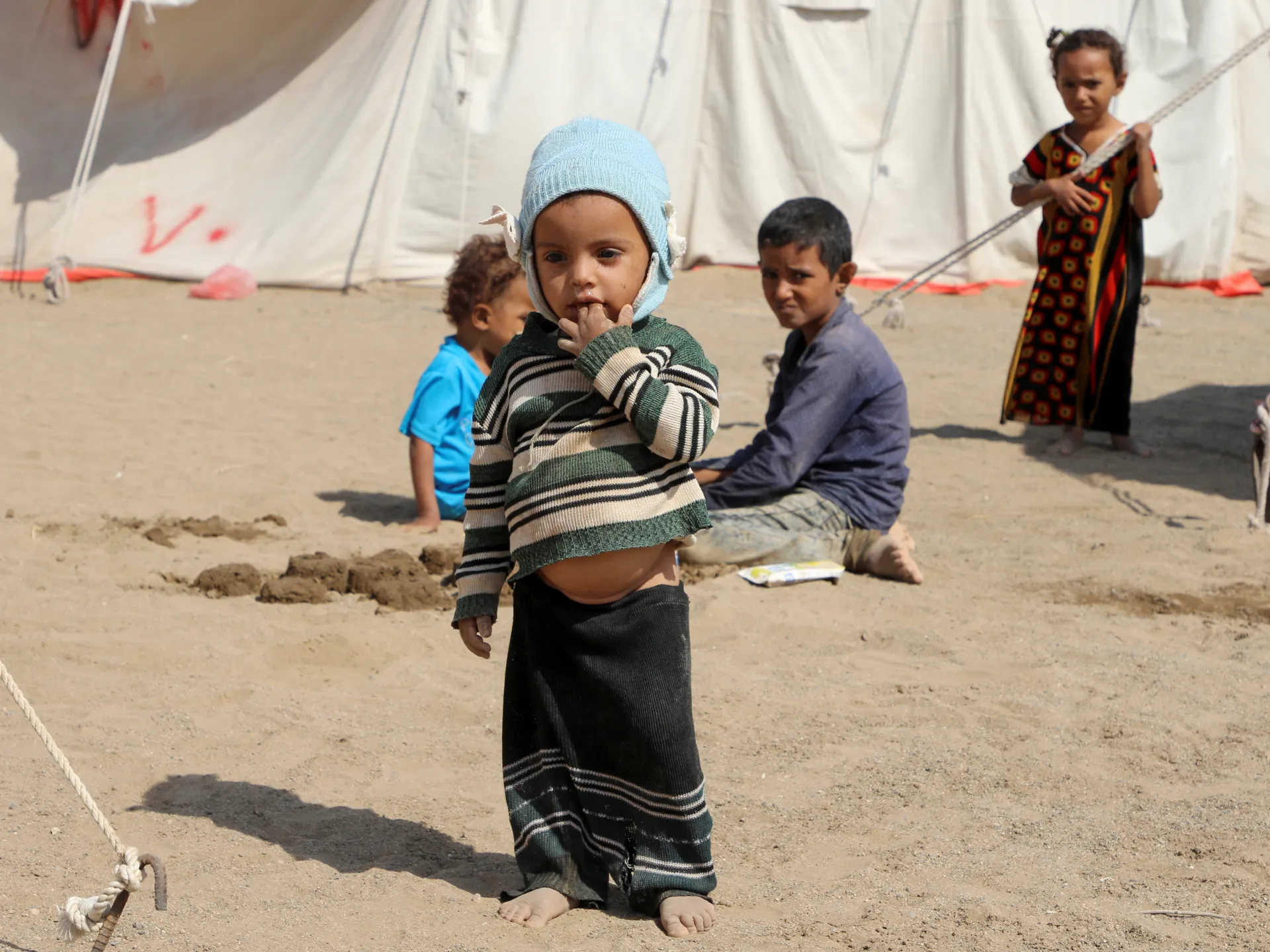
站在荷台达市中心奥斯曼市场附近租来的摩托车出租车旁,艾哈迈德·阿尔贾什每天清晨就开始寻找乘客,希望能赚够钱养活六口之家。
Standing beside his rented motorcycle taxi near the Othman market in central Hodeidah, Ahmed Arjash starts each day early in the morning looking for passengers, hoping to earn enough to feed his family of six.
年近40岁的阿尔贾什还为商户送小件货物。到傍晚时,他需要赚够钱买面粉、大米和面包,还要交当天的摩托车租金。但他总是入不敷出。
In his late 30s, Arjash also delivers small goods for merchants. By evening, he needs to have made enough money to buy flour, rice and bread, and for the day’s rent on the motorcycle. He falls short.
“以前,我回家时能带够全家一天的食物,或许还能存一点钱修摩托车,或者万一孩子生病了买药,”他告诉半岛电视台。“现在,我一天的收入勉强只够油钱或摩托车租金。有时我空手回家,或者只带一小袋食物,根本解决不了我们的饥饿。” 荷台达全市,这个红海港口处理着进入也门胡塞武装控制的西北部地区的大部分商业和人道主义进口物资,家庭们都在为买得起基本商品而挣扎,因为重燃战火在十多年战争造成的破坏基础上雪上加霜。
“Before, I would come home with enough food for my family for the day, and maybe save a little to repair the motorcycle or buy medicine if one of my children fell ill,” he told Al Jazeera. “Now, my daily earnings barely cover the fuel or the rent for the motorcycle. Sometimes I go home empty-handed, or with a small bag of food that does nothing for our hunger.”Across Hodeidah, where the Red Sea port handles the bulk of commercial and humanitarian imports into Yemen’s Houthi-controlled northwest, families are struggling to afford basic goods as renewed fighting compounds the damage of more than a decade of war.
胡塞武装与沙特支持的也门政府军之间的战斗于7月升级,此前曾有四年相对平静,此后胡塞武装在也门南部红海沿海地区取得了重大进展。沙特领导的联盟袭击了荷台达港,但该港口仍保持开放。“连面包都成了负担”在荷台达萨勒哈纳街区的一个市场上,独自抚养四个孩子的寡妇乌姆·萨米出售小件日用品,偶尔做些家政工作。物价上涨改变了她的购物方式。
Fighting between the Houthis and Yemeni government forces backed by Saudi Arabia intensified in July after four years of relative calm, and the Houthis have since made significant advances in Yemen’s southern Red Sea coast region. Hodeidah port has come under attack by the Saudi-led coalition, but continues to remain open. ‘Even bread has become a burden’In a market in Hodeidah’s al-Salkhana neighbourhood, Umm Sami, a widow raising four children, sells small household goods and takes occasional domestic work. Rising prices have changed how she shops.
“我们买得很少。有时买一点面粉或油,只够吃一天,因为买不起整袋,”她对半岛电视台说。“连面包都成了负担。孩子们想吃战前随处可得的食物,我只能保持沉默,或用别的话题转移他们的注意力。”也门联合监测报告显示,在胡塞武装控制区,一篮子基本食品9月价格比8月上涨约7%,达到一年来最高水平。监测人员能到达的市场上食物仍有供应,但家庭可支配的钱变少了。
“We buy in very small quantities. Sometimes we buy a little flour or oil that lasts just one day because we cannot afford a whole bag,” she told Al Jazeera. “Even bread has become a burden. My children ask for foods they used to eat easily before the war, and I have to stay silent or distract them by talking about something else.”Across Houthi-controlled areas, a basket of basic foods cost about 7 percent more in September than in August, its highest price in a year, according to the Yemen Joint Monitoring Report. Food was still available in markets the monitors could reach, but families had less money to spend.
根据世界粮食计划署(WFP)数据,也门约90%的食物依靠进口。
Yemen imports about 90 percent of its food, according to the World Food Programme (WFP).
在荷台达最贫困的社区,家庭不得不减少进餐次数,或完全断绝肉、鱼、奶和水果。家里没有清洁用水的家庭必须高价购买,而日益恶化的医疗设施让许多人无力负担治疗。
In Hodeidah’s poorest neighbourhoods, families are skipping meals or going without meat, fish, milk and fruit. Families without clean water at home must buy it at high prices, and deteriorating health facilities leave many unable to afford treatment.
公共部门雇员薪资全部或部分停发,以及固定收入被通胀侵蚀的家庭,同样陷入困境。世界银行5月表示,也门经济2025年收缩1.5%,预计2026年将进一步收缩0.5%。
Public sector employees whose salaries have stopped entirely or in part, and families whose fixed incomes have been eroded by inflation, are also in need. In May, the World Bank said Yemen’s economy contracted by 1.5 percent in 2025 and projected a further 0.5 percent contraction in 2026.
一座正在失去生计的沿海城市 捕鱼长期是荷台达经济的支柱,对一些人来说却已成了亏本买卖。
A coastal city losing its livelihoods Fishing, long a mainstay of Hodeidah’s economy, has become a losing trade for some.
“出海捕鱼的成本、渔具和燃油价格大幅上涨,而城市里的销售额和人们的购买力却不断波动,”三十多岁的渔民萨利姆说。“许多家庭不再像以前那样买鱼了。有时渔民出海归来,运气好的话,捕获的鱼勉强只够覆盖出海的成本。”
“The cost of going out to sea, fishing equipment and fuel has risen a lot, while sales and people’s purchasing power in the city keep fluctuating,” said Salem, a fisherman in his 30s. “Many families no longer buy fish as they used to. Sometimes a fisherman comes back with barely enough to cover the cost of his trip, if he is lucky.”
按日计酬的建筑工人萨利赫说,好几天都可能没人雇佣他。“如果我干一天活,这工资在物价这么高的情况下,不够一家人花好几天的,”他说。“什么都涨价了:食品、交通,甚至最基本的家庭用品,而收入却保持不变或缩水。”经济分析人士表示,运输、航运和燃油成本直接转嫁给消费者,地区航运风险推高了进口商品的保险和运费成本。需求疲软进而压缩了临时工的就业机会。
Saleh, a construction worker paid by the day, said days can pass without anyone hiring him. “If I work one day, the wage is not enough to cover the family’s needs for several days with prices this high,” he said. “Everything has gone up: food, transport, even the simplest household needs, while income stays the same or shrinks.”Economic analysts say transport, shipping and fuel costs pass directly to consumers and that risks to regional shipping have raised insurance and freight costs on imports. Weak demand then shrinks the work available to day labourers.
援助中断,战火蔓延 今年早些时候,荷台达省海斯和哈乌哈地区以及红海沿岸其他地方的战斗,迫使更多家庭流离失所。
Aid cut off as fighting spreads Fighting earlier this year in Hodeidah governorate’s Hays and al-Khokha districts and elsewhere on the Red Sea coast has forced more families from their homes.
10月2日,世界粮食计划署表示,战斗已切断其通往泰兹省和荷台达省部分地区约35万人的通道。
On October 2, the WFP said the fighting had cut off its access to about 350,000 people in parts of Taiz governorate and Hodeidah.
该机构称,已将原定11月发放食物的资源重新分配,以维持其紧急响应,并警告称,如果没有新的资金,将出现援助缺口。其在可抵达地区的监测发现,74%的家庭无法满足基本粮食需求。
The agency said it had reallocated resources from food distributions scheduled for November to sustain its emergency response, and warned of assistance gaps without new funding. Its monitoring in areas it could reach found 74 percent of households unable to meet their basic food needs.
2025年9月,在胡塞武装扣押联合国工作人员后,世界粮食计划署暂停了在胡塞控制区的活动。
The WFP suspended its activities in areas under the control of the Houthis in September 2025, after the group detained UN staff members.
对阿尔贾什来说,战争体现在能付得起摩托车车费的乘客日益减少上。
For Arjash, the war shows in the dwindling number of passengers who can pay to ride his motorcycle.
“这里的人们步行很长的路程来省车费,坐我摩托车出租车的人都要为每一里亚尔讨价还价,因为他们的腰包空空如也,”他说。
“People here walk long distances to save on the fare, and anyone who rides my motorcycle taxi haggles over every rial because their pockets are empty,” he said.
“正如你们所见,当孩子们提出简单的要求而我无法满足时,我感到无助。”
“As you can see, I feel helpless in front of my children when they ask for something simple and I cannot provide it.”