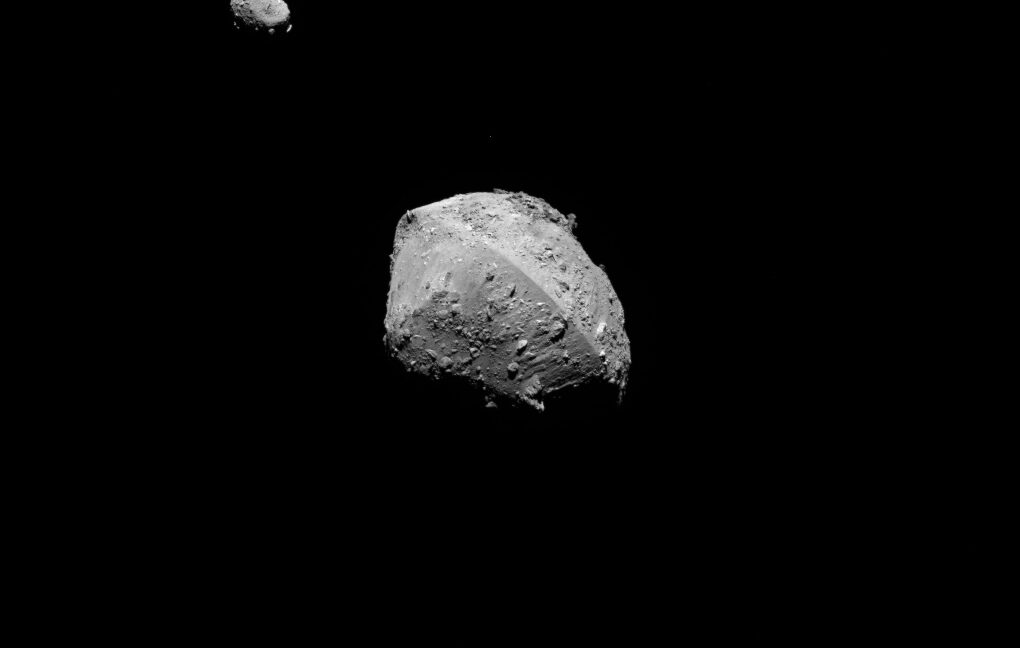
四年前,美国宇航局派遣一艘小型航天器执行自杀式任务,展示人类如何偏转一颗与地球相撞的小行星。这项首创实验效果完美,太阳能空间探测器撞击小行星迪莫尔福斯,永久改变了其轨迹。
Four years ago, NASA dispatched a small spacecraft on a suicide mission to show how humanity might deflect an asteroid on a collision course with Earth. The first-of-its-kind experiment worked beautifully as the solar-powered space probe slammed into asteroid Dimorphos, permanently altering its trajectory.
天文学家利用望远镜,测量了迪莫尔福斯围绕较大的伴随小行星迪迪莫斯运行轨道的变化,以此观察美国宇航局“双小行星重定向测试”(DART)任务的后续影响。该航天器在2022年9月以每小时超过13700英里(6.14公里每秒)的速度撞击迪莫尔福斯,释放了约100亿焦耳的能量,将该小行星围绕迪迪莫斯的12小时轨道缩短了约33分钟,是最保守预期的25倍。
Using telescopes, astronomers measured changes in the orbit of Dimorphos around a larger asteroid companion named Didymos in the aftermath of NASA's Double Asteroid Redirection Test (DART) mission. The spacecraft released some 10 billion joules of energy as it impacted Dimorphos in September 2022 at more than 13,700 mph (6.14 kilometers per second), shortening the asteroid's 12-hour orbit around Didymos by about 33 minutes, 25 times the most conservative expectation.
但科学家只能从DART中获取有限信息。碰撞如预期般摧毁了航天器。DART在瞄准迪莫尔福斯时记录了图像,但只有遥远的望远镜和一颗短暂探测到撞击闪光的小型立方星,才能看到随后发生了什么。
But scientists could only learn so much from DART. The collision destroyed the spacecraft, as expected. DART recorded images as it took aim on Dimorphos, but only faraway telescopes and a small CubeSat that briefly detected the impact flash could see what happened next.