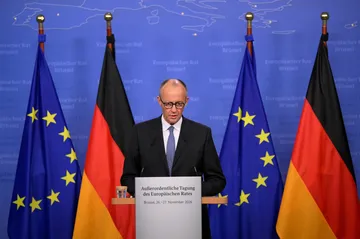
发布时间:2026-11-27T05:34:24+08:00 德国总理弗里德里希·默茨表示,由于各国在欧盟长期资金计划谈判中拒绝让步,欧盟领导人周五取消了在布鲁塞尔进行的第二天预算谈判。
Published: 2026-11-27T05:34:24+08:00 German Chancellor Friedrich Merz said European Union leaders called off a second day of budget talks in Brussels on Friday, as countries refused to budge in negotiations over the bloc’s long-term funding plan.
领导人们周四上午聚集举行峰会,旨在为12月就欧盟未来七年预算达成协议创造势头,该预算周期为2028年至2034年。
The leaders had gathered Thursday morning for a summit meant to create momentum for a December deal over the bloc’s next seven-year budget, which runs from 2028 to 2034.
然而,据知情人士透露,几小时内,官员们私下抱怨谈判进展情况,因为各国坚持其长期固守的立场。这些人要求匿名,以便自由谈论会议情况。
Within hours, however, officials were privately grumbling about how the negotiations were evolving as countries stuck to their long-entrenched positions, according to people familiar with the matter. They requested anonymity in order to speak freely about the meeting.
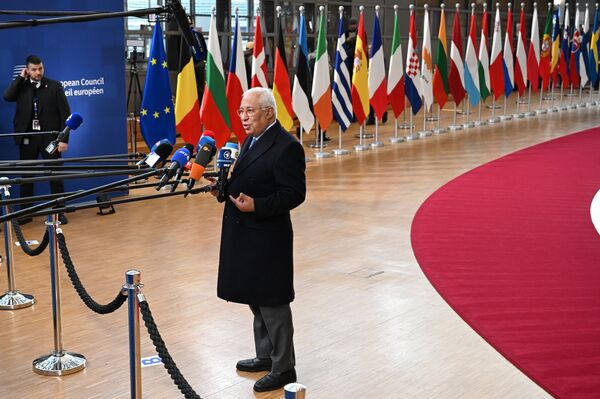
几位与会者将矛头指向主持欧盟峰会的欧洲理事会主席安东尼奥·科斯塔,一些人质疑此次会议背后的策略。最终,领导人们承认分歧实在太大。
Several participants focused their ire on European Council President António Costa, who oversees EU summits, with some questioning the strategy behind the meeting. In the end, leaders conceded they were simply too far apart.
默茨周四晚间对记者说:“需要付出的努力实在太多了。需要完成的工作实在太多了。”这些紧张局势有危及欧盟设定的年底最后期限,即敲定近2万亿欧元(约合2.2万亿美元)的预算,这是欧洲农民、基础设施项目和国防的重要资金来源。
“There are far too many efforts that need to be taken,” Merz told reporters late on Thursday. “Far too much work that needs to be done.”The tensions risk imperiling a year-end deadline the EU has set to finalize its near-€2 trillion ($2.2 trillion) budget, a vital source of funding for Europe’s farmers, infrastructure projects and defense.
这一时间安排旨在防止谈判被卷入法国大选,极右翼领导人玛丽娜·勒庞在民调中领先,并一直呼吁削减对欧盟预算的缴款。
The timing is meant to prevent the talks from being swept into France’s election, where far-right leader Marine Le Pen is leading in the polls and has been calling for cuts to EU budget contributions.
意大利总理焦尔吉娅·梅洛尼在峰会间隙对记者说:“我们距离预算解决方案还差十万八千里。”
“We’re light years away” from a budget solution, Italian Prime Minister Giorgia Meloni told reporters on the summit’s sidelines.
事实上,周四的计划从来不是达成协议——至少目前不是——而是探明在哪些方面可能有周旋余地。科斯塔先让所有27位欧盟领导人共同会晤,随后将他们分成一系列小组进行30分钟的交谈,以测试潜在妥协方案。
In truth, the plan on Thursday was never to reach a deal — at least not yet — but to suss out where there might be room to maneuver. Costa first asked all 27 EU leaders to meet together, before sending them into a series of smaller groups for 30-minute chats to test for potential compromises.
领导人原定随后在午夜左右重新聚首,以决定是否值得留到周五继续谈判。但在该会议甚至还未举行之前,其中一些人已决定不再继续。
Leaders were set to then reconvene around midnight to determine whether it was worth staying until Friday to keep talking. But before that meeting even happened, some of them decided against it.
知情人士表示,显而易见,各国在关键问题上仍存在巨大分歧,范围涵盖从预算总规模到新的欧盟税收,再到应投入多少资金用于缩小地区间的经济差距。一些官员愤然离场,认为在领导人分歧如此之大的情况下,举行讨论几无理由。他们指出,大使们可以讨论程序性事项。
It was evident, the people said, that countries remained far apart on critical issues, ranging from the budget’s overall size to new EU taxes to how much money should be spent on narrowing economic gaps between regions. Some officials left angry, arguing there had been little reason to hold the discussion while leaders remained so divided. Ambassadors, they noted, can discuss procedural matters.
一名科斯塔身边人士反驳了这种说法,坚称讨论涉及需要领导人定夺的根本政治问题。该人士强调,即使每个人都在重申众所周知的立场,分组会议也提供了一个推进讨论、找出趋同领域的机会。欧盟的预算分歧往往是地域、经济或意识形态分歧的混合体。
A person close to Costa pushed back on the notion, insisting the discussions concerned fundamental political issues that needed leaders’ input. The person stressed that even if everyone was repeating well-known stances, the breakout sessions offered a chance to advance the discussions and identify areas of convergence. The EU’s budget divides tend to be a mixture of regional, economic or ideological disagreements.
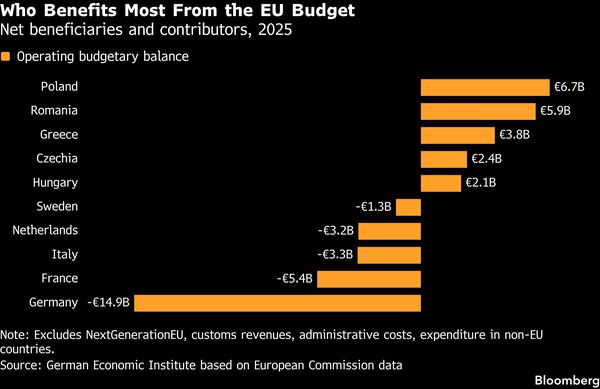
广泛地说,西部和北部较富裕的欧盟国家——它们向欧盟预算的缴款多于从中获得的款项——希望预算规模更小。
Broadly speaking, wealthier EU countries across the west and north — which contribute more than they receive from the bloc’s budget — want a smaller budget.
“我们不能成为欧盟的提款机,”瑞典首相乌尔夫·克里斯特松说。
“We cannot be an ATM for the European Union,” said Swedish Prime Minister Ulf Kristersson.
然而,南部和更东部的国家一直在捍卫更大规模的欧盟预算,主张保留大量资金以提振欠发达地区。
Countries across the south and further east, however, have been defending a larger EU budget that retains significant funds to lift up less-affluent regions.
“凝聚力真正是欧盟和捷克共和国的目标,”捷克总理安德烈·巴比什说。“我们将为这笔钱而战。”这些争斗的核心在于关于何种价值观应注入欧盟预算的信念变化。
“Cohesion is really the goal of the European Union and the Czech Republic,” said Czech Prime Minister Andrej Babiš. “We will fight for this money.”At the core of the fights are shifting beliefs about what values should infuse the EU budget.
历史上,欧盟预算的很大一部分用于农业,例如支持农民收入和粮食生产。虽然各国仍认为这至关重要,但也有呼声要求增加用于帮助企业成长、与美国和中国竞争的支出——这一变化源于欧洲必须刺激经济活动、减少对外部伙伴依赖的焦虑。
Historically, a large chunk of the bloc’s money has gone toward agriculture, for instance, supporting farmers’ income and food production. While countries still consider that essential, there have been calls to also spend more on helping companies grow and compete with the US and China — a change linked to anxiety that Europe must spur economic activity and cut reliance on foreign partners.
此外,许多领导人表示,欧盟预算必须优先考虑国防开支——这是欧盟历史上一直回避的领域。随着莫斯科构成威胁、美国从欧洲大陆撤回,许多国家,尤其是靠近俄罗斯边境的国家,认为这现在已成为欧盟使命的重要组成部分。
Additionally, numerous leaders say the EU budget must prioritize defense spending — something it historically eschewed. With Moscow menacing and the US pulling back from the continent, many countries, especially those closer to the Russian border, say it’s now a vital part of the EU’s mission.
“一个廉价的欧洲可能会变成一个非常昂贵的错误,”波兰总理唐纳德·图斯克在会议期间的一条社交媒体帖子中写道。“安全是有代价的。就这么简单。”基于这一逻辑,对乌克兰的资助被纳入了欧盟预算谈判。
“A cheap Europe could turn out to be a very expensive mistake,” Polish Prime Minister Donald Tusk said in a social media post during the meeting. “Security comes at a price. As simple as that.”By this logic, funding for Ukraine has been pulled into the EU budget talks.
随着乌克兰的财政需求在俄罗斯全面入侵近五年后不断升级,欧盟领导人正试图敲定一项总额450亿欧元(约合492亿美元)的新贷款。虽然这笔资金将独立于欧盟预算之外,但德国、荷兰等经济大国表示,如果国家不参与这项贷款,就不应享受某些欧盟预算福利。
EU leaders are trying to finalize a new €45 billion ($49.2 billion) loan for Kyiv as the country’s financial needs escalate nearly five years into Russia’s full-scale war. While that money would be separate from the EU budget, economic heavyweights like Germany and the Netherlands are saying that if countries don’t participate in the loan, they shouldn’t enjoy certain EU budget benefits.
寻求退出贷款机制的国家,包括匈牙利、斯洛伐克和捷克共和国,周四并未退让,坚持认为这两个问题不应挂钩。但知情人士称,一旦领导人进入会议室,该话题在对话中鲜有提及,贷款本身并不面临风险。
Those seeking an opt-out from the loan, including Hungary, Slovakia and the Czech Republic, did not back down on Thursday, insisting the two issues shouldn’t be linked. But the topic didn’t feature much into the conversation once leaders got in the room, the people said, and the loan itself isn’t at risk.
目前,谈判将在较低层级继续进行,希望能在12月17日和18日(周四和周五)举行的峰会前找到妥协方案。官员们已发出信号,表明会议可能会直接延续到周末。“我们都想在圣诞节前回家,”默茨说。
For now, talks will continue at lower levels, with the hopes that compromises can be found between now and a summit planned for Dec. 17 and 18, a Thursday and Friday. Already, officials are signaling that the gathering may go straight through the weekend. “We all want to be home by Christmas,” Merz said.