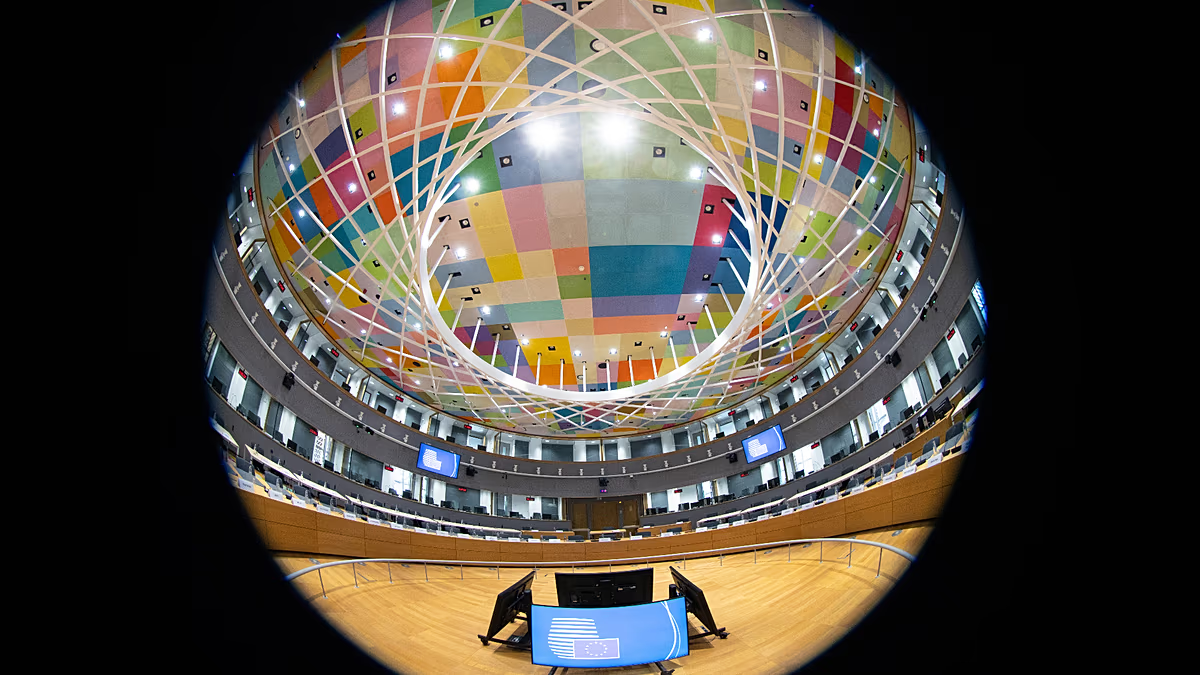
请做好心理准备。欧盟领导人今天上午聚集在布鲁塞尔,参加预计将是多年来最愤怒的峰会之一。会场上几乎没有善意,没有明显的调解人能够弥合分歧,几乎也没有人指望能取得突破。会议可能会延续到明天,尽管很难看出再熬一个夜通宵讨价还价能达成什么成果。正如豪尔赫·利博雷罗报道的那样,欧盟最具分裂性的两个议题正在迎头相撞:未来七年的预算和乌克兰战争的融资。从技术层面看它们是分开的,但在政治上已纠缠在一起。没有什么比为钱吵架更能暴露欧洲团结的最坏一面了。
Brace yourselves. EU leaders gather in Brussels this morning for what promises to be one of the angriest summits in years. There is precious little goodwill in the room, no obvious broker capable of bridging the differences and virtually no expectation of a breakthrough. The meeting could spill into tomorrow, although it is hard to see what another night of haggling might achieve. As Jorge Liboreiro reports, two of the EU’s most divisive issues are heading for a collision: the next seven-year budget and the financing of Ukraine’s war effort. Technically separate, they have become politically intertwined. And nothing brings out the worst in European solidarity quite like an argument about money. Nobody’s happy. European Council President António Costa has lopped €204 billion off the Commission’s original €2 trillion budget proposal for 2028-2034. His reward? Complaints from virtually every corner of Europe. The German-led frugals, who now prefer to call themselves the “modernisers”, want deeper cuts to agricultural subsidies and regional development funds, prioritising defence, technology and competitiveness instead. The 17 Friends of Cohesion, predominantly southern and eastern countries, think the cuts have already gone too far. France, despite securing concessions on farming subsidies and a proposed digital tax, is also deeply unimpressed. Paris wants to preserve spending while avoiding an increase in its national contribution – a particularly tricky equation given the parlous state of French public finances.
没人高兴。欧洲理事会主席安东尼奥·科斯塔将欧盟委员会针对2028-2034年提出的原本2万亿欧元预算方案砍掉了2040亿欧元。他的回报?来自欧洲几乎每个角落的抱怨。
The elephant in the room. Marine Le Pen is not attending the summit, but her presence will be felt. The far-right frontrunner in next spring’s French presidential election has threatened to slash France’s contribution to the EU budget. Emmanuel Macron insists negotiations cannot extend beyond December. Unfortunately, imposing a deadline is rather easier than meeting it. Enter Ukraine. Russia’s relentless attacks have left Kyiv facing a €70 billion budget shortfall next year.
以德国为首的“节俭派”,现在更愿意自称“现代化派”,他们希望在农业补贴和区域发展基金上进一步大幅削减,转而优先考虑国防、技术和竞争力。17个“凝聚力之友”成员国,以南欧和东欧国家为主,认为削减力度已经过头了。
The Commission is proposing another €45 billion loan, financed through joint borrowing, but Hungary, Slovakia, Bulgaria and the Czech Republic want no part in it. An exasperated Friedrich Merz is threatening to veto the entire EU budget unless all 27 countries agree to support Ukraine. Slovak Prime Minister Robert Fico calls it a “textbook case of blackmail”.The Commission’s suggested escape route would allow reluctant countries to contribute to the €20 billion earmarked for Ukraine’s civilian needs without participating in the €25 billion military component.
法国尽管在农业补贴和拟议的数字税上争取到了让步,也深感不满。巴黎希望维持支出水平,同时避免增加其国家缴款——考虑到法国公共财政的岌岌可危,这是一个特别棘手的算术题。
Guns versus butter. One of the more alarming aspects of the budget wrangling is that, for all the grand rhetoric about European sovereignty and military readiness, defence spending is also taking a hit. EU Defence Commissioner Andrius Kubilius warns that the proposed €39 billion cut to defence and space funding – a reduction of 30% – would jeopardise crucial pan-European programmes. Former Commission President José Manuel Barroso weighed in, pointing to the glaring contradiction between European leaders’ declarations on defence and their willingness to pay for it.
房间里的大象。玛丽娜·勒庞没有出席峰会,但她的存在感将被感受到。明年春季法国总统大选的极右翼领跑者威胁要大幅削减法国对欧盟预算的缴款。埃马纽埃尔·马克龙坚持谈判不能拖过12月。不幸的是,设定截止日期比遵守截止日期容易得多。乌克兰问题登场。
With Russia still waging war in Ukraine and Donald Trump proving an increasingly unreliable ally, the timing could hardly be worse. Something to agree on? Leaders will also discuss Christine Lagarde’s successor at the European Central Bank, with Spain’s Pablo Hernández de Cos emerging as the favourite. But the real measure of success by tomorrow will be whether a budget deal in December looks remotely achievable. The danger is that everyone leaves Brussels even angrier than when they arrived. Meanwhile, the European Parliament is up in arms over Costa's proposed 10% cut to the MFF, threatening to reject the deal if it is struck by EU leaders. Vincenzo Genovese has the story from Strasbourg. For more on this, follow our live blog on the EU summit. In other newsWith friends like these.
俄罗斯的持续攻击使基辅明年面临 700 亿欧元的预算缺口。欧盟委员会提议再提供一笔 450 亿欧元贷款,通过联合借贷融资,但匈牙利、斯洛伐克、保加利亚和捷克共和国拒绝参与。愤怒的弗里德里希·默茨威胁,除非所有 27 国同意支持乌克兰,否则将否决整个欧盟预算。斯洛伐克总理罗伯特·菲佐称这是“教科书式的勒索”。欧盟委员会提出的退路是,允许不愿参与的国家仅向为乌克兰民用需求预留的 200 亿欧元出资,而不参与 250 亿欧元的军事部分。
So much for transatlantic trade peace. Donald Trump is proposing another round of tariffs on 14 major trading partners, including the EU, ostensibly to combat industrial overcapacity. European goods could face duties of 15% on top of existing most-favoured-nation tariffs, potentially rising to 20%. Brussels strongly rejects Washington’s premise, pointing out that Europe is itself a victim of global overcapacity. For Europeans who thought last year’s painstakingly negotiated trade deal offered some protection against Trump’s tariff whims, it’s another rude awakening. Who picks up the tab? As EU leaders haggle over the next seven-year budget, Luca Bertuzzi and Kamuran Samar have put together a brilliant explainer on who would actually pay the proposed new EU taxes, complete with illuminating charts. The package could raise €60 billion annually, with Germany shouldering the biggest bill. Electronic waste, rather than Big Tech or tobacco, is the biggest money-spinner. Essential reading for understanding the national interests behind the budget horse-trading. New faces, old dilemmas. Serbia’s absence from yesterday’s EU-Western Balkans summit has postponed a crucial test of its new leadership. The student movement that ousted Aleksandar Vučić is making encouraging noises about democratic reforms but remains decidedly coy about aligning with EU foreign policy. Sanctioning Russia, a move opposed by 67% of Serbians, and normalising relations with Kosovo remain particularly thorny issues.
炮弹还是黄油。预算拉锯战中更令人担忧的一个方面是,尽管欧洲领导人就欧洲主权和军事准备发表宏大言辞,国防开支也在遭受打击。欧盟国防与空间事务委员安德留斯·库比柳斯警告,拟议削减 390 亿欧元国防和空间资金——减少 30%——将危及关键的泛欧项目。前欧盟委员会主席若泽·曼努埃尔·巴罗佐指出,欧洲领导人关于国防的宣言与其付诸行动的意愿之间存在显而易见的矛盾。俄罗斯仍在乌克兰发动战争,唐纳德·特朗普被证明是一个日益不可靠的盟友,时机几乎不可能更糟。
Brussels is still waiting to see whether Belgrade’s geopolitical compass has shifted. Trouble in the marriage. The European Parliament’s Socialists and Liberals have suspended coalition talks with the centre-right EPP after it once again teamed up with the far right, this time to water down environmental safeguards, Vincenzo Genovese reports. They want written guarantees that Manfred Weber’s group will stop flirting with parties further to its right. Among the potential casualties of the spat: Roberta Metsola’s re-election as European Parliament president in January. Taxing times. Brussels could slap a windfall tax on oil and gas giants without giving national governments a veto. A new legal study suggests the EU could sidestep unanimity rules if the levy genuinely serves climate or energy policy rather than simply raising revenue. With fuel prices soaring, fossil fuel companies enjoying bumper profits and EU leaders squabbling over the next budget, the timing is particularly intriguing. Quantum leap. Having largely missed the boat on AI, Brussels is determined not to lose the next technology race. The Commission unveiled its Quantum Act yesterday, alongside a new fund designed to mobilise €50 billion in investment across critical technologies. Europe has a strong scientific pedigree in quantum but struggles to turn research into commercial success. There’s also a looming headache: quantum computers could crack today’s encryption systems.
能达成共识吗?领导人还将讨论欧洲央行行长拉加德的继任者,西班牙的巴勃罗·埃尔南德斯·德·科斯成为热门人选。但到明天衡量成功的真正标准,将是 12 月的预算协议看起来是否有可能达成。危险在于,所有人离开布鲁塞尔时比到达时更愤怒。
Membership with strings attached. Getting into the EU is hard enough, but Montenegro could find itself under special scrutiny even after joining. The Commission wants to extend its monitoring of reforms beyond accession, alongside a 10-year probation period during which serious breaches of EU values could trigger the suspension of voting rights. It’s all designed to prevent another Viktor Orbán, although some member states question whether Brussels really needs another policing mechanism. Follow the powder. Brussels wants to establish whether Irish-made alumina is feeding Russia’s war machine. Rather than banning exports of the raw material used to make aluminium, the Commission is proposing a reporting mechanism to track shipments to their final destination. Kyiv is disappointed, while Dublin fears hundreds of jobs could be at stake. An Irish investigation over the summer failed to settle the matter. Political ippon?
与此同时,欧洲议会对科斯塔提议削减 10% 多年财政框架(MFF)感到愤怒,威胁如果欧盟领导人达成协议将予以否决。文森佐·热诺韦塞在斯特拉斯堡发回报道。更多内容请关注我们关于欧盟峰会的直播博客。
French judo legend turned presidential hopeful Teddy Riner has questioned France’s military support for Ukraine, saying that he did "not understand" why France was sending troops there. The five-time Olympic gold medallist asked whether Ukraine was even in the EU. Riner is currently polling at a modest 4.5%. We’re also keeping an eye onEurope Today this morning features interviews Polish EPP MEP Michał Szcerba, Portuguese Socialists & Democrats MEP Carla Tavares and Florence Duveiller from the Security Studies Center at the French Institute of International Relations (IFRI).The European Council meets today and (maybe) tomorrow, starting. It will start Euro SummitThat's it for today. Jorge Liboreiro, Marta Pacheco, Luca Bertuzzi, Angela Skujins and Vincenzo Genovese contributed to this newsletter.