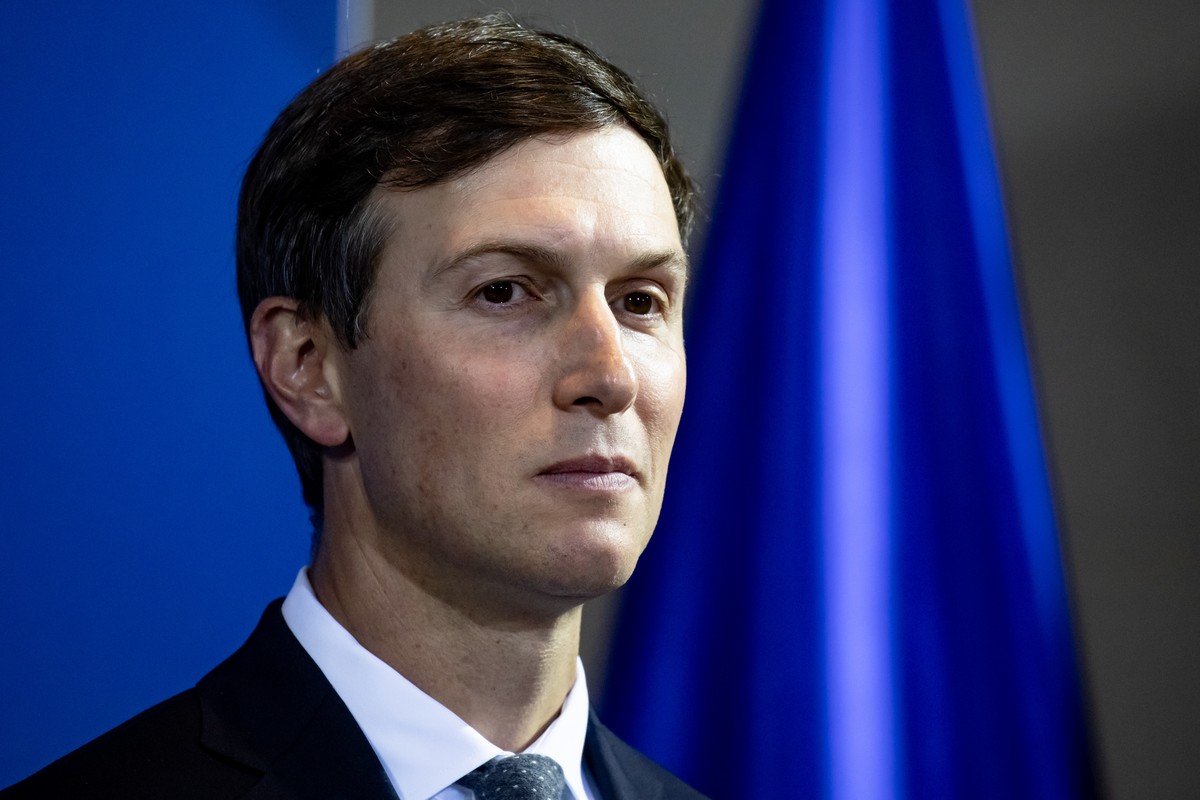
艾略特·A·科恩 2026年11月27日16:47发布 只因他本人所知的原因,平时神秘莫测的贾里德·库什纳——他与另一位富有的房地产商人史蒂夫·威特科夫一起,承担了特朗普政府大部分艰巨的谈判工作——终于开口了。他在11月22日在X上发帖,并接受了阿克塞尔·施普林格公司的马蒂亚斯·德普夫纳的长篇采访,阐述了他关于与俄罗斯和乌克兰谈判的想法。库什纳的言论揭示了许多意想不到且往往不讨喜的方面。
By Eliot A. Cohen Published: 2026-11-27T16:47:00Z For reasons known only to himself, the normally enigmatic Jared Kushner—who, together with Steve Witkoff, another wealthy real-estate guy, does most of the Trump administration’s heavy-duty negotiations—has opened up. In a post on X on November 22, and a lengthy interview with Mathias Döpfner of Axel Springer, he has laid out his thoughts about the talks with Russia and Ukraine. Kushner’s comments are revealing in unintended and often uncomplimentary ways.
首先,是他对弗拉基米尔·普京及其爪牙的谄媚。普京是“政治大师”,库什纳说。对于70万俄罗斯阵亡者的亲属、更多永久致残者、面临燃气和食品短缺的民众,以及逃离家园的百万余名移民来说,这将是新闻。库什纳还将俄罗斯首席谈判代表、具有爬行动物般圆滑的基里尔·德米特里耶夫称为“了不起的朋友”,并将俄罗斯国家安全顾问尤里·乌沙科夫称为“绝妙”。
To begin with, there is his truckling to Vladimir Putin and his henchmen. Putin is a “grand master of politics,” Kushner said. This will be news to the bereaved families of 700,000 Russian dead, the even larger numbers of those permanently maimed, the population suffering shortages of gas and groceries, and the million-odd émigrés who fled their country. Kushner also described the lead Russian negotiator, Kirill Dmitriev, a man of reptilian smoothness, as “an incredible friend,” and the Russian National Security Adviser Yuri Ushakov as “fantastic.”
对莫斯科的谄媚并未止步于此。他解释说,俄罗斯同意“不使用核武器,这显然是一件大事”,为西方做了一件大好事。战争并非源于俄罗斯摧毁乌克兰国家并将其肢解的残酷决定,而是多年来许多领导人做出的“错误决策和误判”。俄罗斯需要被说服,“北约并不寻求对抗”,而普京是“历史人物”,对问题有“非常深刻的理解”,并且“想要和平”。
The sycophancy toward Moscow does not end there. Russia, he explained, has done the West a great favor by agreeing “not to use nuclear weapons, which obviously is a big thing.”The war did not result from Russia’s brutal decision to destroy the Ukrainian state and dismember it, but rather “bad decisions and miscalculations by many leaders over the years.”Russia needs to be convinced that “NATO is not seeking confrontation,” and Putin, who is “a historic figure,” has “a very deep understanding of the issues” and “wants peace.”
与此同时,库什纳对美国盟友的态度明显冷淡。他声称,乌克兰人通过袭击普京的一处住宅破坏了早期谈判阶段——中央情报局评估他们并未这样做。他坚称,白宫并未通过扣留情报或武器(或推测,星链和星盾的访问权限)对乌克兰施压:“这大多是错误信息。”特朗普总统呼吁在乌克兰举行选举,既是对民主的捍卫,也是对泽连斯基总统批评白宫的回击——毕竟,特朗普是“非常强硬的反击者”。
Meanwhile, Kushner’s attitude to America’s allies is distinctly cooler. He claimed that the Ukrainians blew up an earlier phase of the negotiations by attacking one of Putin’s homes—which the CIA assesses they did not. The White House, he insisted, has not put any pressure on Ukraine by withholding intelligence or weapons (or, presumably, access to Starlink and Starshield): “That’s a lot of misinformation.”President Trump’s call for elections in Ukraine was both a defense of democracy and a pushback at Volodymyr Zelensky’s criticism of the White House—Trump is “a very strong counterpuncher,” after all.
美国的北约盟友表现不佳:“欧洲有很多毫无根据的恐惧,”他说,却无视俄罗斯情报部门实施的真实和未遂暗杀,以及可能致命的破坏行为。欧洲人被排除在阿布扎比的和平谈判之外,“因为普京总统看到欧洲发出大量挑衅言论,采取大量挑衅行动。因此他的观点是,他看不到他们已准备好和平。”库什纳问道,谁能责怪他呢?
America’s NATO allies do not come off well: “There’s a lot of fear in Europe that’s unfounded,” he said, ignoring assassinations real and attempted, and potentially lethal sabotage conducted by the Russian secret services. The Europeans were excluded from peace talks in Abu Dhabi “because President Putin sees a lot of provocative statements out of Europe and a lot of provocative actions out of Europe. And so his view is he does not see that they are ready for peace.”
库什纳观点的一个关键在于一句随口说的话:“这不是关于公平或谁对谁错的问题。”相反,他主张,这是关于一场侵略者与受害者、掠食者与猎物之间的区别再清晰不过的战争。仅凭这一点,布查和俄罗斯实施的其他上千起屠杀与残暴行动的幽灵就应该让他彻夜难眠,但人们怀疑它们不会。
Who, Kushner asked, could blame him? One key to Kushner’s view is a throwaway line: “This isn’t about fairness or who’s right or wrong.”Rather, he argued, this is about a war in which the distinction between aggressor and victim, predator and prey could not be clearer. For that alone the ghosts of Bucha and a thousand other massacres and cruelties perpetrated by Russia should haunt his sleep, but one doubts they will.
库什纳能够说出并相信这些事情已经够糟糕了。同样令人震惊的是他的傲慢,以及政府其他成员的傲慢。这条X帖子、这次采访以及其他言论表明,该政府渴望的不亚于重新设计“欧洲安全架构”,达成一种大和解,类似于拿破仑战争后卡斯尔雷勋爵、夏尔·莫里斯·德·塔列朗-佩里戈尔和克莱门斯·冯·梅特涅所策划的,以及迪安·艾奇逊、克莱门特·艾德礼和康拉德·阿登纳等同样敏锐的政治家在第二次世界大战后制定的。
That Kushner can say and believe these things is bad enough. No less stunning is his hubris, and that of the other members of the administration. The X post, the interview, and other statements indicate that the administration wishes for nothing less than a redesign of “European security architecture,” a grand settlement of the kind that Lord Castlereagh, Charles Maurice de Talleyrand-Périgord, and Klemens von Metternich concocted after the Napoleonic Wars, and that a no less acute group of statesmen—Dean Acheson, Clement Attlee, and Konrad Adenauer—devised after World War II.
在争夺首席地缘政治架构师一职的主要候选人中,有一位是国防部副部长埃尔布里奇·科尔比,他坚称北约3.0时代已经到来。11月17日,在布鲁塞尔举行的乌克兰防务联络小组会议上,他谴责乌克兰对俄基础设施的打击——美国最近对伊朗所做的那种事——在军事上毫无价值。随后,他在乌克兰国防部长就战争进行机密简报(包括,大概是,基辅的深度打击行动)之前离开了会议。
One of the leading aspirants for the role of master geopolitical architect is Elbridge Colby, the undersecretary of defense who insists that the time has come for NATO 3.0. At a conference of the Ukrainian Defence Contact Group in Brussels on November 17, he denounced Ukrainian strikes on Russian infrastructure—the kind of thing the United States recently did to Iran—as being militarily valueless. He then walked out of the meeting before the Ukrainian defense minister could give a classified briefing on the war, including, presumably, Kyiv’s deep-strike campaign.
科尔比在会议上一脸不悦,那种装作愠怒的嘟囔表情,正是许多政府官员的典型特征,这让一些德国观察员相信,他也远比同情乌克兰更同情俄罗斯。德国国防部长鲍里斯·皮斯托里乌斯是个言语精炼的人,他只是评论说,对乌克兰的此类批评“相当愚蠢”。这些程序的荒谬之处在于,库什纳和科尔比似乎认为,他们可以在(1)同情欧洲敌人、(2)谴责美国盟友、(3)为一个反复声明意图尽可能从欧洲承诺中抽身、而非积极讨论吞并欧洲部分领土的政府效力的同时,重塑欧洲的安全安排。
Colby, who sat through the meeting with the Trumpian pout masquerading as scowl that characterizes so many administration officials, convinced some German observers that he too sympathized far more with Russia than with Ukraine. The German defense minister, Boris Pistorius, a man of few but choice words, merely observed that such criticisms of Ukraine were “quite a stupid thing.”Part of the inanity of these proceedings is that Kushner, Colby, believe that they can reshape Europe’s security arrangements while (1) sympathizing with its enemies, (2) denouncing America’s allies, and (3) serving an administration that repeatedly insists on its intention to withdraw as much as possible from European commitments, when it is not actively discussing seizing some of Europe’s territory.
在此基础上,再加上道德上的盲目和政治上的愚蠢。但还有更深层的东西在起作用,一种根深蒂固的不严肃,其根源不仅在于对历史的无知和对本世纪最大国际犯罪实际情况的漠视,更在于对神奇外交的信仰。这是一种通过战略巫术实现和平的愿景。
To moral blindness, then, add political idiocy. But there is something even deeper at work, a profound unseriousness that is rooted not merely in ignorance of history and indifference to the actual circumstances of the greatest act of international criminality in this century, but faith in magical diplomacy. It is a vision of peace through strategic witchcraft.
关键在于库什纳在 X 上发帖:他提出“可信的类似第五条的保证,并由威慑和冲突避免安排支持”的设想,称特朗普总统只有在“保证几乎不可能被触发”的情况下,才会同意向乌克兰提供这样的保证。乍一看,这像是一场骗局:只在明知永远不必履行的条件下做出承诺。然而,情况更糟。
The tell here is in Kushner’s X post: he floats the idea of “a credible Article 5–like guarantee, backed by deterrence and deconfliction arrangements,” saying that President Trump would agree to such an offer for Ukraine only if it were “highly unlikely that the guarantee would ever be invoked.”It sounds at first blush like a grift: Make promises only under the condition that you know you will never have to fulfill them. It is worse, however.
北大西洋公约第五条并不保证任何事情,这是一个长期被美欧修辞掩盖的不便之真相。该条款规定,“对其中一个或多个成员在欧洲或北美的武装攻击,应视为对它们全体的攻击”,但各国的反应仅限于“其认为必要”的范围。例如,如果美国不认为有必要保卫乌克兰免受另一次俄罗斯入侵,它就没有义务这样做。
Article 5 of the North Atlantic Treaty guarantees nothing, an inconvenient truth long obfuscated by American and European rhetoric. It states that “an armed attack against one or more of them in Europe or North America shall be considered an attack against them all” but it promises reactions by any country only “as it deems necessary.”If, say, the United States does not deem it necessary to defend Ukraine from another Russian invasion, it would not be obliged to.
在冷战的大部分时间里,“威慑”被视为一种战略上的“仙女粉”,本应确保欧洲的安全。至少在早期,它得到了大量地面常规部队的支撑。例如,莱茵英国陆军曾一度比今天的整个英国陆军还要庞大,而联邦国防军当时拥有五十万武装人员、十二个师和一千架飞机——在这些部队背后,还有美国的核优势和二十五万多名驻地美军。
For much of the Cold War, “deterrence” was the strategic pixie dust that was supposed to keep Europe safe. Early on, at least, it was bolstered by substantial conventional forces on the ground. At one point, for example, the British Army on the Rhine was larger than the entire British Army today, while the Bundeswehr had half a million men and women under arms, 12 divisions, and a thousand aircraft—and behind those forces, American nuclear superiority and more than a quarter million U.S. troops on the ground.
然而,没有履行能力的保证,就如同1939年夏季英国对波兰提供的保证一样毫无意义。它们无法起到威慑作用,因为威慑是战斗能力和意志的副产品,而非独立存在的事物。
Guarantees without the ability to deliver on them, though, are as meaningless as those Great Britain gave to Poland in the summer of 1939. They deter nothing, because deterrence is the by-product of the ability and will to fight, not a thing unto itself.
脾气暴躁的杰基·费舍尔上将,这位世纪初英国脾气乖戾、言行夸张的海军上将,在1899年一次和平会议上说出了一句更接近真相的话:你说我的好战,全是为了和平。如果你在国内和国外都一再强调,你随时准备以全部兵力投入第一线,打算率先出击,直击敌人要害,趁其落井下石……那么人们就会远离你。
The irascible Admiral Jacky Fisher, the dyspeptic and histrionic first sea lord in turn-of-the-century Britain, was closer to the truth when he said (at a peace conference in 1899, no less): What you call my truculence is all for peace. If you rub it in, both at home and abroad, that you are ready for instant war with every unit of your strength in the first line, and intend to be first in, and hit your enemy in the belly, and kick him when he is down … then people will keep clear of you.
费舍尔部分是为了效果而说,他说得比任何清醒甚至合乎道德的领导人都要过分,但他有道理。至少他没有像贾里德·库什纳和埃尔布里奇·科尔比那样,活在一个缺乏道德、空洞且自私的地缘政治妄想世界里。
Fisher spoke partly for effect and went further than any sane or even ethical leader might, but he had a point. At least he did not live, as Jared Kushner and Elbridge Colby apparently do, in a world of amoral, vapid, and self-serving geopolitical delusion.