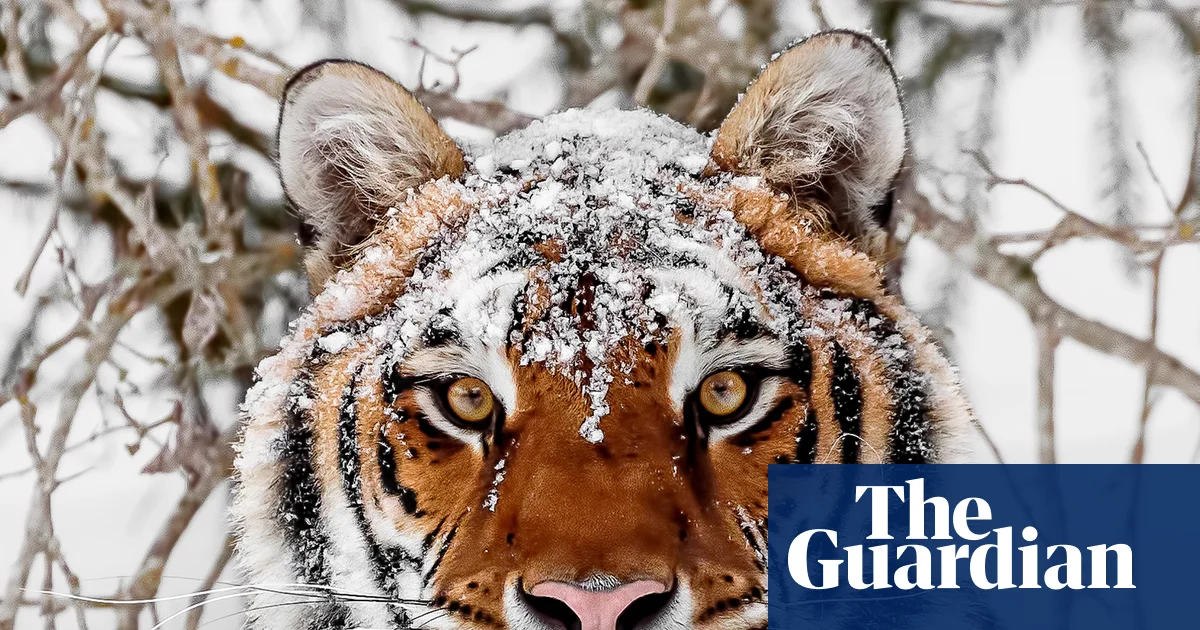
科学家表示,野生老虎、金枪鱼和绿海龟等物种的种群数量成功恢复,证明全球自然生态的丧失是可以逆转的。但一份报告警告称,如果世界想要避免生物多样性崩溃,食品生产必须成为下一个“积极的临界点”。
Conservation comebacks for wild tigers, tuna and green sea turtles prove that global nature loss can be reversed, scientists have said. But a report warns food production must be the next “positive tipping point ” if the world is to avert biodiversity collapse.
世界野生动物基金会分析了近36,000个动物种群和超过5,000个物种,建立了迄今为止规模最大的脊椎动物野生生物数据库。科学家发现,自1970年以来,这些种群的规模平均下降了73%,表明“自然生态正以惊人的速度持续退化”,且“损失减缓的迹象尚未出现”。
The World Wildlife Fund analysed nearly 36,000 animal populations and more than 5,000 species, producing the largest ever database of vertebrate wildlife. Scientists found populations had declined by an average of 73% since 1970, showing that “nature continues to be degraded at an alarming scale”, with “no sign of losses slowing”.
报告指出,自然生态的丧失已不再仅仅是环境挑战,而是对全球经济直接的威胁。报告提到,全球约一半的GDP——2023年约为58万亿美元(44万亿英镑)——依赖于自然及其生态系统服务。报告作者写道,物种的崩溃如今已对“经济稳定、地缘政治安全以及人类福祉构成了生存性威胁”。
Nature loss is no longer just an environmental challenge but a direct threat to the global economy, the report says, noting that about half of global GDP – roughly $58tn (£44tn) in 2023 – depends on nature and its ecosystem services. The authors write that species collapse now poses an “existential threat to economic stability, geopolitical security and human wellbeing”.
研究发现,动物种群数量下降最严重的地区是生物多样性丰富的热带地区,而世界北部温带地区的趋势则相对温和得多。
Animal populations were found to be falling most sharply in tropical, biodiversity-rich regions, while trends in northern temperate parts of the world appeared much gentler.
在拉丁美洲和加勒比地区,1970年至2022年间,陆地和淡水野生生物种群数量平均下降了95%;非洲的同类下降幅度为80%,欧洲和中亚则为23%。
In Latin America and the Caribbean, land and freshwater wildlife populations fell by an average of 95% between 1970 and 2022, while the equivalent declines were 80% in Africa and 23% in Europe and Central Asia.
淡水野生生物在全球各生态系统中遭受了最严重的损失,河流和湖泊中受监测的种群数量平均下降了85%,而陆地物种为69%,海洋物种为59%。
Freshwater wildlife suffered the sharpest losses across the world’s ecosystems, with monitored populations in rivers and lakes down by an average of 85%, compared with 69% for land species and 59% for marine species.
英国世界野生动物基金会首席执行官塔尼亚·斯蒂尔表示:“自然生态的丧失不仅是野生生物的危机,它已经通过日益增长的食物安全、水资源、经济以及应对气候冲击的能力方面的风险,向我们提出了沉重的代价。”
Tanya Steele, the chief executive of UK, said: “Nature loss is not just a crisis for wildlife. It’s already sending us the bill through growing risks to our food security, water supplies, economy and resilience to climate shocks.
“我们正站在一个十字路口:要么继续为自然丧失付出日益高昂的代价,要么投资恢复自然,创造一个人类与野生动物能够共同繁荣的未来。”报告指出,尽管全球生物多样性持续下降,但野生老虎、绿海龟和蓝鳍金枪鱼正在恢复,这表明“只要采取行动,逆转全球自然丧失的现象仍然可能实现”。
“We stand at a fork in the road: either we continue paying the rising price of nature loss, or we invest in nature’s recovery and a future where people and wildlife can thrive together.”But despite the pattern of global biodiversity decline, wild tigers, green sea turtles and bluefin tuna are recovering, the report said, showing that “it is still possible to reverse the global loss of nature when action is taken”.
2010年,全球野生老虎仅剩约3200只,该物种正濒临灭绝。经过持续且有针对性的保护干预,其数量已增长至约5700只,增幅超过70%。
In 2010, about 3,200 wild tigers remained globally and the species was sliding toward extinction. After sustained and targeted conservation interventions, the population has grown to roughly 5,700, an increase of more than 70%.
世界自然基金会(WWF)英国分会的老虎项目负责人贝奇·戴表示,野生老虎的惊人复苏展现了“希望的科学”,并证明只要采取气候和生态行动,改变就是可能的。
Becci Day, WWF UK’s tiger lead, said the remarkable comeback of wild tigers demonstrated the “science of hope” and proved that when climate and ecological action was taken, change was possible.
报告指出,经过数十年的过度捕捞,大西洋和太平洋蓝鳍金枪鱼种群曾濒临崩溃,如今已恢复至不再被视为受威胁的程度。
The report said Atlantic and Pacific bluefin tuna populations, which were collapsing after decades of overfishing, had now recovered to the point where neither was now considered threatened.
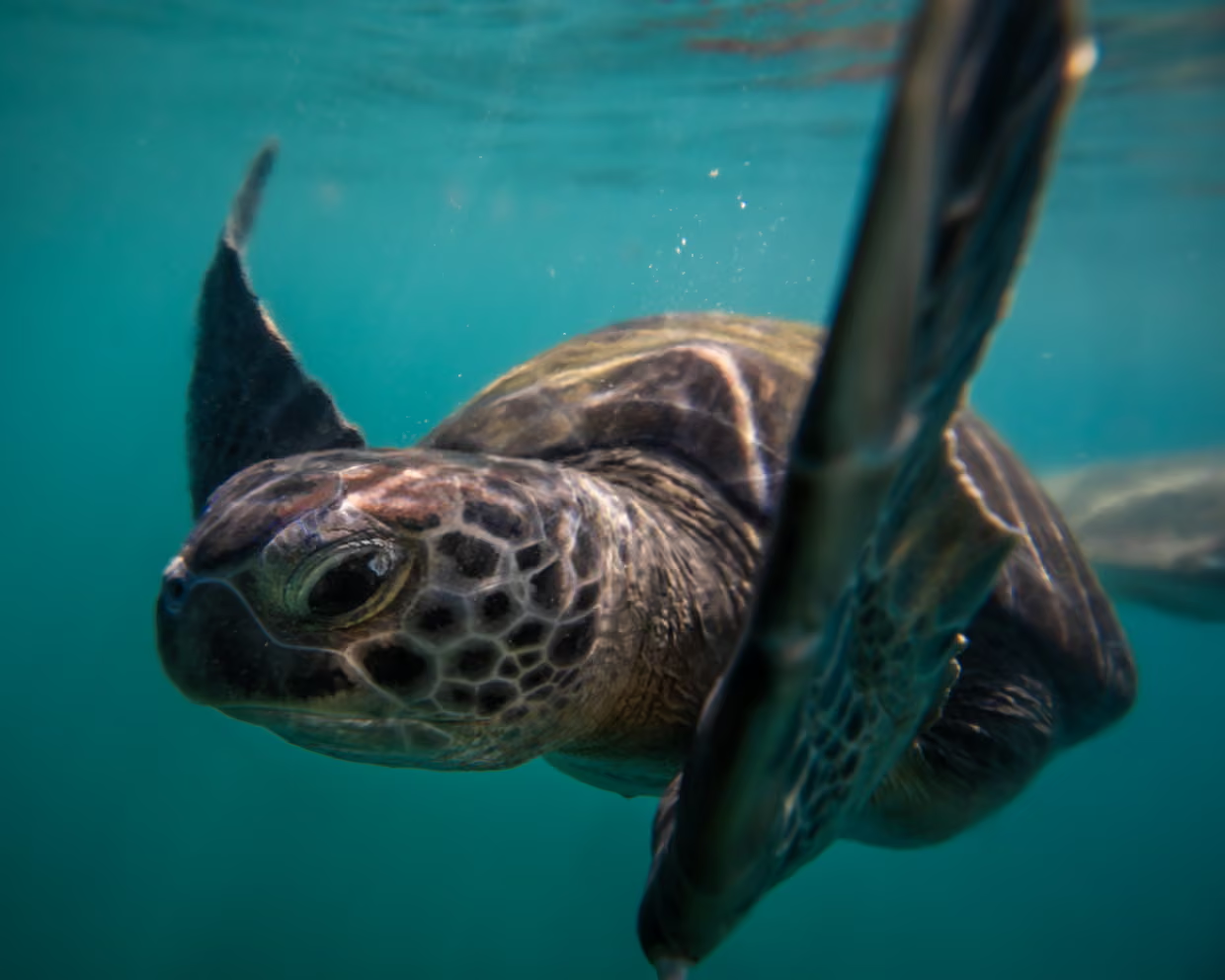
去年,绿海龟成为首个从“濒危”降级为“无危”的海洋龟类,被列入国际自然保护联盟(IUCN)红色名录,这反映了约80个国家在过去50年中开展的协同保护工作成果。
Last year, the green sea turtle became the first marine turtle ever downlisted from endangered to “least concern” on the IUCN red list, reflecting 50 years of coordinated conservation work across about 80 countries.
WWF英国分会的首席科学顾问、该报告的共同作者迈克·巴雷特博士表示:“这些案例表明,即使自然被推至崩溃边缘,它仍然能够恢复,并为我们带来了启发。同时也很明确,仅靠保护行动无法应对自然所面临威胁的规模。”他警告说,如果“负面临界点”——即加速气候危机的自我强化、不可逆的生态变化——被突破,自然将毫无恢复机会。“我们必须彻底改变导致自然丧失的系统,而这些系统涉及能源、粮食和金融。”
Dr Mike Barrett, the chief scientific adviser for WWF UK and a co-author of the report, said: “These are examples that show that nature can recover even when pushed right to the brink, and they provide us with inspiration. It’s also very clear that conservation alone cannot tackle the scale of threats facing nature.”He said nature would have no chance of recovery if “negative tipping points” – self-reinforcing, irreversible ecological changes that accelerate climate crisis – were passed. “The systems which drive nature’s loss have to be transformed. And that’s energy, food and finance,” he said.
我们的报告显示,随着可再生能源的普及,能源行业已经跨越了临界点。这一转型如今已势不可挡。虽然进展还不够快,但确实无法逆转。
“Our report shows that we’ve already passed the tipping point in the energy sector with the take-up of renewable energy That transition is now unstoppable. It’s not happening fast enough, but it is unstoppable.”
他说,人类同样必须改变粮食生产方式。“农业是栖息地丧失和退化,进而导致生物多样性丧失的最大单一原因。它也是温室气体排放的主要来源,因此加剧了气候变化,形成了反馈循环。”
Humanity must likewise adapt the way it produces food, he said. “Agriculture is the single largest cause of habitat loss and degradation and therefore the loss of biodiversity. It’s also a major source of greenhouse gas emissions and so helps drive climate change, so you have that feedback.”
全球系统研究所的研究员、该报告的合著者史蒂夫·史密斯博士表示:“对自然恢复而言,最大的成果将是一个可持续且健康的粮食系统,但目前这一领域距离实现积极临界点还最遥远。例如,农业扩张导致了全球近90%的森林砍伐。” 积极临界点是指某种可持续技术或实践在越过特定阈值后,会变得越来越廉价、普及或受到政治支持,从而推动进步自我加速。
Dr Steve Smith, a research fellow at Global Systems Institute and a co-author of the report, said: “The biggest prize for nature recovery would be a sustainable and healthy food system, but it’s currently the farthest away from positively tipping. For example, agricultural expansion drives almost 90% of deforestation worldwide.”Positive tipping points are thresholds beyond which a sustainable technology or practice becomes increasingly cheap, widespread or politically popular, allowing progress to become self-propelling.