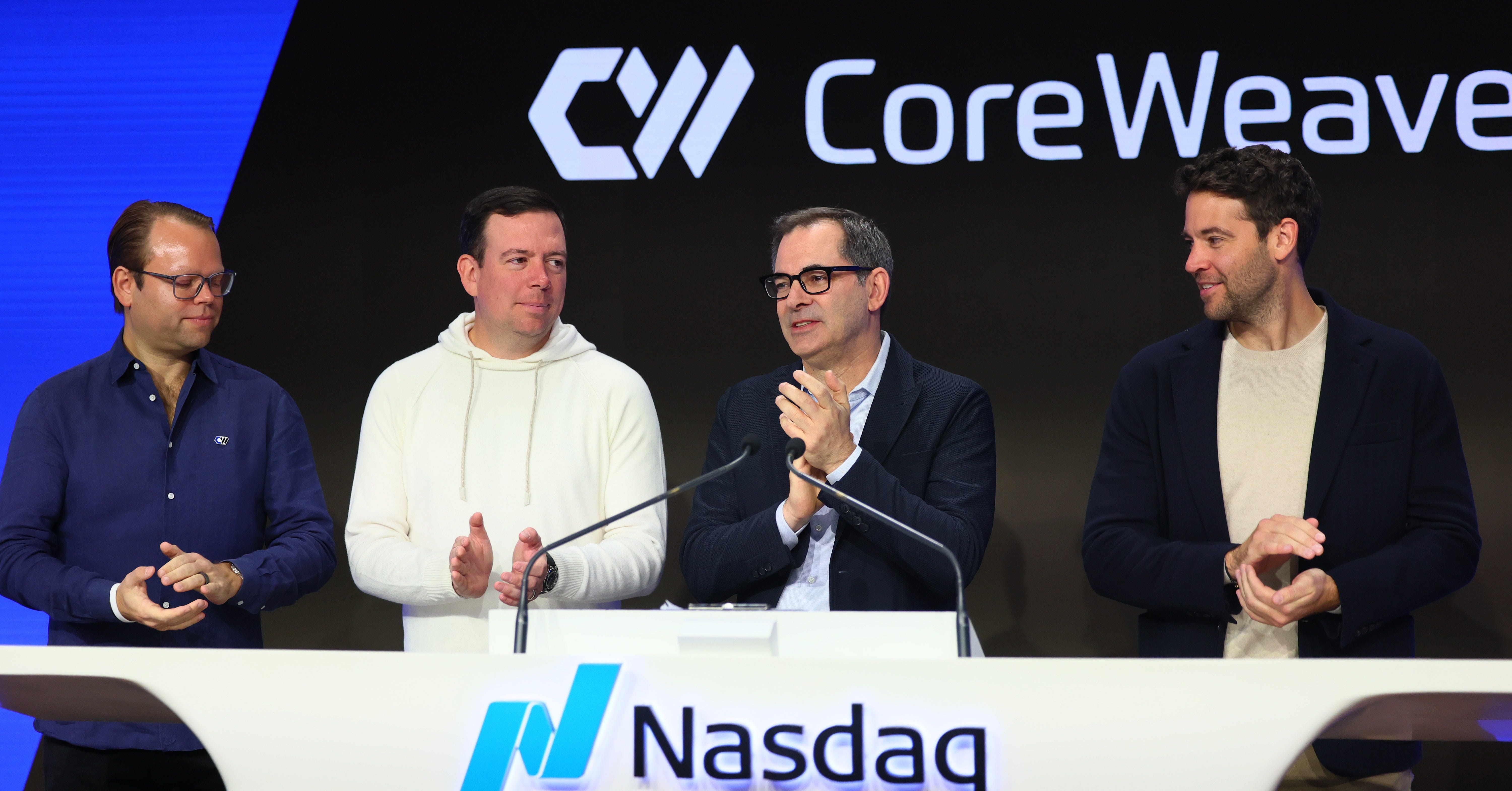
本周简报 主要内容 CoreWeave 与人工智能基础设施建设面临真相时刻 CoreWeave 是人工智能繁荣的典型公司,无论好坏。如今市场正在检验它的实力。
The Week in Short The Main Item CoreWeave & the AI Infrastructure Build-Out Face a Moment of Truth CoreWeave is an archetypal company of the AI boom, for better and for worse. Now the markets are testing its mettle.
CoreWeave 由一群金融和比特币从业者创立,他们早早意识到人工智能算力需求将巨大,于是打造了一家高度杠杆化的公司,动用大量资本来满足这一需求。
Launched by a group of finance and bitcoin guys, CoreWeave saw early that there’d be a huge need for AI compute and built a highly leveraged vehicle that deployed massive amounts of capital to serve that need.
风险从一开始就很明显,CoreWeave 在 2025 年春季的 IPO 虽然起步艰难,但投资者很快推高了股价,并点燃了整个新云(neocloud)板块。包括 Nebius、Nscale 和 Firmus 在内的公司加大了以债务融资为主的项目力度,这些项目得到了英伟达的支持(无论是其芯片,还是在某些情况下其股权),以及阿波罗和黑石等私人信贷机构的支持。
The risks were obvious from the get-go and CoreWeave’s IPO in the spring of 2025, though rocky out of the gate, had investors quickly send the shares soaring and set the whole neocloud category on fire. Companies including Nebius, Nscale, and Firmus ramped up debt-financed projects backed by Nvidia (both its chips and its equity in some cases) and private credit lenders such as Apollo and Blackstone.
如今,伴随利率上升、政治反弹以及市场对人工智能交易的普遍担忧,新云公司正面临严峻考验。本周发布的 Anthropic 财报并未带来太多安慰。市场普遍认为,接下来将会有惨烈的后果。
Now the grim reaper of rising interest rates, alongside political backlash and general market jitters over the AI trade, is coming for the neoclouds. Anthropic financials that were released this week didn’t provide much comfort. The betting here is that there’s carnage to come.
澳大利亚公司 Firmus Grid 可能成为早期预警信号。这家曾经的比特币矿工与英伟达关系密切,同时也得到 Coatue、Jane Street 和黑石的支持。它曾试图在上周以 300 亿美元估值上市,但其 2026 财年收入仅为 5900 万美元,且仅交付了 912 兆瓦数据中心管线中的 46 兆瓦。此外,其首席执行官曾因内幕交易服刑。这无疑带有 2000 年互联网泡沫时期的氛围。
Firmus Grid, an Australian firm, may prove an early indicator. A former Bitcoin miner with close ties to Nvidia and also backed by Coatue, Jane Street, and Blackstone, it tried to go public last week at a valuation of $30 billion, though it only had $59 million in revenue in FY 2026 and has only delivered 46MW of its 912MW data center pipeline. Oh and its CEO had done time for insider trading. That’s circa-2000 bubble vibes for sure.
由于投资者对其估值持异议,认为这是傲慢的过度扩张,Firmus 的 IPO 被叫停,即使降价他们也不愿支持。该公司坚称仍计划于明年在纽约上市,与此同时将通过私募融资筹集资金,但目前尚未有任何公告。
The Firmus IPO was pulled after investors balked at the valuation, and what looked like arrogant overreach, and they ultimately weren’t willing to back it even at a lower price. The company insists it still plans to go public in New York next year and in the meantime will raise private funds, though there’s been no announcement yet.
上个月提交上市申请的Nscale同样面临类似困境:凭借与微软及Anthropic签订的合同,该公司估值达到350亿美元,但其承诺可提供的兆瓦级算力与实际已上线的算力之间存在巨大差距。目前这份合作协议的前景也显得岌岌可危。
Nscale, which filed to go public last month, has a similar profile: a $35 billion valuation based on contracts with Microsoft and Anthropic, and a big ratio of promised megawatts to actual capacity online. That deal is already looking shaky.
至于CoreWeave,它正与骤然变得对AI基础设施建设持怀疑态度的债券市场苦苦抗争。本周中期,该公司的债券价格一度跌至危险水平,虽随后有所回升,但截至周四其债券收益率仍高达15%。然而,该公司要想维持财务健康,就必须能以投资级利率——即6%左右的水平——进行融资。
CoreWeave, for its part, is battling a bond market that has abruptly become far more skeptical of the AI buildout; its debt was trading at distress levels mid-week before recovering somewhat, but the bonds still pay a 15% yield as of Thursday. Yet the company needs to be able to borrow at investment-grade rates — i.e. more like 6% — for its math to work.
股票投资者们虽仍被AI行业的增长潜力所吸引,但依然坚守阵地;近几周CoreWeave股价虽下跌了30%,但仍比18个月前的IPO发行价高出60%。不过该公司显然正面临巨大压力:首席执行官迈克·因特拉托尔不得不以“市场非理性”来解释债券价格暴跌的现象,这实在颇具讽刺意味——毕竟整个AI行业本身恐怕就是非理性狂热的产物。
Equity investors, still drawn to the upside of the AI trade, are hanging in there; CoreWeave shares have fallen 30% over recent weeks but still sit 60% above its IPO offering price 18 months ago. Yet the company is clearly in the hot seat: CEO Mike Intrator was forced to plead “irrational markets” in explaining the bond selloff, which was amusing given that the whole category is arguably the product of irrational exuberance.
英伟达的黄仁勋对CoreWeave及Firmus的成功寄予厚望,周四他公开表态力挺这两家公司,坚称CoreWeave的资金成本实际上正在下降,一切都会顺利。然而当天晚些时候有报道称,自IPO以来CoreWeave的创始人们已抛售了价值33亿美元的股票,这一消息恐怕难以提振股东们的信心。
Nvidia’s Jensen Huang — deeply invested, both literally and figuratively, in the success of CoreWeave and Firmus — offered a vote of confidence Thursday, insisting that CoreWeave’s cost of capital was actually declining and all would be fine. But a story late in the day showing that CoreWeave founders have sold $3.3 billion in stock since the IPO isn’t likely to improve the mood of shareholders.
本周公布的Anthropic营收数据也未能为数据中心行业的投资者们带来乐观预期。
Nor did the Anthropic revenues released this week provide a clean narrative for data center bulls.
在面向潜在公开市场投资者的会议上,该公司透露其第三季度收入已达到近170亿美元。较上一季度增长46%,这一表现令人印象深刻,但远低于其在第一和第二季度之间实现的爆炸性100%增长。据报道,Anthropic约5%至7%的收入来自“蒸馏”——即竞争对手AI模型制造商通过使用更先进模型的输出来训练自身模型的过程。这使得Anthropic在IPO时瞄准的2万亿美元估值显得有些勉强;周四,有报道称一些投资者正在讨论将其估值调整至约1.5万亿美元。
In a meeting for potential public market investors, the company disclosed that it had hit nearly $17 billion in revenue for the third quarter. That’s up 46% from the previous quarter, which is impressive, but well below the explosive 100% growth it showed between the first and second quarters. Around 5% to 7% of Anthropic’s revenue came from “distillation,” a process where rival AI model makers train their models on the outputs of more advanced ones, per the That makes the $2 trillion valuation Anthropic was targeting at its IPO feel like a reach; on Thursday, reported that some investors were discussing a valuation of around $1.5 trillion.
该公司预计将在未来十年内投入超过5000亿美元用于数据中心容量建设。而像Coreweave这样的云服务提供商及其他公司,正在承担高额债务,以期待Anthropic能够兑现这一预测。即使你相信AI具有变革性力量,这仍是一项风险极高的赌注。
The company is projecting it will spend upwards of $500 billion on data center capacity over the next decade. And cloud providers like Coreweave and the rest are taking on expensive debt in anticipation of Anthropic being able to make good on that projection. It's a risky bet even you believe in AI’s transformative power.
比例权利:Valar Atomics与Day One的争议凸显硅谷的不成文规则硅谷今日的一项关键原则是“创始人友好”,关于其具体含义存在诸多默契理解。Valar Atomics的创始人兼首席执行官Isaiah Taylor正通过诉讼试图对其自身的种子投资方Day One Ventures强制执行这些不成文规则。
Pro Rata Rights Valar Atomics’ Battle with Day One Spotlights the Valley’s Unwritten Rules A key principle of Silicon Valley today is being “founder friendly,” and there are a lot of tacit understandings about what that means. Isaiah Taylor, founder and CEO of Valar Atomics, is trying to enforce the unwritten rules with a lawsuit against his own seed investor, Day One Ventures.
今年早些时候,当Sequoia向这家核反应堆制造商投资时,其他投资者放弃了优先认购权和“春季回归”权利——这些权利本可让他们追加投资,并将导致Taylor的股份被稀释。但Day One的创始人Masha Bucher拒绝了这一安排,经过数次紧张交锋后,Taylor称Bucher要求Quinn Emanuel律所发出法律威胁。Taylor的版本可在此处阅读,Bucher的回应可在此处查看。
When Sequoia invested in the nuclear-reactor maker earlier this year, other investors waived pro-rata rights and “spring back” rights that entitled them to invest more and would have diluted Taylor. But Masha Bucher, Day One’s founder, refused, and after several testy exchanges, Taylor says Bucher called on Quinn Emanuel to send legal threats. You can read Taylor’s version here and Bucher’s response here.
公开而言,大多数人站在Taylor一边,有人甚至将此事描述为“艰难”;硅谷创始人目前处于不可触碰的地位。但我们私下交流的投资者则更倾向于同情Day One所面临的困境。
Publicly, most people backed Taylor, and some termed the situation “tough”; Silicon Valley founders are untouchable at the moment. But investors we spoke to were privately more sympathetic to Day One’s predicament.
这场拉锯也暴露了硅谷创始人与投资者之间反复无常的关系动态。泰勒在没有更好选择时,曾从布彻那里筹集资金——布彻并非顶级风投,且与可疑的俄罗斯投资者有联系;但在获得十亿美元融资后,他觉得自己有能力重新调整股权结构。
The tussle also exposes the Valley’s seesawing founder-investor dynamic. Taylor raised money from Bucher — not a top-tier VC, with ties to suspect Russian investors — when he did not have better options, but after a billion dollars in funding, he felt empowered to rearrange his cap table.
据一位知情人士透露,布彻一方认为,只有她被要求放弃未来的比例投资权,而其他投资者没有。该人士还表示,泰勒也给了其他投资者一些份额,尽管他们放弃了相关权利。这些细节此前未有报道。瓦拉尔未回应置评请求。
Bucher’s side believes she alone was told to give up future pro-rata rights, while other investors were not, according to a source with knowledge. Taylor also gave other investors some allocation, despite their waiving, the person said. These details have not been previously reported. Valar did not respond to a request for comment.
“马沙并非某个顶级风投,但天哪,这件事之后,还有哪个创始人愿意接受她的投资?这会是什么样子?他们还能信任她吗?而且‘第一天’这个名字在新闻稿中出现,现在会产生截然不同的联想,”一位风投对我们说。
“Masha wasn’t some elite VC, but god, what founder will now take money from her after this? How will it look? Can they trust her? And Day One’s name in a press release will now have a wildly different association,” one VC told us.
投资者喜欢说,如果事情按预期运行,复杂交易协议中的这些细节最终都不重要。如果瓦拉尔像泰勒所说的那样成为“万亿美元级公司”,布彻将赚取惊人的金额,尽管比例投资权可能会让回报在比如100倍和150倍之间产生差异。
Investors like to say that if like to say if things work as they should, none of the details in complex deal agreements ultimately matter. If Valar becomes a “multi-trillion-dollar company,” as Taylor says it can be, Bucher will make spectacular amounts of money, although the pro-rata might have made the difference between, say, a 100x and a 150x.
虽然这一事件在某些方面凸显了细则的重要性,但消息人士告诉我们,它不太可能促使其他初创公司进行法律修改或提出挑战,因为如果风投过度谈判,创始人会去其他地方。
While the episode in some ways underscores the importance of the fine print, sources told us it was unlikely to spur legal tweaks or challenges at other startups because if VCs over-negotiate, founders will go elsewhere.
新来者播客:亚历克斯·坎特罗维茨谈OpenAI、英伟达及可能阻碍AI热潮的因素 两大图表 企业AI代币支出持平,Ramp数据显示 根据Ramp最新的企业支出数据,新AI客户的增长已显著下降。
Newcomer Podcast Alex Kantrowitz on OpenAI, Nvidia & What Could Derail the AI Boom Two Big Charts Enterprise AI Token Spending Levels Out, Ramp Data Shows The growth in new AI customers has dropped significantly, according to fresh business spending data from Ramp.
OpenAI设法缩小了Anthropic的领先优势,xAI因GrokBot的受欢迎程度略有回升,但这不足以扭转今年夏天开始的趋势。
OpenAI managed to narrow Anthropic’s gain and xAI saw a slight uptick due to the popularity of GrokBot, but it wasn’t enough to reverse the trend that began this summer.
与此同时,AI 代币支出增长在连续两个月基本持平,这可能是由于前沿模型价格下降以及整体模型效率提升所致,Ramp 首席经济学家 Ara Kharazian 如是写道。
Meanwhile, AI token spending growth has been basically flat for two months in a row, likely due to price declines at the frontier and the models becoming more efficient overall, writes Ramp chief economist Ara Kharazian.