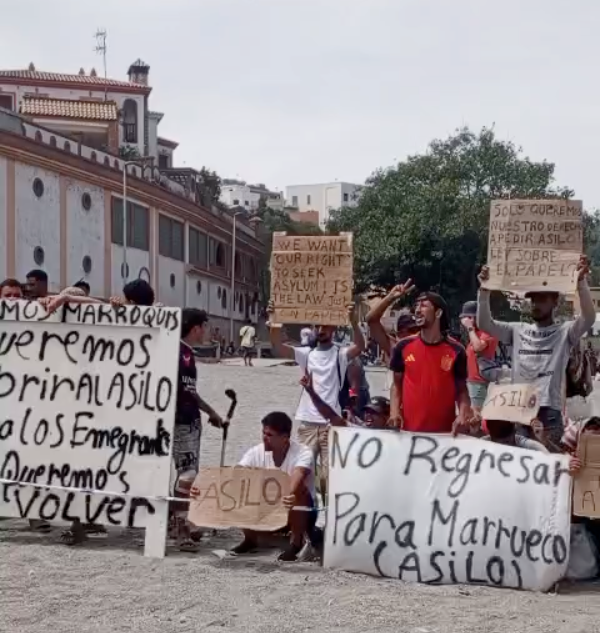
两个月后,穆罕默德在游过休达的防波堤到达西班牙后得知,他的庇护申请被拒绝。
Two months after swimming across the breakwaters to Ceuta, Spain, Mohamed learned that his asylum claim was denied.
7月下旬,穆罕默德在丹吉尔的家中收到社交媒体警报,称摩洛哥与西班牙飞地休达之间的边境口岸已开放,他没有犹豫。他搭上朋友的车,驱车四小时到达边境,然后跳入海中。“我游了三四个小时,我当时非常冷,”他说。“我一生中从未如此害怕过。你甚至无法想象。”他只带着手机和14欧元。
In late July, at his home in Tangier, Mohamed didn’t hesitate when he received a social media alert that the border crossing between Morocco and the Spanish enclave had opened. He hopped in a friend’s car, drove four hours to the border, and jumped into the sea. “I swam for three or four hours, I was so cold,” he said. “I’ve never been so scared in my life. You can’t even imagine.”He carried nothing but his phone and 14 euros.
我最初通过一位学术界的朋友与穆罕默德取得联系,在过去几周里,我一直在他居住在休达边境收容所期间通过WhatsApp与他交谈。该收容所为超过一千名移民提供十个淋浴间和四个手机充电端口。穆罕默德最初在等待其待审庇护申请时持乐观态度,但如今他的案件被拒绝后,这种态度已经改变。“我非常悲伤,我没有心情,”他告诉我。
I first connected with Mohamed through a friend in academia, and over the last few weeks, I’ve been speaking to him while he’s lived in a Ceuta shelter along the border. The facility has ten showers and four phone charging ports for over a thousand migrants. Mohamed was initially optimistic while waiting for his pending asylum application, but that’s changed now that his case has been denied. “I’m so sad, I have no mood,” he told me over WhatsApp.
“我们所有的申请,都被拒绝了。”穆罕默德(非其真实姓名)是去年夏天48小时内从摩洛哥进入休达的约8万人之一——这是有记录以来规模最大的一次移民越境,发生在非洲与欧盟之间仅有的两条陆地边界之一。另一条是西班牙飞地梅利利亚,这两个地点都曾发生移民越境事件。2021年5月,两天内有8000人进入休达;2022年6月,有2000人试图越过梅利利亚边境围栏。但7月份越境人数的规模远超之前的尝试,相差一个数量级。
“All of our claims, they’re getting denied.”Mohamed (not his real name) is one of the estimated 80,000 people who crossed from Morocco into Ceuta over 48 hours last summer—the largest recorded migrant crossing which took place at one of only two land borders between Africa and the European Union. The other is the Spanish enclave Melilla and both locations have experienced migrant crossings. Over two days in May 2021, 8,000 people entered Ceuta, and in June 2022, 2,000 people attempted to cross the Melilla border fence. But the sheer number of people who made the crossing in July eclipses previous attempts by an order of magnitude.
像穆罕默德一样,今年夏天许多移民涉水进入大海,在塔拉赫尔海滩和贝努的防波堤周围游泳,进入塞乌塔。据估计,有141人丧生,有人溺亡,有人在试图翻越边境围栏时被压死。“这是一场灾难,”人道主义非政府组织“无名厨房”的志愿者弗朗西斯卡·富萨罗说。该组织为跨越边境的移民提供援助。仅仅几天时间,超过7万名人士自愿返回摩洛哥,但仍有数千人留在塞乌塔,希望获得庇护。每天都有更多人被拒绝。
Like Mohamed, many migrants this summer waded into the sea and swam around the breakwaters of Tarajel Beach and Benzú into Ceuta. An estimated 141 people died, some by drowning and some were crushed as they attempted to climb around the border fence. “It was a disaster,” said Francesca Fusaro, a volunteer for No Name Kitchen, a humanitarian NGO that provides aid to migrants crossing borders. Within a matter of days, over 70,000 people voluntarily returned to Morocco, but thousands still remain in Ceuta hoping to be granted asylum. More are being rejected every day.
当大规模越境的消息首次传出时,描述事件的标题迅速走红:“出租车司机称其为入侵;非政府组织称其为人道主义危机;面对处理局面的地方政客将其称为国家紧急情况,”卡门·莫兰·布雷尼亚在《》中写道。与此同时,极端右翼的俄罗斯和以色列网络在线煽动右翼社交媒体叙事,将此次越境称为“袭击”,并推动伊斯兰恐惧症和反犹太主义的阴谋论。
When news of the mass crossing first broke, headlines describing the events went viral: “Taxi drivers called it an invasion; NGOs described it as a humanitarian crisis; local politicians faced with handling the situation labeled it a national emergency,” Carmen Morán Breña wrote in . Meanwhile, far-right Russian and Israeli networks fueled right-wing social media narratives online, calling the crossing an “assault” and pushing Islamophobic and antisemitic conspiracy theories.
媒体关注可能聚焦于越境背后的地缘政治,但另一个现实一直潜藏在背后:气候变化。
Media attention may have focused on the geopolitics behind the crossing, but another reality was in the background: climate change.
这并不是说气候变化的影响导致数万人冒着生命危险试图游泳到达塞乌塔。经济因素对穆罕默德离开家园的动机影响更为紧迫。“我在摩洛哥受苦,”他告诉我。“没有就业机会。我拥有英国文学学位。我会说英语、德语和法语。我从事油漆工的工作。”
That is not to say that the effects of climate change caused tens of thousands of people to risk their lives by attempting to swim to Ceuta. Economic forces were much more urgent motivators for Mohamed to leave his home. “I am suffering in Morocco,” he told me. “There are no job opportunities. I have a degree in British literature. I speak English, German, and French. I work as a painter.”
但摩洛哥北部和东南部省份经历了另一个夏季的极端高温和野火,高阿特拉斯山脉农村社区发生了严重的突发洪水和山体滑坡,全国范围内在经历了一个冬季的大雨后,七年干旱达到顶点,气候变化也可能是导致经济危机的根本因素之一,而这一危机迫使许多人离开家园。正如劳伦·赫泽·里西在她为《》撰写的文章中所指出的:“60,000[加]人不会仅仅因为警卫指向一扇开着的门就越过边界。”
But after another summer of extreme temperatures and wildfires in the northern and southeastern provinces in Morocco, severe flash flooding and landslides in rural communities throughout the High Atlas Mountains, and the culmination of a seven-year drought after a winter of heavy rainfall across the country, climate change also may be an underlying factor in creating the economic crisis forcing so many to leave their homes. As Lauren Herzer Risi pointed out in her piece for , “60,000 [plus] people don’t just cross a border when a guard points to an open door.”
我采访了几位专注于气候变化、移民和边境安全交叉领域的专家。他们解释了变暖世界与移民之间的微妙互动。“现在每一个人的流动故事都是一个气候故事,无论我们是否愿意,”佩特拉·莫尔纳尔说道,她是一名律师和研究者,多年来一直在记录她所说的“边境亡灵技术”——即法律、种族主义和技术在边境的致命结合。
I spoke to several experts focused on the intersection of climate change, migration, and border security. They explained the nuanced interaction between the warming world and migration. “Every story of human movement now is a climate story, whether we like it or not,” said Petra Molnar, a lawyer and researcher who has spent years documenting what she calls “border necrotechnics”—the lethal blend of law, racism, and technology at borders. “Pretty much every case of forced or ‘voluntary’ migration has a climate element built into it.”
“几乎每一个被迫或‘自愿’移民的案例都内在地包含着气候因素。”无论是在国内还是跨境,“没有人会称自己为气候移民,”气候难民组织的联合创始人阿马利·塔瓦尔说。从法律角度来看,不存在这样的类别,因为国际法不认为气候流离失所是获得难民身份的依据。
Whether within or across borders, “no one calls themselves a climate migrant,” said Amali Tower, the co-founder of the organization Climate Refugees. Legally, there’s no such category because international law does not consider climate displacement to be grounds for refugee status. Add to this the fact that data on international climate displacement is lacking; it’s easier to measure displacement after a distinct disaster, such as a hurricane, rather than the slow onset of rising temperatures or sea levels.
再加上国际气候流离失所的数据缺失;相较于气温或海平面缓慢上升,在飓风等突发灾难之后测量流离失所情况要容易得多。
Today, North Africa and the Middle East are warming faster than the rest of the world, and Morocco’s agricultural sector—the cornerstone of the country’s economy—is particularly vulnerable to climate impacts like soil degradation and depleted groundwater. Many Moroccan farmers have had to adjust their lives in response to extreme weather events, planting different crops, or eating different food, or reducing livestock holdings. A January 2026 Afrobarometer survey showed that almost a fifth of all those surveyed considered moving to a new place due to climate impacts. A 2021 World Bank report found that by 2050 in Morocco, 1.9 million climate migrants would be moving internally in the country.
如今,北非和中东地区的升温速度快于世界其他地区,而摩洛哥的农业部门——该国经济的基石——尤其容易受到土壤退化和地下水枯竭等气候影响。许多摩洛哥农民不得不因极端天气事件而调整生活,改种不同作物,或改变饮食,或减少牲畜数量。2026年1月的非洲巴罗美特调查显示,受访者中近五分之一的人因气候影响而考虑搬迁至新居所。2021年世界银行的一份报告指出,到2050年,摩洛哥将有190万气候移民在国内迁徙。
“The relationship between environmental change, climate hazards, and aspirations to move is incredibly complex,” said Karolina Sobczak-Szelc, a migration researcher who studied climate displacement in Morocco. In Syria, for example, the decade-long civil war and subsequent refugee crisis was the result of systemic political and sectarian repression. But, just before the civil war broke out in 2011, the country experienced the worst multiyear drought in nearly a millennium, decimating Syria’s economy and livestock.
“环境变化、气候灾害与迁移意愿之间的关系极其复杂,”研究摩洛哥气候流离失所的移民研究者卡罗利娜·索布恰克-谢尔茨说道。以叙利亚为例,长达十年的内战及随后的难民危机是系统性政治和宗派压迫的结果。但就在2011年内战爆发前不久,该国经历了近千年来最严重的多年干旱,这场干旱毁灭性地打击了叙利亚的经济和畜牧业。
Climate change is what Peter Schwartzstein, an environmental journalist and Stimson Center fellow, calls the “mood music” behind events like Ceuta, not mass migration’s main driver, but a constant presence. “It puts a proverbial thumb on the scales that amplifies the pressure exerted by a whole bundle of other things,” he said. “This is the bitter reality of climate-induced crises.”Coupled with stressors like rising housing costs, growing wealth inequality, and youth disenfranchisement laid bare during Morocco’s 2025 GenZ212 uprising, “the difference between the bright lights of Casablanca and some of these really, really quite deprived areas is stark in the extreme,” said Schwartzstein.
气候变化是环境记者、斯蒂姆森中心研究员彼得·施瓦茨斯坦所说的“背景音乐”,它不是大规模迁移的主要驱动力,而是一种持续存在的力量。“它像一只比喻中的拇指压在天平上,放大了其他一系列因素施加的压力,”他说。“这就是气候引发危机的苦涩现实。”与住房成本上升、财富不平等加剧以及摩洛哥2025年GenZ212起义中暴露的青年被剥夺权利等压力因素叠加在一起,“卡萨布兰卡的灯红酒绿与这些地区极端贫困之间的差异极其显著,”施瓦茨斯坦说。
Before even reaching another country’s border, climate migration typically starts with internal movement within a country. “They move from village to small town, from small town to bigger city,” said Sobczak-Szelc. “Only later, when the city doesn’t fulfill their changed expectations, do they think about moving further.”Mohamed followed a similar trajectory. He was originally from Fez, a city in central Morocco with high rates of income inequality and poor public infrastructure in comparison to its coastal neighbor. When he was unemployed and in his twenties he moved north to Tangier—only to find similar circumstances.
在甚至还未抵达另一个国家的边境之前,气候迁移通常始于国内的内部流动。“他们从村庄搬到小城镇,再从小城镇搬到更大的城市,”索布恰克-谢尔茨说。“只有后来,当城市无法满足他们改变后的期望时,他们才会考虑继续迁移。”穆罕默德走了一条类似的轨迹。他原本来自摩洛哥中部城市非斯,该城市收入不平等程度较高,公共基础设施较差,相较于其沿海邻城更为落后。当他失业且二十出头时,他向北迁移到丹吉尔——却发现情况相似。
“It’s reductive of international law and policy to expect people to fit into one neat lane,” Tower says. “People have always moved, and they’ve moved for no one singular reason.”After the mass crossing, Morocco’s Association for Human Rights issued a statement saying that it “[reflected] the profound despair among young people fueled by the lack of prospects, endemic corruption, the rise of authoritarianism, the absence of social justice, and the lack of employment opportunities and decent conditions.”
“期望人们能够恰好融入一条整齐的轨道,这对国际法和政策来说是一种简化。”塔尔说。“人们一直在迁移,而且他们迁移的原因从来不是单一的。”大规模越境之后,摩洛哥人权协会发表声明称,这“[反映]了年轻人因前景渺茫、腐败盛行、威权主义抬头、社会正义缺失以及缺乏就业机会和体面条件而产生的深刻绝望。”
Todd Miller, a journalist for in Tucson, Arizona, has covered the intersection of border militarization, surveillance, and climate change.
来自亚利桑那州图森的记者托德·米勒长期关注边境军事化、监控与气候变化的交叉问题。他在2021年《全球气候墙》报告中写道,富裕国家倾向于平均花费超过2.3倍的资金来武装边境,而非用于缓解气候变化的努力,利用所谓的“大规模移民”威胁来证明加强监控的合理性。“注意力并没有用于帮助人们适应气候变化或将他们安置到更好的境况中,”来自气候难民组织的阿马利·塔尔说。
In his 2021 Global Climate Wall report, Miller wrote that wealthy countries would rather spend on average over 2.3 times more to arm their borders than on efforts to mitigate climate change, using the so-called threat of “mass migration” to justify increased surveillance.
“相反,我们把所有的钱和精力都用在了如何把人们挡在外面上。”在某种程度上,对7月份大规模越境的地区响应可以说明他们的观点。意大利总理乔治亚·梅洛尼呼吁将西班牙从欧盟的免签区——申根区——暂停资格,她在X上写道,这次大规模越境表明“无控制的非法移民对欧洲边境的安全构成了真正威胁。”芬兰、捷克共和国、瑞典、丹麦和奥地利支持梅洛尼的呼吁。
此外,在9月下旬,欧盟委员会提出了让欧盟边境和海岸警卫局——Frontex——牵头组建一个快速反应团队的计划,该团队能够在危机情况下在24小时内部署。
“Attention isn’t going towards helping people adapt to climate change or move them into better situations,” Amali Tower, from Climate Refugees, says. “Instead, we’re putting all our money and effort into how to keep people out.”
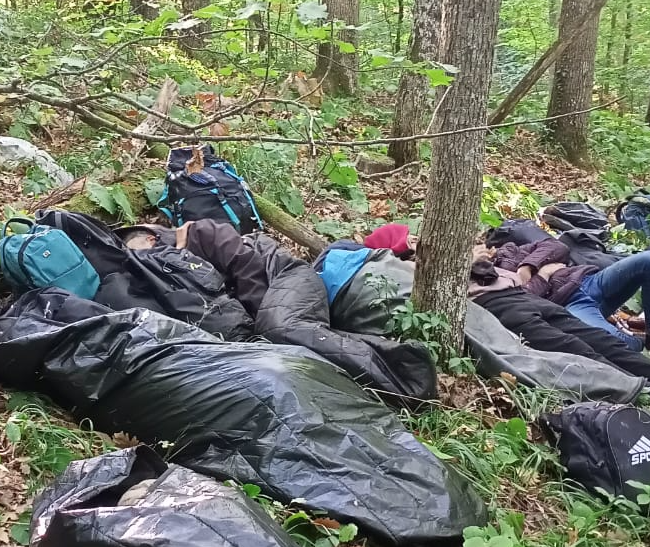
欧洲边境管理局局长表示,该机构可以动用卫星、飞机以及地面观察员,“以提升我们对局势的掌控能力”。穆罕默德抵达休达后的头三周,只能在城郊的树林中过夜,食物和水也极为匮乏。连续几个夜晚,西班牙军方警卫都在树林中巡逻,搜寻非法入境的移民。穆罕默德回忆道:“我们身边的几个朋友被军方发现后遭到殴打,他们的手机也被砸坏了。最初的那些夜晚,我害怕极了。”
In some ways, the regional response to July’s mass crossing illustrates their points. Italy’s prime minister Giorgia Meloni called for Spain to be suspended from the EU’s visa-free region known as the Schengen Area, writing on X that the mass crossing demonstrated “that uncontrolled illegal immigration poses a real threat to the security of Europe’s borders.”Finland, the Czech Republic, Sweden, Denmark, and Austria supported Meloni’s call. And, in late September, the European Commission floated plans for the European Border and Coast Guard Agency, Frontex, to lead a rapid-response team that could deploy within 24 hours in a crisis. The Chief of Frontex said its agency could deploy satellites, aircraft, and observers on the ground “to improve our situational awareness.”For the first three weeks after Mohamed arrived in Ceuta, he slept in a forest on the edge of the city with limited food and water. For several nights, Spanish military guards patrolled the forest for migrants. “Some friends near us, the military found them and started beating them, they smashed their phones,” Mohamed said.
如今休达已不再受到公众关注,但“无名厨房”组织仍在持续报道类似事件:执法部门对那些等待办理庇护申请的移民实施暴力。
“Those first few nights, I was very scared.”As Ceuta has faded away from public attention, No Name Kitchen has continued to report similar stories of law enforcement violence against migrants waiting to have their asylum cases processed in Ceuta.
对于受气候变化影响最严重的人群而言,即便面临执法部门与安全机构的暴力对待,离开故土也并非他们的选择。“这种绝望情绪促使移民们想要逃离,因此他们会利用一切可能的途径,哪怕只是暂时性的办法,”托尔说道,“只有当处境变得无法忍受、所有尝试都无济于事且再无力应对时,他们才会选择离开。”
And for the people most affected by climate change, leaving is not a choice, even when faced with violence from law enforcement and the security state. “There’s a desperation that leads to migrants wanting to leave, so, they’ll take any avenue available to them, even if it’s short-lived,” Tower said. “They do so when circumstances become untenable, when everything they’ve tried has been exhausted, and it’s now beyond their means of coping.”
几年前从摩洛哥移居波兰的华沙移民研究中心研究员法蒂玛·扎赫拉·兹尼奥伊指出,许多摩洛哥人的处境就如同被困在着火的房子里。“只有两种死法,”她说,“要么被烧死,要么从窗户跳出去。”兹尼奥伊十分怀念自己在阿加迪尔的家乡,但也理解为何有那么多人执意离开。“我认为这些人已经彻底绝望了。只有绝望到极点的人才会毅然跳进大海。”
Fatima Zahra Znioi, a researcher at Warsaw’s Centre of Migration Research who moved to Poland from Morocco several years ago, compares the situation for many Moroccans to being trapped inside a burning house. “There are two ways of dying,” she said, “you can just burn to death, or jump out the window.”Znioi misses her home in Agadir, but understands why so many others have tried to leave. “I believe these people were completely desperate. You have to be to throw yourself into the sea.”
在我与穆罕默德的最后一次视频通话中,我们并未谈及气候变化。他告诉我自己“受够了”,虽然仍有权对庇护申请被拒的决定提出上诉,但他已准备返回丹吉尔。随后我询问他对未来的打算。“这并非我第一次试图进入休达,”他说道,“我会再试一次的。”
In my last video call with Mohamed, climate change never came up. Instead, Mohamed tells me he’s “fed up,” and even though he still has the right to appeal his asylum denial, he’s getting ready to return to Tangier. Then I ask about his plans for the future. “This isn’t the first time I’ve crossed into Ceuta,” he says. “I’ll just try again.”