在经历了多年欧洲电力需求下降之后,该地区的一些主要经济体正在使用更多的电力——随着摆脱化石燃料的进程推进,这种转变预计将加速,并可能进一步考验电网。
After years of falling power demand in Europe, some of the region’s top economies are using more — a shift that should gather pace amid a move away from fossil fuels and which may further test grids.
近年来,由于工业活动减弱、抑制需求的较高价格以及为减少排放而采取的更高使用效率,消费受到了打击。但随着消费者和企业越来越多地接入电网以运行电动汽车、空调和数据中心,一个电力需求增长的新时代正在兴起。
Consumption has in recent years been hit by weaker industrial activity, higher prices that curbed demand, and more efficient usage to cut emissions. But as consumers and businesses increasingly tap the grid to run electric vehicles, air conditioners and data centers, a new age of power demand growth is emerging.
彭博新能源财经的数据证明了这一点。在调整了使电力需求高度多变的天气影响后,彭博新能源财经发现,在过去一年的大部分月份里,包括德国、意大利和西班牙在内的欧洲主要经济体的电力需求都在增长。智库Ember汇编的数据显示,过去一年中,整个欧盟也普遍存在需求增长的趋势。
That’s evident in BloombergNEF data. After adjusting for weather impacts that make power demand highly variable, BNEF identified growing demand for electricity in most months of the past year in major European economies including Germany, Italy and Spain. There has also been a broad trend of demand growth across the European Union in the past year, according to data compiled by think tank Ember.
这一增长远远落后于美国由人工智能驱动的激增,但欧洲更大的消费量表明了一种结构性转变,随着能源使用逐渐摆脱石油和天然气,这种转变只会越来越大。虽然这可能有助于推动对可再生能源的投资,但当没有足够的风能或太阳能来满足需求,或者基础设施不足以将电力输送到需要的地方时,这也可能给电网带来更大的压力。
The increase lags far behind the artificial intelligence-driven surge in the US, but bigger consumption in Europe points to a structural shift that will only grow as energy usage moves away from oil and natural gas. While that could help drive investment in renewables, it could also put greater strain on grids when there’s not enough wind or sun to meet demand, of if the infrastructure isn’t adequate enough for delivery power to where it’s needed.
*总部位于伦敦的对冲基金“清洁能源转型”公司首席执行官佩尔·莱坎德表示:“不断增长的能源使用份额是通过电力实现的,即使能源需求下降,电力需求也在上升。这是不可阻挡的,并将持续几十年。”数据中心、清洁能源、电网和能源安全是周一和周二在伦敦举行的彭博新能源财经峰会上将讨论的关键议题之一,该活动汇集了从能源到技术等行业的数百位领导者。
“A growing share of energy use is through electricity and even if energy demand goes down, electricity demand is going up,” said Per Lekander, chief executive officer of London-based hedge fund Clean Energy Transition LLP. “It’s unstoppable and it’s going to go on for decades.”Data centers, clean power, grids and energy security are among the key topics that will be discussed at the BNEF Summit in London on Monday and Tuesday, an event bringing together hundreds of leaders from industries ranging from energy to technology.
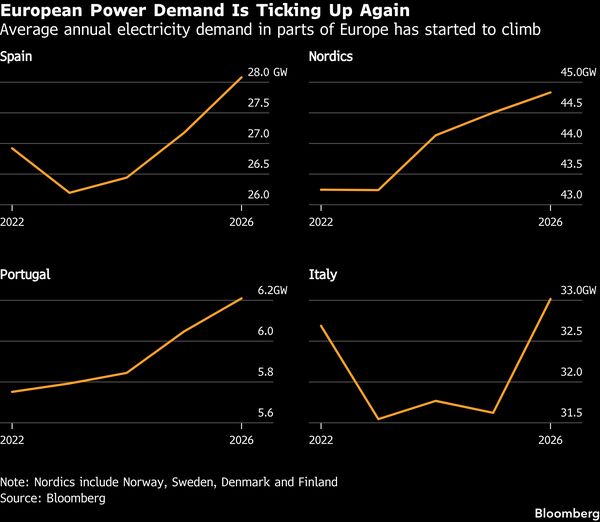
彭博新能源财经数据显示,在截至2023年的15年里,欧盟的电力需求下降了大约9%。这一趋势现在似乎正在逆转。Ember的数据显示,9月份标志着欧盟电力需求连续第13个月实现同比增长,这是至少自2018年以来持续时间最长的此类趋势。
The EU’s power demand fell roughly 9% in the 15 years through 2023, BNEF data show. That trend appears to now be reversing. September marked the 13th consecutive month of year-over-year power demand growth in the EU, the longest such trend since at least 2018, according to Ember data.
除了更多的空调和电动汽车的发展外,随着建设步伐的加快,数据中心在未来几年似乎将成为一个更大的用户。彭博新能源财经表示,拥有廉价低碳电力的市场,如芬兰和西班牙,应该会看到数据中心的需求激增。
In addition to more air conditioning and the growth of EVs, data centers look set to become a bigger user in the coming years as the build-out gains pace. Markets with cheap, low-carbon power like Finland and Spain should see demand for data centers boom, according to BNEF.
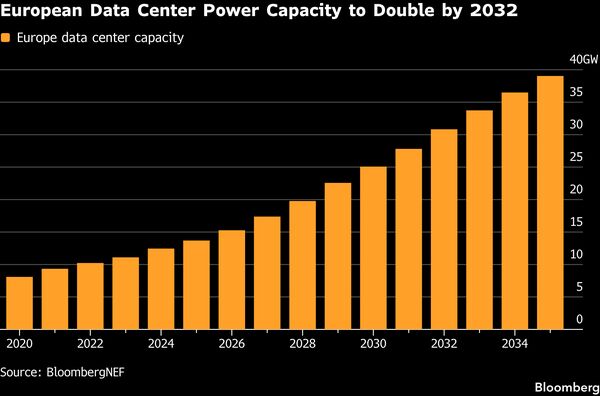
彭博新能源财经分析师阿恩休·陈表示:“有新的需求来源正在涌现。这并不是那种扑面而来的需求增长,但我们的总体观点是需求将会增长。”根据彭博新能源财经的数据,到2032年,欧洲数据中心的电力容量预计将翻一番,达到30吉瓦以上,并在2035年左右扩大到大约39吉瓦。
“There are new sources of demand coming through,” BNEF analyst Arhnue Tan said. “It’s not really in-your-face demand growth, but our overall view is that demand will grow.”Power capacity of European data centers is expected to double to more than 30 gigawatts by 2032, and expand to roughly 39 gigawatts by 2035, according to BNEF.
彭博新能源财经对截至8月份的使用情况进行的分析调整了天气影响,因为极端条件会导致电力需求剧烈波动。炎热的夏天——就像今年欧洲所经历的那样——将导致安装了空调的地方消费增加。
BNEF’s analysis of usage through August adjusted for weather impacts because extreme conditions can cause electricity demand to vary wildly. A hot summer — like the one seen in Europe this year — will lead to higher consumption in places where there’s air conditioning.
尽管如此,由于德国等主要经济体的工业活动减弱,欧洲的总体电力消耗仍远低于历史水平。今年冬天更高的天然气价格也存在损害需求的风险,这推高了发电成本。
Still, Europe’s overall power consumption remains far below historical levels as industrial activity weakened in major economies like Germany. There’s also the risk that demand is hurt by higher gas prices this winter, which drive up the cost of generating electricity.
由于去年占全球供应约五分之一的波斯湾出口继续受到伊朗战争的干扰,欧洲基准天然气期货已攀升至2022年以来的最高水平。随着该大陆的冬季天然气库存处于季节性低位,这使得市场在供暖需求回升时面临进一步价格飙升的风险。
Benchmark European gas futures have climbed to the highest since 2022 as exports from the Persian Gulf, which accounted for about a fifth of global supply last year, remain disrupted by the Iran war. And with the continent’s winter gas inventories at a seasonal low, that leaves the market exposed to further price spikes when heating demand picks up.
n如果电力消耗继续增长,这可能有助于鼓励投资满足需求所需的新风电场和太阳能发电场。但欧洲也迫切需要扩建其电网,该电网已经难以跟上新能源发电的速度——需求的激增将加剧这种压力。
If power consumption keeps growing, that could help encourage investment in new wind and solar farms that would be needed to meet demand. But Europe also urgently needs to expand its power grid, which is already struggling to keep up with the pace new renewables generation — and a surge in demand will add to that strain.
Ember能源战略专家金斯米尔·邦德表示,目前,空调、工业增长和电动汽车正在以不同的比例推动整个欧洲的电力需求,具体取决于各个经济体的发展程度。他说,与此同时,伊朗战争让各国和企业对进口能源的持久性产生怀疑,这正在推动更多的电气化。
For now, air conditioning, industrial growth and EVs are driving power demand across Europe in different proportions, depending on how developed each economy is, said Kingsmill Bond, an energy strategist at Ember. At the same time, the Iran war has countries and businesses questioning the durability of importing energy, which is driving more electrification, he said.
他说:“世界上大部分地区并没有大量的石油和天然气。人们对混乱越来越感到焦虑。”
“Most of the world doesn’t have a lot of oil and gas,” he said. “People are getting more and more nervous about chaos.”