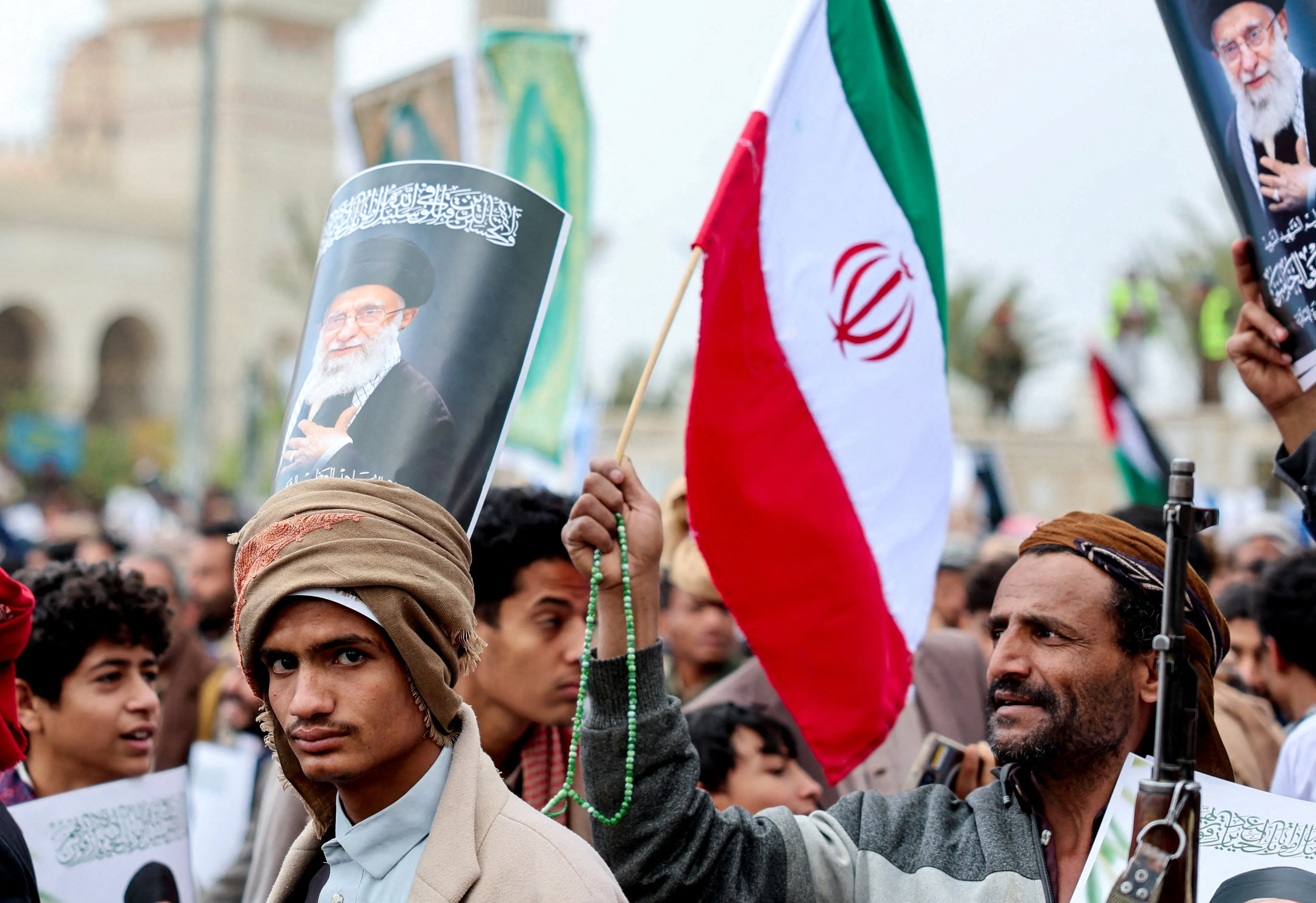
媒体报道和官方评论中出现了关于伊朗支持也门胡塞武装的新指控,凸显了该联盟的不透明性。
New allegations about Iranian support for Yemen’s Houthis have emerged in media reports and official comments, highlighting the opaque nature of the alliance.
媒体报道称,伊朗伊斯兰革命卫队(IRGC)在胡塞武装夺取也门西部广大地区并发动迄今为止对沙特阿拉伯最具威力和最复杂的袭击时向其提供了援助,而沙特阿拉伯正在支持国际社会承认的也门政府,该政府正在与胡塞武装作战。
Media outlets have reported that Iran’s Islamic Revolutionary Guard Corps (IRGC) aided the Houthis as they seized swaths of western Yemen and launched their most potent and sophisticated attacks yet on Saudi Arabia, which supports the internationally recognised Yemeni government fighting the Houthis.
媒体报道的伊朗对胡塞武装的支持包括培训、情报、战术指导以及在无人机和导弹袭击中的目标定位方面的帮助。
Iranian support for the Houthis reported by the media includes training, intelligence, tactical guidance and help in targeting for drone and missile attacks.
如果属实,这无疑将加剧伊朗与沙特阿拉伯之间的紧张关系,因为该王国在最近几周已遭到数十架胡塞武装无人机和导弹的袭击,其中包括对利雅得哈立德国王国际机场的袭击,该袭击造成13人死亡。沙特的能源设施和油轮也曾成为该组织的袭击目标。
If true, this will undoubtedly escalate tensions between Iran and Saudi Arabia, given that the kingdom has been targeted by dozens of Houthi drones and missiles in recent weeks, including an attack on King Khalid International Airport in Riyadh that killed 13 people. Saudi energy facilities and oil tankers have also been targeted by the group.
据报道,伊朗的支持促成了胡塞武装在九月的一次进攻,胡塞武装也是一个武装组织,亦被称为安萨尔·阿拉(阿拉伯语意为“真主的支持者”)。这些战斗使胡塞武装控制了也门的红海海岸线以及战略上重要的巴布·曼德布海峡。
Iranian backing, according to the reports, contributed to a September offensive by the Houthis, an armed group also known as Ansar Allah (Arabic for Supporters of God). Those battles saw the Houthis win control of Yemen’s Red Sea coastline and the strategically important Bab al-Mandeb strait.
《华尔街日报》报道称,伊朗马汉航空的航班将伊朗革命卫队准军事军官、无人机零件、导弹制导系统和冲击引信运送到也门的胡塞武装手中。伊朗革命卫队军官也据称曾在前线指挥胡塞武装的袭击。
The Wall Street Journal reported that Iranian Mahan Air flights ferried IRGC paramilitary officers, drone parts, missile guidance systems and impact detonators to the Houthis in Yemen. IRGC officers were also reportedly on the front lines directing Houthi attacks.
支持也门政府的沙特领导的联盟发言人、少将图尔基·马利基证实了胡塞武装不断发展的武器库背后存在一个外国国家行为体,但未提及具体是哪个国家。
The spokesperson for the Saudi-led coalition supporting Yemen’s government, Major-General Turki al-Maliki, confirmed the presence of an external state actor behind the Houthis’ evolving arsenal but did not mention the state in question.
马利基指出,胡塞武装自2014年以来一直与政府交战,他们在地区援助的帮助下获得了先进技术。
Al-Maliki noted that the Houthis, who have been at war with the government since 2014, have acquired advanced technologies with regional assistance.
这种支持使胡塞武装成为首个部署弹道导弹、攻击性和自杀式无人机以及装载炸药的高速快艇的非国家武装组织,他说,尽管其他伊朗盟友,如真主党和伊朗民兵,也拥有此类武器。
This support has made the Houthis the first nonstate armed group to deploy ballistic missiles, offensive and suicide drones, and explosive-laden, high-speed boats, he said, although other Iranian allies, such as Hezbollah and Iranian militias, also possess such weaponry.
虽然胡塞武装强调其独立于伊朗,但两者在意识形态上是一致的。他们还被指在军事事务上密切合作,这在胡塞的导弹库中可见一斑。
While the Houthis have stressed their independence from Iran, the two groups are ideologically aligned. They have also been accused of collaborating closely on military matters, evident in the Houthis’ missile arsenal.
接受《半岛电视台》采访的分析人士一致认为,胡塞武装所获得的“地区援助”指向伊朗伊斯兰革命卫队,尽管伊朗和胡塞武装否认这一点。
Analysts who spoke to Al Jazeera all agreed that the “regional assistance” the Houthis are receiving points towards the IRGC although Iran and the Houthis denied this.
一个迹象是七月对萨那国际机场的轰炸,恰逢一架载有胡塞代表团、从德黑兰飞来的伊朗飞机即将降落。也门政府称其部队实施了此次袭击,并指责“伊朗飞机”侵犯了也门领空。
One indication of this is the bombing of Sanaa International Airport in July before an Iranian plane carrying a Houthi delegation travelling from Tehran was due to land. The Yemeni government, which said its forces carried out the attack, accused “the Iranian aircraft” of violating Yemeni airspace.
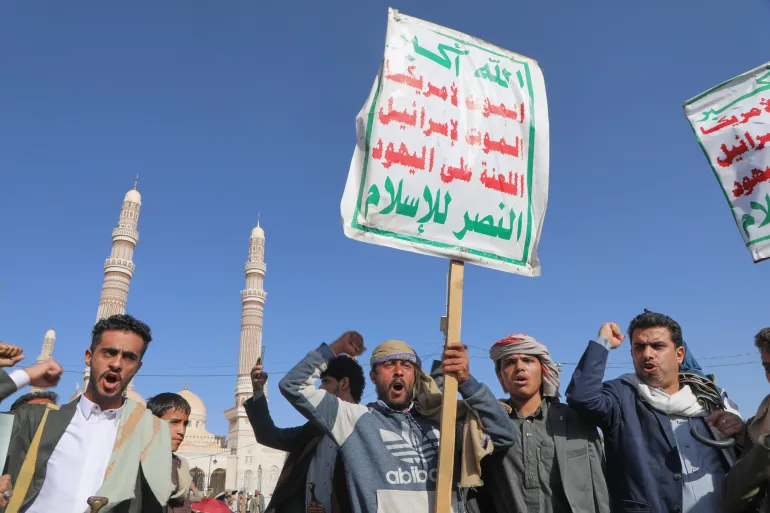
“[近期报告]证实,专家多年来所知的伊朗革命卫队和真主党专家参与了针对也门政府及邻国,包括沙特阿拉伯王国的作战计划,”专注于也门事务的分析师伊布拉欣·贾拉尔对《半岛电视台》说。
“[Recent reports] confirm what is known to experts for years as the Revolutionary Guard and Hezbollah experts engaged in managing the operational planning of battles against the Yemeni government and neighbouring countries, including the Kingdom of Saudi Arabia,” Ibrahim Jalal, a Yemen-focused analyst, told Al Jazeera.
“例如,2021年马里卜军事行动后,伊朗革命卫队驻胡塞的特使哈桑·伊尔鲁被暗杀,这是一项重要指示;此外,马汉航空的航班在今年七月向胡塞内部和外部升级前运送了更多专家。”军事与战略安全事务专家阿里·达哈卜同意,胡塞使用的先进武器表明伊朗在近期行动中发挥了作用。
“For example, the killing of Hassan Irloo, the Revolutionary Guard envoy to the Houthis, in Yemen after the military campaign on Marib in 2021 is one of the important indicators, in addition to Mahan aviation flights that transported more experts ahead of the Houthis’ internal and external escalation during July of this year.”Ali al-Dahab, a military and strategic security affairs expert, agreed that the advanced weaponry used by the Houthis indicates an Iranian role in recent operations.
“关于伊朗支持胡塞武装的泄露内容,通过这份报告除了确认已有信息之外,并未提供任何新内容,而它可能补充的信息是,武器走私,尤其是用于导弹和无人机的精密技术,正通过小型潜艇进行,”达哈布对半岛电视台表示。
“What was leaked about Iranian support for the Houthis through this report did not add anything new except that it confirmed the confirmed, and what it added perhaps is that weapons smuggling, especially precision technologies for missiles and unmanned aircraft, takes place via small submarines,” al-Dahab told Al Jazeera.
“这一问题并不意味着伊朗向胡塞武装走私的一切物品,因为联合部队在胡塞武装控制摩卡海岸至巴布·曼德布之前以及其在九月份的中断之前,曾拦截过一些走私货物。”达哈布指出,虽然走私者历史上一直使用多夫帆船——传统木质帆船——来误导海军联盟,但使用潜艇是胡塞武装采用的一种新方法,类似于美洲有组织犯罪集团所使用的战术。
“This issue is not everything being smuggled from Iran to the Houthis because there are interceptions of smuggled shipments revealed by the joint forces that were controlling the Mocha coast to Bab al-Mandeb before the Houthis’ control and before its break in September.”Al-Dahab pointed out that while smugglers historically have used dhows, traditional wooden sailboats, to mislead naval coalitions, employing submarines is a new method used by the Houthis, akin to the tactics used by organised criminal groups in the Americas.
“这表明伊朗将胡塞武装视为红海南部军事和安全重心的核心,因此向他们提供这些武器、弹药、专业知识和信息,以应对可能在霍尔木兹海峡爆发的冲突,”达哈布说。“因此,胡塞武装在他们眼中在巴布·曼德布海峡发挥着支持作用。”他警告称,随着胡塞武装如今控制着巴布·曼德布——这一连接亚丁湾和红海的狭窄水道——对国际航运将产生更广泛的影响。
“It indicates that Iran focuses on the Houthis as the centre of military and security gravity south of the Red Sea and, therefore, provides them with these weapons, ammunition, expertise and information in anticipation of a battle that may break out in the Strait of Hormuz,” al-Dahab said. “Therefore, the Houthis play a supporting role for them in the Bab al-Mandeb strait.”He warned of broader implications for international shipping with the Houthis now in control of Bab al-Mandeb, a narrow waterway linking the Gulf of Aden and the Red Sea.
“目前最大的危险是,如果在亚丁湾和海峡爆发冲突,南部红海和亚丁湾地区的非国家实体可能在伊朗的领导下联合起来,以对抗美国、英国和欧洲,”达哈布说。
“The greatest danger now is that substate entities in the southern Red Sea and Gulf of Aden region unite under Iran’s leadership to confront the United States, Britain and Europe in general if a battle breaks out in the Gulf of Aden and the strait,” al-Dahab said.
沙特阿拉伯和伊朗曾似乎通过一项在中国北京斡旋下达成的和解协议,修复了多年的敌对关系,该协议包括暂停外交关系,并于2023年签署。
Saudi Arabia and Iran had appeared to have patched up years of hostilities, including the suspension of diplomatic relations, with a China-brokered reconciliation agreement signed in Beijing in 2023.
Hesham Alghannam,一位居住在利雅得的卡内基国际和平基金会研究员表示,他对沙特阿拉伯是否真正阅读了北京协议为和解,还是将其视为降低紧张的手段表示怀疑。自协议签署以来,两国在地缘政治问题上持续存在分歧,包括位于沙特阿拉伯南部边境的也门问题。
Hesham Alghannam, a Riyadh-based fellow at the Carnegie Endowment for International Peace, said he doubts whether Saudi Arabia ever read the Beijing agreement as reconciliation but as a way of lowering tensions. Differences on geopolitical issues have continued between the two countries since the agreement was signed, including on Yemen, which lies on Saudi Arabia’s southern border.
“那不是可以拿去法院的违约行为。它只是把两份文件分开,直到有人公开说出来为止。这才是变化所在,”Alghannam对Al Jazeera说道。
“That isn’t a breach you can take to a lawyer. It’s keeping two files apart, and it works until someone says it out loud. That’s what’s changed,” Alghannam told Al Jazeera.
“老实说,更深层的问题是,伊朗是否签署[与沙特阿拉伯的协议],关键在于其签署的内容是否真正触及持有发射器的人手中,”他补充道,指的是伊朗支持的武装组织,如胡塞运动。
“Honestly, the deeper question was never whether Tehran signs [the agreement with Saudi Arabia]. It’s whether anything Tehran signs reaches the people holding the launchers,” he added, referring to Iran-aligned armed groups, such as the Houthis.
“我们清楚知道后续发展的走向。2014年,胡塞运动被提供席位、对萨达(胡塞运动的北方据点)的特殊地位,以及在也门分享行政权,以换取将重武器交还国家,”他补充道。
“We know how the other sequence ends. In 2014, the [Houthis] were offered seats, special status for Saada [the northern Yemeni stronghold of the Houthis] and a share of the executive authority in Yemen in return for handing the heavy weapons to the state,” he added.
随后发生的是胡塞运动于2014年9月占领首都萨那,迫使政府南逃,随后前总统艾哈迈德·艾利·艾卜杜拉·萨拉赫被杀。
What followed was the Houthis seizure of the capital, Sanaa, in September 2014, forcing the government to flee south, and the later killing of former President Ali Abdullah Saleh.
“随后发生的是机构被占领,总统被拘留,议会被解散。收益被储存,枪支被保留,”Alghannam补充道。
“What followed was the seizure of the institutions, the president detained, parliament dissolved. The gains were banked, and the guns were kept,” Alghannam added.
“萨利赫与他们结盟,他于2017年在街头被杀。即使占领了萨那,他们也没有成为国家。他们建立了一个监督网络,坐镇每一个官职。因此,沙特的红线是一回事,任何武装组织或第二支军队都不能在同一国家内部存在。”沙特主导的也门干预行动于2015年3月开始,并导致利雅得与胡塞武装之间出现另一场直接冲突。尽管沙特向国际公认政府提供了大量支持,却未能收复萨那。这凸显了反胡塞联盟内部的弱点,包括国际公认政府与南部分裂主义者之间的分歧。
“Saleh partnered with them, and he was killed in the street in 2017. Even after taking Sanaa, they didn’t become the state. They built a network of supervisors sitting over every official post. So the Saudi red line is one thing, no armed group or second army inside one state.”The Saudi-led intervention in Yemen began in March 2015 and led to another direct conflict between Riyadh and the Houthis. Despite the massive support Saudi Arabia provided the internationally recognised government, it failed to retake Sanaa. This highlighted weaknesses within the anti-Houthi coalition, including divisions between the internationally recognised government and southern separatists.
“2015年的教训不是‘坚定行动会导致长期战争’,而是‘提前宣布目标会导致一旦公开就被束缚,远早于你能够实现它的时机’,”他说。
“The lesson of 2015 wasn’t that acting firmly leads to a long war. It was that announcing a goal earlier than you should [do] does because once it’s said out loud, you’re bound to it long before you can deliver it,” he said.
“利雅得现在试图做的事情说起来容易做起来难,但至关重要:将金钱和武器与真正的统一指挥下的整合挂钩,而不是与宣称的忠诚挂钩。”德黑兰大学政治学助理教授哈桑·阿赫马迪安在接受《半岛电视台》采访时表示,伊朗寻求为合作伙伴实现技术独立,而不是让其长期依赖。
“What Riyadh is trying to do now is easy to say and hard to do, but it’s crucial: tie the money and the weapons to real integration under one command, not to declared loyalty.”Hassan Ahmadian, an assistant professor of political science at the University of Tehran, told Al Jazeera that Iran seeks technological independence for partners rather than perpetual reliance.
“这种模式不同于美国的模式,美国让所有追随者和盟友对美国保持依赖,也就是说他们必须从美国购买所需武器,而如果对象是阿拉伯或伊斯兰国家,主要武器基本上不会提供给他们,”他说。
“This pattern is not like the United States pattern, which keeps whoever follows and allies with it in need of it, meaning [they have] to buy from the United States the weapons he needs, and the main weapon is basically not given to him if it is an Arab or Islamic country specifically,” he said.
“至于伊朗,其盟友获得了制造和生产武器的所需技术;这种技术不仅被提供给也门,还尽可能地被传播到了其他地区,甚至包括加沙地带。之所以如此,是因为各方对此有着不同的看法。”阿赫马迪安表示,让伊朗的盟友能够自行生产武器是德黑兰的一项战略举措;而胡塞武装之所以采取行动,也是为了打破沙特对他们在也门控制地区的封锁。
“As for Iran, the ally is provided with the technology to create and produce the weapon, and this is not only in Yemen but in other regions and even in Gaza as much as possible where the technology was transferred because the view is different.”Ahmadian said enabling Iran’s allies to produce their own weapons is a strategic move by Tehran and the Houthis are also motivated by breaking the Saudi siege on territories it controls in Yemen.
“他们认为,这种技术有助于共同对抗共同的敌人;因此,让这些盟友独立地增强自身的军事实力,对伊朗本身来说也是一种战略利益。”阿赫马迪安进一步解释道。
“The view is that this technology helps in confronting a common enemy, and therefore, strengthening this capability independently of Iran is in itself a strategic interest for Iran,” Ahmadian said.
“值得注意的是,胡塞武装(Ansar Allah)的行动与他们所秉持的‘正义事业’密切相关——因为也门人民正遭受着严重的封锁,其中70%到80%的地区都处于胡塞武装的控制之下,而萨那政府也深受影响。因此,打破这种封锁对他们来说是一项正义的事业。地区局势为他们提供了向沙特阿拉伯施压、要求其解除封锁的动机,而事实也确实如此。”
“Notice that there is an advance for Ansar Allah [the Houthis] linked to the justice of the cause as there is a siege imposed on the Yemenis affecting 70 percent to 80 percent of the society controlled by Ansar Allah and the Sanaa government. So this cause, breaking the siege, is a just cause. … The regional circumstance gave [the Houthis] a motive that this is the time to pressure Saudi Arabia to break the siege, and this is what actually happened.”