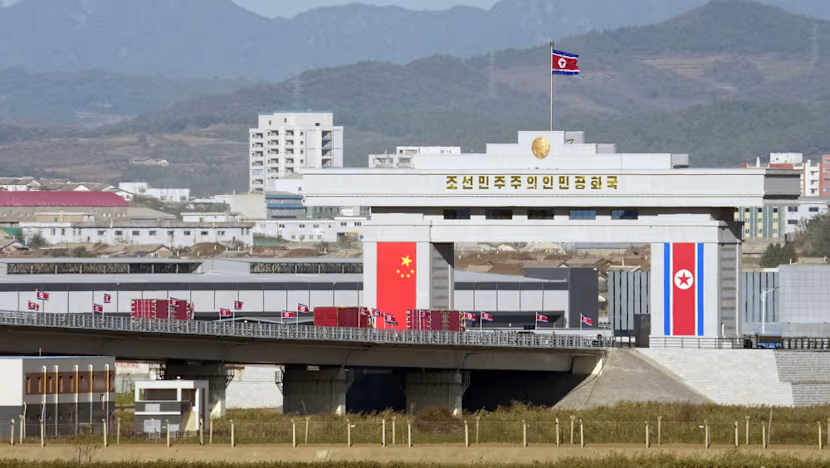
波士顿,马萨诸塞州:新鸭绿江大桥在东北亚地区曾长达12年成为最昂贵的死胡同。该桥由中国于2014年建成,耗资3.5亿美元,是一座时髦的四车道斜拉桥,从丹东延伸至朝鲜边境,却在新义州外的未铺装农田中戛然而止。
BOSTON, Massachusetts: For 12 years, the New Yalu River Bridge stood as the most expensive dead end in Northeast Asia. Completed by China in 2014 at a cost of US$350 million, the sleek four-lane cable-stayed span stretched across the border from Dandong only to terminate abruptly in unpaved North Korean farmland outside Sinuiju.
如今,经过十余年的反复折腾,北京与平壤于10月15日正式对交通开放了该过境通道。
Now, after more than a decade of false starts, Beijing and Pyongyang officially opened the crossing to traffic on Oct 15.
为何现在才开通这座历经12年的桥梁?答案远超边境物流范畴。通过启用高容量商业交通,北京正在物理上终结以制裁为导向的对朝施压时代——同时确保莫斯科在战时的拉拢以及华盛顿对新峰会的渴望都不会削弱中国在朝鲜半岛问题上作为不可或缺的仲裁者的地位。
Why open a 12-year-old bridge now? The answer goes well beyond border logistics. By turning on the tap of high-capacity commercial traffic, Beijing is physically retiring the era of sanctions-led pressure on North Korea – and ensuring that neither Moscow’s wartime courtship nor Washington’s appetite for fresh summiteering dilutes China’s position as the indispensable arbiter on the Korean Peninsula.
十年来,这座沉寂的大桥一直是两个社会主义邻国之间微妙摩擦的晴雨表。中国于2014年完成主跨后,因谁来承担朝鲜海关综合体及入口道路的费用而产生争议,导致项目停滞。
For a decade, the dormant bridge served as a barometer of quiet friction between the two socialist neighbours. After China finished the main span in 2014, disputes over who would pay for the North Korean customs complex and entry roads stalled the project.
随后是平壤升级核试验,北京决定在2017年支持联合国安理会制裁朝鲜的严厉决议,最终是金正恩在疫情期间实施的严苛边境封闭。在联合国制裁体系达到顶峰时期开放一条四车道贸易通道,对北京而言在外交上将极为尴尬,且会被平壤视为隔离。
Then came Pyongyang’s escalating nuclear tests, Beijing’s decision to back harsh United Nations Security Council sanctions in 2017, and finally Kim Jong-un’s draconian pandemic-era border closure. Opening a four-lane trade artery while the UN sanctions regime was at its peak would have been diplomatically awkward for Beijing and quarantined by Pyongyang.
然而,这种算计如今已然逆转。北京已经在对平壤的公开外交中删除了“去核化”一词,从将朝鲜核武库视为扩散风险转变为将其视为能够牵制美国军事注意力的持久缓冲。
That calculus has now inverted. Beijing has already dropped the word “denuclearisation” from its public diplomacy with Pyongyang, shifting from viewing North Korea’s nuclear arsenal as a proliferation liability to treating it as a durable buffer that ties down American military attention.
一旦北京接受拥有核武器的朝鲜作为基线现实,继续将其主要商业通道锁死就不再符合战略逻辑。
Once Beijing accepted a nuclear-armed North Korea as a baseline reality, keeping its primary commercial artery padlocked no longer made strategic sense.
开幕标志着一项有条不紊的正常化进程的完成:跨境卡车货运于2023年恢复,北京-平壤客运列车于2026年3月在暂停六年后重新启动,如今,由帝国日本于1937年建造的老旧单车道中朝友谊桥正被一条专为重型集装箱货运设计的现代化高速公路所补充。
The opening is the culmination of a methodical normalisation: cross-border truck freight resumed in 2023, the Beijing-Pyongyang passenger train restarted in March 2026 after a six-year suspension, and now the ageing single-lane Sino-Korean Friendship Bridge – built by Imperial Japan in 1937 – is being supplemented by a modern highway designed for heavy containerised freight.
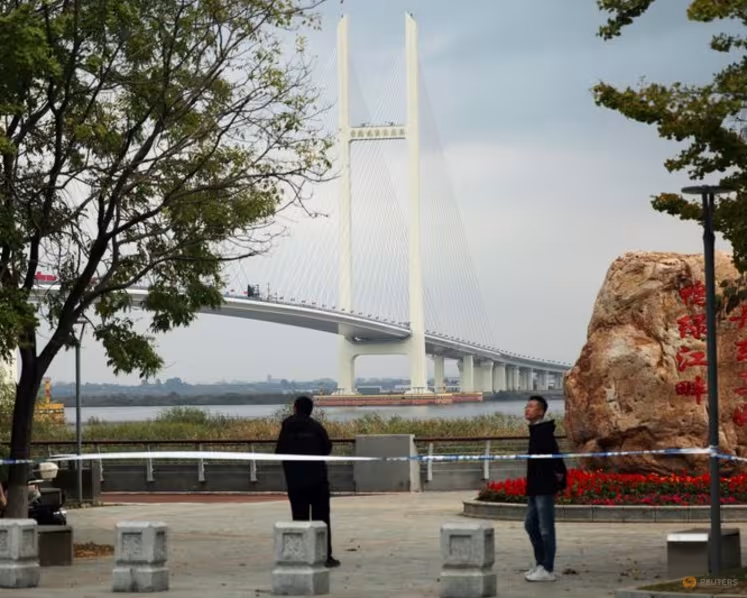
2026年10月15日,在辽宁省丹东市,安保人员在丹东新区与朝鲜新义州之间的新鸭绿江大桥开幕式前的封锁水域处戒备。路透社/弗洛伦斯·洛俄罗斯牌然而,东北亚的时机从来不是偶然的,而围绕此刻的两种常见误读值得被挑战。
Security personnel keep watch at a cordoned-off waterfront before the opening ceremony for the New Yalu River Bridge, which connects China’s Dandong New Zone and North Korea’s Sinuiju, in Dandong, Liaoning province, China, Oct 15, 2026. REUTERS/Florence Lo THE RUSSIA CARD Yet timing in Northeast Asia is never accidental, and two popular misreadings of this moment deserve to be challenged.
第一种是广泛流行的观念,即金正恩成功利用他与弗拉基米尔·普京的高调军事伙伴关系,迫使不愿重新接触的中国屈服。
The first is the widespread notion that Kim Jong-un successfully used his high-profile military partnership with Vladimir Putin to strong-arm a reluctant China into re-engaging.
表面上,这种形象具有诱惑力。就在五周前,即9月7日,朝鲜和俄罗斯在图们江上开通了他们的第一座公路桥,该项目从2025年4月破土动工到大约16个月后的剪彩仪式。
On the surface, the optics are seductive. Just five weeks ago, on Sep 7, North Korea and Russia inaugurated their first road bridge across the Tumen River, a project that raced from groundbreaking in April 2025 to ribbon-cutting in roughly 16 months.
相比之下,中国在鸭绿江桥上的12年延迟显得莫斯科的闪电速度像是战时便利性的胜利。
Compared with China’s 12-year delay on the Yalu, Moscow’s sprint looked like a triumph of wartime expediency.
但形象不应与经济重力混淆。中国仍占朝鲜对外官方贸易的98%以上。这一单一数据始终是平壤对外关系的决定性现实——无论其与莫斯科日益“深入紧密”的协调在外部观察者眼中看来有多“深且近”。
But optics should not be confused with economic gravity. China still accounts for over 98 per cent of North Korea’s official external trade. That single figure remains the defining reality of Pyongyang’s external relations – regardless of how “deep and close” its booming alignment with Moscow may appear to outside observers.
莫斯科可以向平壤提供即时的安全保障、燃料、粮食和战场技术,以换取弹药和部队。但俄罗斯人口稀少的远东地区无法提供维持朝鲜经济运转所需的工业供应链、消费品、农业投入品和商业规模。
Moscow can supply Pyongyang with immediate security assurances, fuel, grain, and battlefield technologies in exchange for munitions and troops. What Russia’s sparsely populated Far East cannot provide is the industrial supply chain, consumer goods, agricultural inputs, and commercial scale that keep the North Korean economy functioning.
“俄罗斯牌”当然给了金正恩与北京从容谈判的空间,使其能够从自信而非绝望的位置出发进行谈判。但最终,地理和规模仍将平壤拉回鸭绿江。北京在图们江口岸开通五周后才开放该桥,正是在提醒平壤和世界,半岛真正的经济命脉所在。
The “Russia card” certainly gave Kim the breathing room to negotiate with Beijing from a position of confidence rather than desperation. In the end, though, geography and scale bring Pyongyang back to the Yalu. By opening the bridge five weeks after the Tumen crossing, Beijing is reminding both Pyongyang and the world where the Peninsula’s real economic lifeline lies.
没有三方军事同盟 第二个误解是认为,俄罗斯和中国在五周内先后开通双桥,就证明了一个正式的、单一的北京-莫斯科-平壤集团已经形成。实际上,北京之所以采取行动保护其双边杠杆,恰恰是因为其战略视角与莫斯科不同。
NO THREE-WAY MILITARY PACT The second misconception is that twin bridge openings with Russia and China within five weeks prove that a formal, monolithic Beijing-Moscow-Pyongyang bloc has locked into place. In reality, Beijing is moving to protect its bilateral leverage precisely because its horizon differs from Moscow’s.
俄罗斯和朝鲜目前因紧急的交易性战争需求而绑在一起,这使得两国首都都愿意公开制造地缘政治动荡。北京的优先事项则根本不同。
Russia and North Korea are currently bound by urgent, transactional wartime needs, making both capitals comfortable with visible geopolitical disruption. Beijing’s priorities are fundamentally different.
作为深度融入国际市场的全球贸易大国,中国希望在平壤拥有一个稳定的缓冲国,在莫斯科拥有一个有韧性的伙伴,但它更倾向于分别通过双边轨道管理与两国的关系,而不是表面上 endorsing 一个可能引发次级制裁或强化盟友反联盟的正式三方轴心。
As a global trading power deeply integrated into international markets, China wants a stable buffer state in Pyongyang and a resilient partner in Moscow, but it prefers to manage its relations with both on separate bilateral tracks rather than appearing to endorse a formal trilateral axis that could invite secondary sanctions or harden allied counter-coalitions.
振兴辽宁省——而丹东是该省的商业门户——并将朝鲜纳入中国的经济轨道,能够在不付出三方军事同盟外交代价的情况下实现北京的目标。
Revitalising Liaoning province – for which Dandong is the commercial gateway – and anchoring North Korea inside China’s economic orbit achieves Beijing’s goals without the diplomatic costs of a three-way military pact.
最后,该桥的开放向华盛顿和首尔传递了一个鲜明的信号。美国总统特朗普已经承认朝鲜的“57”枚核武器是一种现实,同时暗示可能回到领导人层面的外交,传统的以制裁解除换取无核化的交易已经过时。
Finally, the bridge’s opening carries a stark message for Washington and Seoul. With US President Donald Trump having already acknowledged North Korea’s “57” nuclear weapons as a practical reality while hinting at a return to leader-level diplomacy, the traditional bargain of trading sanctions relief for denuclearisation is obsolete.
物理基础设施决定命运。拥有核武器的朝鲜通过四车道高速公路与中国的工业心脏地带相连,并新增一条通往俄罗斯的道路,其对经济胁迫的抵御能力前所未有地增强。
Physical infrastructure is destiny. A nuclear-armed North Korea connected by a four-lane highway to China’s industrial heartland and a new road link to Russia is insulated against economic coercion as never before.
如果华盛顿重返与平壤的谈判桌,它将发现,它曾希望用来作为交换筹码的经济杠杆已经被铺满了鸭绿江两岸。
If Washington returns to the negotiating table with Pyongyang, it will find that the economic leverage it once hoped to trade away has already been paved over across the Yalu.
李圣贤(Seong-Hyon Lee),博士,是乔治·H·W·布什基金会中美关系项目的高级研究员,也是哈佛大学亚洲中心的驻校研究员。此评论首发于洛伊研究所博客《解释者》。
Seong-Hyon Lee, PhD, is a senior fellow at the George HW Bush Foundation for US-China Relations and an associate-in-research at the Harvard University Asia Centre. This commentary first appeared on Lowy Institute’s blog, The Interpreter.