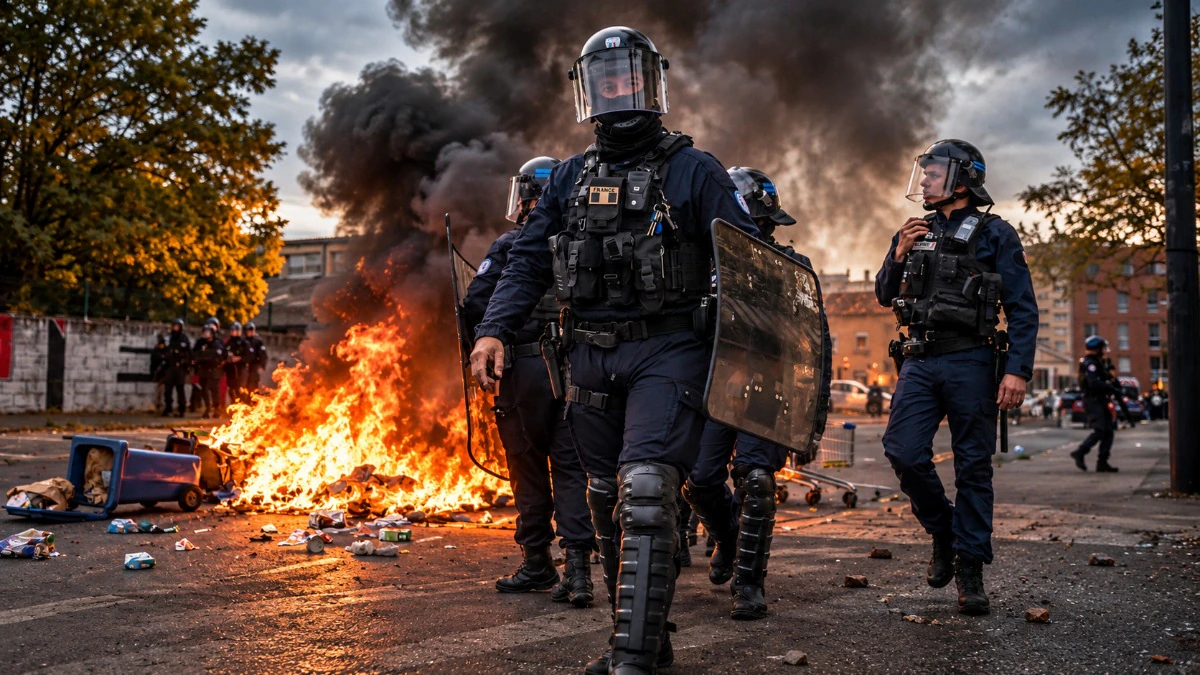
在战争、经济不确定性和政治分裂动摇世界之际,一场风暴袭击了欧洲的街道。一波抗议浪潮,其中一些演变为骚乱和暴力,引发了与阿拉伯之春的比较,阿拉伯之春是始于2010年底突尼斯的一波起义浪潮,席卷了中东和北非地区,推翻了几位长期执政的统治者。如今,在2026年,从巴黎和米兰到马德里和提拉纳,抗议者们正因生活成本上升、住房负担不起、教育恶化和政治腐败而挑战政府。
At a time when wars, economic uncertainty and political divisions are unsettling the world, a storm has hit Europe's streets. A wave of protests, some descending into riots and violence, has prompted comparisons with the Arab Spring, the wave of uprisings that began in Tunisia in late 2010 and swept across the Middle East and North Africa, toppling several long-entrenched rulers. Now, in 2026, from Paris and Milan to Madrid and Tirana, protesters are challenging governments over rising living costs, unaffordable housing, deteriorating education and political corruption.
示威活动在法国、意大利、比利时和阿尔巴尼亚转为暴力,而其他国家则出现罢工、学校占领和学生动员日益增长的情况。至少有九个欧洲国家发生了抗议。它们包括法国、意大利、比利时和奥地利,在这些国家,对教育削减的担忧引发了动荡。在西班牙、葡萄牙和希腊,抗议者对住房成本飙升表示担忧。德国的学生反对兵役计划。
Demonstrations have turned violent in France, Italy, Belgium and Albania, while other countries are witnessing strikes, school occupations and growing student mobilisation. At least nine European countries have seen protests. They include France, Italy, Belgium and Austria, where concerns about education cuts triggered unrest. In Spain, Portugal and Greece, protesters raised concerns over soaring housing costs. Students in Germany are opposing military-service plans.
阿尔巴尼亚的示威者抗议腐败和失业。随着一些国家的示威转为暴力,欧洲的动荡引发了与阿拉伯之春的比较,阿拉伯之春始于2010年12月。然而,专家警告不要将至少九个欧洲国家的抗议视为一次单一的、协调的起义。他们说,各国的不满和诉求各不相同。与阿拉伯之春不同,阿拉伯之春见证了针对威权统治者的大规模起义并导致几个政府垮台,欧洲的抗议主要发生在既有民主体制内,示威者主要要求改革,而非推翻整个政治体制。
Demonstrators in Albania are protesting against corruption and unemployment. With the demonstrations turning violent in some countries, the unrest in Europe has drawn comparisons with the Arab Spring, which began in December 2010. However, experts have cautioned against treating the protests across at least nine European countries as a single, coordinated uprising. They say grievances and demands differ from one nation to another. Unlike the Arab Spring, which saw mass uprisings against authoritarian rulers and brought down several governments, Europe's protests are unfolding largely within established democracies, with demonstrators primarily demanding reforms rather than the overthrow of entire political systems.
在10月16日至18日的周末,法国有数十万人走上街头,抗议活动正是在这里首先爆发的。多个城市报告了与警方的冲突、纵火和抢劫。
Over the October 16-18 weekend, hundreds of thousands took to the streets across France, where the protests first erupted. Clashes with police, arson and looting in several cities were reported.
在意大利、比利时、葡萄牙和阿尔巴尼亚发生了示威活动。奥地利也出现了因教育经费问题的抗议,希腊则因住房成本和大学政策出现示威。“法国是这场运动的震中……现在有迹象表明,这场运动正在超越法国蔓延,”巴黎高等商学院欧盟法律与政策教授阿尔贝托·阿莱曼诺对半岛电视台说。他警告称,这些示威是独立的运动,但存在一些共同的不满,包括教育经费不足、生活成本上升和就业前景不明。
Agitations took place in Italy, Belgium, Portugal and Albania. Protests were also seen in Austria over education funding, and in Greece over housing costs and university policies." France is the epicentre of this movement ... and there are signs now that this is spreading beyond France," Alberto Alemanno, professor of European Union law and policy at HEC Paris, told Al Jazeera. He cautioned that the demonstrations were separate movements, but some shared grievances, including underfunded education, rising living costs and uncertain employment prospects.
但对美籍科威特记者艾哈迈德·埃尔丁而言,欧洲的动荡与阿拉伯之春有更深层的相似性。他说,年轻人正因经济困难、不平等以及日益增长的被背叛感而挑战政治精英。这正是印度裔美国国会议员罗·坎纳所提出的观点,他反驳了美国副总统JD·万斯的论点。万斯将法国的骚乱和暴力归咎于“把第三世界输入法国”,而坎纳则将法国、西班牙和阿尔巴尼亚的抗议与青年面临的经济不安全感联系起来。”
But for American-Kuwaiti journalist Ahmed Eldin, Europe's unrest has deeper similarities to the Arab Spring. He said that young people were challenging political elites over economic hardship, inequality and a growing sense of betrayal. That's what even Indian-American Congressman Ro Khanna suggested, countering US Vice President JD Vance's argument. While Vance blamed "imported the Third World into France" for the rioting and violence, Khanna linked the protests in France, Spain and Albania to the economic insecurities that the youths faced."
从法国的高中到马德里的街道,再到蒂拉纳的大学,年轻人正在向他们的政府传达同样的信息:在财富严重不平等的时代,他们想要一个可以相信的未来,”罗·坎纳在X上写道。法国成为欧洲动荡的震中。法国的抗议活动始于9月21日,当时克雷泰伊圣埃克苏佩里中学的学生因教师短缺、建筑老化和教室拥挤而进行抗议。
From the high schools of France to the streets of Madrid to the universities of Tirana, young people are telling their governments the same thing: in an age of massive wealth inequality, they want a future they can believe in," Ro Khanna wrote on X.FRANCE BECOMES EPICENTRE OF EUROPEAN UNRESTThe protests in France began gathering momentum on September 21, when students at Lycee Saint-Exupery in Creteil protested teacher shortages, deteriorating buildings and overcrowded classrooms.
随后示威活动扩大,获得了工会和受通胀影响人群的支持。根据内政部长洛朗·努内斯的消息,10月17日,法国约有55万人参加了全国110场示威活动。
The demonstrations subsequently spread, drawing support from trade unions and people struggling with inflation. On October 17, around 5.5 lakh people participated in 110 demonstrations across France, according to Interior Minister Laurent Nunez.
组织者估计有八十万人参加。尽管在多个地方大多数游行都保持和平,但在巴黎、马赛、利摩日等法国城市爆发了暴力事件。公共建筑遭到袭击,商店被洗劫,路障被点燃。美联社报道称,10月17日大约有400人被捕。法国总统埃马纽埃尔·马克龙抨击了他所谓的“无节制”的暴力行为,并问道:“法国人民怎么能对法国做出这样的事?”
The organisers estimated eight lakh people. Although most marches were peaceful in several places, violence erupted in Paris, Marseille, Limoges and other French cities. Public buildings were attacked, shops were looted and barricades were set ablaze. The Associated Press reported approximately 400 arrests on October 17. French President Emmanuel Macron slammed what he called "unbridled" violence and asked, "How could the French people do this to France?"
这场骚乱也成为围绕移民问题的政治战场。10月6日,美国总统唐纳德·特朗普将法国学生抗议归咎于移民,称:“这与学校无关,这是关于伊斯兰想要接管一个曾经伟大的国家!”法国极右翼领导人玛丽娜·勒庞则将其归咎于数十年来的无控制移民。一名抗议者在法国马赛因生活成本上升而发生的冲突中,在火焰附近挥舞着法国国旗。
The unrest also became a political battleground over immigration. On October 6, US President Donald Trump blamed France's student protests on migration, saying, "This isn't about schools, this is about Islam wanting to take over a once great country!" French far-right leader Marine Le Pen blamed decades of uncontrolled immigration. A protester waves the French flag near a fire during clashes over rising living costs in Marseille, France, on October 17.ITALY AND BELGIUM ALSO SEE CLASHESItalian students staged demonstrations on October 16, protesting education funding, military expenditure and government policies.
意大利和比利时也出现冲突。意大利学生于10月16日举行示威,抗议教育经费、军费开支和政府政策。在都灵和罗马,一些学生占领了学校,效仿法国同行的策略。在意大利10月16日的“不墨洛尼日”抗议活动中,学生们游行反对课堂中外籍学生人数上限的提议,高喊“A scuola nessuno e straniero”(“在学校,没有人是外国人”)等口号,同时要求增加教育经费,意大利通讯社ANSA报道称。
In Turin and Rome, some students occupied schools, borrowing tactics from their French counterparts. At the October 16 "No Meloni Day" protests in Italy, students marched against a proposed cap on foreign pupils in classrooms, raising slogans such as "A scuola nessuno e straniero" ("At school, no one is a foreigner"), alongside demands for increased education funding, Italian news agency ANSA reported.
根据一项新的全国性法令,意大利总理乔治娅·梅洛尼的政府已将部分班级中非意大利学生的人数上限设为30%。梅洛尼还表示,她将提出一项在学校禁止穿着罩袍和面纱的措施。10月17日,米兰的示威活动升级,蒙面抗议者向警察投掷石块和路面砖块,并点燃路障。比利时也出现了反对教育削减、学费上涨和经济压力的抗议活动。
According to a new national decree, the government of Prime Minister Giorgia Meloni has capped the number of non-Italian students to 30% in some classes. Meloni had also said she would bring a measure to ban the wearing of burqas and niqabs in schools. On October 17, demonstrations in Milan escalated when masked protesters threw stones and paving blocks at police and set barricades ablaze. Belgium also witnessed protests against education cuts, higher fees and economic pressures.
警方在列日骚乱期间部署了水炮。比利时内政部长伯纳德·奎因坦将一些事件描述为“纯粹而简单的暴力”,据Euronews报道。10月17日,在意大利米兰的抗议活动中,示威者与防暴警察发生冲突。(Stefano PortaLaPresse 通过 AP)西班牙和葡萄牙应对住房危机在西班牙,住房可负担性已成为一个强有力的政治不满。
Police deployed water cannon during disturbances in Liege. Belgian Interior Minister Bernard Quintin described some incidents as "pure and simple violence", reported Euronews. Demonstrators clash with riot police during a protest in Milan, Italy, on October 17. (Stefano PortaLaPresse via AP)SPAIN AND PORTUGAL FIGHT HOUSING CRISISIn Spain, housing affordability has become a powerful political grievance.
9月份,在87岁的马里卡门·阿巴斯卡尔被驱逐后,抗议活动加剧,据报道她的租金急剧上涨。她随后的死亡加剧了人们对驱逐和房地产投机的愤怒。在马德里,学生们也因教育问题示威,而住房准入活动人士则要求限制投资基金购买住宅物业。邻国葡萄牙在10月17日于里斯本举行了大规模示威,抗议租金、工资、养老金以及公共服务恶化的情况。
Protests intensified in September following the eviction of 87-year-old Maricarmen Abascal, whose rent had reportedly increased sharply. Her subsequent death intensified anger over evictions and property speculation. In Madrid, students also demonstrated over education, while housing-access activists demanded restrictions on investment funds purchasing residential properties. Next door, Portugal witnessed major demonstrations in Lisbon on October 17 over rents, wages, pensions and deteriorating public services.
根据大赦国际的报告,10月15日凌晨,警方 allegedly 在清理波尔图一个和平的住房抗议营地时殴打抗议者,导致37人受伤,其中包括一名残疾人士,大赦国际要求对此事进行调查。欧洲的住房危机对年轻人影响尤为严重。许多人难以负担独立住宿。根据9月份发布的欧盟统计局数据,2025年,超过四分之一的15至29岁欧洲人,即26.9%,居住在拥挤的家庭中。
In the early hours of October 15, police allegedly beat protesters while clearing a peaceful housing protest camp in Porto, leaving 37 people injured, including a person with a disability, according to Amnesty International, which demanded an investigation into the reported excessive force. Europe's housing crisis has particularly impacted the young severely. Many of them have struggled to afford independent accommodation. According to Eurostat data released in September, more than one in four Europeans aged 15 to 29, or 26.9%, lived in overcrowded households in 2025.
10月17日,人们在马德里的太阳门广场走过一幅描绘马里卡门·阿巴斯卡尔的横幅,她的驱逐引发了住房抗议。阿尔巴尼亚的愤怒转向政治。抗议者要求总理拉马辞职。阿尔巴尼亚呈现出不同的景象。
People walk past a banner depicting Maricarmen Abascal, whose eviction sparked housing protests, at Madrid's Puerta del Sol on October 17.ALBANIA'S ANGER TURNS POLITICAL. PROTESTERS WANT PM RAMA TO RESIGNAlbania presented a different picture.
这里的抗议活动更多是由长期对所谓政府腐败、失业的愤怒以及要求总理埃迪·拉马辞职的诉求驱动的,而非经济困难。10月17日,数千名年轻示威者聚集在蒂拉纳教育部外,要求总理埃迪·拉马辞职。这是学生主导的日益壮大的运动的第五天。路透社报道称,蒙面抗议者向防暴警察投掷石块,防暴警察则以催泪瓦斯、闪光弹和水炮作出回应。
Here, protests were driven less by economic hardship and more by longstanding anger over alleged government corruption, unemployment and demands for PM Edi Rama's resignation. On October 17, thousands of young demonstrators gathered outside Tirana's Education Ministry, demanding Prime Minister Edi Rama's resignation. It was the fifth consecutive day of a growing student-led movement. Reuters reported that masked protesters threw stones at riot police, who responded with tear gas, stun grenades and water cannon.
阿尔巴尼亚的动荡是在数月来因所谓腐败、失业以及与美国总统唐纳德·特朗普女婿贾里德·库什纳有关的有争议的海岸开发项目而积累的愤怒之后爆发的。与欧洲其他地区的示威不同,阿尔巴尼亚的抗议直接挑战了拉马政府继续执政。尽管有这些要求,埃迪·拉马拒绝下台,指责他的对手利用动荡来 destabilize 他的政府。
The unrest in Albania followed months of anger over alleged corruption, unemployment and a controversial coastal development associated with Jared Kushner, US President Donald Trump's son-in-law. Unlike demonstrations elsewhere in Europe, Albania's protests directly challenged the Rama government's continuation in office. Despite the demands, Edi Rama has refused to step down, accusing his opponents of exploiting the unrest to destabilise his government.
10月18日,一名抗议者在阿尔巴尼亚蒂拉纳准备向防暴警察投掷汽油弹。德国、奥地利和希腊也出现动员。德国、奥地利和希腊使目睹抗议或学生动员的欧洲国家数量达到九个。然而,这三个国家的示威规模和强度远低于我们之前讨论的国家。在柏林,学生于10月16日封锁了安德烈亚斯文理中学的入口,反对强制兵役的准备工作,并要求增加教育投资。
A protester prepares to throw a petrol bomb at riot police in Tirana, Albania, on October 18.GERMANY, AUSTRIA AND GREECE ALSO SEE MOBILISATIONGermany, Austria and Greece bring the number of European countries witnessing protests or student mobilisation to nine. However, the scale and intensity of demonstrations in these three countries have been considerably lower than the countries we discussed. In Berlin, students blockaded entrances to Andreas-Gymnasium on October 16, opposing preparations for compulsory military service and demanding greater investment in education.
示威者还表达了对在法国示威的学生的团结。在奥地利,学生动员起来反对大学预算削减以及对教育设施恶化的担忧。
The protesters also expressed solidarity with students demonstrating in France. In Austria, students mobilised against university budget cuts and concerns over deteriorating educational facilities.
与此同时,希腊出现了学生对住宿费用飙升、私立大学、住房短缺和军费开支增加的愤怒。欧盟法学教授阿尔贝托·阿莱曼诺在接受半岛电视台采访时说:“在希腊,学生们也在呼吁罢课,他们在德国正在动员起来。在奥地利,我们也看到了运动的早期阶段,预计下周将进行动员。”然而,阿莱曼诺告诫不要将骚乱描绘成协调一致的起义,他说:“这不是单一的运动。更多的是同时发生的独立进程,伴随着一些共同的不满。”
Greece, meanwhile, witnessed student anger over soaring accommodation costs, private universities, housing shortages and increased military spending. Speaking to Al Jazeera, European Union law professor Alberto Alemanno said, "In Greece, students are also calling for walkouts and they are mobilising in Germany. In Austria, we also see the early stage of a movement with mobilisation expected in the coming week." However, Alemanno cautioned against portraying the unrest as a coordinated uprising, saying, "This is not a single movement. It's more about separate processes happening at the same time with some shared grievances."
10月19日,学生们在德国慕尼黑的法国领事馆外示威,声援法国抗议者。那么,这是欧洲的阿拉伯之春时刻吗?美国-科威特记者艾哈迈德·埃尔丁在其Substack文章《欧洲的阿拉伯之春》中,将示威活动与2011年的起义进行了比较,特别是其青年领导力、在线动员以及对政治精英的愤怒。他警告说:“欧洲各国政府有比坦克更安静的方式来结束一场叛乱。”
Students demonstrate outside the French consulate in Munich, Germany, in solidarity with French protesters on October 19.SO, IS THIS EUROPE'S ARAB SPRING MOMENT? American-Kuwaiti journalist Ahmed Eldin, in his Substack essay 'Europe's Arab Spring', compared the demonstrations with the 2011 uprisings, particularly their youth leadership, online mobilisation and anger against political elites. He warned, "Europe's governments have quieter ways than tanks to end a revolt."
他指出需要持续动员,并写道:“学生们已经学会了跑赢警察。比国家更持久对他们要求更高。”美国科学家兼企业家哈里·哈尔平以宽泛的方式解读了欧洲的事态发展。“这只是一系列不可避免的抗议中的一环——就像阿拉伯之春一样——将从尼泊尔蔓延到欧洲,遍布全世界,因为Z世代的未来已被我们现有精英的贪婪腐败所摧毁,”他在X上写道。
Pointing to the need for sustained mobilisation, he wrote, "The students have already learnt to outrun the police. Outlasting the state asks more of them." American scientist and entrepreneur Harry Halpin interpreted the developments in Europe in a broad way. "This is just one in an inevitable sequence of protests — like the Arab Spring — that will spread across the world from Nepal to Europe as Gen Z's future has been destroyed by the rapacious corruption of our existing elite," he wrote on X.British podcaster Peter McCormack, host of The Peter McCormack Show, also drew parallels with the 2011 Arab uprisings, saying, "Europe is on the verge of its own Arab Spring."
英国播客彼得·麦科马克——《彼得·麦科马克秀》的主持人——也将之与2011年阿拉伯起义相提并论,他说:“欧洲正处于其自身阿拉伯之春的边缘。”他将日益加剧的骚乱归咎于数十年的通货膨胀、财富榨取和官僚统治。专家认为,抗议活动的背后是对日益不确定的未来的代际焦虑。
He blamed decades of inflation, wealth extraction and bureaucratic rule for the growing unrest. Experts believe behind the protests lies a generational anxiety about an increasingly uncertain future.
2026年6月,荷兰TUI基金会的一项研究涉及七个欧洲国家的8024名年轻人,发现52%的人担心他们的一代人将比父母过得更糟,而只有25%的人期待更好的未来。骚乱也引发了安全担忧。法国警务专家质疑了激进的群众控制策略,而分析人士警告说,骚乱和暴力可能掩盖合理诉求。抗议活动也进入了国际政治话语。特朗普和俄罗斯官员利用法国的骚乱来推动关于移民和欧洲衰落的叙事。
A June 2026 study by the Neatherlands-based TUI Foundation, involving 8,024 young people across seven European countries, found that 52% feared their generation would be worse off than their parents, while only 25% expected a better future. The unrest has also raised security concerns. French policing experts have questioned aggressive crowd-control tactics, while analysts have warned that rioting and violence risk overshadowing legitimate grievances. The protests have also entered international political discourse. Trump and Russian officials have used France's unrest to advance narratives about immigration and Europe's decline.
但截至目前,欧洲的抗议活动不一定是另一次阿拉伯之春。与2011年受挑战的大多为威权政权不同,欧洲民主国家提供了选举和制度渠道来实现变革。这些国家的抗议者会对这种途径感到满意吗?- 完
But, as of now, Europe's protests are not necessarily another Arab Spring. Unlike the largely authoritarian regimes challenged in 2011, European democracies offer electoral and institutional avenues for change. Will the protesters in these countries be satisfied with that?- Ends