
1971年,当国际货币体系濒临崩溃之际,美国财政部长约翰·康纳利对一群忧心忡忡的欧洲财政部长表示,美元是“我们的货币,但却是你们的问题”。美元于1944年根据布雷顿森林协议成为该体系的官方储备货币,使得签署国受制于美国货币政策的任意摆布。即使布雷顿森林体系崩溃、许多货币开始自由浮动之后,美元仍继续占据主导地位。
In 1971, as the international monetary system was on the brink of collapse, U.S. Treasury Secretary John Connally told a group of worried European finance ministers that the dollar was “our currency, but your problem.”The dollar had become that system’s official reserve currency in 1944, under the Bretton Woods agreement, making signatories subject to the whims of U.S. monetary policy. Even after Bretton Woods collapsed and many currencies floated freely, the dollar continued to dominate.
在过去半个世纪里,美国的货币力量只增未减,因为越来越多的国家融入全球经济,从而越来越依赖美元。中国,依赖出口驱动型增长,是其中最突出的一个。
In the last half century, U.S. currency power has only expanded, as more countries have integrated into the global economy and therefore grown to depend on the dollar. China, reliant on export-driven growth, is foremost among them.
面对华盛顿有朝一日可能让美元成为中国问题的可能性,北京现在正在制定自己的解决方案。在2024年1月的一篇讲话中,中国领导人习近平明确表达了这一努力,指示高级省级和部级官员加快中国转变为“领先的金融强国”的步伐。他特别指出,强势货币是这种力量的基本基础之一。当《求是》杂志,中国共产党的旗舰期刊,于2026年发表该讲话全文时,习近平心目中的标准变得更加清晰:要让一种货币被视为“强势”,它必须在国际贸易、投资和外汇市场中广泛使用,并被承认为全球储备货币。
Reckoning with the possibility that Washington could someday make the dollar China’s problem, Beijing is now crafting its own solution. In a January 2024 speech, Chinese leader Xi Jinping made this effort explicit, instructing senior provincial and ministerial officials to accelerate China’s transformation into a “leading financial power.”A strong currency, he specified, was one of the essential foundations of that power. When , the Chinese Communist Party’s flagship journal, published the full text of the speech in 2026, the standard Xi had in mind became clearer: for a currency to be considered “strong,” it must be widely used in international trade, investment, and foreign exchange markets and be recognized as a global reserve currency.
习近平的呼吁是大国长期以来减少对以美元为中心的全球金融体系依赖的最新一幕。1965年,法国财政部长瓦莱里·吉斯卡尔·德斯坦 famously 将美元霸权带给美国的不成比例的优势描述为“过度特权”;同年,法国开始积极将其美元储备的相当一部分转换为黄金,导致布雷顿森林体系崩溃。1999年,日本政府发布了一份关于如何促进日元更广泛国际使用的报告。
Xi’s call is the latest episode in a long history of efforts by major powers to reduce their dependence on the dollar-centered global financial system. In 1965, French Finance Minister Valéry Giscard d’Estaing famously described the disproportionate advantages that dollar dominance confers on the United States as “exorbitant privilege”; the same year, France began aggressively converting a substantial share of its dollar reserves into gold, contributing to the collapse of the Bretton Woods system. In 1999, the Japanese government released a report on how to promote wider international use of the yen.
同年,欧元的诞生使欧洲获得了后来成为世界第二重要国际货币的地位,使其在欧洲央行小心翼翼地回避任何可能挑战美元的暗示之际,获得了更大的货币自主权。
That same year, the launch of the euro gave Europe what would become the world’s second most important international currency, affording it greater monetary autonomy even as the European Central Bank carefully danced around any suggestion that it might challenge the dollar.
使习近平的雄心与众不同的是,中国不同于欧洲或日本,拥有与美国地缘政治力量相抗衡的经济实力、军事能力和政治意愿。自伦敦主宰全球帝国以来,从未有另一个国家的货币有现实机会与美元竞争。从“我们信奉上帝”到“党指向哪里,我们就跟向哪里”的全球金融转型,已不再能被视为幻想。
What distinguishes Xi’s ambition is that China unlike Europe or Japan, possesses the economic heft, military capability, and political will to rival the United States’ geopolitical power. Not since London commanded a global empire has another country’s currency stood a realistic chance of competing with the dollar. A global financial transition from “In God We Trust” to “Where the Party Leads, We Follow” can no longer be dismissed as fantasy.
人民币的国际化将为中国提供一定的金融韧性——如果美国真的选择将美元作为惩罚性工具来对付其他国家的话(就像2022年俄罗斯全面入侵乌克兰后美国所做的那样)。美国不仅控制着这种全球主要储备货币的供应,还掌控着美元流通所依赖的许多关键金融基础设施。如果美国愿意的话,它可以轻易地限制中国获取美元流动性的能力,例如通过起诉或制裁中国的金融机构。
The internationalization of the renminbi would afford China a measure of financial survivability should the United States ever choose to wield the dollar as a punitive weapon, as it did against Russia after the country’s full-scale invasion of Ukraine, in 2022. The United States controls both the supply of the dominant global reserve currency and many of the critical financial infrastructure chokepoints through which it circulates. Washington, if it so desired, could severely restrict China’s access to dollar liquidity by making the cost of doing business with Chinese institutions prohibitive, for example by indicting or sanctioning a major Chinese bank.
任何此类措施都会对中国金融体系造成冲击,增加贸易交易成本,并对中国出口行业造成重大打击(中国的出口行业占其GDP的约五分之一)。
Any such measure would shock the Chinese financial system, raise transaction costs for trade, and deliver a major competitive blow to China’s export sector, which accounts for roughly one-fifth of its GDP.
然而,仅仅具备“生存能力”还远远不够;要想真正阻止美国使用美元作为金融武器,中国还需要具备“反击能力”——即能够将全球贸易和金融活动的相当大一部分转移到以人民币为基础的体系中。这种转变的可持续性取决于全球对以人民币计价的资产的实际需求。对中国而言,最有可能成为这种“锚定资产”的,就是其在绿色经济领域的主导地位。
Survivability, however, is only a prerequisite for credible deterrence. To deter the United States from using the dollar weapon, Beijing requires a financial second-strike capability. It must be able to redirect a substantial share of global trade and finance to a renminbi-based network. The durability of that shift depends on healthy global demand for an anchor asset priced in renminbi.
习近平并不一定希望人民币取代美元;他在2024年的讲话中强调的是增强人民币的国际影响力,而非追求霸权。只要人民币能够成为全球贸易和金融体系中的重要组成部分(哪怕只是第二或第三大货币),就足以打破美元的垄断地位,限制美国单方面实施金融制裁的能力,同时也能为中国节省维持货币主导地位所需的资源和成本。
For China, the most likely source of such an anchor asset lies in its dominance of the green economy. Xi does not necessarily want the renminbi to replace the dollar. His 2024 speech advocated strength, not hegemony. Placing a respectable second, or even a consequential third, would suffice to break the dollar’s effective monopoly and constrain the United States’ ability to impose financial sanctions unilaterally, while saving China the effort and cost of sustaining currency supremacy.
从北京的角度来看,人民币的目标是成为美元的“替代品”:虽然不必成为市场领导者,但在关键时刻仍能发挥作用,并足以让现有的货币主导者(即美元)保持谨慎行事。
From Beijing’s perspective, the mission is to establish the renminbi as the Pepsi to the dollar’s Coca-Cola: never the market leader, but serviceable in a pinch and more than capable of keeping the dominant incumbent honest.
第二是最佳 美元的近乎普遍接受可以说比任何其他国家都更有利于中国。中国经济依赖出口,而以美元定价和融资的中国商品几乎可以在任何地方找到买家。由此产生的利润随后几乎可以在任何地方进行投资,并在短时间内转化为流动资金。这正合北京的意:中国享受全球流动性的好处,却无需承担维持它的负担。为了维护全球美元体系,美国必须容忍外国对日益扩大的美元索购量的所有权,因为各国正以美元开展越来越多的业务。
SECOND IS THE BEST The near-universal acceptance of the U.S. dollar arguably benefits China more than any other country. The Chinese economy relies on exports, and Chinese goods priced and financed in dollars can reach ready buyers almost anywhere. The resulting profits can then be invested almost anywhere and converted into liquid funds on short notice. This suits Beijing: China enjoys the benefits of global liquidity without bearing the burdens of sustaining it. To preserve the global dollar system, the United States must tolerate foreign ownership of an ever-expanding volume of dollar claims as countries conduct ever more business in the currency.
美国市场面临国际波动,外国人对美国公司也拥有一定影响力。发行美元的美联储为该体系提供后盾,在金融压力时期扩大其资产负债表,当时政府和私营公司囤积美元以确保能够继续偿还债务和购买商品。这种开放和暴露对美国经济构成的威胁甚微,因为外国股东普遍寻求在而非改变美国商业规范的框架内运营,而美国银行则通过纽约和伦敦中介全球资本流动赚取了可观的利润。
U.S. markets are exposed to international volatility, and foreigners hold some influence over U.S. corporations. The Federal Reserve, which issues the dollar, backstops the system, expanding its balance sheet during periods of financial stress, when governments and private companies hoard dollars to ensure they can continue to pay their debts and buy goods. This openness and exposure has posed little threat to the U.S. economy because foreign shareholders have generally sought to operate within, rather than change, U.S. business norms, and U.S. banks have earned tidy profits intermediating the world’s capital flows through New York and London.
中国领导人不愿做出任何此类权衡。维持全球人民币体系,将与中国国家主导的经济模式根本相悖。要让人民币复制美元的功能,中国必须建立广泛的双向金融渠道,让持有人民币的外国投资者能够将资金重新投入中国经济。由此产生的资本流入将从根本上重塑中国的国内金融市场。北京很难像现在这样,将外国投资者局限在一小批获批资产范围内,这不切实际。
China’s leaders have no desire to make any such tradeoff. Maintaining a global renminbi system would be fundamentally at odds with China’s state-led economic model. For the renminbi to replicate the dollar’s functions, China would have to create broad, two-way financial channels through which foreign holders of renminbi could reinvest that money into the Chinese economy. The resulting capital inflows would fundamentally reshape China’s domestic financial markets. It would be impractical for Beijing to confine foreign investors to a narrow group of approved assets, as it does now.
一旦外国投资者大规模进入中国市场,他们就会套利金融压制和政治导向的资本配置所造成的扭曲。这种竞争将削弱北京最有效的手段之一:控制谁能获得资本、以什么条件、用于什么目的,从而确保中国商业阶层的忠诚。
Once foreign investors were allowed into China’s markets in force, they would arbitrage the distortions created by financial repression and politically directed capital allocation. Such competition would undermine one of Beijing’s most effective means of securing the loyalty of China’s business class: controlling who gains access to capital, on what terms, and for what purposes.
对于许多富裕的中国公民而言,包括中国共产党内部的一些成员,美元是一种不可或缺的政治风险保险。国内的政治竞争可能导致资产被没收,甚至面临监禁,而缺乏正当程序。离岸美元存款和海外公司结构使精英阶层能够在不同货币和司法管辖区之间分散其持有资产。控制一家在海外上市的公司,尤其是在美国上市的公司,为富裕的中国人提供的不仅仅是声望和获取全球资本的途径;披露义务、对股东的责任以及国际可见度——这些超出了党的控制范围——可以让中国高管在面对国内官员的任意要求时获得谈判筹码。
For many wealthy Chinese citizens, including some members of the Communist Party itself, the dollar is an indispensable form of political risk insurance. Domestic political rivalries can lead to asset seizure or even imprisonment with little due process. Offshore dollar deposits and foreign corporate structures allow elites to diversify their holdings across currencies and jurisdictions. Control of a company listed overseas, especially in the United States, offers wealthy Chinese more than prestige and access to global capital; disclosure obligations, duties to shareholders, and international visibility, which extend beyond the party’s control, can give Chinese executives leverage against arbitrary demands from officials at home.
这些限制无法阻止决心追求目标的高层当局的干预,但它们可以提高干预的成本,减缓其实施,并为谈判创造空间。基于美元的体系是失势中国精英的避难所,而且由于没有人能完全确保自己的地位永远稳固,因此很少有人希望看到这个避难所消失。
These constraints cannot prevent interference by senior authorities determined to pursue their targets, but they can raise its cost, slow its implementation, and create room for negotiation. The dollar-based system is a refuge for Chinese elites who fall from grace, and because no one’s position is ever entirely secure, few wish to see that refuge disappear.
用它或失去它 中国完全愿意继续生活在美元推动运转的世界中。但它无法容忍美元的武器化,而人民币在这之前还有很长的路要走,才能变得足够强大以削弱这一威胁。如果更多国家和企业要采用人民币,首先必须建立一个用于其使用的全球金融基础设施。中国已经通过在超过一百个国家的企业中推广人民币使用,并在日益增长的大宗商品市场中促进其应用,为结算交易、获取贸易和投资融资以及对冲风险奠定了基础。
USE IT OR LOSE IT China is perfectly willing to go on living in a world that the dollar makes go round. But it cannot abide the dollar’s weaponization, and the renminbi still has a long way to go before it is strong enough to blunt that threat. If more countries and businesses are to adopt the renminbi, there must first be a global financial infrastructure for its use. China has already laid the foundation by facilitating renminbi use among firms in more than a hundred countries and across a growing array of commodity markets to settle transactions, obtain financing for trade and investment, and hedge their risks.
在这里,广度远比深度更重要。即使是人民币日常交易量适中,也能保持支付渠道畅通,维持金融关系,并保留运行替代金融体系所需的法律和行政专业知识。北京需要一项金融“二次打击”能力。
Here, breadth matters far more than depth. Even modest daily volumes of renminbi transactions can keep payment channels operational, preserve financial relationships, and maintain the legal and administrative expertise needed to run an alternative financial system. Beijing requires a financial second-strike capability.
由于中国的相对经济实力在于制成品流动——2025年,中国占全球制成品出口的20%——北京一直致力于构建一个便利其制造业产生的商业流动的支付网络。2005年,时任中国人民银行行长周小川公开鼓励中国贸易伙伴之间日益增长的本币使用。2009年,中国人民银行启动了跨境交易人民币结算试点项目,2015年又创建了跨境银行间支付系统,这是中国国际人民币网络的骨干。
Because China’s relative economic strength lies in the flow of manufactured goods—it accounted for 20 percent of global manufactured exports in 2025—Beijing has concentrated its efforts on building a payment network that facilitates the commercial flows generated by its manufacturing machine. In 2005, Zhou Xiaochuan, then governor of the People’s Bank of China, publicly encouraged the already increasing use of local currencies among China’s trading partners. In 2009, the PBOC launched a pilot program for settling cross-border transactions in renminbi, followed in 2015 by the creation of the Cross-Border Interbank Payment System, the backbone of China’s international renminbi network.
CIPS最初有195名参与者,覆盖50个国家;到2026年6月,其参与者已增至1829名,可向191个国家的5200多家银行机构路由付款。但CIPS的规模仍远小于支持美元和欧元的成熟批发支付系统。2025年,美国清算所银行间支付系统处理的国际支付价值估计是CIPS的19倍,欧洲的实时总额结算系统T2清算的价值约为CIPS的14倍。
CIPS began with 195 participants spanning 50 countries; by June 2026, it had 1,829 participants and could route payments to more than 5,200 banking institutions in 191 countries. But CIPS remains much smaller than the mature wholesale payment systems supporting the dollar and the euro. In 2025, the U.S.-based Clearing House Interbank Payments System processed an estimated 19 times as much value in international payments as CIPS, and Europe’s real-time gross settlement system, called T2, cleared about 14 times as much.
但仅凭支付无法衡量货币的力量。一笔国际交易远不止是经济价值的转移;它需要一套跨越五个相互关联阶段的金融服务:定价、融资、风险转移、支付和再投资。美元主导国际贸易和金融,因为它是每个阶段的默认货币,其在每个阶段的优势都会强化其在其他阶段的地位。要取代美元,人民币必须在交易周期的每个阶段都具有竞争力,而不仅仅是在支付环节。
But payments alone are a misleading measure of currency power. An international transaction entails far more than a transfer of economic value; it requires a package of financial services that unfolds across five linked stages: pricing, financing, risk transfer, payment, and reinvestment. The dollar dominates international trade and finance because it is the default currency at every stage, with its strength in each reinforcing its position in all the others. For the renminbi to supplant the dollar, it would have to become competitive at every stage of the transaction cycle, not just in payments.
中国领导人深知,伦敦、纽约和东京等金融中心的影响力不仅源于其资金流动能力,更取决于当地金融机构创造信贷、定价、提供运输保险以及实现储蓄再利用的能力。正因如此,中国的国有企业正积极推动人民币结算网络的拓展。这些企业通过在发票、合同及海外项目融资中使用人民币,培育出对人民币的持续需求基础,进而促使中国的银行、保险公司及其他金融机构得以在国家的管控下发展出具备竞争力的业务板块。
China’s leaders recognize that the influence of financial centers in London, New York, and Tokyo rests not only on their ability to move money but also on their institutions’ ability to create credit, set prices, insure shipments, and recycle savings. That is why Chinese state-owned enterprises are driving the expansion of the renminbi network. By denominating invoices, contracts, and overseas project financing in renminbi, these enterprises create a base of recurring demand for the currency around which Chinese banks, insurers, and other financial institutions can build competing business lines under Chinese control.
为夯实这一基础,中国共产党于2025年制定了行动计划,要求国有企业在与国外供应商及客户开展业务时优先采用人民币而非美元进行结算。该战略目前已助力东南亚地区形成以人民币为核心的结算网络。2024年,东盟各国间的人民币支付规模增长了19%,其中三分之二的交易发生在东盟成员国之间。进入成本北京已基本完成其战略的第一阶段,在支付领域站稳脚跟,如今正向上游扩展至定价、融资和风险转移,并小心翼翼地向下游拓展至再投资。
To reinforce that base, the Communist Party laid out an action plan in 2025 that instructs state-owned enterprises to prioritize settlement in renminbi, rather than dollars, whenever they deal with foreign suppliers and customers. That strategy is already fostering a regional network for renminbi use in Southeast Asia. In 2024, renminbi payments involving economies in the Association of Southeast Asian Nations rose 19 percent, with two-thirds of those transactions occurring between ASEAN countries. the COST OF ENTRY Beijing has largely completed the first phase of its strategy, establishing a foothold in payments, and it is now expanding upstream into pricing, financing, and risk transfer, and, cautiously, downstream into reinvestment.
只有最近,北京才开始认识到商品计价所用货币对交易循环后续阶段的影响有多大。历史上,中国一直满足于以美元为主要货币为其进出口商品定价。根据国际货币基金组织(IMF)的估计,2023年中国仅有6.5%的出口以人民币计价。中国政府统计数据显示,中国货物贸易中近30%以人民币结算,但其中大部分实际上是美元交易伪装成人民币交易:中国出口商以美元开具发票,买家获得美元融资并以美元记账,资金仅在即将抵达大陆前才转换为人民币。
Only recently has Beijing begun to appreciate how much the currency in which goods are priced influences the subsequent stages of the transaction cycle. Historically, China has been content to price the goods it imports and exports mostly in dollars. According to International Monetary Fund (IMF) estimates, only 6.5 percent of China’s exports were invoiced in renminbi in 2023. Chinese government statistics show that nearly 30 percent of China’s trade in goods is settled in renminbi, but much of that is essentially a dollar transaction masquerading as a renminbi one: Chinese exporters invoice in dollars, buyers obtain dollar funding and are debited in dollars, and the funds are converted into renminbi only just before reaching the mainland.
政府正试图通过推广其所谓的“中国价格”来扭转这一模式:即在本地交易所列出的以人民币计价的主要进口商品基准价。对定价拥有更大自主权意味着,中国企业可以在全球市场上采购原材料并管理其对商品价格波动的敞口,而无需获取美元。这也使中国当局能够对用于制定这些商品实物交易供应合同条款的参考价格施加更大影响。这种杠杆作用对中国至关重要,因为原材料的稳定供应是其制造业顺畅运行的基础。
The government is seeking to reverse that pattern by promoting what it calls “China prices”: renminbi-denominated benchmark prices listed on local exchanges for major commodities that China imports. Greater autonomy over pricing means that Chinese firms can buy raw inputs and manage their exposure to commodity price swings in global markets without acquiring dollars. It also gives Chinese authorities greater influence over the reference prices used to set the terms of supply contracts for the physical delivery of those commodities. This leverage is vital for China because the steady flow of raw inputs is essential to the smooth running of its manufacturing machine.
价格自主权尤为重要,尤其是对于那些对绿色产业至关重要的矿产资源而言。在习近平看来,绿色产业是中国经济未来的核心。中国生产了全球80%以上的电池,消耗了75%以上的锂、70%以上的钴以及约60%以上的镍。然而,中国在这些矿产的全球市场中的地位尚未与其在生产和消费方面的主导地位相匹配。迄今为止,中国在锂资源领域取得了最大的进展:全球90%以上的碳酸锂期货交易都在广州期货交易所进行,且交易合约均以人民币计价。
Price autonomy matters especially for critical minerals, which feed the green industries that in Xi’s view are central to China’s economic future. China produces more than 80 percent of the world’s batteries and consumes over 75 percent of its lithium, 70 percent of its cobalt, and about 60 percent of its nickel. But the country’s position in global markets for each of these minerals does not yet reflect its dominance in production and consumption. To date, China has made the most progress in lithium; more than 90 percent of global trading in lithium-carbonate futures occurs on the Guangzhou Futures Exchange, where contracts are denominated in renminbi.
今年7月,该交易所允许外国投资者直接交易碳酸锂期货合约,并大肆宣传有多家海外“领先企业”加入了该市场。如今,中国或许首次具备了成为这种全球重要商品的主要金融中心的潜力。相比之下,镍和钴的市场价格仍以伦敦和芝加哥的美元基准价为参考;尽管中国是这两种矿产的最大消费国,但它尚未成为这些市场的价格基准。正是这种价格体系上的不匹配,才需要通过推动中国自主制定价格机制来加以解决。
In July, the exchange allowed foreign traders to trade the lithium-carbonate futures contract directly, announcing with fanfare that several overseas “leading enterprises” had joined the market. China is now poised, perhaps for the first time in modern history, to become the principal financial center for a globally important commodity. Nickel and cobalt, on the other hand, remain tied to dollar benchmarks in London and Chicago. Although China is the largest consumer of these two minerals, it is not yet the financial reference point for their markets. That is the sort of mismatch that the push for China prices is meant to resolve.
北京人民币战略的融资阶段正在加速。2023年,北京指示中国金融机构扩大境外人民币融资。中国进出口银行等国有贷款机构已增加对海外贸易和基础设施项目的人民币贷款,商业银行也越来越多地提供人民币贸易融资。2023年至2026年中期,中国金融机构向海外借款人的人民币贷款从1.3万亿元(4280亿美元)增至2.9万亿元,翻了一番多。
The financing stage of Beijing’s renminbi strategy is gaining momentum. In 2023, Beijing instructed Chinese financial institutions to expand their renminbi funding abroad. State-backed lenders such as the Export-Import Bank of China have increased their renminbi lending for overseas trade and infrastructure projects, and commercial banks increasingly supply renminbi trade finance. Between 2023 and mid-2026, Chinese financial institutions more than doubled their renminbi lending to overseas borrowers from 1.3 to 2.9 trillion yuan ($428 billion).
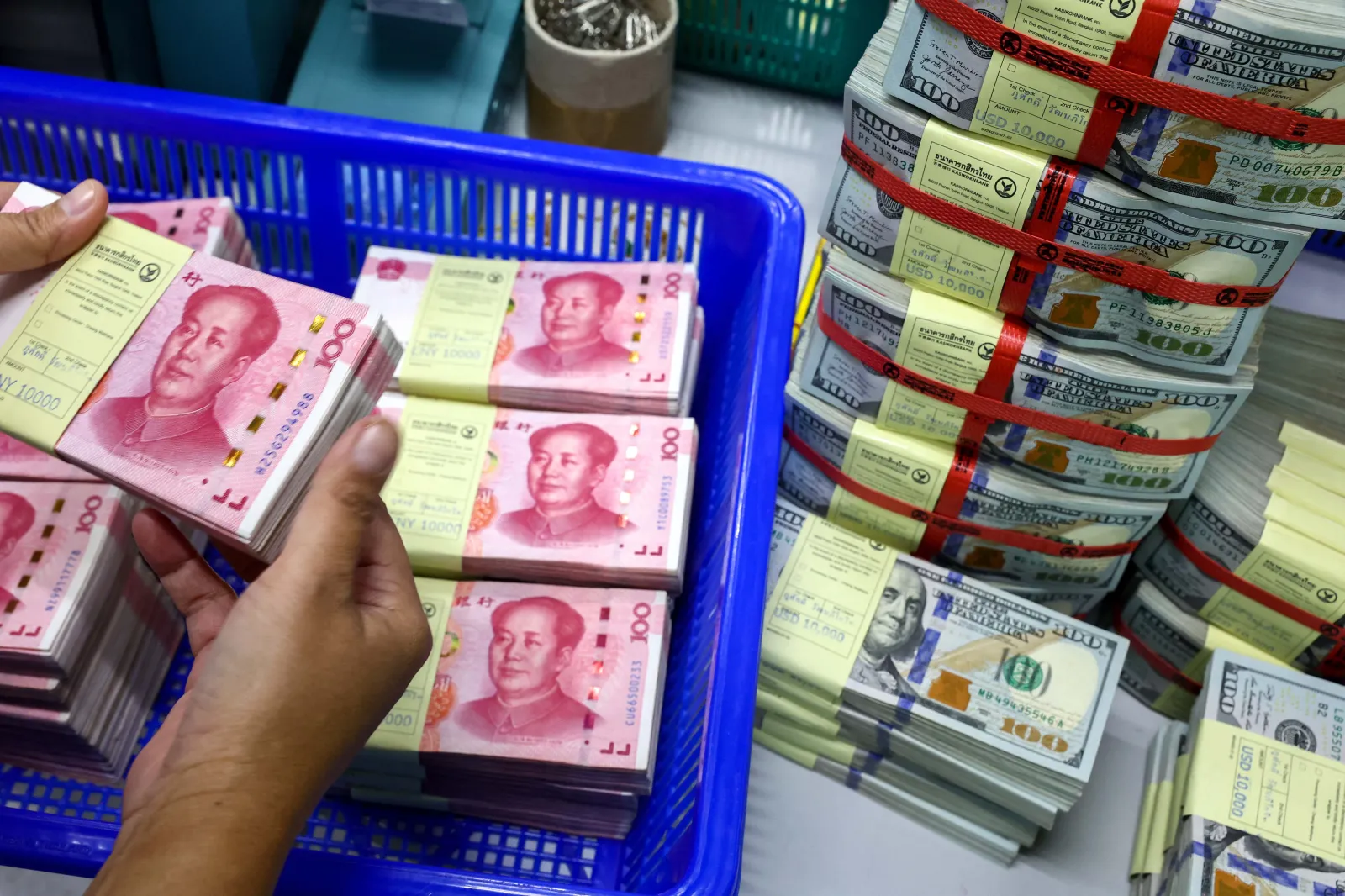
人民银行方面,已与32家外国央行和货币当局签署货币互换协议,其中包括沙特阿拉伯和阿拉伯联合酋长国以及欧洲央行。这些互换协议在全球金融危机后的早期几年大多只是象征性的,且使用率很低,但近年来,其中一些已为商业活动提供直接支持。2025年,土耳其公司利用一个由人民银行互换协议支持的融资渠道,借入40亿元人民币(5.57亿美元)用于向中国供应商付款,较前一年增长70%。
The PBOC, for its part, has adopted currency swap agreements with 32 foreign central banks and monetary authorities, including those in Saudi Arabia and the United Arab Emirates, as well as the European Central Bank. In their early years, after the global financial crisis, these swap lines were largely symbolic and only lightly used, but in recent years, some have provided direct support for commercial activity. In 2025, Turkish companies borrowed four billion yuan ($557 million) to pay Chinese suppliers using a facility backed by a PBOC swap line, 70 percent more than they had borrowed a year earlier.
将人民币打造为融资货币的努力开始见效:2026年5月,人民币在SWIFT(全球领先的支付指令交换平台)贸易融资报文中的占比达到7%,较两年前的5.1%上升,足以超越欧元升至第二位,尽管美元以82.5%的份额遥遥领先。北京也采取了步骤,尽管较为有限,以提升人民币在保险和再保险市场的存在感。2025年,国有银行中国银行与国有财产保险公司人民财险开发了新条款,规定货物运输的保费和索赔可用人民币结算。
This effort to turn the renminbi into a funding currency is starting to gain traction: in May 2026, the renminbi accounted for seven percent of the value of trade-finance messages on SWIFT, the leading global platform for exchanging payment instructions, up from 5.1 percent two years earlier and enough to overtake the euro for second place, although the dollar remained leagues ahead with an 82.5 percent Beijing has also taken steps, if more modest ones, to increase the renminbi’s presence in markets for insurance and reinsurance. In 2025, Bank of China, a state-owned bank, and PICC, a state-owned property and casualty insurance company, developed new terms under which premiums and claims for cargo shipments could be settled in renminbi.
条款还将上海指定为首选仲裁地,这是更广泛努力的一部分,旨在将海运保险市场从长期以来对美元结算和英国商法的依赖中转移出来,而后者长期一直是国际航运和海运保险合同的标准框架。
The terms also specified Shanghai as the preferred venue for arbitration, part of a broader effort to shift the maritime-insurance market away from its traditional reliance on dollar settlement and English commercial law, long the standard framework for international shipping and maritime insurance contracts.
交易循环的最后阶段是再投资,它完成了商品和价值在全球经济中流通的闭环。收款人必须决定如何处理所得款项:将其存放在短期账户中,投资于长期资产,或将其兑换成另一种货币。只有当收款人愿意持有并再投资其余额,而非习惯性地将其兑换时,一种强势货币生态系统才能在规模上实现可持续。中国完全愿意生活在由美元驱动的世界中。
The final stage of the transaction cycle, reinvestment, completes the loop through which goods and value circulate through the global economy. Recipients of payment must decide what to do with the proceeds: hold them in a short-term account, invest them in longer-term assets, or convert them into another currency. A strong currency ecosystem becomes sustainable at scale only when recipients are willing to hold and reinvest their balances rather than routinely convert them. China is perfectly willing to live in a world that the dollar makes go round.
过去十年来,北京为持有人民币的外国持有者提供了更多再投资其余额的方式。沪港通和债券通计划分别于2014年和2017年最早启动,此后已扩大,使境外更广泛的投资者群体能够使用人民币购买部分中国大陆股票和债券。在这些计划启动之前,许可证和配额限制了对中国市场的直接准入,2013年只有约228家大型机构投资者获得配额;如今,约有1000名投资者拥有该资格。
Beijing has, over the past decade, given foreign holders of renminbi more ways to reinvest their balances. The Stock Connect and Bond Connect programs, which took their earliest forms in 2014 and 2017, respectively, have since expanded to allow a much broader mix of investors outside China to use renminbi to buy some mainland equities and bonds. Before these programs began, licensing and quotas restricted direct access to Chinese markets, with only about 228 large institutional investors receiving quotas in 2013; today, about 1,000 investors have that status.
2025年,通过沪港通的外国交易日均为2120亿元人民币(295亿美元),债券通日均为390亿元人民币(54亿美元)。用于管理这些投资相关风险的工具也已扩大。2023年推出的互联互通允许境外投资者对沪深300股指期货进行套期保值,以对冲境内人民币利率波动。
In 2025, foreign trading through Stock Connect averaged 212 billion yuan ($29.5 billion) per day, and Bond Connect averaged 39 billion yuan ($5.4 billion) per day. The tools available to manage the risks associated with these investments have also expanded. Swap Connect, launched in 2023, allows offshore investors to hedge against movements in onshore renminbi interest rates.
对中国金融市场的准入不再是外国投资者面临的最大问题,但北京不可预测的资本管制有朝一日可能将其资金困在境内的风险,仍然令人担忧。中国保险资产管理业协会与摩根大通资产管理公司2023年的一项调查发现,大约三分之二的境外保险公司首席投资官将对资金进出的管制列为在中国投资时的首要担忧。尽管准入前所未有地便利,外国投资者仍不愿大规模持有中国资产。
Access to China’s financial markets is no longer the biggest problem facing foreign investors, but the risk that Beijing’s unpredictable capital controls could someday trap their funds remains a worry. A 2023 survey by the Insurance Asset Management Association of China and J.P. Morgan Asset Management found that roughly two-thirds of chief investment officers at insurance companies outside China cited controls on capital moving in and out of the country as a top concern for investing there. Despite greater access than ever, foreign investors remain reluctant to hold Chinese assets at scale.
2026年3月,他们持有的中国资产仅为3.2万亿元人民币(4480亿美元),占中国债券市场的1.6%,而美国债券市场则约为15.5万亿美元,占27%。记录在国际货币基金组织的外汇储备显示,差距更为悬殊:2026年第一季度,人民币在全球外汇储备中占比不足两%,而美元占57%。如果没有一个外国人可以自由买卖的、规模远大得多的人民币资产池,人民币就无法接近取代美元。
In March 2026, they held only 3.2 trillion yuan ($448 billion), or 1.6 percent of the Chinese bond market, compared with roughly $15.5 trillion, or 27 percent, of the U.S. bond market. Reserve holdings recorded with the IMF reveal an even wider gap: in the first quarter of 2026, the renminbi accounted for just under two percent of global foreign-exchange reserves, compared with 57 percent for the dollar. Without a far larger pool of renminbi assets that foreigners can freely buy and sell, the renminbi cannot come close to replacing the dollar.
绿色标准 要让人民币拥有接近美元的货币影响力,人民币必须主导一种中国掌控、世界其他地区难以替代的商品的贸易。在美元体系中,全球石油贸易长期扮演这一角色——因此有“石油美元”一词。在人民币崛起的体系中,相应的锚点可能是绿色能源技术的核心:关键矿产、清洁能源设备和电力基础设施。如果中国巩固对该产业生态系统的主导地位,利用规模和成本优势阻止竞争对手追赶,它可能获得足够的议价能力,以人民币定价这些必不可少、难以替代的出口商品,从而为“绿色人民币”奠定基础,这种货币最终可能取代石油美元。
GREEN STANDARD For China to wield anything approaching the currency power of the United States, the renminbi must dominate trade in a good that China controls and the rest of the world cannot easily do without. In the dollar system, the global oil trade has long played this role—hence the term “petrodollar.”In a renminbi-ascendant system, the corresponding anchor could be the critical minerals, clean energy equipment, and electrical infrastructure that are central to green energy technology. If China consolidates its dominance over that industrial ecosystem, using its scale and cost advantages to prevent competitors from catching up, it could gain enough leverage to price those essential, hard-to-substitute exports in renminbi, creating the foundation for a “green yuan” that might eventually replace the petrodollar.
中国花费数十年时间,有条不紊地构建供应链,使其成为全球绿色能源技术和设备的主导生产国。北京如今正处于掌控一系列世界已认定不可或缺商品的边缘。中国的战略建立在几乎整个清洁能源供应链的垂直整合之上。它是国际能源署追踪的20种与能源相关的战略矿物中19种的主要精炼国,平均市场份额为70%。它占全球太阳能电池板制造产能的大约85%,并供应全球安装的风力涡轮机产能的78%。2025年,它生产了全球大约70%的电动汽车。
China has spent decades methodically assembling the supply chains that have made it the world’s dominant producer of green energy technology and equipment. Beijing is now on the verge of taking a commanding position across a set of goods that the world has decided it cannot do without. China’s strategy rests on vertical integration of nearly the entire clean energy supply chain. It is the leading refiner of 19 of the 20 energy-related strategic minerals tracked by the International Energy Agency, with an average market share of 70 percent. It accounts for roughly 85 percent of global solar panel manufacturing capacity, and it supplies 78 percent of the wind-turbine capacity installed worldwide. In 2025, it produced about 70 percent of the world’s electric vehicles.
在决定性地抢占先发优势后,北京正在巩固其市场地位,利用规模经济削弱潜在竞争对手,并推广围绕中国企业拥有的技术建立的技术标准。绿色能源经济比其试图取代的化石燃料体系更加分散,因此也更难以掌控。但中国已经开始将其市场份额优势转化为结构性优势,这些优势可能将竞争对手排除在外,并巩固其主导地位。
After decisively seizing the first-mover advantage, Beijing is now consolidating its market position, using economies of scale to undercut prospective rivals and promote technical standards built around technologies owned by Chinese firms. The green energy economy is more diffuse than the fossil fuel system it seeks to replace and therefore more difficult to command. But China is already beginning to turn its market-share lead into structural advantages that could lock out competitors and entrench its dominance.
直到最近,北京更多地关注扩大其在绿色能源领域的工业领先地位,而非将这一优势转化为金融力量。但这一情况开始发生变化。碳中和投资授权的激增,无意中创造了一个几乎专为中国量身定制的绿色金融产业。2022年,北京发布了其“绿色债券原则”,要求绿色债券发行人将100%的所得款项分配给符合条件的绿色项目。
Until recently, Beijing focused more on extending its industrial lead in green energy than on converting that advantage into financial power. But that is beginning to change. The proliferation of carbon-neutral investment mandates has unintentionally created a green finance industry almost tailor-made for China. In 2022, Beijing published its “Green Bond Principles,” which require green bond issuers to allocate 100 percent of proceeds to eligible green projects.
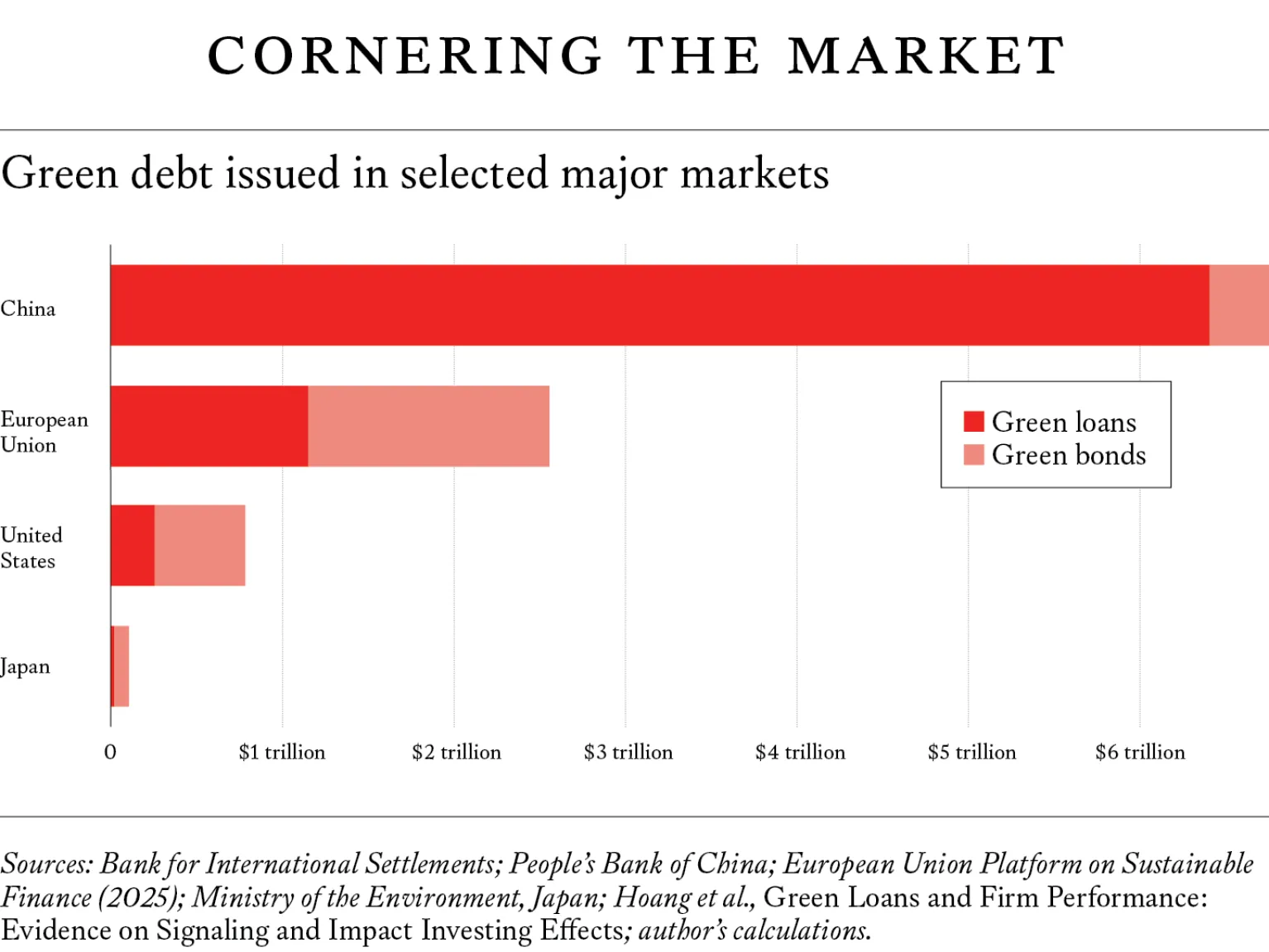
到2025年底,全球可持续投资专项资金价值达4.13万亿美元,而按照可持续性标准管理的资产预计将在2030年达到40万亿美元。与此同时,中国实体的绿色贷款和债券余额已达47.2万亿元人民币(6.7万亿美元),远超任何其他国家的绿色贷款,但大多局限于其境内人民币体系。2024年,外国机构仅持有中国2.2万亿元人民币(3060亿美元)绿色债券市场中的32亿元人民币(4.45亿美元),占比微不足道,仅为0.15%。
By the end of 2025, funds dedicated to sustainable investment were worth $4.13 trillion worldwide, and assets managed according to sustainability criteria were projected to reach $40 trillion by 2030. Chinese entities, meanwhile, already had 47.2 trillion yuan ($6.7 trillion) in green loans and bonds outstanding, far exceeding any other country’s green lending, but largely confined to its domestic renminbi system. In 2024, foreign institutions held only 3.2 billion yuan ($445 million) of China’s 2.2 trillion yuan ($306 billion) green bond market, a minuscule 0.15 percent.
这种微弱的外国参与度可能会增加。中国当局正致力于将该国庞大的绿色债务池——即为对环境产生积极影响的项目发行的贷款和债券——的更多部分,转化为外国投资者可依据国际可持续性要求持有的可交易证券。这些绿色债务主要面向境内投资者群体开发。其目标是创造一大类以人民币计价、与绿色项目挂钩、可在国际上投资,并与更广泛的人民币生态系统在定价、结算及其他金融服务方面相融合的资产。
That meager foreign participation is likely to increase. Chinese authorities are working to turn more of the country’s vast pool of green debt—a term for loans and bonds issued for projects with a positive environmental impact—developed primarily for a domestic investor base, into tradable securities that foreign investors can hold in compliance with international sustainability mandates. Their objective is to create a broad class of renminbi-denominated assets that are internationally investable, tied to green projects, and integrated into the broader renminbi ecosystem for pricing, settlement, and other financial services.
目前,中国绿色债券市场中约有17%的债券已通过符合欧洲绿色金融框架的技术标准审核,这使得外国投资者及指数编制机构更容易识别并将这些债券纳入投资组合。财政部已开始在中国境外发行以人民币计价的主权绿色债券:2025年4月,首笔债券发行在伦敦成功募得60亿元人民币(约合8.34亿美元);今年5月,又在香港发行了第二笔60亿元人民币的绿色债券,认购金额更是达到发行额的十倍。
About 17 percent of China’s green bond market has already been screened against technical criteria aligned with European green finance frameworks, making those bonds easier for foreign investors and index providers to recognize and include in their portfolios. The Ministry of Finance has begun issuing renminbi-denominated sovereign green bonds outside China, with its first bond issuance raising six billion yuan ($834 million) in London in April 2025, followed by a second six-billion-yuan issuance in Hong Kong this past May, where orders were ten times the amount on offer.
尽管这些发行规模与中国国内市场相比微不足道,但它们确立了定价基准,为未来其他机构发行人民币绿色债券创造了有利条件。今年5月,巴基斯坦发行了17.5亿元人民币(约合2.58亿美元)的绿色熊猫债——所谓“熊猫债”即指境外借款人在中国发行的人民币计价债券——这一举措预示着未来将有更多外国借款人借助人民币来为其绿色发展项目融资。华盛顿方面应当认真思考:石油美元体系是否仍能适应当前需求?
These issues are tiny compared with China’s domestic market, but they establish pricing reference points that make it easier for other entities to issue renminbi-denominated green debt in the future. Pakistan’s issuance, in May, of a 1.75 billion yuan ($258 million) green Panda bond—the term for renminbi-denominated debt issued in China by foreign borrowers—offers a glimpse of a future in which foreign borrowers routinely raise renminbi in China to finance their green development. Washington should consider whether the petrodollar is still fit for purpose.
工业领域的优势正是转化为金融实力的起点。尽管中国政府尚未制定创建“绿色人民币”的正式计划,但构建这一体系所需的各项要素却正在逐步成形。绿色人民币的基石并非绿色技术本身,而是日益增多的各类人民币计价绿色经济资产。绿色债券将构成这一经济体系中可交易的核心部分,从而将中国的产业优势与全球对可持续资产日益增长的需求紧密相连。
This is how industrial dominance begins to grow into financial power. The Chinese government has no formal plans to create a green yuan, but the constituent pieces of such a system are nevertheless starting to come together. The anchor asset for a green yuan would not be green technology itself, but an expanding family of renminbi claims on the green economy. Green bonds would form this economy’s tradable core, connecting China’s industrial advantage to the growing global demand for sustainable assets.
世界上大部分地区都已设定了替代化石燃料的期限,但没有中国的绿色经济,这些期限无法实现。即使应对气候变化的政治意愿减弱,全球对进口能源的依赖已经制造了地缘政治脆弱性,这很可能继续支撑可再生能源的需求,而几乎任何国家都可以部署可再生能源,在本国生产更多能源。对于寻求进入绿色经济的国家和企业来说,接受人民币融资和中国技术标准,最终可能成为入场券的普通部分。其结果将是一个自我强化的绿色商品和绿色金融回路,其中大部分以人民币计价。
Much of the world has set deadlines for replacing fossil fuels that cannot be met without China’s green economy. Even if the political will to combat climate change fades, global dependence on imported energy has created geopolitical vulnerabilities that will likely continue to buoy demand for renewables, which almost any country can deploy to produce more energy at home. For countries and firms seeking entry into the green economy, accepting renminbi financing and Chinese technical standards may eventually become part of the ordinary price of admission. The result would be a self-reinforcing circuit of green goods and green finance, much of it denominated in renminbi.
对于华盛顿来说,绿色人民币的前景不应引发关于人民币即将接管的警报。相反,它应当引发一个更艰难的问题:石油美元是否已不再适用,以及哪种资产类别、技术或工业体系未来可能支撑美元的货币力量。美元远不止依赖于美国保障全球能源流动的能力及其与主要产油国的联系,但政策制定者若将其霸权视为永久,那将是错误的。
For Washington, the prospect of a green yuan should not set off alarms about an imminent renminbi takeover. It should instead prompt a harder question: whether the petrodollar is no longer fit for purpose and what asset class, technology, or industrial system might anchor the dollar’s currency power in the future. The dollar rests on far more than the United States’ ability to secure global energy flows and its ties with major oil-producing states, but policymakers would be mistaken to treat its supremacy as permanent.
北京并非在密谋推翻美元,共产党几乎可以肯定不希望这种胜利所要求的金融开放。无论绿色人民币是否有一天成为现实,国际化人民币对党来说更直接的价值,在于其可能阻止华盛顿的中国鹰派将中国对美元的当前依赖武器化。
Beijing is not plotting to dethrone the dollar, and the Communist Party almost certainly does not want the financial openness such a victory would require. Whether or not the green yuan becomes a reality someday, the more immediate value to the party of an internationalized renminbi is its potential to deter China hawks in Washington from weaponizing China’s current reliance on the dollar.
随着中国以人民币为基础的体系日益强大,北京抵御潜在美国金融制裁冲击的能力也将随之增强。华盛顿实施此类制裁的威胁,反过来也将失去部分威慑力。这种经济力量格局的转变,很可能会让北京更愿意戳穿华盛顿的虚张声势——而它或许已经在这样做。5月,中国发布了有史以来第一份阻断令,指示中国境内的企业不得遵守美国对五家中国炼油厂的制裁,这五家炼油厂被指控是伊朗石油的主要购买者。
As China’s renminbi-based system becomes stronger, so will Beijing’s ability to withstand the shock of potential U.S. financial sanctions. Washington’s threat to impose those sanctions will, in turn, lose some of its potency. That shift in the economic power dynamic would likely make Beijing more willing to call Washington’s bluff—which it may already be doing. In May, China issued its first-ever blocking order, instructing firms in China not to comply with U.S. sanctions on five Chinese oil refiners alleged to be major purchasers of Iranian oil.
如果“美元霸权”的统治终结,那很可能不是因为中国篡位,而是因为美国主动放弃了王位。华盛顿必须注意,支撑下一轮货币秩序的战略资产,可能不是一桶石油,而是一个产业生态系统。危险在于,金融市场可能几乎不提供任何预警,表明这种转变正在进行。市场可能长期无视变化的日益增多的证据,直到某个催化剂——例如围绕提高美国债务上限的政治僵局——最终导致模型调整、价格剧烈波动。
If the reign of King Dollar ever ends, it probably won’t be because China usurped the throne but rather because the United States surrendered it. Washington must take note that the strategic asset underpinning the next monetary order may not be a barrel of oil but an industrial ecosystem. The danger is that financial markets may provide little warning that such a transition is underway. Markets can go long stretches ignoring the mounting evidence of change before a catalyst—such as a political stalemate over raising the U.S. debt limit—finally causes models to adjust and prices to snap up or down.
美国官员不愿为美元霸权地位的削弱制定应对计划,担心这样做会向市场发出信号,表明这种衰落不可避免。然而,他们急于以价格图表作为美元韧性的证据,这表明上一次金融危机的教训可能已经被遗忘。美国必须在美元的“过度特权”明显受损、对冲迹象变得清晰之前制定应急计划。到那时,损害可能已无法遏制。
U.S. officials are reluctant to plan for the erosion of the dollar’s dominance for fear that doing so would signal to markets that such a decline is inevitable. Their eagerness to point to price charts as proof of the dollar’s resilience, however, suggests that the lessons of the last financial crisis may already be forgotten. The United States must make contingency plans before the dollar’s exorbitant privilege is visibly tattered and signs of hedging against it become clear. By that time, the damage may no longer be possible to contain.