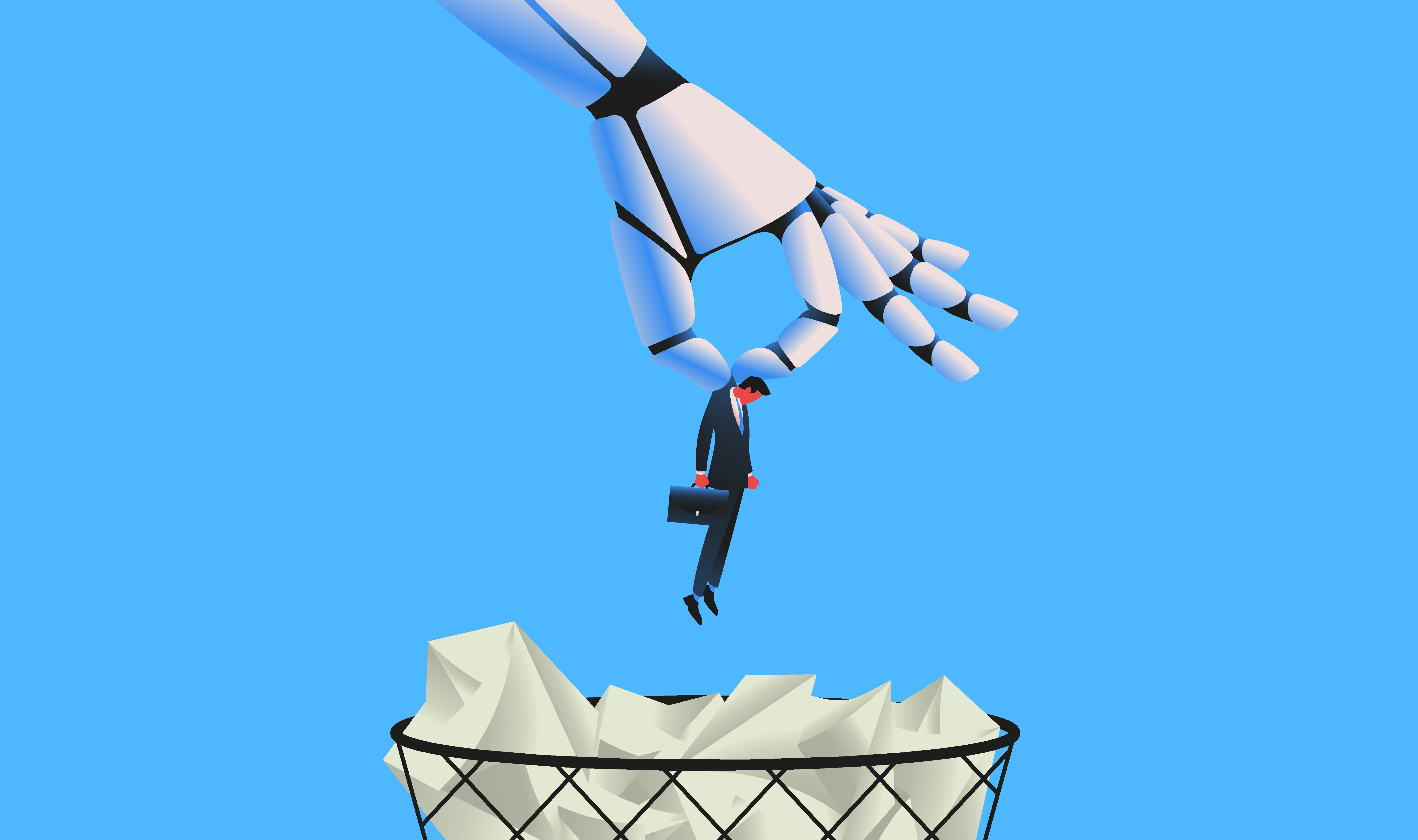
如果人工智能泡沫破裂,引发经济衰退,而该衰退反而加速了用人工智能取代工人的进程,那会怎样?可以称之为“人工智能双重打击”。我知道。这些想法很阴暗。
What if an AI bubble bursts, triggering a recession, and that recession ends up accelerating the replacement of workers with AI? Call it the AI double whammy. I know. Dark thoughts.
我长期以来一直对关于人工智能将如何改变世界的笼统说法持怀疑态度。我现在仍然如此。我们其实并不清楚。但随着这项技术的发展,我越来越担心它对我们生计可能意味着什么。
I've long been skeptical of sweeping claims about how AI will transform the world. I still am. We don't really know. But as this technology advances, I've found myself worrying more about what it could mean for our livelihoods.
两条经济研究线索让我有理由认真对待这种双重打击。一条涉及金融泡沫的历史。另一条涉及经济衰退与自动化之间的一种令人惊讶的关系,即企业利用技术来完成以前由人类完成的任务。
Two strands of economic research have given me reason to take this double whammy seriously. One concerns the history of financial bubbles. The other concerns a surprising relationship between recessions and automation, when businesses use technology to do tasks that were previously done by humans.
当革命性技术助长泡沫 首先说说泡沫。1978年,经济学家查尔斯·金德尔伯格出版了一本有影响力的书,名为《狂热、恐慌与崩溃:金融危机史》。他借鉴经济学家海曼·明斯基的理论研究,梳理了几个世纪的经济史,发现了一个反复出现的模式。
When revolutionary technology fuels a bubble First, the bubbles. In 1978, the economist Charles Kindleberger published an influential book titled Manias, Panics, and Crashes: A History of Financial Crises. Drawing on the theoretical work of economist Hyman Minsky, Kindleberger went through centuries of economic history and saw a recurring pattern.
泡沫往往始于经济中某个重大潜在变化。例如,一种承诺将改变行业并创造巨大财富的革命性新技术。投资者有充分理由对此感到兴奋。但他们变得过于兴奋。在上升阶段,他们押下大量资金,基本上认为天高任鸟飞。而且他们往往在此过程中积累债务,借钱进行更大的赌注,从而进一步助长繁荣。这笔债务可能成为一颗定时炸弹。当现实降临时,资产价格下跌,但债务依然存在。借款人难以偿还,贷款人遭受损失,市场崩盘可能演变成金融危机和痛苦的经济衰退。
Often the bubble starts with some big potential change to the economy. A revolutionary new technology, for example, that promises to transform industries and create enormous wealth. Investors have a good reason to be excited by it. But they get overly excited. During the upswing, they bet tons of money expecting basically that the sky is the limit. And they often build up debt in the process, borrowing money to make even bigger bets and thereby helping to further fuel the boom. That debt can become a ticking time bomb. When reality sets in, asset prices fall, but those debts remain. Borrowers struggle to repay, lenders suffer losses, and a market crash can spiral into a financial crisis and a painful recession.
一个关键的洞察是,一项技术可能真正具有革命性,却仍可能助长最终以金融崩盘告终的泡沫。例如,铁路。我曾在之前的《行星金钱》通讯中写过那个泡沫——以及它的崩溃如何引发了“1873年恐慌”。随之而来的经济动荡助长了民粹主义起义,以及美国历史上第一次重大的移民打压。
One crucial insight is that a technology can truly be revolutionary, yet still fuel a bubble that ends in a financial crash. For example, the railroads. I wrote about that bubble in a previous Planet Money newsletter — and how its collapse triggered "The Panic of 1873." The ensuing economic turmoil helped foment a populist uprising and the first major immigration crackdown in American history.
人工智能现在基本上正在支撑美国股市。摩根大通本月早些时候的一项分析发现,仅42家与人工智能相关的公司就占了标准普尔500指数自2024年初以来股价涨幅的大约三分之二。与此同时,与人工智能相关的公司正在借入数千亿美元,以帮助融资数据中心以及为其供电的能源基础设施。
AI is now basically propping up the U.S. stock market. An analysis from J.P. Morgan earlier this month found that just 42 AI-related companies accounted for around two-thirds of the S&P 500's stock price gains since early 2024. Meanwhile, AI-related companies are borrowing hundreds of billions of dollars to help finance data centers and the energy infrastructure to power them.
所有这些都并不能证明我们正在目睹的是一个泡沫,或者这笔债务是金融系统的一颗定时炸弹。互联网泡沫的破裂帮助带来了一场相对温和的衰退。债务在那次繁荣中作用较小,有助于限制金融后果。它的崩溃并未引发像2008年左右房地产市场崩盘之后那样的系统性金融危机。
None of this proves that what we're witnessing is a bubble or that this debt is a ticking time bomb for the financial system. The bursting of the dot-com bubble helped usher in a relatively mild recession. Debt played a smaller role in that boom, helping to limit the financial fallout. Its collapse did not trigger a systemic financial crisis like the one that followed the housing market bust around 2008.
不过,即使没有金融危机,也可能会出现痛苦的清算。所有这些公司最终是否能赚到足够的钱来证明其所有借款和支出的合理性?每家公司都能生存下来吗?技术分析师本尼迪克特·埃文斯警告称,提供同样强大的人工智能模型的公司之间的激烈竞争可能会压低它们能收取的价格,留下很少的利润空间——即使它们正在花费天文数字的资金来开发和运行这些模型。
Even without a financial crisis, though, there could be a painful reckoning. Will all these companies ultimately make enough money to justify all their borrowing and spending? Will each company survive? Technology analyst Benedict Evans has warned that fierce competition between companies offering similarly capable AI models could drive down the prices they can charge and leave little room for profit — even as they're spending ungodly amounts of money to develop and run these models.
当衰退加速自动化时 如果人工智能泡沫破裂引发衰退,那本身就已经足够痛苦。但这时,几项研究增加了我的焦虑。因为它们表明,衰退可能正是企业转向新技术以取代工人的时刻。
When recessions accelerate automation If an AI bust triggers a recession, that would be painful enough. But this is where a few studies add to my anxieties. Because they suggest that recessions can be the very moment when businesses turn to new technologies to replace workers.
我们往往将自动化想象成一个渐进的过程。技术改进,企业采用,工作缓慢变化或消失,理论上,经济其他部分会出现新的工作。但这项研究表明,自动化可能会以爆发式的方式发生,而这些爆发往往集中在经济衰退期间。
We tend to imagine automation as a gradual process. Technology improves, businesses adopt it, and jobs slowly change or disappear, theoretically while new jobs appear in other parts of the economy. But this research suggests that automation can happen in bursts, and those bursts tend to cluster around recessions.
一项由经济学家尼尔·贾伊莫维奇和亨利·西乌进行的研究发现,易受之前几波自动化影响的工作,其大部分下降发生在经济衰退期间。在1990年至2017年间,美国从事这些工作的就业者比例下降中,88%发生在经济衰退期间,或在经济衰退前后的几个月内。
One study, by economists Nir Jaimovich and Henry Siu, found that jobs vulnerable to previous waves of automation saw most of their decline around recessions. Between 1990 and 2017, 88% of the decline in the share of Americans employed in these jobs occurred during recessions or in the months immediately before or after them.
而这里有一个令人不安的讽刺:激烈的价格竞争可能会阻碍人工智能公司实现投资者期望的利润,同时使其技术对其他企业来说更便宜,从而用于替代员工。如果人工智能泡沫破裂引发经济衰退,那么这次衰退可能会加速员工被替代。投资者可能会损失资金,而员工仍可能失去工作。
And here's the unsettling irony: fierce price competition could keep AI companies from delivering the profits investors expect, while making their technology cheaper for other businesses to use to replace workers. If an AI bust triggers a recession, that downturn could accelerate worker replacement. Investors could lose their money, and workers could still lose their jobs.
这是一个噩梦般的场景。首先,泡沫破裂会重创我们的退休储蓄。然后,当企业争相削减成本时,我们的许多工作将永久消失。
It's a nightmare scenario. First, the bust hammers our retirement savings. Then, as businesses scramble to cut costs, many of our jobs are permanently lost.
当然,我们仍然不知道人工智能是否能带来足够的利润来证明所有借贷和支出的合理性,泡沫破裂是否会引发痛苦的经济衰退,或者过去经济衰退中发现的自动化模式是否会在人工智能领域重演。经济衰退可能会让企业用于投资人工智能的资金减少。而人工智能最终可能更有助于帮助员工提高生产力,而不是直接替代他们。
Of course, we still don't know whether AI will deliver enough profits to justify all the borrowing and spending, whether a bust would trigger a painful recession, or whether the automation patterns found in past recessions will repeat themselves with AI. A downturn could leave businesses with less money to invest in AI. And AI could still prove more useful for helping workers get more productive than outright replacing them.
无论 AI 造成一次冲击、双重冲击还是没有冲击,都有政策可以在工人失业时限制损害。显然,失业保险和其他类似政策。比尔·盖茨等人提议对 AI 和机器人征税,使继续雇佣人类在经济上更划算,同时产生政府可用于加强安全网的收入。这个想法我们或许会在未来的通讯中探讨。
Whether AI delivers one whammy or two whammies or none, there are policies that can limit the damage when workers lose their jobs. Obviously, unemployment insurance and other policies like that. And people like Bill Gates are proposing that we should tax AI and robots, making it more economical to continue employing humans while generating revenue that the government can spend to enhance the safety net. That idea is something we might explore in a future newsletter.
所以,是的,有理由相信这场噩梦可能永远不会成真,即便成真也有办法限制损害。但这并没有阻止我为此担忧。
So, yeah, there are reasons this nightmare might never come true, and there are ways to limit the damage if it does. That, however, hasn't stopped me from worrying about it.
不过,把这些写下来让我感到宣泄——把这些担忧从脑海中释放出来,落在纸上。
But it felt cathartic writing this down — getting these worries out of my head and onto the page.
NPR+ 支持者专场线上直播活动 想知道 AI 对你的生计意味着什么?欢迎于 10 月 28 日(周三)参加 Adrian 与《Planet Money》栏目《The Indicator》团队举办的“向经济学家提问”线上活动,主题为 AI 与就业。活动将邀请麻省理工学院诺贝尔奖得主教授 Daron Acemoglu(他一直批评 AI 公司)以及杜克大学教授、OpenAI 首席经济学家 Ronnie Chatterji。本活动面向 NPR+ 支持者,点击此处加入,点击此处查看活动详情。
LIVE VIRTUAL EVENT FOR NPR+ SUPPORTERS Wondering what AI could mean for your livelihood? Join Adrian and friends from The Indicator from Planet Money on Wednesday, Oct. 28, for a virtual Ask an Economist event about AI and jobs. It will feature Daron Acemoglu, a Nobel Prize-winning professor at MIT who's been critical of AI companies, and Ronnie Chatterji, a professor at Duke and chief economist at OpenAI. This is for our NPR+ supporters, join here, and find more details on the event here.
附:Charles Kindleberger 的一生极其精彩。正如我们之前所写,他曾为 CIA 的战时前身机构工作,并协助设计了马歇尔计划。真该有人拍部好莱坞电影讲述他的故事。
P.S. Charles Kindleberger's life was super fascinating. As we've written before, he worked for the CIA's wartime predecessor and helped design the Marshall Plan. Someone should probably make a Hollywood movie about him.