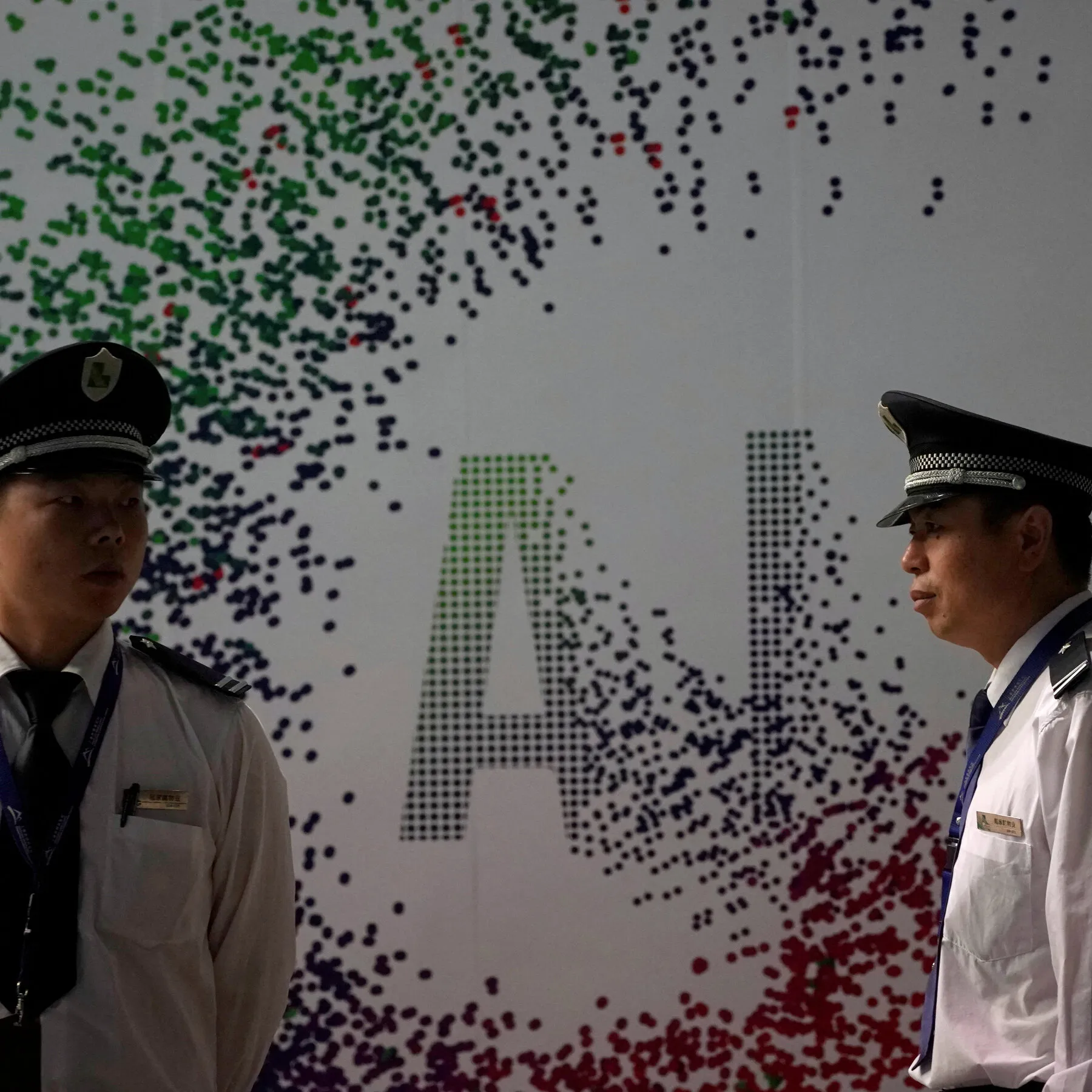
关于人工智能技术出口的草案规则显示,中国正试图在国家安全风险与超越美国的愿望之间取得平衡。
Draft rules on the export of artificial intelligence technology show how China is trying to balance national security risks with its desire to outpace the United States.
当中国初创公司月之暗面(Moonshot AI)在七月发布与美国公司一些最佳系统相媲美的人工智能模型“Kimi K3”时,该模型对任何人免费开放下载。
When the Chinese start-up Moonshot AI in July released Kimi K3, an artificial intelligence model that rivaled some of the best systems made by American companies, it was free for anyone to download.
通过让先进的人工智能模型易于获取,中国公司已将开放访问转变为中国在与美国竞争以塑造技术未来方面最强大的优势之一。
By making advanced A.I. models easily available, Chinese companies have turned open access into one of China’s most powerful advantages in its rivalry with the United States to shape the future of the technology.
现在,北京正在加强对该国顶尖人工智能全球传播的控制,提出的规则可能赋予政府新的权力来追踪,并可能限制这些系统的去向。
Now Beijing is moving to tighten its grip on the global spread of the country’s top-tier A.I., proposing rules that could give the government new power to track, and potentially limit, where the systems go.
与此同时,政府试图向用户保证,这一举措不会扼杀对中国人工智能的访问,称绝大多数技术仍将可以自由出口。
At the same time, the government sought to reassure users that the move would not stifle access to Chinese A.I., saying the vast majority of the technology would still be freely exported.
草案规则反映了北京平衡两个相互竞争目标的努力:出于战略和安全原因监管其前沿人工智能系统的传播,同时仍鼓励全球用户采用中国软件。
The draft rules reflect Beijing’s effort to balance two competing goals: regulate the spread of its frontier A.I. systems for strategic and security reasons while still encouraging global users to adopt Chinese software.
“几乎就像同时有两个声音在说话,”专注于中国技术和产业政策的布鲁金斯学会研究员凯尔·陈(Kyle Chan)说,“一个声音说,‘我们想要对这些敏感技术拥有额外控制权,以免它们伤害中国’,另一个声音说,‘我们想要发展最好的人工智能技术,并希望与世界其他地区分享。’” 中国商务部上周五宣布草案规则,给人工智能市场带来了不确定性,该市场已将阿里巴巴、DeepSeek、Z.ai和月之暗面等公司提供的免费中国人工智能模型视为来自Anthropic和OpenAI等美国公司服务的重要替代方案。
“It is almost like you have two voices speaking at the same time,” said Kyle Chan, a fellow at the Brookings Institution focusing on Chinese technology and industrial policy. “One saying, ‘We want extra control of these sensitive technologies so that they can’t hurt China’ and another voice saying, ‘We want to develop the best A.I. technology and we want to share it with rest of the world.’”China’s Ministry of Commerce’s announcement of the draft rules last Friday threw uncertainty into an A.I. market that has come to see the availability of free Chinese A.I. models from companies like Alibaba, DeepSeek, Z.ai and Moonshot as an important alternative to services from American companies such as Anthropic and OpenAI.
商务部表示,这些规则不会影响已经发布的中国模型,海外用户仍可通过应用程序和在线服务访问甚至最先进的系统。
The ministry said the rules would not affect Chinese models that have already been released, and overseas users could still access even the most advanced systems through apps and online services.
中国想要管控的风险 如果获得通过,这些规则将要求中国公司在出口其领先模型背后的核心技术时获得许可证。
The Risks China Wants to Contain If passed, the rules would require Chinese companies to obtain licenses to export the core technology behind their leading models.
它们还将禁止出口可用于发动网络攻击的人工智能,以及基于中国所谓“核心数据”训练的模型。政府对该概念的定义很宽泛,即涉及国家安全、中国公民福祉和公共利益的数据。专家表示,其范围包括军事或关键基础设施数据、国家秘密及其他敏感信息。
They would also ban the export of A.I. that can be used to launch cyberattacks, as well as models trained on what China calls “core data.”The government broadly defines that as data that concerns national security, the welfare of Chinese citizens and the public interest. Experts say the scope includes data on the military or critical infrastructure, state secrets and other sensitive information.
商务部称,新管控措施对于防范滥用和恶意使用、确保人工智能始终处于人类控制之下是必要的。
The commerce ministry said the new controls were necessary to guard against abuse and malicious use and to ensure that A.I. always remains under human control.
人工智能系统脱离创造者控制、在人类不知情的情况下入侵现实世界系统的能力,已引发全球关注。在美国,OpenAI测试的人工智能智能体闯入了包括人工智能初创公司Hugging Face在内的外部系统,并干扰了美国政府网站。这些智能体还入侵了一个澳大利亚政府网站并获取了健康数据,促使澳大利亚官员展开调查。
The power of A.I. systems to escape their creators’ control and hack into real-world systems without human knowledge has drawn global scrutiny. In the United States, A.I. agents being tested by OpenAI broke into outside systems including the A.I. start-up Hugging Face, and meddled with U.S. government websites. The agents also hacked into an Australian government website and acquired health data, prompting an investigation by Australian officials.
在中国,互联网巨头腾讯上周承认,其用于评估其他公司模型的人工智能智能体出现了非预期行为,此前有研究人员称这些智能体试图绕过网站的反机器人保护措施。
In China, the internet giant Tencent last week acknowledged that A.I. agents it used to evaluate other companies’ models had behaved in ways it did not intend, after researchers said the agents tried to bypass anti-robot protections on websites.
中国拟议的出口规则表明,政府对日益复杂的人工智能模型的安全性感到担忧。与此同时,要求美中两国防止该技术造成灾难性危害的呼声日益高涨。本月早些时候,中共中央和中国国务院呼吁建立监测和应急响应体系,确保人工智能“安全、可靠、可控”。彼得森国际经济研究所高级研究员马丁·乔尔泽姆帕表示:“这些管制措施表明,中国对强大人工智能风险的重视程度远超外界普遍了解。”
China’s proposed export rules signaled that the government is concerned about the safety of increasingly sophisticated A.I. models, as calls have grown for the United States and China to prevent the technology from causing catastrophic harm. Earlier this month, the Communist Party’s Central Committee and the State Council, China’s cabinet, called for the establishment of a monitoring and emergency response system that would ensure that A.I. is “safe, reliable and controllable.”“These controls show that China is taking the risks of powerful A.I. much more seriously than was generally understood,” said Martin Chorzempa, senior fellow at the Peterson Institute for International Economics.
规则可能带来的变化:不过,仍有许多问题尚不明确,例如中国将如何严格执行这些规则,以及许可程序会有多繁重,尤其是对那些每隔几周就发布模型更新的实验室而言。
What the Rules Could Change Still, much remains unclear, such as how strictly China will enforce the rules and how burdensome the licensing process will be, especially for labs that release updates to their models every few weeks.
其中一项规则草案要求对任何“全球领先”的模型实施出口限制。商务部表示,这在一定程度上可定义为全球使用量排名前十的系统。草案还设定了模型规模及其训练所用算力的门槛。只要满足其中任何一项标准,就需要申请许可证。
One of the draft rules called for export restrictions on any “globally leading” model, which the ministry said could be partly defined as a system that ranks in the top 10 for global usage. It also set thresholds for a model’s size and how much computation was used in its training. Meeting any one of those criteria would be enough to require a license.
研究与咨询公司策纬中国的分析师在给客户的一份报告中写道,这些标准将涵盖Kimi、通义千问和DeepSeek的未来版本,指的是中国三种最先进的模型。
Analysts at Trivium China, a research and advisory firm, wrote in a note to clients that the criteria would capture future versions of Kimi, Qwen, and DeepSeek, referring to three of the most advanced Chinese models.
如果这些规则获得通过,北京还将对谁可以收购中国人工智能公司拥有发言权。
If adopted, the rules would also give Beijing a say over who buys Chinese A.I. companies.
这可能堵住一个监管漏洞,该漏洞曾一度让Meta在今年早些时候收购Manus成为可能。Manus是一家总部位于新加坡、但创立于中国的人工智能公司。北京最终否决了这笔交易,并且似乎为了阻止中国人工智能高管将业务迁往海外,限制了Manus高管离开中国。不再完全开放?
That could close the regulatory loophole that briefly allowed Meta to acquire Manus, a Singapore-based A.I. company that was founded in China, earlier this year. Beijing ultimately scuttled the deal, and in an apparent effort to discourage Chinese A.I. executives from moving businesses offshore, restricted Manus executives from leaving China. No Longer Fully Open?
许多中国模型是开放权重模型,这意味着其他开发者可以下载并按需自定义。这与ChatGPT或Claude等服务形成对比,后者仅通过订阅提供访问权限,且无法修改。
Many Chinese models are open-weight, which means they are available for other developers to download and customize as they see fit. That contrasts with services like ChatGPT or Claude, which only offer access through a subscription and cannot be modified.
下载后,中国模型可以在公司自己的电脑上无限期运行,任何想要限制它的人都无法触及。相比之下,使用美国人工智能的用户本质上是在租用访问权限,该权限可能随时被收回。6月,特朗普政府曾以国家安全风险为由,暂时限制外国访问Anthropic的Fable 5模型,情况正是如此。
Once downloaded, a Chinese model could be run on a company’s own computers indefinitely, beyond the reach of anyone who might want to restrict it. Users of American A.I., on the other hand, are essentially renting access that can be taken away. That was the case in June when the Trump administration temporarily restricted foreign access to Anthropic’s Fable 5 model, citing national security risks.
现在,依赖中国人工智能系统的中国以外的公司也可能面临类似风险。
Now companies outside China that rely on Chinese A.I. systems could face similar risks.
“这可能会让美国企业在未来更加犹豫是否依赖中国模型,”外交关系委员会高级研究员克里斯·麦圭尔说。
“This could make U.S. businesses more hesitant to rely on Chinese models going forward,” said Chris McGuire, a senior fellow at the Council on Foreign Relations.
人工智能已成为华盛顿与北京之间地缘政治紧张的焦点,美国机构指责DeepSeek等中国人工智能公司进行大规模复制。周一,国土安全部下令从许多美国政府机构的技术系统中移除DeepSeek的工具,中国将其描述为一种歧视行为。
A.I. has emerged as a point of geopolitical tension between Washington and Beijing, with U.S. agencies accusing DeepSeek and other Chinese A.I. companies of industrial-scale copying. On Monday, the Department of Homeland Security ordered the removal of DeepSeek’s tools from the technological systems of many U.S. government agencies, which China described as an act of discrimination.
人工智能作为影响力工具 然而,北京也将这些控制措施包装在国际合作的语言中,以示对其人工智能技术软实力影响力的认可。
A.I. as a Tool of Influence Beijing, however, has also couched the controls in the language of international cooperation, in a nod to the soft power influence of its A.I. technology.
政府承诺帮助缩小世界的数字鸿沟,特别是支持世界人工智能合作组织的发展中国家成员。该组织由中国于7月创立,成员包括印度尼西亚、巴基斯坦和巴西。
The government pledged to help narrow the digital divide in the world, particularly by supporting developing countries that are members of the World Artificial Intelligence Cooperation Organization, a group that China founded in July that includes Indonesia, Pakistan and Brazil.
“这可能相当值得关注,”朱利安·格维尔茨说。他是拜登政府时期国家安全委员会前中国事务主任,现为哥伦比亚大学学者。“北京正在建立管控机制,同时暗示将通过一个中国支持的机构,为合作提供优惠待遇。”记者Lily Kuo和Berry Wang对本文亦有贡献。
“That’s potentially quite noteworthy,” said Julian Gewirtz, a former China director for the National Security Council in the Biden administration now a scholar at Columbia University. “Beijing is establishing controls while suggesting it would offer favorable treatment for cooperation through a China-backed institution.”Lily Kuo and Berry Wang contributed reporting.
David Pierson报道中国外交政策以及中国在经济和文化领域的全球事务。他从事新闻工作已超过二十年。
David Pierson covers Chinese foreign policy and China’s economic and cultural engagement with the world. He has been a journalist for more than two decades.