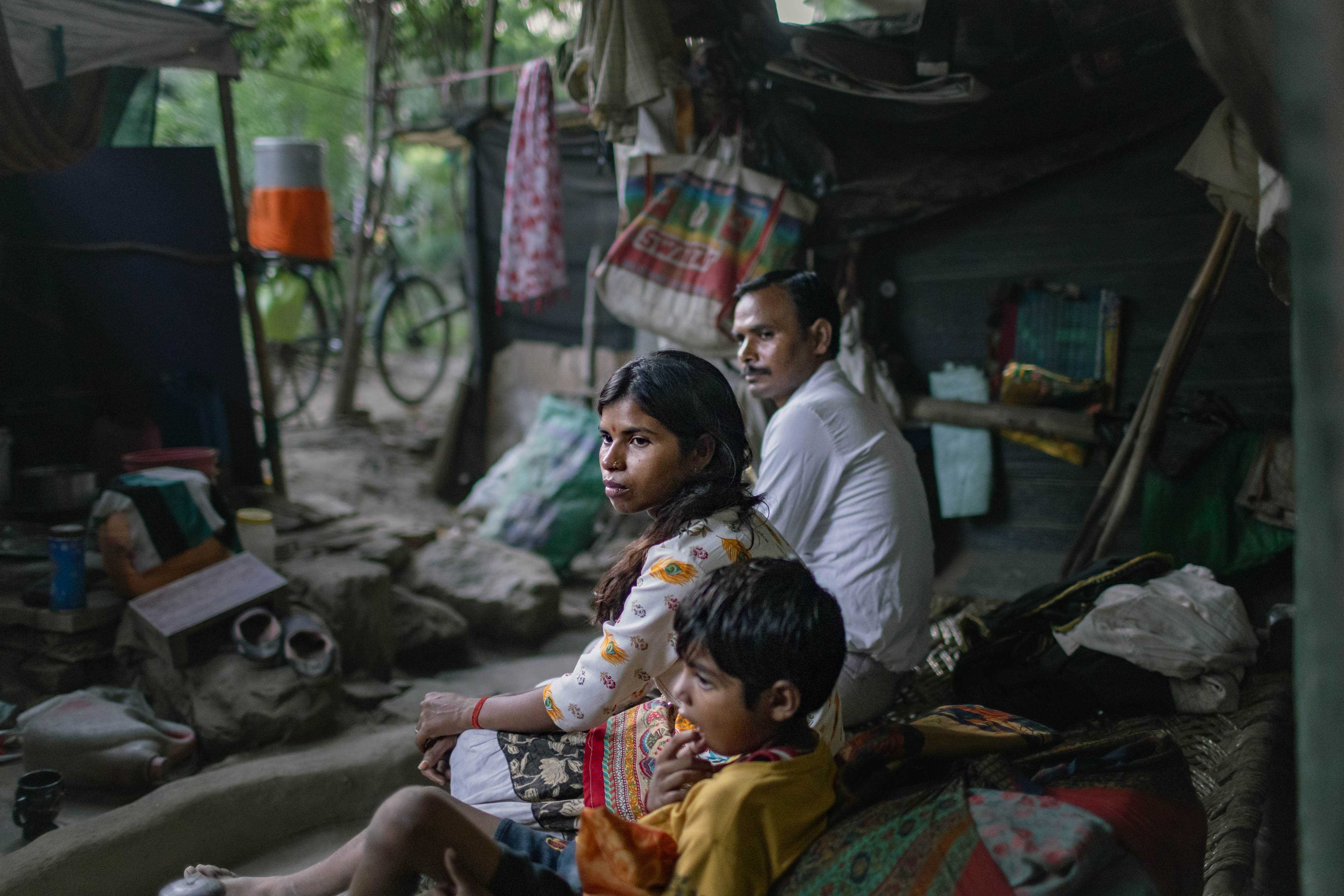
坎钱和她的儿子坐在儿子的床上,旁边坐着亲戚卡马尔,地点是印度新德里穆斯林占多数的贝拉贫民窟,2026年10月13日。
Kanchan and her son sit on his bed, next to Kamal, a relative, in the Muslim-majority neighborhood Bela Slum in New Delhi, India, October 13, 2026.
埃尔克·斯科利尔斯/美国公共广播电台拍摄 新德里——像许多印度人一样,坎钱只有一个名字,住在简陋的房子里。她的家由铁皮和防水布搭建而成,建在首都新德里一座立交桥下。和许多处于社会边缘的人一样,坎钱为自己拥有投票权而感到自豪——这是不平等的印度中罕见的平等化因素。
Elke Scholiers for NPR NEW DELHI — Like many Indians, Kanchan has one name and lives in hardscrabble quarters. Her home is built of tin and a tarp, constructed under a flyover in the capital New Delhi. And like many on the margins, Kanchan was proud of her right to vote — a rare equalizer in unequal India.
“很重要,因为这表明我们是公民,”坎钱在最近的一个十月天里说,当时她坐在塑料椅上,车辆在头顶驶过。
"It's important, because it shows we are citizens," Kanchan said on a recent October day, sitting on a plastic chair as vehicles trundled overhead.
但几周前,坎钱说,这个围绕一座桥梁居住的社区中,大约有500名成年人被从选民名单中删除。他们是通过另一名居民得知的,该居民作为政党代表有权查阅选民名单。
But a few weeks ago, Kanchan said about 500 adults were deleted from their voter roll in this community, which resides around a bridge. They found out through another resident who is allowed to examine the voter rolls as a representative of a political party.
他们是去年6月开始的一轮选民名单修订中被删除的估计1.3亿个名字中的一部分。
They were among an estimated 130 million names that were deleted during a revision of voter rolls that began last year in June.
这个数字是选举专家、印度总理纳伦德拉·莫迪领导的印度人民党(BJP)的著名批评者约格德拉·亚达夫的估计。尽管如此,印度人民党在为选民名单修订辩护时,仍引用该数字作为权威数据。选民名单曾列有9.8亿个名字。
The number is an estimate by Yogendra Yadav an elections specialist and prominent critic of Indian Prime Minister Narendra Modi's ruling Hindu nationalist Bharatiya Janata Party (BJP). Nevertheless, the BJP has cited the figure as authoritative in its defense of the voter roll revision. The rolls once had listed 980 million names.
“政府正在选择支持他们的人,”坎钱告诉美国公共广播电台,指责印度人民党操纵选民名单,剥夺反对该党社区的选举权。这是选民名单修订过程批评者中普遍存在的看法,包括印度前首席选举委员会委员S·Y·库雷希。“通常选民选择政府,而这里政府在选择选民,”库雷希说,他曾于2010年至2012年担任该职务。
"The government is choosing the people that support them," Kanchan told NPR, accusing the BJP of engineering voter rolls to disenfranchise communities opposed to the party. That is a widespread belief among critics of the voter revision process, including a former chief election commissioner of India, SY Quraishi. "Normally voters choose the government, here the government was choosing the voters," said Quraishi, who served in that role from 2010 to 2012.
负责选民登记修订的印度选举委员会名义上是独立的。但批评者指责首席选举委员贾纳什·库马尔偏袒莫迪总理的政党。而捍卫这项修订的是该政党,而非委员会。在印度人民党10月初发布于其YouTube频道的一段视频中,该党称,被删除的约1.3亿个姓名属于已故人士、重复登记者、已搬迁者或其他缺席者。
India's election commission, which is overseeing the voter revision, is ostensibly independent. But critics accuse chief commissioner Gyanesh Kumar of being partisan to Prime Minister Modi's party. And it is the party, not the commission, that has mounted a defense of the revision. In a video issued on the BJP's YouTube channel in early October, it said those approximately 130 million deleted names were of people who had died, had duplicate entries, had moved residences or were otherwise absent.
坎昌说,在她的社区,人们因搬迁而被删除,尽管一名选举官员曾来访,她“让我签字并把表格交给她”。帮助印度人重新登记选民名单的活动人士表示,许多其他人被删除,是因为他们无法提供此前从未要求选民提供的信息,例如证明其父母或祖父母在二十多年前参加过选举。还有人被告知要证明自己的身份,原因是选民名单上的姓名拼写与分发给部分(而非所有)选民的登记表上的拼写不一致。
Kanchan said in her community, people were deleted on the basis they had relocated, even though an election official came to visit and she "made me sign and hand over the form to her." And activists helping Indians get back on the voter roll say many others were deleted because they could not provide information that had never been demanded of voters before, like demonstrating that their parents or grandparents voted in elections more than two decades ago. Others were told to prove who they were after discrepancies appeared between how their names were spelled on voter rolls and how they were spelled on enumeration forms that were distributed to some, but not all, voters.
一份通知被交给了新德里穆斯塔法巴德社区的活动人士纳西尔·马利克,他在近日挥舞着这份通知。“这说不通,”他对NPR说。“如果这是个问题,那我之前的选举怎么投票?”姓名拼写不一致在印度非常普遍,专家表示,在以往的选民名单修订中,只要当地选举官员认为自己面对的是同一个人,就不将其视为问题。
One notice was handed to Nasir Malik, a community activist in a New Delhi quarter called Mustafabad, who waved it around on a recent day. "This makes no sense," he told NPR. "If this was a problem, how did I vote in elections before this?" Name spelling discrepancies are so common in India that experts said they were not regarded as a problem in previous voter roll revisions, as long as the local election official believed they were dealing with the same person.
在新德里市中心的一家咖啡馆里,一名多次就选民登记修订程序提起诉讼的律师表示,他的国家曾以确保每个合格成年人都能投票而自豪。如今,举证责任已转移到公民身上,要求他们证明自己的身份,这引发了“人类历史上最大规模的剥夺选举权行动”,该律师考斯塔布·查图尔维迪(Kaustubh Chaturvedi)表示。“这是一个不道德的过程。你实际上所做的,就是从几乎所有最需要投票权的人手中剥夺了这一权利。”
In a downtown New Delhi café, a lawyer who has filed multiple petitions against the voter revision process said his country once took pride in ensuring that every eligible adult could vote. Now, the burden of proof was flipped onto citizens to prove who they were, triggering "the largest disenfranchisement exercise in human history," said the lawyer, Kaustubh Chaturvedi. "It's an unconscionable process. What you've really done is you've purged the right to the vote from almost all of those who need it most."
从人数来看,这是最大规模的剥夺选举权。按比例计算,美国的吉姆·克劳法导致更高比例的人被剥夺选举权,据历史学家卡罗尔·安德森(Carole Anderson)称,她广泛撰文研究过对黑人社区的选民压制行为。
It is the largest disenfranchisement by numbers. By ratio, the Jim Crow laws led to higher percentages of people being disenfranchised in the United States, according to historian Carole Anderson, who has written extensively about voter suppression of Black communities.
对于新德里桥梁周边社区的27岁坎钱(Kanchan)来说,她的投票权不仅仅关乎投票。
For 27-year-old Kanchan, in the New Delhi community around the bridge, her right to vote wasn't just about voting.
她丈夫四年前在一起交通事故中丧生,丈夫是一名外卖配送员,她独自抚养6岁的儿子。她靠教学收入,加上每月相当于25美元的政府津贴,以及每月免费的大米、小麦和糖等主食来维持生计。她担心当局会以质疑其国籍为由,剥夺她这些服务,因为她已被从选民名单中除名。“他们会慢慢把我们与一切隔绝开来,”她担忧道。
She's raising her 6-year-old son alone after her husband, a food delivery driver, was killed in a road accident four years ago. She supplements her teaching income with a monthly government stipend equivalent to $25, and free monthly food staples of rice, wheat and sugar. She feared authorities would deny her those services by calling into question her citizenship, because she was struck off voter rolls. "They'll cut us off from everything slowly," she fretted.
这些担忧在一些由人民党执政的州的政府官员誓言,如果有人被从选民名单中删除,就将其从救助计划中剔除之后,变得尤为强烈。
Those fears were particularly triggered after government officials in some states ruled by the BJP vowed to strike people off assistance programs if they'd been deleted off voter rolls.
在九月份因选民被删除而引发的舆论哗然之后,选举委员会表示,其工作“完全公正”。它表示,官员将帮助那些被从选民名单中删除的人重新登记。坎钱所在选区昌迪乔克的一名高级选举官员孙尼尔·库马尔(Sunil Kumar)告诉美国国家公共广播电台(NPR),他的部门正在努力将坎钱的社区重新列入选民名单。
After an outcry over voter deletions in September, the election commission said it worked with "complete integrity." It said officers would help those deleted from voter rolls to be reinstated. Sunil Kumar, a senior election official in Kanchan's constituency of Chandi Chowk told NPR that his department was working to get Kanchan's community back onto voter lists.
对一些被剥夺选举权的印度人来说,任何帮助现在都来得太迟了,比如马利卡,她只有一个名字。
Any help now has come too late for some disenfranchised Indians, like Malika, who only has one name.
在工人阶级聚居区穆斯塔法巴德,马利卡担心自己现在会被指控为非法移民,因为她被从选民名单中除名。她的担忧源自强大的内政部长阿米特·沙阿的说法,沙阿最初称选民名单修订旨在发现、删除和驱逐渗透者。当局在十月试图平息对选民名单修订删除的抗议活动,而沙阿则将反对选民名单修订的人描述为在保护渗透者。这在印度常常是针对来自邻国孟加拉国的穆斯林的暗语。
In the working-class quarter of Mustafabad, Malika worried she'd now be accused of being an illegal migrant, because she was struck off voter rolls. Her concern stems from the claim by the powerful interior minister, Amit Shah, who first said the voter revision would be aimed at detecting, deleting and deporting infiltrators And while authorities tried to quell protests against the voter revision deletions in October, Shah described those opposing the voter revision as protecting infiltrators. That is often a dog whistle in India for Muslims from neighboring Bangladesh.
马利卡是穆斯林,她说她的选民身份证是她证明自己身份的少数方式之一。她出生时没有出生证明,称自己从未上过学,父母在她年幼时去世。“我没有长辈,”她说。“我基本上是自己把自己养大的。”她说,在搬到两小时车程外的地方后,她的名字被从穆斯塔法巴德的旧选民名单中除去——六年前她丈夫在此地的宗教暴力事件中被杀后,她付不起房租了。
Malika, who is Muslim, says her voter ID was one of the few ways she could prove who she was. She was born without a birth certificate, says she never went to school and that her parents died when she was young. "I had no elders," she said. "I pretty much raised myself." She said she was struck off her old voter roll in Mustafabad after she moved two hours away — she couldn't afford the rent after her husband was killed in communal violence here six years ago.
超过40人丧生,大多数是穆斯林,死于印度教暴徒之手。马利卡现在每天往返穆斯塔法巴德,在那里担任清洁工,每月收入80美元,她说这勉强够养活她的三个孩子。
More than 40 people were killed mostly Muslims, by Hindu mobs. Malika now commutes to Mustafabad each day where she works as a cleaner, making $80 a month, which she said barely feeds her three children.
她说,从未有选举官员到她新住处登记她的信息,官员本应这样做,以便她能重新登上选民名单。马利卡说,她最近一个星期五去找当地官员,但白白损失了一天的工资,却什么问题也没解决。
She said no election officer ever visited her in her new digs to take down her details, which they were supposed to do so she could get back on the voter roll. Malika said she'd visited her local officer on a recent Friday, but she lost a day's work without resolving anything.
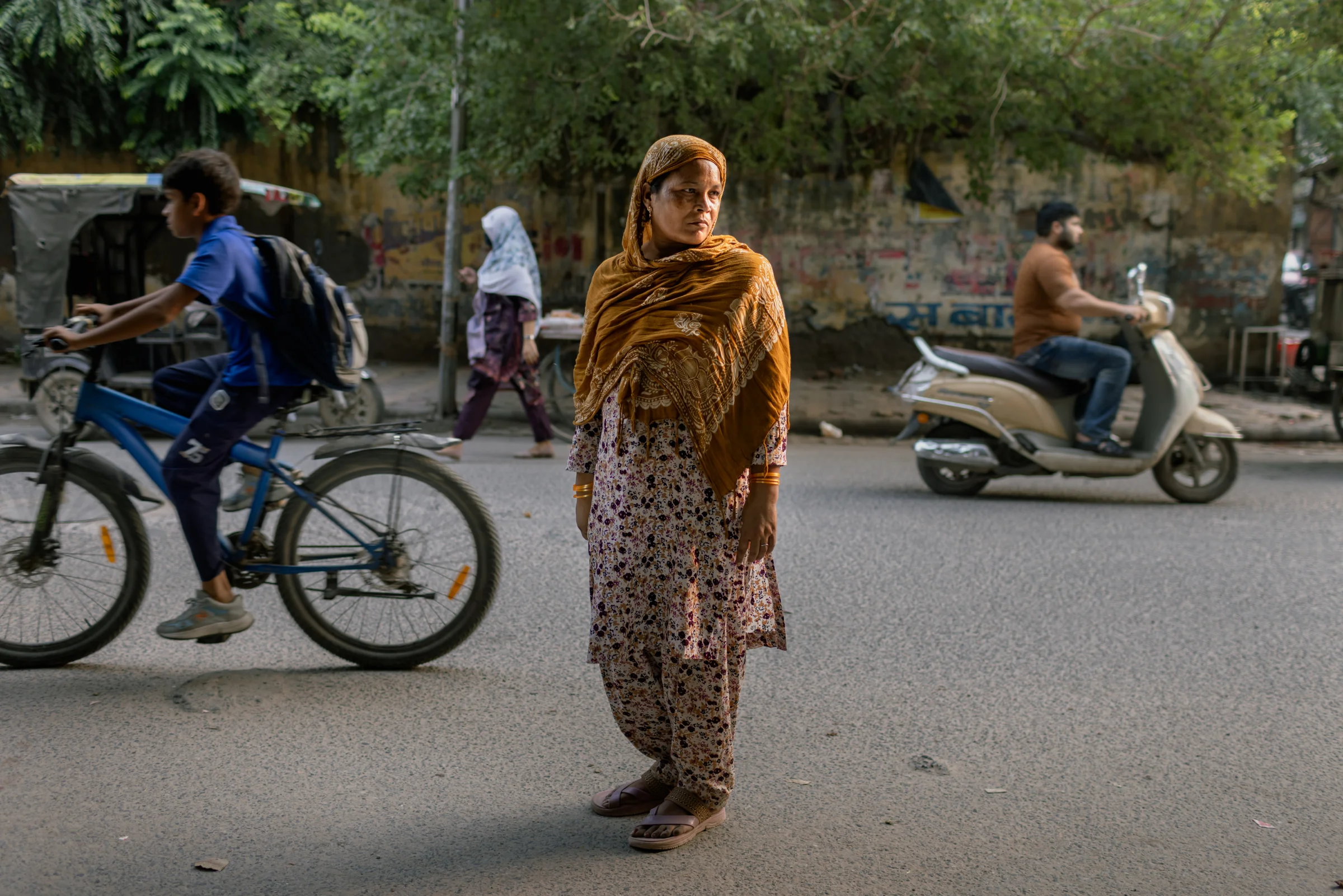
马利卡,一名清洁工,在印度新德里穆斯林占多数的穆斯塔法巴德社区摆姿拍摄,2026年10月13日。
Malika, a cleaning lady, poses in the Muslim-majority neighborhood of Mustafabad in New Delhi, India, October 13, 2026.
“这些人,政府官员——他们喜欢坐在空调房里,制定某些规则,”她指选民登记过程说,“但他们真的需要来到基层,看看实际情况,”她说,“在烈日下工作,像我们一样贫穷。”目前,她通过手臂上的塑料手镯表明身份,颜色为橙色、白色和绿色——印度国旗的颜色。她晃动手镯时微笑着说:“这也是我的印度。”
"These people, the government officials — they like to sit in their air-conditioned offices and they make certain rules," she said, referring to the voter revision process. "But they really need to come to the ground and see how it is," she said, "to work in the hot sun, to be poor like we are." For now, she signals her identity through the plastic bangles on her arms, colored orange, white and green — the colors of the Indian flag. She smiled as she jangled them. "This is my India too," she said. elections India politics