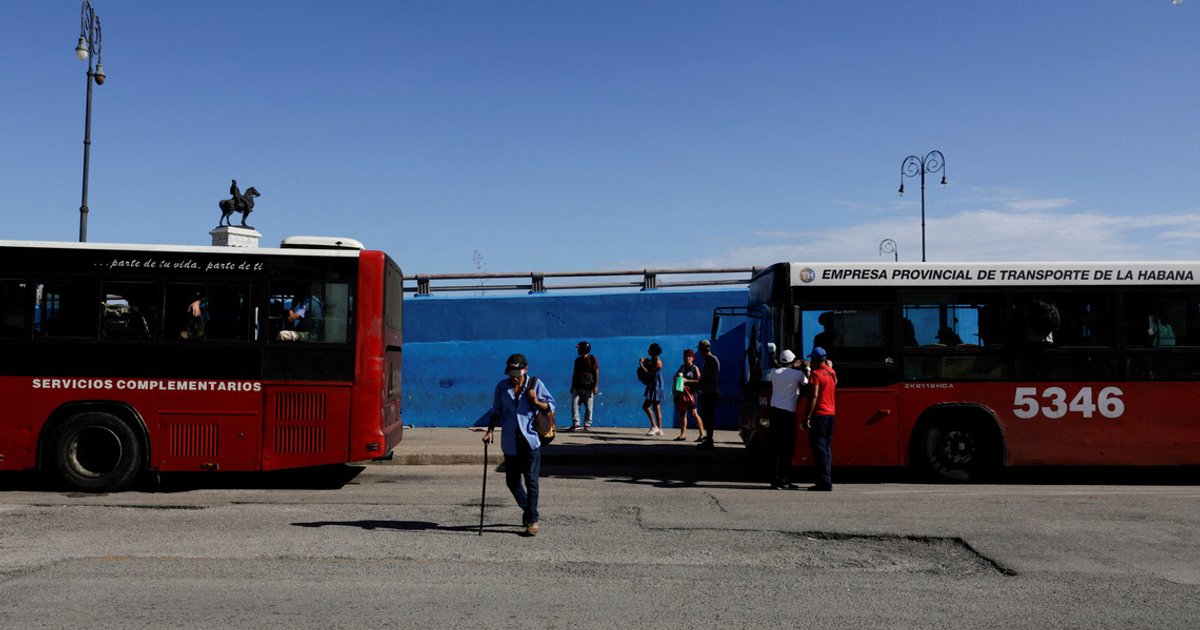
古巴交通部长爱德华多·罗德里格斯·达维拉表示,在美国的燃料封锁之下,古巴的公共交通已跌至历史最低点,从哈瓦那发往各省的公共汽车线路从2025年的每日419班骤减至2026年的仅11班,预计2026年客运量将下降75%。
Cuba’s public transport plunges to all-time low amid US fuel blockade, minister says Cuba’s transport system has hit a record low after the US fuel blockade, with bus routes cut from 419 to 11 and passenger trips expected to fall 75% in 2026.
罗德里格斯·达维拉说,许多家庭难以前往探望远方的亲人或病人,也难以到达医院,而货运量可能降至2000万吨。
Minister Eduardo Rodriguez Davila said families are struggling to travel, visit sick relatives, or reach hospitals, while freight transport may drop to 20 million tonnes.
古巴正转向电动汽车和太阳能充电,但高昂的成本和薄弱的电力供应仍然造成延误,包括三轮车闲置和充电站有限。AI生成哈瓦那——古巴交通部长爱德华多·罗德里格斯·达维拉每天都面临一项看似不可能完成的任务:在这个全长1250公里的岛国上,通过飞机、火车和汽车运送数百万人——而实际上几乎没有燃料。
Cuba is turning to electric vehicles and solar charging, but high costs and weak power supply still cause delays, including idle tricycles and limited charging stations. AI generated HAVANA – Cuba’s Transportation Minister Eduardo Rodriguez Davila faces daily what appears to be mission impossible: moving millions of people by plane, train and automobile across an island nation that spans 1,250km – with virtually no fuel.
自美国于1月下旬对古巴共产党政府实施事实上的燃料进口禁令以来,这个加勒比地区最大的岛屿的公共交通出现了前所未有的崩溃。
Since the US imposed a de facto ban on fuel imports on Cuba’s communist-run government in late January, the Caribbean’s largest island has seen an unprecedented collapse in public transportation.
“传统公共交通正处于历史最低点之一,”本周在哈瓦那接受路透社独家采访时,这位机械工程师出身的部长罗德里格斯·达维拉表示。
“Traditional public transportation is at one of its lowest points of all time,” Rodriguez Davila, a mechanical engineer turned minister, told Reuters in an exclusive interview in Havana this week.
这位岛国最高交通官员估计,2026年公共交通客运量将比去年骤降75%。他说,从首都哈瓦那开往各省的公共汽车服务从2025年的每日419班降至2026年的仅11班。全岛公交线路已从100多条削减至仅21条。他表示,城际交通——古巴劳动者的主要出行方式——将下降90%。
The island’s top transportation official estimates passenger trips on public transportation would plunge 75% in 2026 versus the last. Public bus service to the provinces from the capital Havana dropped from 419 daily in 2025 to just 11 in 2026, he said. Bus routes island-wide have been slashed from more than 100 to just 21. Inter-urban transportation – a mainstay for Cuban workers – would fall 90%, he said.
“这些是无法出行的家庭、无法探望病重亲人的民众、无法前往医院的患者,”他说。“这些短缺背后的困境错综复杂。”罗德里格斯·达维拉表示,即便是国内货运量预计也将降至2026年的2000万吨左右,不足2025年全国7000万吨货运量的三分之一。
“These are families that can’t move around, people who can’t visit their sick loved ones, others who can’t get to a hospital,” he said. “The drama behind these shortfalls is complex.”Even domestic freight transport is expected to fall to around 20 million tonnes in 2026, Rodriguez Davila said, less than a third of the 70 million tonnes moved across the country in 2025.
美国称,如今长达九个月的燃料封锁和近期升级的制裁,对于推翻其称为无能且腐败的古巴政府是必要的。古巴和联合国则称该封锁违法,侵犯了所有古巴人的基本人权。
The US says the now nine-month-long fuel blockade and recent beefed-up sanctions are necessary to upend Cuba’s government, which it calls inept and corrupt. Cuba and the United Nations have called the blockade illegal and a violation of the human rights of all Cubans.
电动革命 随着政府间紧张局势升级,古巴人转向搭顺风车、临时拼车,以及价格昂贵得多的私人运输服务。部长表示,电动出行方式也蓬勃发展。
Electric revolution While tension soars between governments, Cubans have turned to hitchhiking, impromptu carpooling and, increasingly, far pricier private transportation. Electric options have also flourished, the minister said.
“这是我们不得不采取的办法,但投资成本高昂,”他说,并指出此类车辆价格往往是燃油或柴油车的两倍。
“It’s what we have to work with, but it comes with a high investment cost,” he said, noting that such vehicles are often twice the price of those that utilize gas or diesel.
罗德里格斯·达维拉称,古巴目前拥有15万辆电动汽车、电动自行车和电动三轮车,数量是2025年的两倍,约占古巴100万辆车辆总数的15%。
Rodriguez Davila says Cuba now has 150,000 electric cars, bikes and tricycles, double the number in 2025 and around 15% of the total one million vehicles in Cuba.
他表示,考虑到大量未登记的插电式汽车和自行车,以及汽柴油车极其高昂的使用成本,电动车实际占比可能远高于此。
The actual proportion of electric vehicles is likely far higher, he said, given the large numbers of unregistered plug-in cars and bikes, and the prohibitively high price of running a car on petrol or diesel.
他称,得益于免除或减征电动汽车和电动自行车税收的进口激励政策,截至8月,电动车占车辆进口量的40%,而2025年1月这一比例仅为3.5%。“电动车增长速度超过了可再生能源的供应增速,”部长说。
By August, 40% of vehicle imports were electric, he said, up from just 3.5% in January 2025, thanks to import incentives that waive or reduce taxes for electric-powered cars and bikes. “Electric vehicles have increased more quickly than the supply of renewable energy,” the minister said.
古巴正在加紧建设用于为车辆充电的太阳能充电站,以将日益增长的需求从老旧的、主要依赖燃油供电的电力系统中转移出来,转而利用太阳能来满足这些需求。罗德里格斯·达维拉表示,交通部刚刚购买了60个太阳能充电站,并计划在全国范围内进行部署。
Cuba is scrambling to construct solar-charging stations for vehicles, to move soaring demand from the decrepit, mostly fuel-fired electrical grid to the sun. Rodriguez Davila said the Transportation Ministry had just purchased 60 solar charging stations to be distributed countrywide.
在古巴,类似的实验屡见不鲜——有些实验取得了成功,也有些失败了。
Examples abound across Cuba of experiments that have ended in success, and failure.
国营企业Transmed即将投入运营一批货运货车及充电站,这些设施将负责将药品运送到哈瓦那各地的药店,而无需使用那些难以获取的燃料。
Transmed, a state enterprise, will soon inaugurate a fleet of cargo vans and charging stations that will move medicines to pharmacies throughout Havana without using hard-to-source fuel.
然而,即使在政府组织的媒体参观活动中,也并非所有事情都运行得如预期般顺利。在其中一个站点,由一家国有企业拥有的数十辆黄色电动三轮车因没有电力可供充电而闲置在停车场里;愤怒的出租车司机们对此表示不满。部长皱起了眉头,说道:“这些就是我们面临的问题。”
But even on a government-led press tour, not everything was running like clockwork. At one stop, dozens of yellow electric tricycles owned by a state company sat idle in a parking garage because there was no electricity to charge them. Frustrated taxi drivers vented. The minister grimaced. “These are the problems we face,” he said.