编辑按:出乎意料的是,全球经济在过去几年中出色地应对了各种挑战。疫情过后,一系列突发事件接连发生:俄罗斯对乌克兰的战争、华盛顿拒绝遵守基于规则的自由贸易体系,以及最近的伊朗冲突。其中任何一件事都可能引发严重的经济衰退,更不用说这三者同时发生的情况了。然而,全球经济增长依然持续。
By The Editors Somewhat unexpectedly, the global economy has weathered the challenges of the past few years extraordinarily well. Following the pandemic, shock followed shock — Russia’s war on Ukraine, Washington’s rejection of rule-based liberal trade, then most recently the war with Iran. Any one of these might’ve led you to expect a severe economic setback, let alone all three combined. Yet global output kept on growing.
国际货币基金组织(IMF)发布的最新《世界经济展望》报告试图解释这一现象,并警告各国政府应认真对待这一警告。虽然全球经济体系的韧性令人印象深刻,但其能力终究是有限的。
The International Monetary Fund’s new World Economic Outlook grapples with this puzzle — and sounds a warning that governments would be wise to heed. The system’s resilience has indeed been impressive, but there are limits.
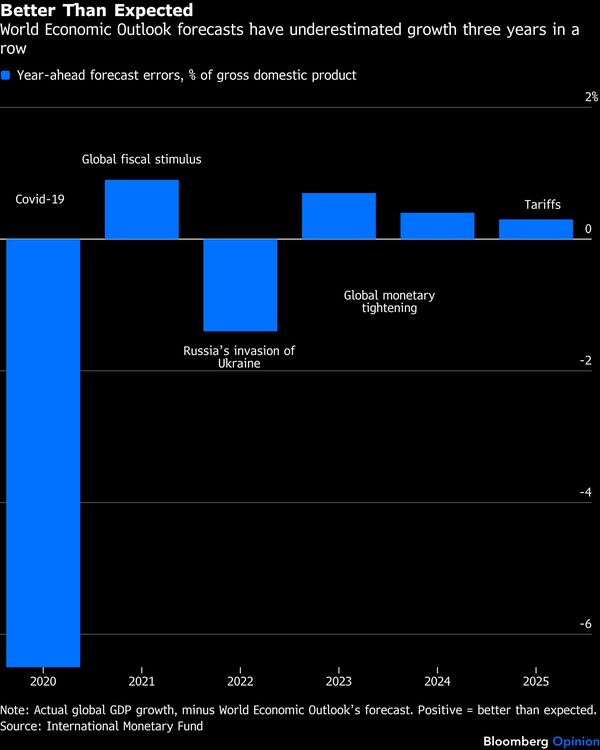
在逆境中依然保持稳定增长的情况让IMF的经济学家们感到十分意外;自2023年以来,他们在每年的经济预测中都低估了全球经济增长的速度。目前他们预计今年全球经济将增长3.1%,2027年将增长3.4%,并指出部分国家的表现优于其他国家。这种增长趋势主要体现在那些具备以下两个特点的国家身上:首先,这些国家受伊朗冲突引发的能源价格冲击的影响较小;其次,它们最能受益于人工智能相关商品和基础设施投资所带来的需求增长。这两种韧性来源都为政策制定提供了重要的启示。
Steady growth against the odds has surprised the IMF’s economists as much as anyone: They’ve underestimated year-ahead global growth in every annual forecast since 2023. They currently expect output to expand by a respectable 3.1% this year and 3.4% in 2027, noting that some countries are doing better than others. The pattern has shifted in favor of those, like the US, with two key characteristics: limited exposure to the energy-price shocks caused by the conflict with Iran and maximum exposure to the rise in demand driven by investment in AI-related goods and infrastructure. There are lessons for policy in both sources of resilience.
更高效地利用清洁能源不仅对环境至关重要;如果做得恰当,还能在其他方面增强经济实力。从化石燃料向可再生能源的多元化转型,已大幅降低了对石油的依赖。而且,世界现在每单位国内生产总值(GDP)所消耗的能源,比例如 20 世纪 70 年代少得多,当时石油价格冲击造成了严重的经济破坏。此外,得益于更复杂的供应链,能源买卖双方现在能更灵活地应对油价上涨。
More efficient use of clean energy isn’t just vital for the sake of the environment; done right, it also makes economies stronger in other ways. Diversification from fossil fuels to renewables has greatly reduced dependence on oil. And the world uses much less energy per unit of gross domestic product than it did, for instance, in the 1970s, when oil-price shocks wreaked economic havoc. In addition, thanks to more sophisticated supply chains, buyers and sellers of energy now adjust more flexibly to oil-price hikes.
尽管霍尔木兹海峡的关闭切断了一条承载全球四分之一海上石油贸易的航线,但供应迅速得到重新调配,库存也被迅速消耗,缓冲了冲击。
Although the closure of the Strait of Hormuz blocked a route carrying a quarter of the global maritime trade in oil, supplies were quickly rerouted and inventories drawn down, softening the impact.
从能源角度看,人工智能(AI)的繁荣恐怕是喜忧参半。随着该技术推广应用,它将需要海量能源,而生产率和效率大幅提升(包括在能源使用方面)所带来的潜在巨大抵消效益,目前仍属推测。即使 AI 如预期那样提高长期增长率,也可能无法证明投资者近期的狂热合理 —— 甚至可能将其短期提振增长的效果推向反面。
Energywise, the boom in AI threatens to be a mixed blessing. As the technology rolls out, it will require vast amounts of energy, and the potentially enormous offsetting benefits of greater productivity and efficiency (including in the use of energy) are still speculative. Even if AI raises long-term growth rates, as seems likely, it may fail to justify investors’ recent exuberance — conceivably pushing its short-term growth-boosting effects into reverse.
由对 AI 投资的更冷静评估所引发的挫折风险,或许会因过度私人债务导致的金融脆弱性而放大,这凸显了另一项政策建议:政府需要恢复其在必要时支持经济的能力。目前,它们像疫情期间那样以强有力的财政刺激应对经济下行的能力,令人存疑。
The risk of a setback driven by a more sober appraisal of AI investment, perhaps amplified by financial fragility due to excessive private debt, underlines another policy prescription: Governments need to restore their ability to support their economies should the need arise. At the moment, their capacity to respond to downturns with strong fiscal stimulus — as they did during the pandemic — is in doubt.
新冠疫情过后,许多政府并未收紧借贷,反而让赤字持续扩大。在许多情况下,公共债务率处于历史高位的国家,讨论的是如何稳定债务负担,而非如何削减债务。其他一些国家,尤其是美国(尽管经济温和增长且充分就业,却仍维持占国内生产总值6%的赤字),则完全无视这一问题。还请注意,人口压力和增加国防开支的需求必将使问题更加复杂。
Far from reining in borrowing after Covid, many governments let deficits keep growing. In many cases, countries with historically high ratios of public debt are discussing how to stabilize those burdens rather than how to reduce them. Others, notably the US (which is running a deficit of 6% of GDP despite moderate growth and full employment), are ignoring the subject altogether. Bear in mind as well that demographic pressures and the need to spend more on defense are certain to compound the problem.
近期全球债券收益率上升应视为一个危险信号。在全球范围内,财政空间——经济韧性不可或缺的组成部分——已被拉至极限。在再次接受考验之前,各国政府需要削减开支、增加收入,并恢复其行动能力。
Consider the recent rise in global bond yields a red flag. Across the globe, fiscal capacity — an indispensable component of economic resilience — is stretched to the limit. Before it’s tested again, governments need to spend less, collect more revenue and restore their ability to act.