德国能否在AfD壮大之前完成经济改革?尼克·马丁 2026年10月22日 冲突、成本上升和中国竞争正以前所未有的方式考验德国的经济模式。哪些新行业能够重振增长并遏制支持率空前高涨的极右翼德国选择党(AfD)?
Can Germany overhaul its economy before the AfD grows stronger? Nik Martin October 22, 2026 Conflicts, rising costs and Chinese competition are testing Germany's economic model like never before. Which new sectors could revive growth and contain the far-right AfD, whose support has grown larger than ever?
总理弗里德里希·默茨领导的政府提出了一项高科技议程,聚焦六大优先领域,包括人工智能、量子计算和气候中性出行。就在德国出口导向型经济模式面临空前压力之际,极右翼德国选择党(AfD)的支持率也达到新的高峰。
Chancellor Friedrich Merz's government set out a high-tech agenda focusing on six priority sectors, including artificial intelligence, quantum computing and climate-neutral mobility Germany's export-led economic model faces unprecedented strain just as support for the far-right Alternative for Germany (AfD) party reaches a new peak.
中国竞争对手正在逐步蚕食德国主要工业企业的市场,而持续高企的能源价格、居高不下的劳动力成本以及繁重的官僚程序,进一步加剧了这场结构性危机。
Chinese rivals are steadily eroding the market of major German industrial players, while persistently high energy prices, elevated labor costs and excessive red tape are adding to the structural crisis.
据德国联邦统计局(Destatis)数据,在连续两年萎缩之后,去年实际GDP仅微增0.2%。2025年对华出口下降9.7%,其中德国汽车及零部件出货量骤降三分之一。
After two years of contraction, real GDP edged up only 0.2% last year, according to the Federal Statistical Office, Destatis. Exports to China fell 9.7% in 2025, with German vehicle and part shipments plunging by a third.
尽管有迹象显示德国经济正在好转,但政府最新预测的2026年1.3%增长率,与新冠疫情前的繁荣年份相比仍显温和。
While there are signs the German economy is turning the corner, the government's latest forecast of 1.3% growth in 2026 is still modest compared with the pre-COVID boom years.
德国选择党目前的民调支持率领先于德国所有其他政党。德国面临的诸多经济挑战,是这些右翼民粹主义者崛起的主要因素。
The AfD is currently polling ahead of all other political parties in Germany. The country's many economic challenges have been a major factor in the right-wing populists' rise.
德国国内情报机构认为,有可靠迹象表明德国选择党整体上属于右翼极端主义。
Germany's domestic intelligence agency sees reliable indications that the AfD is right-wing extremist in its entirety.
该党誓言要让德国重回增长轨道,办法包括终止向可再生能源的转型、减税、重新谈判欧盟条约,同时改革福利制度并大幅限制移民。
The party has vowed to put Germany back on a growth path by ending the transition to renewable energies, lowering taxes and renegotiating European Union treaties, while also reforming welfare and sharply restricting immigration.
梅尔茨寻求通过先进技术实现增长。在总理弗里德里希·梅尔茨领导的执政联盟寻求新的增长战略以抵御民粹主义政治抬头之际,政府公布了其高科技议程,聚焦六大优先领域。
Merz seeks growth via advanced tech As Chancellor Friedrich Merz's coalition searches for a fresh growth strategy to fend off the rise in populist politics the government has set out its high-tech agenda focusing on six priority sectors.
这些领域分别是人工智能、量子计算、微电子、生物技术、清洁能源(包括核聚变)以及气候中性出行。
These are artificial intelligence (AI), quantum computing, microelectronics, biotechnology, clean energy (including nuclear fusion) and climate-neutral mobility.
莱布尼茨欧洲经济研究中心(ZEW)数字经济研究部门负责人伊雷妮·贝尔切克认为,德国在这些“关键使能技术”方面的研究“非常强,尤其是在气候中性技术领域”。然而,贝尔切克对德国之声表示,相关成果往往在国外实现商业化,美国在人工智能领域领先,而中国正在迅速缩小差距。
Irene Bertschek, head of the Digital Economy research unit at the Leibniz Center for European Economic Research (ZEW), argues that Germany's research in these "key enabling technologies is very strong, particularly in the area of climate-neutral technologies." Yet, the results are often commercialized abroad, Bertschek told DW, with the United States leading in AI and China closing the gap quickly.
德国面临压力 观看此视频,以及数万亿新投资。 “德国制造”倡议组织周一发布的一份报告以政府的计划为基础,该组织由147家企业和投资者组成。报告估计,到2035年,这些技术及其他新技术有望吸引高达4.1万亿欧元(4.6万亿美元)的投资。
Germany under pressure To view this video , and Trillions in new investments A report published Monday by the Made for Germany initiative — a group of 147 companies and investors — builds on the government's plan, estimating that these and other new technologies could attract up to €4.1 trillion ($4.6 trillion) in investment by 2035.
然而,能否实现这一潜力,将较少取决于大众、西门子和巴斯夫等当今的工业巨头。
Realizing that potential, however, will depend less on today's industrial giants, like Volkswagen, Siemens and BASF.
伊弗经济研究所创新经济学与数字化转型中心主任奥利弗·法尔克对德国之声表示:“征服这些新领域的主要不会是老牌企业,而是富有创新精神的新来者——初创企业。”
"It will not primarily be the established companies that conquer these new fields, but innovative newcomers — startups," Oliver Falck, director of the ifo Center for the Economics of Innovation and Digital Transformation, told DW.
法尔克说,任务在于为初创企业的涌现创造合适的条件,包括靠近顶尖大学、获得私人资本以及足够的试验自由。
The task, Falck said, is to create the right conditions for startups to emerge, including proximity to top universities, access to private capital and enough freedom to experiment.
他主张在早期“死亡之谷”阶段提供国家融资——这是从研究到商业可行性之间的高风险阶段,私人融资往往十分稀缺。
He argues for state financing during the early-stage "valley of death" — the risky phase between research and commercial viability when private financing is often scarce.
投资者关注未来增长领域已经有明显迹象表明,这种转变正在发生。德意志银行和德国初创企业数据库及市场情报平台startupdetector的数据显示,2026年上半年德国新创立了3000多家初创企业,同比增长88%。其中三分之一的新企业专注于人工智能领域。
Investors circle future growth sectors There are clear signs this shift is already happening. Data from Deutsche Bank and startupdetector, a German startup database and market intelligence platform, show more than 3,000 startups were founded in Germany in the first half of 2026, up 88% from the same period last year. One-third of the new ventures have an AI focus.
2026年上半年,风险投资额飙升44%,达到58亿欧元,Neura Robotics以及无人机制造商Stark和Quantum Systems等公司从中受益。
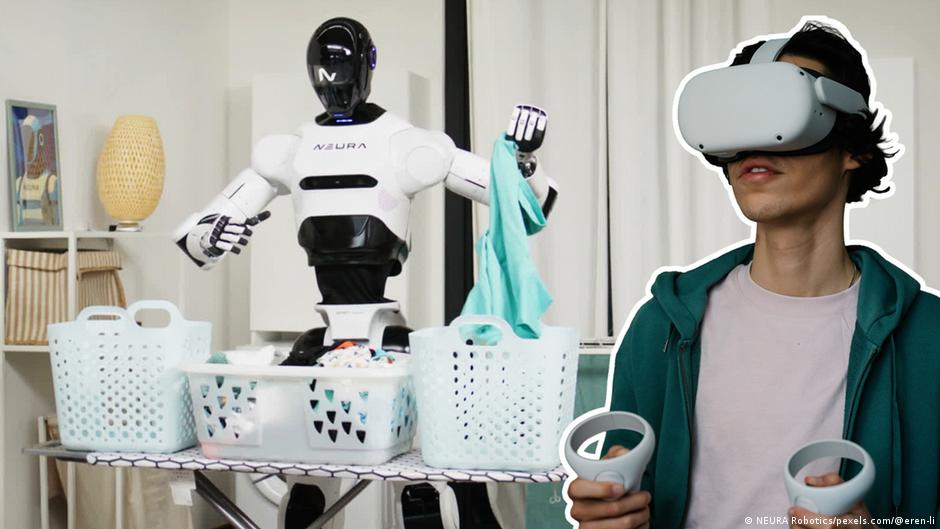
Venture-capital investment soared 44% to €5.8 billion in the first half of 2026, with firms such as Neura Robotics and drone manufacturers Stark and Quantum Systems benefiting.
与此同时,美国投资者正越来越多地收购德国著名的小型企业——即传统的中小企业(SMEs)——着眼于它们的专业技术。
US investors, meanwhile, are increasingly buying up Germany's famed Mittelstand— its traditional small and medium-sized enterprises (SMEs) — with an eye on their specialized technology.
“德国中小企业极具创新性。现在关键是要投资人工智能等关键技术,并挖掘与既有技术交叉所产生的潜力,”贝尔切克强调说。
"The German Mittelstand is highly innovative. Now it is essential to invest in key technologies such as artificial intelligence and to tap into the potential that arises at the intersection with established technologies," Bertschek stressed.
这位专家同时也是德国政府研究与创新专家委员会(EFI)的主席,他认为中小企业应更好地利用其海量的生产数据,并与人工智能初创企业合作,帮助这些年轻公司成长。
The expert, who is also chair of the German government's Commission of Experts for Research and Innovation (EFI), thinks SMEs should make better use of their huge amounts of production data and collaborate with AI startups to help those young firms grow.
中国已建成2000多个经济区和工业园区(2020年资料照片)设立经济特区的理由关于加速向新兴高科技领域转型的另一个构想,来自总部位于莱比锡的未来研究机构2b AHEAD的主席斯文·加博尔·扬斯基。他认为,德国需要设立经济特区,以帮助抓住下一波经济增长浪潮。
China has built more than 2,000 economic zones and industrial parks (file photo from 2020) A case for special economic zones Another idea for accelerating the shift to new high-tech sectors comes from Sven Gabor Janszky, chairman of the Leipzig-based futures-research institute 2b AHEAD. He argues that Germany needs special economic zones to help catch the next wave of economic growth.
“针对少数特定技术,你降低监管门槛,招募有抱负的劳动者,并向这些区域投入资金,”扬斯基对德国之声说。
"For a few specific technologies, you lower the regulations, you recruit ambitious workers and pump money into these zones," Janszky told DW.
他补充说,这将效仿硅谷以及中国大城市深圳和上海浦东新区的做法,也与二战后帮助德国经济重建的条件相呼应。
This, he added, would follow the examples of Silicon Valley and Chinese mega-cities Shenzhen and Shanghai's Pudong district, and echoes the conditions that helped rebuild the German economy after World War II.
在扬斯基看来,这些区域将有助于德国在新兴领域占据先发地位,而不是继续固守传统工业优势。
In Janszky's view, these zones would help Germany position itself as a first mover in emerging fields rather than remaining tied to older industrial strengths.
“欧盟的法规可能会试图阻止这一举措,但德国必须克服这些障碍,才能让经济重新增长,”他补充道。
"EU regulations may try to prohibit this move, but Germany will have to overcome them so we can grow the economy again," he added.
国防开支推动科技增长德国国防开支的急剧上升也将助推目前被列为优先事项的几个高科技行业。
Defense spending powers tech growth The sharp rise in Germany's defense spending will also help several of the high-tech sectors now being prioritized.
据国际战略研究所(IISS)称,国防预算预计将在2026年达到约1200亿欧元——约占GDP的2.6%。政府希望到2029年这一数字达到3.5%。
According to the International Institute for Strategic Studies (IISS), the defense budget is expected to reach around €120 billion in 2026 — roughly 2.6% of GDP. The government wants this figure to hit 3.5% by 2029.
由此产生的采购将大幅推动无人机、传感器、通信系统及其他军民两用技术的生产,这些技术既有民用也有军事用途。
The resulting procurement will provide a major boost to the production of drones, sensors, communications systems and other dual-use technologies that have both civilian and military applications.
中国如何加大对德国企业的压力成本差距未必是决定性的然而,由于主要竞争对手中国受益于低得多的能源和劳动力成本,以及巨额政府补贴,德国在出口其新的高端技术时将继续面临类似的价格劣势。但这未必意味着失败,伊弗经济研究所专家法尔克表示。
How China is upping pressure on German businesses The cost gap need not be decisive Yet, with major rival China benefiting from much lower energy and worker costs, along with huge government subsidies, Germany will continue to face similar price disadvantages when exporting its new high-end tech. But that doesn't have to spell failure, said Falck, the ifo expert. "Take the semiconductor industry as an example.
“以半导体行业为例。试图在整个价值链上占据领先地位可能并不现实。但在个别关键节点上领先就足够了,”他指出。
It is probably unrealistic to aim for leadership along the entire value chain. But it is enough to lead at individual choke points," he pointed out.
“而这正是德国的强项所在:作为最先进芯片工厂的设备供应商,以及作为全球AI超级工厂的功率半导体供应商。”换言之,凭借先发优势、数十年积累的高质量生产数据以及对细分利基市场的专注,德国可以在先进工业和工程技术领域继续保持重要地位。
"And that is exactly where Germany is strong: as a supplier of equipment for state-of-the-art chip fabs and as a supplier to the world's AI gigafactories, with power semiconductors." In other words, with a first-mover advantage, decades of high-quality production data and a focus on specialized niches, Germany can remain a major force in advanced industrial and engineering technologies.