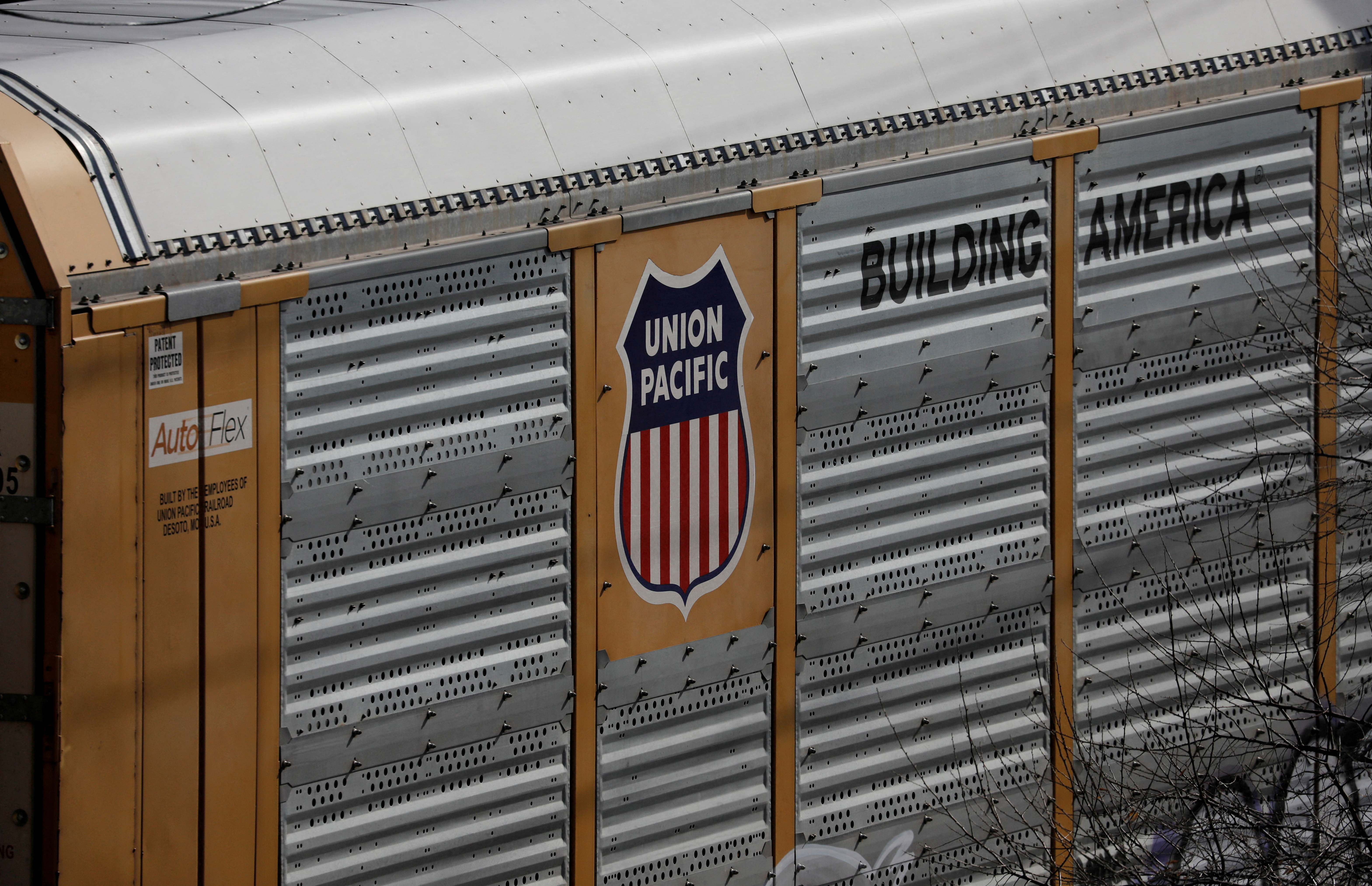
创纪录的燃油价格正将货运从美国公路推向铁路,随着发货人寻求更廉价的长途运输方式,铁路公司获得了更高的收入和利润。
Record fuel prices are pushing freight off US highways and onto trains, helping railroad companies rake in higher revenue and profits as shippers look for cheaper ways to move goods long distances.
联合太平洋铁路公司(UNP.N)、诺福克南方铁路公司(NSC.N)和CSX公司(CSX.O)本周均报告第三季度利润和收入大幅增长,公司高管表示,高昂的燃油成本和可用卡车减少正将更多业务带给他们。
Union Pacific (UNP.N), Norfolk Southern (NSC.N) and CSX (CSX.O) all reported a jump in third-quarter profit and revenue this week, with company executives saying high fuel costs and fewer available trucks were sending more business their way. "Railroads are much more efficient.
“铁路效率高得多。我们跨美运输产品的每吨成本要低得多。所以燃油价格上涨时,这自然是一种优势,”联合太平洋铁路公司首席执行官吉姆·维纳周四在财报后的投资者电话会议上表示。
It costs us way less per ton to move products across the US. So when fuel prices go up, it's naturally an advantage," Union Pacific CEO Jim Vena told investors on a post-earnings call on Thursday.
这种转变让铁路有机会从卡车手中夺回长途货运,尽管更高的燃油价格也在推高铁路自身的成本并压缩利润空间,因为伊朗战争导致燃油价格居高不下。根据美国汽车协会(AAA)数据,作为货运承运商的关键成本,柴油价格在9月触及每加仑6.53美元的纪录高位。
The shift gives railroads a chance to win back long-haul freight from trucks, though higher fuel prices are raising their own costs and squeezing margins as the Iran war keeps fuel prices elevated. Diesel, a key cost for freight carriers, reached a record $6.53 per gallon in September, according to AAA data.
铁路的收益最明显地体现在联运货量上,即货物的长途段由铁路运输,卡车通常负责提货和最终派送。联运货量与长途卡车运输直接竞争。
Railroad gains are showing up most clearly in intermodal shipments, where freight is moved by rail for the long-haul portion of the journey, with trucks typically handling pickup and final delivery. Intermodal shipments compete directly with long-haul trucking.
“我们看到长途整车运输正转向联运,以及中转和铁路服务配送中心的使用增加,”咨询公司EFESO的交通、物流与服务主管詹姆斯·穆拉费蒂斯表示。
"We are seeing long-haul truckload shift to intermodal and increased use of transload and rail-served distribution centers," said James Mourafetis, head of transportation, logistics and services at consulting firm EFESO.
联合太平洋铁路公司第三季度国内联运量同比增长13%,CSX报告增长7%,诺福克南方铁路公司增长3%。
Union Pacific's domestic intermodal volume rose 13% from a year earlier in the third quarter, while CSX reported a 7% rise and Norfolk Southern 3%.
卡车运力萎缩也在将部分货运推向铁路。一场持续的货运低迷迫使小型承运商退出市场,高昂的运营成本和更严格的司机执法限制了卡车运力的回升。
Shrinking trucking capacity is also moving some freight onto rail. A prolonged freight downturn has forced smaller carriers out of the market, with high operating costs and stricter driver enforcement limiting the return of trucking capacity.
“今年卡车市场的形势确实发生了翻天覆地的变化,但最近的货运量数据表明,这种变化主要是由于运力下降所致,而非需求强劲,”美国卡车运输协会(American Trucking Association)的首席经济学家鲍勃·科斯特洛(Bob Costello)表示。
"The truck market has certainly flipped this year, but recent tonnage levels confirm this is due to reduced capacity, not robust demand," said American Trucking Associations' Chief Economist Bob Costello.
然而,燃油价格的上涨也在增加铁路公司的运营成本,使得铁路公司难以将增加的收入转化为更高的利润;尽管燃油附加费在一定程度上缓解了这一压力。
However, higher fuel prices are also raising costs for railroads, making it harder to translate stronger revenue into higher profits, though fuel surcharges have offset some of that pressure.
联合太平洋铁路公司(Union Pacific)表示,高燃油价格使其第三季度的运营利润率下降了140个基点;而诺福克南方铁路公司(Norfolk Southern)则表示,燃油成本占其收入和支出同比增幅的一半左右。
Union Pacific said high fuel prices hurt its third-quarter operating ratio by 140 basis points, while Norfolk Southern said fuel costs accounted for about half of the year-over-year increase in both revenue and expenses.