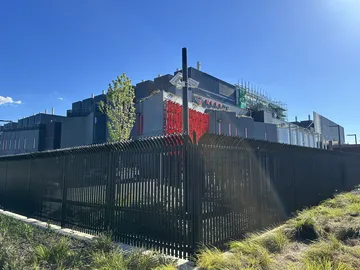
澳大利亚最大城市周边拟建的数据中心中,超过四分之三面临电网紧张和当地居民反对的风险,威胁到该国成为亚太地区人工智能枢雄的雄心。
More than three-quarters of data centers set to be built around Australia’s biggest cities are at risk from stretched power grids and local opposition, threatening the country’s ambition to become an artificial intelligence hub for the Asia Pacific region.
据彭博社对企业披露信息的审查,悉尼和墨尔本规划或在建的40多座大型数据中心——预计投资超过1000亿澳元(约合700亿美元)——仅有23%公开确认已获得电力供应或电网接入协议。这些协议是衡量项目是否推进的指标,显示出重大挫折和潜在延误。
Of the 40-plus large centers planned or under construction in Sydney and Melbourne — representing more than A$100 billion ($70 billion) of projected investment — just 23% have confirmed publicly that they have secured electricity supply or grid connections, according to a Bloomberg review of company disclosure. Those agreements, a gauge of whether or not a project is advancing, suggest significant setbacks and potential delays.
澳大利亚押注数据中心繁荣,意在利用其广阔空间和清洁能源潜力。但迄今为止,大多数项目管线集中在悉尼和墨尔本——近五分之二的澳大利亚人口居住于此——以利用现有光纤网络和可靠电力。这些运营给本已紧张的基础设施增加压力,使开发商与居民陷入对抗。
Australia has bet heavily on a data-center boom that is intended to capitalize on its vast open spaces as well as clean-energy potential. To date, though, most of the project pipeline is clustered around Sydney and Melbourne — where almost two in five of its inhabitants live — in order to harness existing fiber networks and reliable power. Those operations put more strain on already stretched infrastructure, and leave developers on a collision course with residents.
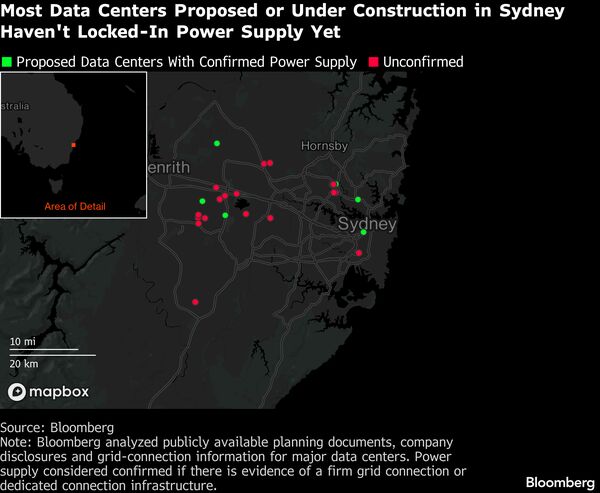
根据彭博社分析,悉尼28个活跃项目中有7个确认已获电力供应;墨尔本15个项目中这一数字降至3个。
In Sydney, seven of 28 active projects have confirmed power, according to Bloomberg’s analysis. In Melbourne, the figure drops to three out of 15.
彭博社联系了25家开发商,以核实其在电力供应方面的公开披露及40多个项目的状态。运营商GreenSquare拒绝就其电力安排置评,但表示正“与相关当局和基础设施合作伙伴密切合作,以支持长期运营表现”。CDC Data Centres称其“对目前在建的所有场地都有稳健的交付计划”,电力交付时间表符合预期。
Bloomberg contacted 25 developers to verify public disclosure on power supply and the status of more than 40 projects. Operator GreenSquare declined to comment on its power arrangements but said it was “working closely with relevant authorities and infrastructure partners to support long-term operational performance.”CDC Data Centres said it had “robust delivery plans in place for all sites currently under construction” with power delivery timelines as anticipated.
另外九家开发商拒绝置评或未直接回答关于未来项目的询问。其余开发商未作回应。
Nine others declined to comment or didn’t directly answer queries on future projects. The rest did not respond.
摩擦与延误的后果已显现。运营商 Nextdc Ltd 本周下调了利润预测,此前墨尔本居民阻挠了高耸输电线路的安装,导致其股价几乎腰斩。
The consequences of friction and delays are already apparent. Operator Nextdc Ltd slashed its profit forecast this week after Melbourne residents blocked the installation of towering transmission lines, almost halving the value of its shares.
在悉尼,Goodman Group 上月放弃了价值 12 亿澳元的“火星项目”开发。拟建的 90 兆瓦设施距离最近住宅仅约 20 米(近 66 英尺),距离一所公立学校 160 米,在规划过程中引发了数百份反对意见。
In Sydney, Goodman Group abandoned its A$1.2 billion Project Mars development last month. The proposed 90-megawatt facility would have been built about 20 meters (almost 66 feet) from the nearest home and 160 meters from a public school, prompting hundreds of objections to be submitted during the planning process.
“澳大利亚数据中心的社会许可正成为日益显著的逆风因素,”Morgans Financial Ltd 分析师 Nick Harris 本周写道。“投资者愈发担忧会出现更多延误,并质疑其连锁效应可能是什么。”官方数据也开始显示,已宣布项目与将实际建成项目之间的差距正在浮现。根据澳大利亚能源市场运营商的数据,去年拟接入澳大利亚主电网的数据中心项目中,逾三分之一被取消。
“Social license for Australian data centers is becoming an increasingly significant headwind,” Morgans Financial Ltd analyst Nick Harris wrote this week. “Investors are becoming concerned more delays could occur and question what the knock-on effect might be.”The gulf between announced projects and those that will be built is also beginning to emerge in official data. Over a third of proposed data centers that would tap Australia’s main grid were canceled last year, according to the Australian Energy Market Operator.
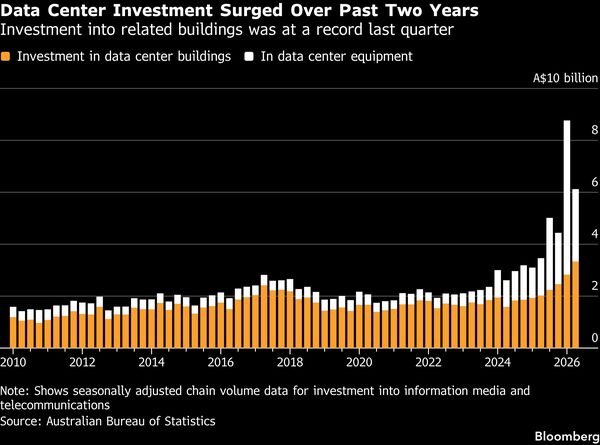
问题部分在于建设规模之大。据彭博新能源财经(BNEF)数据,澳大利亚已宣布及处于早期阶段的数据中心项目容量超过 20 吉瓦,而实际运营规模仅 1.5 吉瓦。
Part of the issue is the sheer scale of the build out. The country has more than 20 gigawatts of capacity in announced and early-stage data center projects compared to an operational fleet of just 1.5 gigawatts, according to BloombergNEF.
“获取能源已是一个主要问题,”BNEF 分析师 Tushna Mehta 表示。“数据中心产能建设速度远快于为其供电所需的新增发电量。”这些障碍引发了对政府推动澳大利亚成为更广泛区域枢纽举措的质疑,政府在寻求精简审批、吸引投资者的同时,现实约束依然存在。土地或许充裕,但数据中心需要接入高压输电线路及其他基础设施。建在远离大城市的地方虽有优势,但也意味着在新输电线路和电信设施上投入巨资。
“Access to energy is already a major issue,” said BNEF analyst Tushna Mehta. “Data center capacity is being built much faster than the new generation needed to supply it.”These hurdles are raising questions about the government’s push to make Australia a hub for the wider region, courting investors and seeking to streamline approvals even as practical constraints remain. Land may be plentiful, but data centers need access to high-voltage electricity lines and other infrastructure. Building further from the major cities can have advantages, but also means hefty investment in new transmission lines and telecommunications.
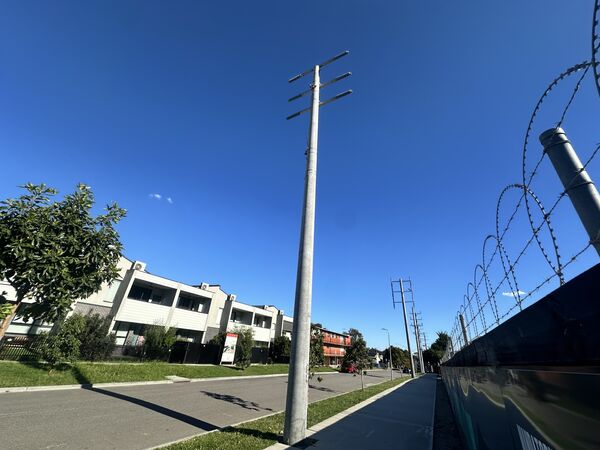
悉尼的电力网已经难以应对这种规模的繁荣。运营全州电网的 Transgrid 公司在 8 月表示,该市没有足够的输电容量来连接其收到的来自大型新用电户的 20 吉瓦咨询需求。
Sydney’s electricity grid is already struggling to accommodate the scale of the boom. Transgrid, which operates the statewide power network, said in August the city doesn’t have enough transmission capacity to connect any of the 20 gigawatts of inquiries it’s received from large new power users.
Transgrid 称,其中一半的拟议需求出现在其悉尼西变电站 12 公里半径范围内 —— 相当于整个新南威尔士州冬季用电峰值负荷,却集中在一个很小的区域。
Half of that proposed demand has emerged within a 12-kilometer radius of its Sydney West substation, Transgrid said — equivalent to the peak winter electricity load of the entire state of New South Wales, in one small area.
预计这种压力将迅速加剧。澳大利亚已有 160 多座运营中的数据中心,主要集中在悉尼和墨尔本,消耗全国电网供电量的约 2%。澳大利亚能源市场运营商(AEMO)预测,这一比例可能每年增长四分之一,到 2030 年达到约 6%,到 2036 年达到 13%。
That strain is expected to intensify, and quickly. Australia already has more than 160 operating data centers, concentrated mainly in Sydney and Melbourne, which consume about 2% of electricity supplied by the country’s grids. AEMO has projected this could rise by a quarter each year to roughly 6% by 2030, and 13% by 2036.
另一个障碍是用水获取。行业委托的分析估计,澳大利亚数据中心每年使用约 5.5 吉升水,主要用于冷却 —— 约占全国用水量的 0.04%。但当项目集中在一起时,局部影响可能大得多,包括在已因干旱面临压力的增长走廊。
Another hurdle is access to water. Industry-commissioned analysis estimates Australian data centers use about 5.5 gigalitres of water each year, largely for cooling — equivalent to roughly 0.04% of national consumption. But the local impact could be far greater when projects are clustered together, including in growth corridors already facing stress from drought.
住在墨尔本西福茨克雷 Nextdc 设施附近的居民 —— 有些距离仅约 15 米 —— 上月在议会调查中表示,他们希望就噪音、污染和潜在火灾风险获得赔偿。
Residents living near Nextdc’s facility in Melbourne’s West Footscray — about 15 meters from it, in some cases — told a parliamentary inquiry last month they wanted compensation for noise, pollution and potential fire risks.
悉尼科技大学研究数据中心的 Bronwyn Cumbo 说:“我们看到的是公众对 AI、特别是生成式 AI 的抵制情绪上升。许多数据中心计划建在住宅、学校、农田和自然区域附近,改变这些地方的体验感和宜居性。”
“What we are seeing is rising public resistance to AI, particularly generative AI,” said Bronwyn Cumbo, who researches data centers at the University of Technology Sydney. “Many are planned to be built near homes, schools, farmland and natural areas, and alter the experience and livability of these places.”